🇹🇷 Türkçe | Çeyiz Odasının Sessiz Vaktinde Demire Sinmiş Bekleyiş
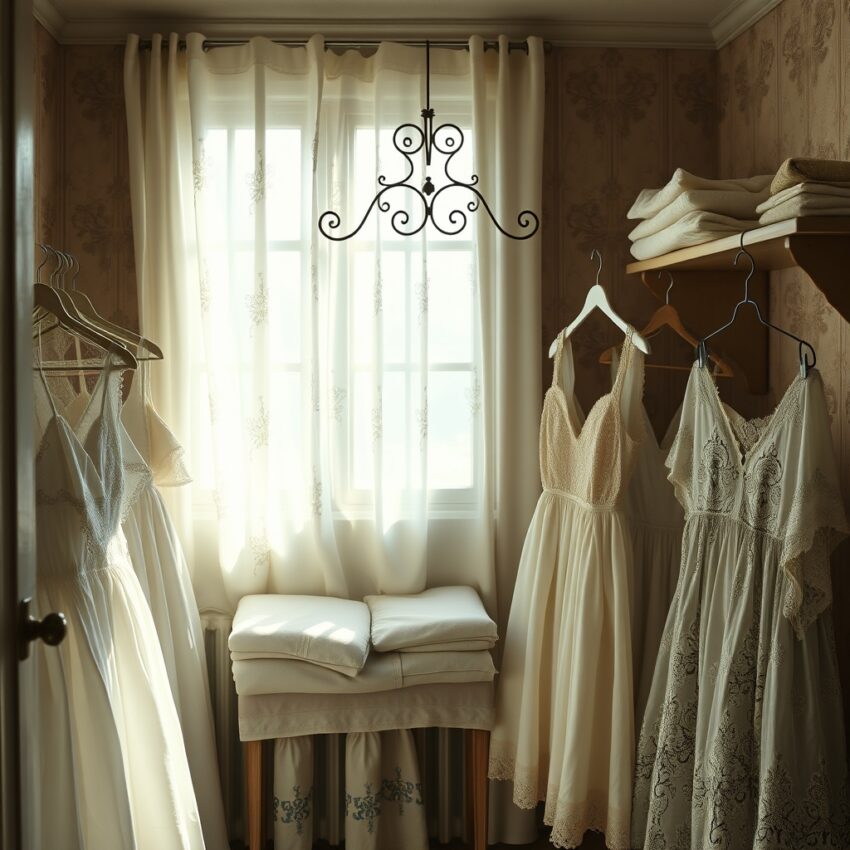
Bir zamanlar bazı evlerde en az kullanılan oda, en çok anlam yüklenen yerdi. Çeyiz odası yalnız eşyaların saklandığı bir bölüm değil, geleceğin ağır ağır hazırlandığı sessiz bir alandı. O odada duran ferforje askılık ise ilk bakışta sade görünen ama zamanla ev hayatının küçük ritüellerini etrafında toplayan bir eşya hâline gelirdi. Üzerine özenle örtülmüş işlemeli bohçalar, ütülenip asılmış dantelli gecelikler, kenarı oyalı havlular ya da misafir için saklanan temiz örtüler yerleştirilirdi. Demirin kıvrımlı gövdesi, odaya hem zarafet hem de bekleyiş hissi katardı. Çünkü askılık, yalnız nesneleri taşımıyor; henüz tam yaşanmamış bir hayatın hazırlığını da görünür kılıyordu.
Obje Hikayeleri açısından bakıldığında ferforje askılık, işlevi kadar görünüşüyle de hafızaya yerleşen parçalardan biridir. Ağır, dayanıklı ve süslü oluşu, onu sıradan bir eşya olmaktan çıkarırdı. Demirin kıvrılan uçları, çiçeğe ya da sarmaşığa benzeyen desenleri, ev sahibinin estetik anlayışını sessizce anlatırdı. Fakat bu askılığı asıl özel kılan, yer aldığı bağlamdı. Çeyiz odası çoğu zaman gündelik kullanımın dışında tutulur, kapısı sık açılmaz, içerideki düzen bozulmadan korunmaya çalışılırdı. Bu nedenle askılığın üzerindeki her parça bir eşyadan çok bir söz gibi dururdu: ileride kullanılacak, bir gün sahibine kavuşacak, doğru zaman geldiğinde açılacak.
Ferforje askılık ve çeyiz odasında büyüyen bekleyişin ev hayatının ritüellerini şekillendirmesi, biraz da hazırlığın gündelik davranışlara sinmesiyle ilgilidir. Evde büyük temizlik yapılacağı zaman çeyiz odası en son açılır, eller daha dikkatli olur, kumaşlara dokunurken ses bile alçalırdı. Bayram öncesi havalandırılan örtüler, kız isteme ya da nişan konuşulurken göz ucuyla bakılan bohçalar, yeni misafir geleceğinde “şu işlemeli olanı çıkaralım” diye seçilen parçalar, hep bu odanın sessiz otoritesini hissettirirdi. Askılık o otoritenin ortasında durur; bekleyen hayatı düzenli, temiz ve görünür tutardı. Böylece evin geleceğe dönük hayali, gündelik düzenin içine yerleşirdi.
Bu bekleyiş yalnız evlenecek genç kıza ait bir duygu da değildi. Annenin emeği, teyzenin tavsiyesi, komşunun dantel modeli, sandıktan çıkan kumaşın hikâyesi de aynı eşyanın etrafında birikirdi. Askılığa asılan her parça, tek kişinin değil bir aile ağının izini taşırdı. Kimi zaman bir bohçanın kenarı düzeltilirken yıllar önce alınmış bir kumaştan söz açılır, kimi zaman “bunu annen genç kızken işlemişti” cümlesi odanın havasını değiştirirdi. Demek ki ferforje askılık, yalnız geleceğe dair beklentiyi değil, geçmişten devralınan emeği de bir arada taşıyordu. Ev hayatının ritüelleri de tam burada şekilleniyordu: geçmişin eli, geleceğin hazırlığına sessizce değiyordu.
Gündelik hayatın içinde bu eşyanın etkisi çoğu zaman yüksek sesle fark edilmezdi. Ama odanın kapısı aralandığında, askılığın üzerinde duran ütülü kumaşlar ve özenle ayrılmış parçalar, evde düzenin nasıl anlaşıldığını ortaya koyardı. Temizlik, saklama, koruma, gösterme ve zamanı gelince kullanma gibi davranışlar, bu nesnenin etrafında incelik kazanırdı. Evdeki çocuklar bile o odaya başka türlü girer, dokunurken daha yavaş davranır, oradaki eşyanın yalnız eşya olmadığını sezerek büyürdü. Böylece askılık, konuşmadan öğreten bir nesne hâline gelirdi.
Bugün ferforje askılık ve çeyiz odasında büyüyen bekleyişi hatırlarken özlenen şey sadece eski eşya estetiği değildir. Özlenen biraz da ev hayatının geleceği hazırlamayı günlük bir terbiyeye dönüştüren tarafıdır. Beklemek, bir eksiklik değil; özenin biçimi sayılırdı. Bir askılığa asılan dantel, havlu ya da gecelik, kullanımdan önce anlam taşırdı. Bu yüzden o nesne ev hayatının ritüellerini şekillendirdi. Çünkü demirin sessiz sağlamlığı içinde, bir evin hafızası kadar yarını da asılı duruyordu.
🇬🇧 English | Waiting Soaked into Iron in the Quiet Time of the Dowry Room
There was a time when, in some homes, the least-used room carried the greatest weight of meaning. The dowry room was not merely a place where things were stored, but a quiet area in which the future was prepared slowly and with care. The wrought-iron hanger standing there could seem simple at first glance, yet over time it became an object around which many rituals of domestic life gathered. Embroidered bundles were placed upon it, lace nightgowns freshly ironed were hung there, as were edged towels and clean covers kept for guests. The curved body of the iron gave the room both elegance and a sense of waiting. It carried not only objects, but the visible preparation of a life not yet fully lived.
From the perspective of object stories, the wrought-iron hanger is one of those household pieces remembered as much for its appearance as for its use. Heavy, durable, and decorative, it stood apart from ordinary furniture. The curled ends of the metal, the forms that resembled flowers or climbing vines, quietly expressed the aesthetic sensibility of the home. Yet what made it truly distinctive was the context in which it stood. The dowry room was often kept outside the reach of daily use. Its door was not opened frequently, and the order inside was preserved with special care. That meant every item placed upon the hanger stood less as a possession than as a promise: something to be used later, something that would meet its owner in time, something waiting for its proper day.
The way the waiting in that room shaped domestic rituals had much to do with how preparation itself entered everyday behavior. When the house underwent a major cleaning, the dowry room was opened last, hands became gentler, and even voices lowered around the fabrics. Before holidays, carefully stored cloths were aired out there. During conversations about a proposal or engagement, eyes drifted toward the bundles. When guests were expected, someone might say, “Let us bring out the embroidered one.” The hanger stood at the center of that quiet authority, keeping the waiting life orderly, clean, and visible. In that way the household’s idea of the future settled into the discipline of ordinary days.
This waiting did not belong only to the young woman for whom the dowry was being prepared. The labor of the mother, the advice of an aunt, the lace pattern shared by a neighbor, and the history of a fabric taken from a chest all gathered around the same object. Every piece hanging there carried not a single life, but the trace of a family network. Sometimes, while smoothing the edge of a bundle, someone would mention a fabric bought years earlier. At other times, a sentence such as “your mother embroidered this when she was a girl” changed the air of the room. The hanger therefore held not only expectation for the future, but inherited labor from the past. Domestic ritual was formed precisely there, where the hand of memory touched preparation.
In everyday life, the influence of this object was rarely noticed loudly. Yet each time the room’s door was opened, the iron hanger with its carefully arranged textiles revealed how order itself was understood in the house. Cleaning, preserving, protecting, displaying, and finally using at the right moment all gained refinement around this piece of furniture. Even children entered that room differently. They moved more slowly, touched more carefully, and grew up sensing that what stood there was not merely material. The hanger became an object that taught without speaking.
What is missed in remembering the wrought-iron hanger and the waiting of the dowry room is not only the beauty of old domestic objects. It is also the side of home life that turned preparing for the future into a daily discipline of care. Waiting was not regarded as emptiness, but as a form of tenderness. A lace piece, a towel, or a nightdress hanging there held meaning before it ever entered use. That is why the object helped shape the rituals of home life. Within the silent firmness of iron, both the memory and the tomorrow of a household remained suspended.
🇧🇷 Português (Brasil) | A Espera Impregnada no Ferro no Tempo Silencioso do Quarto do Enxoval
Houve um tempo em que, em algumas casas, o quarto menos usado era justamente o que carregava mais sentido. O quarto do enxoval não era apenas um lugar para guardar objetos, mas um espaço silencioso onde o futuro era preparado devagar e com zelo. O cabide de ferro forjado que ficava ali podia parecer discreto à primeira vista, mas com o tempo se tornava um objeto em torno do qual muitos rituais da vida doméstica se organizavam. Sobre ele eram colocados fardos bordados, camisolas de renda passadas a ferro, toalhas com barra trabalhada e tecidos limpos reservados para visitas. A estrutura curva do ferro dava ao ambiente elegância e também sensação de espera. Ela sustentava não apenas peças, mas a preparação visível de uma vida ainda por acontecer por inteiro.
Do ponto de vista das histórias dos objetos, o cabide de ferro forjado é uma dessas peças lembradas tanto pela aparência quanto pela função. Pesado, resistente e decorativo, ele se distinguia dos móveis comuns. As pontas curvas do metal, os desenhos que lembravam flores ou trepadeiras, tudo revelava silenciosamente o gosto estético da casa. Mas o que o tornava realmente especial era o contexto em que estava inserido. O quarto do enxoval geralmente ficava fora do uso cotidiano. Sua porta não era aberta a toda hora, e a ordem ali dentro era mantida com um cuidado especial. Por isso, cada peça colocada no cabide parecia menos uma posse do que uma promessa: algo a ser usado mais adiante, algo destinado a encontrar sua dona no tempo certo, algo aguardando o dia adequado.
A maneira como essa espera moldava os rituais da casa tem relação com o fato de a preparação se infiltrar no comportamento diário. Quando havia uma grande limpeza, o quarto do enxoval era aberto por último, as mãos ficavam mais delicadas e até as vozes baixavam ao tocar nos tecidos. Antes das festas, toalhas bem guardadas eram arejadas ali. Em conversas sobre noivado ou casamento, os olhos se voltavam discretamente para os fardos. Quando chegariam visitas importantes, alguém dizia: “vamos tirar aquele bordado”. O cabide permanecia no centro dessa autoridade silenciosa, mantendo a vida que esperava de forma limpa, organizada e visível. Assim, a ideia de futuro da casa se instalava na disciplina dos dias comuns.
A espera ali presente não pertencia apenas à jovem para quem o enxoval era preparado. O trabalho da mãe, o conselho da tia, o modelo de renda trazido pela vizinha e a história de um tecido retirado do baú também se acumulavam ao redor do mesmo objeto. Cada peça pendurada levava a marca não de uma única pessoa, mas de uma rede familiar. Às vezes, ao ajeitar a ponta de um embrulho, alguém lembrava um tecido comprado anos antes. Outras vezes, uma frase como “sua mãe bordou isso quando era moça” mudava o ar do quarto. O cabide, portanto, guardava não só a expectativa do futuro, mas também o trabalho herdado do passado. Era ali que o ritual doméstico se formava, quando a mão da memória tocava a preparação.
Na vida cotidiana, a influência desse objeto quase nunca era percebida em voz alta. Mas cada vez que a porta do quarto se abria, o cabide com seus tecidos alinhados revelava como a ordem era entendida naquela casa. Limpar, guardar, proteger, mostrar e depois usar no momento certo eram gestos que ganhavam delicadeza ao redor dele. Até as crianças entravam ali de outra maneira. Andavam mais devagar, tocavam com mais cuidado e cresciam percebendo que aquilo não era apenas matéria. O cabide se transformava num objeto que ensinava sem falar.
Ao lembrar do cabide de ferro forjado e da espera do quarto do enxoval, o que faz falta não é apenas a estética dos antigos objetos domésticos. Faz falta também esse lado da vida da casa que transformava preparar o futuro numa disciplina diária de cuidado. Esperar não era visto como falta, mas como forma de ternura. Uma renda, uma toalha ou uma camisola pendurada ali já tinha sentido antes de ser usada. É por isso que esse objeto ajudou a moldar os rituais da vida doméstica. Na firmeza silenciosa do ferro, ficavam suspensos tanto a memória quanto o amanhã de uma casa.