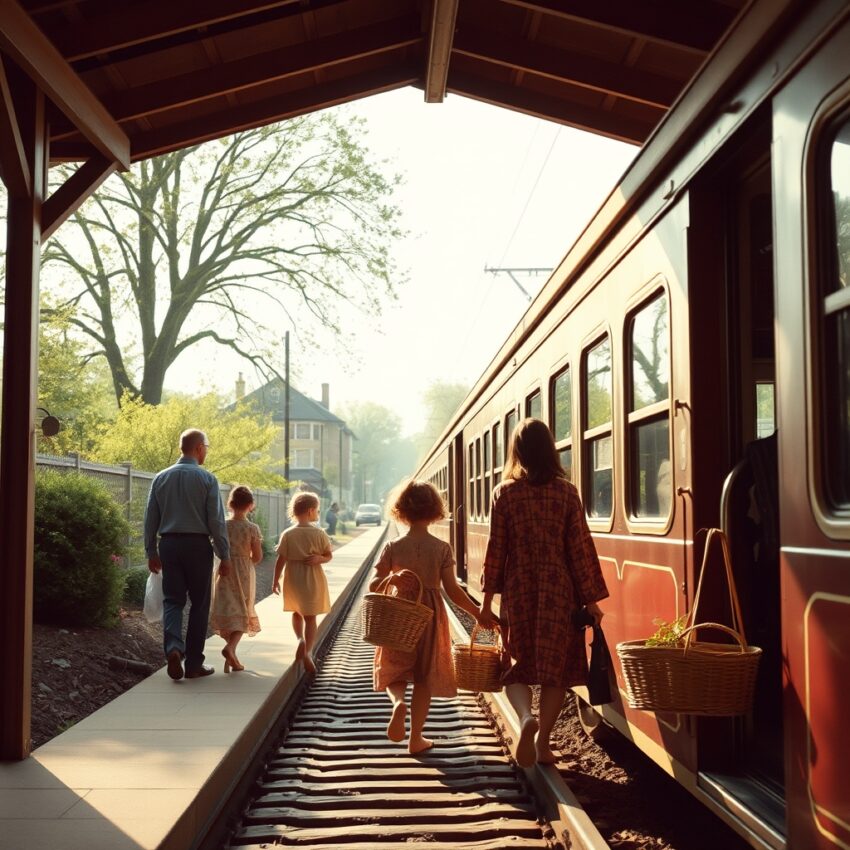
🇹🇷 Türkçe | Ray Sesine Karışan Aile Neşesinin Bahçelerde Bıraktığı İnce Sızı
Bir zamanlar hafta sonu geldiğinde bazı mahallelerde sabahın ritmi, ev içindeki hazırlık telaşından önce uzaktan geçen tren fikriyle kurulurdu. Piknik trenleri yalnız bir ulaşım aracı değildi; hafta boyunca çalışmış, yorulmuş, şehir içinde sıkışmış ailelerin kısa süreliğine nefes alacağı bir geçidin adıydı. Bez çantalar hazırlanır, emaye kaplara köfte, dolma ya da haşlanmış yumurta yerleştirilir, gazeteye sarılı ekmekler son anda sepete konurdu. Çocuklar pencere önünde acele eder, büyükler “suyu aldın mı, örtüyü unutma” diye birbirini tamamlar, istasyona gidiş bile küçük bir bayram yürüyüşü gibi yaşanırdı. Daha tren görünmeden başlayan bu heyecan, hafta sonunu takvimde kırmızıyla işaretleyen şeyin yalnız tatil değil, birlikte dışarı çıkma arzusu olduğunu gösterirdi.
Zamanın İzinde bakıldığında piknik trenleri, büyüyen şehir hayatının ailelere bıraktığı sınırlı boşluğu nasıl değerlendirdiğini anlatan çok canlı bir ayrıntıdır. Eski gazetelerde yaz mevsimi yaklaşırken banliyö hatlarının kalabalığından, mesire yerlerindeki hareketlilikten ve tren vagonlarında taşınan sepetlerden söz edilirdi. Fakat asıl hikâye, bu haberlerin satır aralarında değil, istasyon peronlarında duyulan uğultuda saklıydı. Rayın üstünde ilerleyen tren, mahalleliyi şehrin daha yeşil kıyılarına taşırken aynı zamanda ev içi neşeyi de vagonlara yüklüyordu. Koltukların kenarına iliştirilen fileler, camdan dışarı bakan çocuk yüzleri, annelerin eteğine ilişmiş mendiller ve babaların biletleri birkaç kez kontrol eden alışkanlığı, dönemin aile düzenini sessizce kayda geçirirdi.
Bu hafta sonlarının bugün bile bir sızı gibi hatırlanmasının nedeni, yolculuğun kendisinin neredeyse piknik kadar önemli olmasıydı. Tren daha hareket etmeden içerde hafif bir uğultu başlar, bir köşede limonata şişesi tıkırdar, başka bir yerde kağıt helva paketi açılırdı. Cam kenarını kapan çocuklar dışarıdaki tel örgüleri, köprü ayaklarını, istasyon tabelalarını sayarak yol alır; yetişkinler ise yan vagondaki tanıdığa el sallardı. Tren her sallandığında yalnız bedenler değil, aile içindeki neşe de yer değiştirirdi. Kısa bir yolculuk bile evin gündelik ağırlığını hafifletmeye yeterdi. Çünkü şehirden biraz uzaklaşmak, insanın kendine değil ailesine de yeniden yaklaşmasını sağlardı.
Bahçelerin ıhlamur kokusuna dönmesi ise bu sahnenin hafızadaki en yumuşak katmanını oluşturur. Piknik yerine varıldığında serilen örtüler, gölge arayan bakışlar ve semaver kurulacak yeri seçen eller kadar çevrenin kokusu da hatırada yer ederdi. Ilık rüzgârla karışan ıhlamur, kimi yerde ıslak toprakla kimi yerde köz kokusuyla birbirine eklenirdi. Çocuklar ağacın dibinde top koşturur, büyükanneler meyve bıçağını gazeteye siler, genç kızlar termos bardaklarına çay doldururken saçlarına yaprak değdirirdi. Günün hiçbir anı büyük bir olay taşımazdı belki; ama tam da bu yüzden değerliydi. Hatırlanan şey, olağanüstü bir serüven değil, ortak saadetin sıradan ayrıntılar içinde kurulmuş biçimiydi.
Akşam dönüşleri bu mutluluğun neden hafif bir sızıyla anıldığını anlatır. Örtü silkelenir, kaplar toplanır, çocukların ayakkabısına toprak bulaşmış halde yeniden istasyona yürünürdü. Gün boyu konuşmuş aileler, dönüş treninde biraz sessizleşir; yorgunlukla mutluluk birbirine karışırdı. Pencere dışındaki akşam ışığı kısalırken, herkes günün çabuk bittiğini hisseder ama bunu açıkça söylemezdi. Mahalleye varınca bahçeden taşınan koku, giysilere ve sepete sinmiş olarak eve kadar gelirdi. İşte bugün hatırlanan sızı biraz da budur: bir zamanlar hafta sonu neşesinin tren rayları boyunca uzayıp akşamla birlikte usulca geri çekildiğini bilmek.
Şimdi o piknik trenleri düşünüldüğünde özlenen yalnız mesire yerleri ya da eski banliyö hatları değildir. Özlenen, aile sevincinin bir ulaşım biçimine dönüşebildiği o toplu ritimdir. Bir trenin vagonlarına kahkaha, termos, keten örtü ve ıhlamur kokusu birlikte sığabiliyorsa, o dönem şehir hayatı insanlara dar zamanlarda bile müşterek bir genişlik sunabiliyordu. Bu yüzden piknik trenlerinin aile neşesini raylara taşıdığı hafta sonları mahalle takviminden hiç düşmedi. Çünkü onlar, geçmişin büyük olaylarından biri değil; tam tersine, sıradan hayatın en incelikli mutluluklarından biriydi.
🇬🇧 English | The Gentle Ache Left in the Gardens by Family Joy Mingling with the Sound of Rails
There was a time when, in certain neighborhoods, the rhythm of a weekend morning began with the thought of a train long before the bustle inside the home was complete. Picnic trains were not merely a mode of transport. They were the name of a brief passage through which families, tired from the week, crowded by city life, could breathe for a few hours. Cloth bags were packed, enamel containers were filled with meatballs, stuffed vegetables, or boiled eggs, and loaves wrapped in newspaper were tucked into baskets at the last moment. Children hurried from the window, elders reminded one another not to forget the water or the blanket, and even the walk to the station felt like a small holiday procession. The excitement began before the train appeared, showing that what marked the weekend on the neighborhood calendar was not simply leisure, but the promise of going out together.
Seen historically, picnic trains reveal how urban families used the narrow space of freedom that city life allowed them. Old newspapers, especially as summer approached, mentioned crowded suburban lines, lively excursion grounds, and baskets carried into railway carriages. Yet the real story lived not in the columns, but in the murmur on station platforms. The train moving along the tracks carried residents toward greener edges of the city, but it also carried domestic cheer itself into the wagons. Net bags hung beside the seats, children’s faces pressed to the glass, handkerchiefs pinned to mothers’ skirts, and fathers checking the tickets more than once all recorded the family order of the period without saying so directly.
These weekends remain like an ache because the journey was nearly as important as the picnic itself. Before the train even moved, a soft hum filled the carriage. A bottle of lemonade clinked in one corner, a packet of wafer sweets opened in another. Children who won the window seat counted fences, bridge pillars, and station signs, while adults waved to acquaintances in the next carriage. Every sway of the train seemed to shift not only bodies, but family joy itself. Even a short ride was enough to lighten the daily weight of the house. To go a little beyond the city meant not only getting away from routine, but also drawing closer again to one’s own family.
The gardens turning into the scent of linden formed the softest layer of this memory. Once the picnic ground was reached, the blankets spread on the grass, the searching for shade, and the hands choosing where to set the samovar were joined by smell as a lasting part of remembrance. Linden mixed with warm air, with damp soil in one place, with charcoal smoke in another. Children ran with a ball at the foot of the trees, grandmothers wiped fruit knives on newspaper, and young women poured tea into thermos cups while a leaf brushed their hair. Nothing dramatic happened, perhaps, and that was precisely why it mattered. What remained memorable was not an extraordinary adventure, but the way shared happiness settled inside ordinary details.
The return in the evening explains why the memory still carries a tender ache. Blankets were shaken out, containers collected, and children walked back toward the station with earth still clinging to their shoes. Families who had talked all day grew quieter on the return train, with tiredness and happiness blending into each other. As the light outside thinned, everyone felt how quickly the day had passed, though few said it aloud. By the time they reached the neighborhood, the smell of the garden remained on clothes, baskets, and hands. That is part of the ache remembered today: the knowledge that weekend joy once traveled along railway lines and then gently withdrew with the evening.
What is missed now is not only the excursion grounds or the old suburban lines. What is missed is the collective rhythm in which family happiness could become a way of traveling. If laughter, thermoses, linen cloths, and the scent of linden could all fit into the same carriage, then urban life of that era still offered a shared spaciousness inside limited time. That is why the weekends when picnic trains carried family joy along the rails never disappeared from neighborhood memory. They were not one of the great events of history, but one of the most delicate forms of everyday happiness.
🇧🇷 Português (Brasil) | A Suave Dor Deixada nos Jardins pela Alegria das Famílias Misturada ao Som dos Trilhos
Houve um tempo em que, em certos bairros, o ritmo da manhã de fim de semana começava com a ideia do trem antes mesmo de a correria dentro de casa terminar. Os trens de piquenique não eram apenas um meio de transporte. Eram o nome de uma breve passagem pela qual famílias cansadas da semana e apertadas pela vida urbana conseguiam respirar por algumas horas. Sacolas de pano eram arrumadas, potes esmaltados recebiam almôndegas, legumes recheados ou ovos cozidos, e os pães embrulhados em jornal eram colocados na cesta no último instante. As crianças se apressavam perto da janela, os adultos lembravam uns aos outros da água e da toalha, e até a caminhada até a estação parecia um pequeno cortejo de festa. A expectativa começava antes da chegada do trem, mostrando que o que marcava o fim de semana no calendário do bairro não era apenas o descanso, mas a alegria de sair juntos.
Vista no tempo, essa cena mostra como as famílias urbanas usavam o pequeno espaço de liberdade que a cidade lhes deixava. Nos jornais antigos, quando o verão se aproximava, apareciam notas sobre os trens suburbanos lotados, os parques cheios e as cestas carregadas para os vagões. Mas a verdadeira história não estava nas colunas, e sim no murmúrio das plataformas. O trem correndo sobre os trilhos levava os moradores até as bordas mais verdes da cidade, mas também carregava para dentro dos vagões a alegria doméstica. As sacolas penduradas ao lado dos bancos, os rostos infantis colados ao vidro, os lenços presos às saias das mães e o hábito dos pais de conferir o bilhete mais de uma vez registravam silenciosamente a ordem familiar daquela época.
Esses fins de semana continuam sendo lembrados como uma dor suave porque a viagem era quase tão importante quanto o próprio piquenique. Antes mesmo de o trem partir, um zumbido leve tomava o vagão. Uma garrafa de limonada batia de leve num canto, um pacote de doce era aberto em outro. As crianças que conseguiam sentar na janela contavam cercas, pilares de ponte e placas de estação, enquanto os adultos acenavam para conhecidos no vagão ao lado. A cada balanço do trem, parecia que não só os corpos, mas a própria alegria da família mudava de lugar. Mesmo um trajeto curto bastava para aliviar o peso cotidiano da casa. Ir um pouco além da cidade significava também voltar a se aproximar dos próprios.
Os jardins que ganhavam cheiro de tília formavam a camada mais macia dessa lembrança. Quando se chegava ao lugar do piquenique, a toalha aberta na grama, a busca pela sombra e as mãos escolhendo onde colocar o samovar se juntavam ao perfume do ambiente como parte essencial da memória. A tília se misturava ao ar morno, à terra úmida em alguns pontos e ao cheiro do carvão em outros. As crianças corriam com bola ao pé das árvores, as avós limpavam a faca de fruta no jornal, e as moças enchiam copos de chá enquanto uma folha tocava seus cabelos. Talvez nada grandioso acontecesse, e era justamente isso que tornava tudo precioso. O que ficou foi a forma como a felicidade compartilhada se instalava dentro dos detalhes mais comuns.
A volta ao entardecer explica por que essa recordação ainda traz uma pontada. As toalhas eram sacudidas, os recipientes recolhidos, e as crianças caminhavam até a estação com terra grudada nos sapatos. Famílias que tinham conversado o dia inteiro ficavam mais silenciosas no trem da volta, com cansaço e contentamento misturados. À medida que a luz do lado de fora diminuía, todos sentiam como o dia passara depressa, embora quase ninguém dissesse isso. Quando o bairro reaparecia, o cheiro do jardim ainda estava nas roupas, nas cestas e nas mãos. Essa é parte da dor suave lembrada hoje: saber que a alegria do fim de semana já viajou um dia pelos trilhos e voltou devagar com a noite.
O que faz falta agora não são apenas os parques ou as antigas linhas suburbanas. Faz falta o ritmo coletivo em que a felicidade da família podia se transformar numa forma de viajar. Se risos, garrafas térmicas, toalhas de linho e cheiro de tília cabiam no mesmo vagão, então a vida urbana daquele tempo ainda oferecia uma espécie de amplitude compartilhada mesmo em poucas horas livres. É por isso que os fins de semana em que os trens de piquenique levavam a alegria das famílias pelos trilhos nunca saíram do calendário afetivo do bairro. Eles não foram um grande acontecimento histórico, mas uma das formas mais delicadas de felicidade cotidiana.