🇹🇷 Türkçe | Bir Patlama Işığıyla Aileyi Aynı Karede Toplayan Eski Salon Töreni
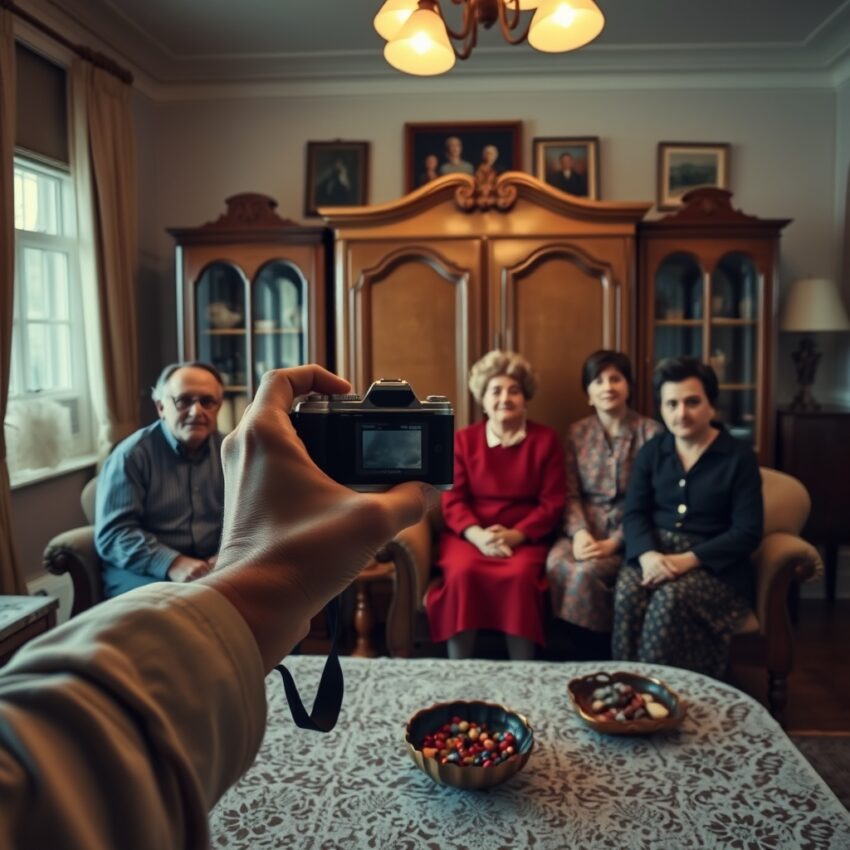
Eski evlerde bazı teknolojiler yalnız işlevleriyle değil, etraflarında kurulan davranış düzeniyle hatırlanır. Sekmeli fotoğraf flaşı da bunlardan biriydi. Salonda aile toplandığında makineyi eline alan kişi bir anda yalnız fotoğraf çeken biri değil, küçük bir törenin yöneticisi hâline gelirdi. Perde biraz çekilir, en iyi köşe aranır, çocukların üstü düzeltilir, babanın ceketi iliklenir, annenin yüzüne düşen saç teli geriye alınırdı. O sırada kimse yüksek sesle konuşmaz ama herkes olacak şeyi beklerdi. Flaş küpünün o kısa, keskin parlaması, işte bu sessiz hazırlığın doruk anıydı.
Teknoloji Mirası açısından sekmeli flaş dönemin ev içi fotoğraf kültürünü belirleyen önemli ayrıntılardan biridir. Bugünün sayısız deneme hakkı veren dijital rahatlığının tersine, o yıllarda her kare kıymetliydi. Film sınırlıydı, ışık dikkatle ayarlanmalıydı ve yanlış çekilmiş bir fotoğraf hemen telafi edilemezdi. Flaş küpü ya da benzeri döner sistemler, her patlamadan sonra küçük bir mekanik dönüş hissi verir; kullanıcıya teknolojinin çalıştığını fiziksel olarak hissettirirdi. Bu yüzden fotoğraf çekme anı, yalnız görüntü kaydı değil, aletin kendisinin de izlenen bir gösterisine dönüşürdü.
Salonda toplanan ailelerin sessiz heyecanı buradan doğardı. Herkes bir anlığına gündelik hareketlerini askıya alırdı. Normalde yerinde durmayan çocuk bile “kıpırdama” uyarısının ciddiyetini hisseder, büyükler yüzlerine uygun bir ifade yerleştirmeye çalışırdı. Koltuk kenarındaki dantel örtü, vitrindeki cam eşyalar, duvardaki takvim ya da radyonun üstüne konmuş küçük süsler bile kadraja bilinçli ya da bilinçsiz olarak katılırdı. Böylece çekilen fotoğraf yalnız insanları değil, dönemin salon düzenini, ev estetiğini ve aile içi temsil arzusunu da saklardı. Flaşın patladığı an, biraz da evin kendini geleceğe tanıtma anıydı.
Bu küçük ritüelin tören gibi hissedilmesinin bir başka nedeni, sonuçla araya giren zaman mesafesiydi. Fotoğraf çekildiği anda görüntü görülmezdi. Film banyodan çıkana kadar herkes hafızasına güvenirdi. “Gözüm kapalı mı çıktı”, “ışık fazla mı geldi”, “çocuk yine oynadı mı” gibi sorular günlerce konuşulabilirdi. Bu belirsizlik, fotoğrafı sıradan bir kayıt olmaktan çıkarıp beklentiyle çevrili bir aile olayına dönüştürürdü. Sonradan albüm sayfaları açıldığında, o flaş anının öncesindeki düzenlemeler de sanki yeniden hissedilirdi. Çünkü fotoğraf yalnız sonucu değil, öncesindeki toplu dikkati de içinde taşırdı.
Gündelik ayrıntılar bu sahneyi daha canlı kılar. Makinenin üstüne dikkatle takılan flaş küpü, çekimden sonra duyulan hafif ısınmış plastik kokusu, çocukların bir patlamadan sonra gözlerini kırpması, bir büyükannenin “şimdi oldu mu” diye sorması, ev içi teknoloji deneyimini ailece paylaşılan bir âna dönüştürürdü. Bazen ilk kare misafire ayrılır, bazen bayramlıklarla çekim yapılır, bazen de yeni alınmış bir koltuğun ya da duvara asılmış bir halının kadraja girmesi özellikle istenirdi. Böylece fotoğraf makinesi, teknolojik bir araç olduğu kadar ev içi statü, özen ve hatıra üretiminin de ortağı olurdu.
Sonuçta salonda toplanan ailelerin sessiz heyecanı eşliğinde sekmeli fotoğraf flaşı kullanmak başlı başına bir törendi; çünkü o an teknoloji, aile disiplini ve hatıra arzusu tek bir parlamada birleşirdi. Hatırlanan yalnız flaşın ışığı değildir. Çekimden önceki toparlanma, patlama anındaki kısa durgunluk ve günler sonra fotoğraf kâğıdında beliren yüzler de bu törenin parçalarıdır. Belki bu yüzden eski aile albümlerine bakarken insan sadece bir görüntü görmez; o görüntünün alınabilmesi için salonda kurulan kısa ama ciddi hazırlığı da neredeyse yeniden yaşar.
🇬🇧 English | The Old Living Room Ceremony that Gathered the Family into One Frame with a Burst of Light
In older homes, some technologies are remembered not only for what they did, but for the pattern of behavior they created around themselves. The flash cube was one of them. When the family gathered in the living room and one person took the camera in hand, they became more than the one who pressed the button. They became the conductor of a small ceremony. Curtains were adjusted, the best corner was searched for, children’s clothes were straightened, the father buttoned his jacket, and a strand of the mother’s hair was moved back into place. No one spoke loudly during those moments, yet everyone waited for the same thing. The brief, sharp burst from the flash cube marked the high point of that quiet preparation.
From the viewpoint of technology heritage, the flash cube was a defining detail of domestic photography. Unlike today’s digital ease, which offers endless retries, each frame in that period carried weight. Film was limited, light had to be considered carefully, and a failed image could not be instantly corrected. Flash cubes and similar rotating systems gave a small mechanical sense of progression after every shot, allowing the user to feel the device working in a physical way. For that reason, taking a photograph became more than image capture. It also became a visible performance of the device itself.
This is where the quiet excitement of families gathered in the living room came from. For a brief moment, everyone suspended ordinary movement. Even a restless child felt the seriousness of being told not to move, while adults tried to settle their faces into the expression they thought most suitable. The lace cover on the side table, the glass objects in the cabinet, the calendar on the wall, or the ornament resting on top of the radio all entered the frame knowingly or unknowingly. In that way, the photograph preserved not only people, but also the living room order, the domestic aesthetic, and the family’s desire to represent itself. The instant of the flash was also the house presenting itself to the future.
Another reason this small act felt ceremonial was the stretch of time between the shot and the result. The image could not be seen at once. Until the film was developed, everyone depended on memory. Questions such as whether someone blinked, whether the light was too strong, or whether the child moved again could remain in conversation for days. That uncertainty lifted the photograph out of ordinary record-keeping and turned it into a family event surrounded by expectation. When the album pages were later opened, the arrangements made before the flash seemed to be felt again, because the photograph carried not only the result, but also the shared concentration that came before it.
Everyday details make the scene vivid. The careful attachment of the flash cube to the camera, the faint smell of warmed plastic after the burst, children blinking after the flash, and a grandmother asking whether it was successful turned domestic technology into a collectively experienced moment. Sometimes the first frame was reserved for guests, sometimes the picture was taken in holiday clothes, and sometimes a newly bought sofa or a wall carpet was deliberately included. The camera thus became not just a device, but a partner in household status, care, and memory-making.
In the end, using a flash cube amid the quiet excitement of families gathered in the living room was a ceremony in itself because technology, family discipline, and the desire for remembrance all met in a single burst of light. What remains in memory is not only the flash. It is also the tidying before the shot, the short stillness at the moment of exposure, and the faces that later emerged on photographic paper. That may be why, when people look through old family albums, they do not see only an image. They almost relive the brief but serious preparation once arranged in the living room to make that image possible.
🇧🇷 Português (Brasil) | A Antiga Cerimônia da Sala que Reunia a Família num Só Quadro com um Estouro de Luz
Nas casas antigas, algumas tecnologias são lembradas não apenas pelo que faziam, mas pelo conjunto de gestos que criavam ao redor de si. O flash de cubo fotográfico era uma delas. Quando a família se reunia na sala e alguém pegava a câmera, essa pessoa deixava de ser apenas quem tirava a foto. Virava a condutora de um pequeno ritual. A cortina era ajustada, buscava-se o melhor canto, arrumava-se a roupa das crianças, o pai abotoava o paletó e um fio de cabelo da mãe era colocado para trás. Ninguém falava alto, mas todos esperavam a mesma coisa. O clarão curto e preciso do flash marcava o ápice dessa preparação silenciosa.
Do ponto de vista do patrimônio tecnológico, o flash de cubo foi um detalhe decisivo da cultura fotográfica doméstica. Ao contrário da facilidade digital de hoje, que permite inúmeras tentativas, cada quadro naquele tempo tinha valor. O filme era limitado, a luz exigia cuidado e uma foto malfeita não podia ser corrigida na hora. O cubo de flash e seus mecanismos giratórios davam, a cada disparo, uma pequena sensação física de funcionamento. A pessoa sentia a tecnologia trabalhar. Por isso, fotografar era mais do que registrar uma imagem. Era também assistir a uma pequena apresentação do aparelho.
É daí que vinha a excitação silenciosa das famílias reunidas na sala. Por alguns instantes, todos suspendiam seus movimentos comuns. Até a criança mais inquieta sentia a seriedade do “não mexe”. Os adultos, por sua vez, tentavam encontrar no rosto a expressão que consideravam mais adequada. A toalhinha de renda, os objetos de vidro na cristaleira, o calendário na parede ou o enfeite em cima do rádio entravam no enquadramento de forma consciente ou involuntária. Assim, a fotografia guardava não só as pessoas, mas também a organização da sala, a estética da casa e o desejo da família de se apresentar. O clarão era também o instante em que a casa se mostrava ao futuro.
Outra razão para esse gesto parecer cerimonial estava na distância entre o disparo e o resultado. A imagem não aparecia imediatamente. Até o filme ser revelado, tudo dependia da memória. Perguntas como se alguém saiu de olhos fechados, se a luz ficou forte demais ou se a criança se mexeu outra vez podiam permanecer dias em conversa. Essa incerteza tirava a fotografia do campo do simples registro e a transformava num acontecimento familiar cercado de expectativa. Quando o álbum era aberto mais tarde, as arrumações feitas antes do flash pareciam voltar junto. A foto carregava não apenas o resultado, mas a atenção coletiva que veio antes dele.
Os detalhes do cotidiano tornam a cena ainda mais viva. O cuidado ao encaixar o cubo na câmera, o leve cheiro de plástico aquecido depois do disparo, as crianças piscando e a avó perguntando se tinha dado certo faziam da tecnologia doméstica um momento compartilhado. Às vezes o primeiro quadro era reservado para visitas, às vezes a foto era feita com roupa de festa, e às vezes fazia questão de entrar na imagem um sofá novo ou um tapete recém-pendurado. A câmera se tornava, assim, não só um aparelho, mas parceira da memória, do cuidado e até da apresentação da casa.
No fim, usar o flash de cubo fotográfico em meio à excitação silenciosa das famílias reunidas na sala era um ritual por si só, porque tecnologia, disciplina familiar e desejo de lembrança se encontravam num único clarão. O que fica na memória não é apenas a luz. São também a arrumação antes do clique, a breve imobilidade no instante da foto e os rostos aparecendo dias depois no papel revelado. Talvez por isso, ao olhar um álbum de família antigo, a pessoa não veja somente uma imagem. Ela quase revive a preparação curta e séria que a sala precisou montar para que aquele retrato existisse.