 Eski Pano
Some objects occupy a deep place in domestic memory not only because they were used, but because they became visible again at particular times. The old scale belongs to this group. On ordinary days, it might stand quietly on a pantry shelf, in the cool storage room, or in the upper part of a cupboard. Yet when holiday cleaning arrived, it emerged once more, had its dust removed, its brass or metal face polished, and was placed again in a visible position as if to remind the household of an older seriousness. Its renewed shine signaled not only the care of the object, but the refreshing of domestic order itself.
Within object stories, the scale matters as much for its symbolic associations as for its use. To weigh, to measure, to keep balance are meanings that extend beyond the kitchen. The old scale entered household decisions by measuring sugar for jam, setting quantities of legumes for winter storage, and sometimes checking cloth for a dowry chest or fruit brought from the market. For that reason, it was more than a technical instrument. It was a material extension of the household idea of order. The feeling that things should be neither too much nor too little became visible on its pans.
The way its face shone again during holiday cleaning added another cultural layer. In those days, people did not remove visible dust alone. They renewed the household’s manner of presenting itself. Carpets were shaken, cabinet glass brightened, copper utensils were polished, and then attention turned to scales that may have seemed forgotten but in fact remained among the memory objects of the home. Wiped carefully by a mother or grandmother and sometimes revived with lemon or another cleaning mixture, the scale became one of the quiet protagonists of pre-holiday preparation. Every cleaned object was also part of the respect offered to the house.
The role of the scale in shaping domestic rituals can also be seen in the small behaviors that developed around it. It was not used carelessly. It was placed on a level surface, its balance checked while empty, and sometimes small weights were brought out from a separate box. Children watching this process saw not merely a tool, but the way domestic attention functioned. A little too much sugar or a little too little flour could feel as though measure itself had an ethical side. In this way, the scale taught not only kitchen practice, but patience, precision, and disciplined household management.
Everyday scenes gathered around the scale make this even clearer. During winter preparations, sacks were opened, a child watched from the side, and the adults said things like “set aside one more kilo” or “let’s weigh this exactly.” As holidays approached, the amount of nuts or sweets bought for guests was clarified with the same instrument, and the measure of what would be placed on the table was determined almost as part of family upbringing. Once polished, the scale stood quietly on the shelf beside the newly ordered house and rejoined the visible objects that might be noticed before guests arrived. Use and representation met in the same item.
In the end, the old scale and the face it regained during holiday cleaning deeply shaped the rituals of domestic life because they brought together measure, household order, and the seriousness of preparation in a single object. What remains in memory is not only the act of weighing, but the careful behaviors surrounding it and the way the object was made visible again at the end of cleaning. Looking at such scales today, one sees not only an old kitchen instrument, but the household discipline once built through respect, balance, and readiness.
The Old Scale and the Face It Regained During Holiday Cleaning: How Did It Shape the Rituals of Domestic Life?
🇹🇷 Eski Terazi Ve Bayram Temizliğinde Yeniden Parlayan Yüzü: Ev Hayatının Ritüellerini Nasıl Şekillendirdi
🇵🇹 A Balança Antiga e o Brilho que Recuperava na Limpeza de Festa: Como Moldou os Rituais da Vida Doméstica?
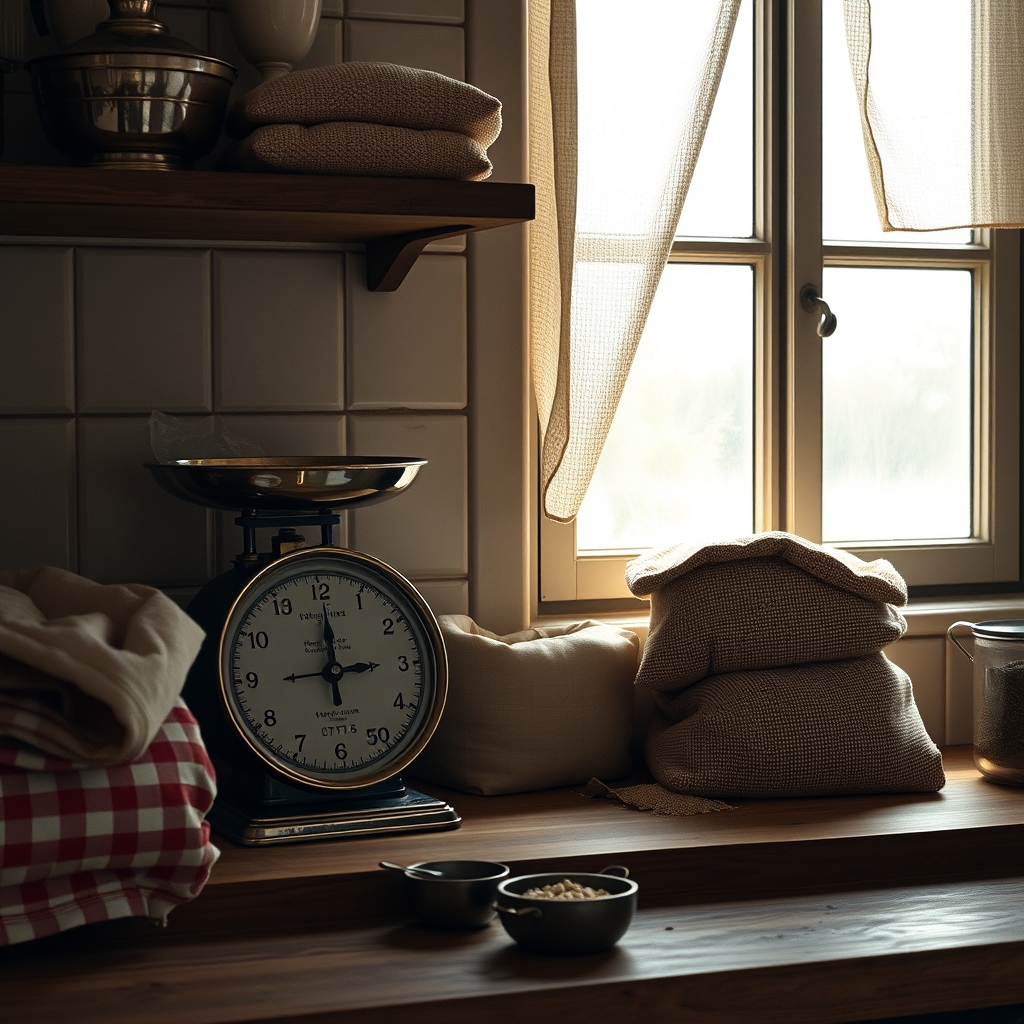
🇬🇧 The Old Scale Returning to the Center of Order and Measure as It Was Polished
🇹🇷 Parlatıldıkça Ev Düzeninin Ve Ölçü Duygusunun Ortasına Dönen Eski Terazi
Bazı eşyalar yalnız kullanıldıkları için değil, belirli zamanlarda yeniden görünür hâle geldikleri için de ev hafızasında derin yer eder. Eski terazi bunlardan biridir. Gündelik günlerde mutfak rafının bir köşesinde, kilerin serinliğinde ya da dolabın üst bölümünde sessizce duran bu eşya, bayram temizliği geldiğinde yeniden ortaya çıkar, tozu alınır, pirinç ya da metal yüzeyi parlatılır ve sanki evin eski ciddiyetini hatırlatmak için tekrar görünür bir yere yerleştirilirdi. Onun parlayan yüzü, yalnız eşyanın değil ev düzeninin de tazelendiğini gösterirdi.
Obje Hikayeleri içinde terazi, işlevi kadar simgesel çağrışımıyla da önemlidir. Ölçmek, tartmak, dengeyi gözetmek gibi anlamlar ev hayatında sadece mutfakla sınırlı kalmaz. Eski terazi; reçel yapımında şekerin hesabını tutan, kışlık erzak hazırlanırken bakliyatın miktarını belirleyen, bazen çeyiz bohçasına konacak kumaşı ya da pazardan gelen meyveyi kontrol eden bir araç olarak ev içi kararlara katılırdı. Bu yüzden terazi, teknik bir alet olmasının ötesinde evdeki düzen fikrinin somut uzantısıydı. Ne fazla ne eksik olmalı duygusu, onun kefelerinde görünürlük kazanırdı.
Bayram temizliğinde yeniden parlayan yüzü ise teraziye ayrı bir kültürel katman eklerdi. O günlerde yalnız görünen kir silinmez, evin temsili de yenilenirdi. Halılar silkelenir, vitrin camları parlar, bakır kaplar ovulur, sonra sıra bazen unutulmuş görünen ama aslında evin hafıza eşyaları arasında duran terazilere gelirdi. Annenin ya da anneannenin bezle dikkatle sildiği, zaman zaman küllenmiş yüzeyini limonla ya da uygun bir karışımla canlandırdığı terazi, bayram öncesi hazırlığın sessiz kahramanlarından birine dönüşürdü. Çünkü temizlenen her eşya biraz da eve verilecek saygının parçasıydı.
Bu nesnenin ev hayatının ritüellerini şekillendirmesi, onun etrafında gelişen küçük davranışlardan da anlaşılır. Terazi gelişigüzel kullanılmazdı; düz zemine konur, kefeleri boşken dengesi kontrol edilir, bazen küçük ağırlıklar ayrı bir kutudan çıkarılırdı. Çocuklar bu süreci izlerken yalnız bir alet görmez, ev içi dikkatin nasıl işlediğini de öğrenirdi. Bir avuç fazla şekerin ya da eksik gelen unun fark edilmesi, ölçünün ahlaki bir tarafı varmış gibi hissedilirdi. Böylece terazi, yalnız mutfağı değil sabrı, titizliği ve düzenli ev yönetimini de öğreten bir nesne hâline gelirdi.
Gündelik yaşamda terazi etrafında biriken sahneler bunu daha iyi gösterir. Kış hazırlığında büyük torbaların ağzı açılır, çocuk bir kenardan izler, büyükler “bir kilo daha ayır” ya da “bunu tam tartalım” derdi. Bayram yaklaşırken alınan kuruyemiş ya da şekerin miktarı yine bu aletle netleşir, sofraya konacak şeylerin ölçüsü sanki aile terbiyesinin parçası gibi belirlenirdi. Parlatılmış yüzüyle rafta duran terazi, temizliğin ardından evin toparlanmış hâline sessizce eşlik eder, misafir gelmeden önce görülebilecek nesneler arasına yeniden katılırdı. Böylece kullanım ile temsil aynı eşyada buluşurdu.
Sonuçta eski terazi ve bayram temizliğinde yeniden parlayan yüzü, ev hayatının ritüellerini derinden şekillendirdi; çünkü ölçü duygusunu, ev düzenini ve hazırlık ciddiyetini tek bir nesnede bir araya getirdi. Hatırlanan şey yalnız tartma işlemi değil, o işlemin etrafındaki özenli davranışlar ve temizliğin sonunda nesnenin yeniden görünür kılınmasıdır. Bugün bu tür terazilere bakınca insan, sadece eski bir mutfak aracını değil; evin saygı, denge ve hazırlık üzerinden kurulan terbiyesini de görür.
🇵🇹 A Balança Antiga Voltando Ao Centro da Ordem e da Medida Ao Ser Polida
Alguns objetos ocupam um lugar profundo na memória da casa não apenas porque eram usados, mas porque voltavam a ficar visíveis em certos momentos. A balança antiga é um deles. Nos dias comuns, ela podia ficar quieta numa prateleira da despensa, no frescor do armário de mantimentos ou na parte alta de um móvel. Mas quando chegava a limpeza de festa, aparecia novamente, tinha o pó removido, a face de metal ou latão era polida e ela voltava a um lugar visível como se lembrasse à casa uma antiga seriedade. O brilho recuperado mostrava não só o cuidado com o objeto, mas a renovação da própria ordem doméstica.
Dentro das histórias de objetos, a balança é importante tanto pelo uso quanto pelos significados que carrega. Pesar, medir, procurar equilíbrio são ideias que ultrapassam a cozinha. A balança entrava nas decisões da casa ao medir o açúcar da geleia, definir a quantidade dos grãos guardados para o inverno e às vezes conferir tecidos do enxoval ou frutas trazidas da feira. Por isso, ela era mais do que um instrumento técnico. Era uma extensão material da ideia de organização doméstica. A sensação de que nada devia ser demais nem de menos ganhava forma visível em seus pratos.
O fato de seu rosto voltar a brilhar na limpeza antes das festas acrescentava outra camada cultural. Nesses dias, não se tirava apenas a sujeira aparente. Renovava-se também a forma como a casa se apresentava. Sacudiam-se tapetes, limpavam-se os vidros da cristaleira, poliam-se peças de cobre e, depois, chegava a vez da balança, que podia parecer esquecida, mas continuava entre os objetos de memória da família. Limpa com cuidado pela mãe ou pela avó e às vezes reavivada com limão ou outra mistura, ela se tornava uma das protagonistas silenciosas da preparação. Cada objeto limpo fazia parte do respeito dedicado ao lar.
O modo como a balança moldava os rituais da vida doméstica também aparece nos pequenos comportamentos ao redor dela. Não era usada de qualquer jeito. Precisava de uma superfície reta, o equilíbrio era testado antes e, por vezes, os pequenos pesos saíam de uma caixa separada. As crianças que observavam não viam apenas um utensílio. Viamm como funcionava a atenção da casa. Um pouco de açúcar a mais ou farinha a menos parecia carregar quase um lado moral da medida. Assim, a balança ensinava não só prática culinária, mas paciência, precisão e administração cuidadosa do lar.
As cenas do cotidiano reunidas em torno dela deixam isso ainda mais claro. Na preparação para o inverno, abriam-se sacos grandes, uma criança olhava de lado, e os adultos diziam “separa mais um quilo” ou “vamos pesar isso certinho”. Com a aproximação das festas, a quantidade de nozes, doces e guloseimas para os convidados também era definida ali, como se a medida do que iria à mesa fizesse parte da própria educação familiar. Depois de polida, a balança ficava quieta na prateleira, acompanhando a casa arrumada e voltando ao grupo de objetos visíveis antes da chegada das visitas. Uso e representação se encontravam no mesmo item.
No fim, a balança antiga e o brilho que recuperava na limpeza de festa moldaram profundamente os rituais da vida doméstica porque reuniam medida, ordem da casa e seriedade da preparação num único objeto. O que permanece na memória não é apenas o ato de pesar, mas os gestos cuidadosos ao redor dele e o fato de o objeto voltar a ser colocado em evidência ao fim da limpeza. Ao olhar essas balanças hoje, a pessoa vê não só um utensílio antigo de cozinha, mas a disciplina doméstica construída por respeito, equilíbrio e prontidão.