
Skip to content

Eski Pano

🇬🇧 Exploring the beauty of the past 🇹🇷 Geçmişin güzelliğini keşfedin 🇧🇷 Explorando a beleza do passado

Menu
Menu

Art Deco’nun İhtişamı: Geometrinin Mücevherle Dansı | The Splendor of Art Deco: Geometry’s Dance with Jewelry | O Esplendor do Art Déco: A Dança da Geometria com a Joalheria

Posted on 03/03/202603/03/2026 by admin

🇹🇷 Türkçe | Art Deco’nun İhtişamı: Geometrinin Mücevherle Dansı

Birinci Dünya Savaşı’nın ardından dünya, geçmişin ağır süslemelerinden sıyrılıp modernliğe doğru cesur bir adım atmak isterken Art Deco akımı doğdu. Bu stil, sadece bir estetik tercih değil; hızlanan yaşamın, makinelere duyulan hayranlığın ve yeni bir refah hayalinin görsel ifadesiydi. 1920’ler ve 1930’lar boyunca Art Deco, umut dolu bir geleceğin parlak yüzü olarak hem büyük şehirlerin siluetine hem de günlük hayatta kullanılan objelere damgasını vurdu.

Art Deco’nun en ayırt edici özelliği, keskin ve net geometrik formlara duyduğu tutkuydu. Daireler, zigzaglar, basamaklı formlar ve mutlak simetri bu stilin temel yapı taşlarını oluşturdu. Güneş ışığını andıran “sunburst” motifleri, dönemin teknolojiye ve ilerlemeye olan hayranlığını simgeliyordu. Aynı tasarım dili, devasa mimari yapılardan küçük masa saatlerine kadar her ölçekte kendini gösterdi. Bu ortak dilin en çarpıcı örneklerinden biri, New York siluetini bir mücevher gibi süsleyen Chrysler Binası oldu.

Bu ihtişamlı görünüm, kullanılan malzemelerle daha da güçlendi. Altın, krom ve parlak metaller modernliğin soğuk ama çekici yüzünü temsil ederken; fildişi, lake ve cilalı ahşap yüzeyler lüks duygusunu pekiştiriyordu. Mücevher tasarımlarında zümrüt, oniks ve elmas gibi taşlar, geometrik kesimlerle adeta mimari bir düzene sokuldu. Her parça, rastlantısal değil; bilinçli, matematiksel ve kusursuz bir denge anlayışıyla şekillendirildi.

Art Deco’nun büyüsü, onun sadece anıtsal yapılarda değil, gündelik hayatta kullanılan objelerde de kendini göstermesinden kaynaklanır. Saatler, aynalar, lambalar ve takılar bu stil sayesinde sıradan bir eşya olmaktan çıkıp küçük sanat eserlerine dönüştü. İnsanlar, yaşadıkları mekânlarda modernliğe dokunuyor, ilerleme fikrini evlerinin içine taşıyordu. Bu nedenle Art Deco, sadece göze hitap eden bir stil değil; bir yaşam biçimiydi.

Bugün bile modern tasarımda Art Deco izlerinin aranması tesadüf değildir. Çünkü bu stil, geçmişle gelecek arasında kurduğu dengede zamansız olmayı başarmıştır. Geometrinin zarafetle, lüksün ölçüyle buluştuğu bu estetik anlayış, aradan geçen onca yıla rağmen hâlâ “yeni” görünür ve bu yüzden asla eskimez.


🇬🇧 English | The Splendor of Art Deco: Geometry’s Dance with Jewelry

After the First World War, as societies sought to leave behind the heavy ornamentation of the past and step boldly into modernity, the Art Deco movement was born. It was not merely a decorative style, but a visual expression of a faster life, a fascination with machines, and a dream of prosperity. Throughout the 1920s and 1930s, Art Deco became the shining face of an optimistic future, shaping both city skylines and everyday objects.

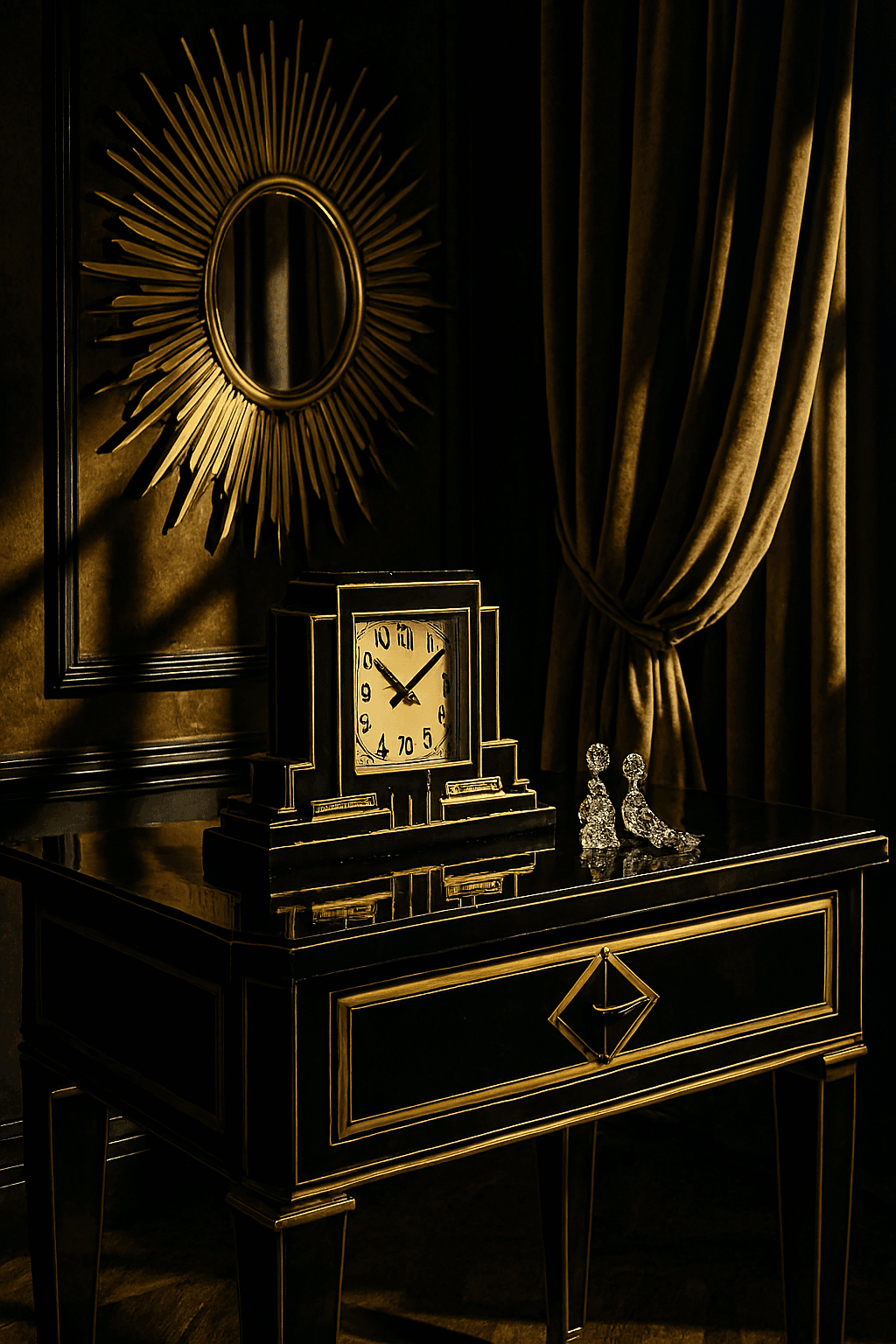
The defining characteristic of Art Deco was its devotion to sharp, precise geometric forms. Circles, zigzags, stepped shapes, and strict symmetry formed the foundation of the style. Sunburst motifs symbolized the era’s admiration for technology and progress. This shared design language appeared at every scale, from monumental architecture to small tabletop clocks. The same visual principles connected towering buildings with the smallest decorative objects, creating a unified modern identity.

The splendor of Art Deco was further enhanced by its luxurious materials. Gold, chrome, and polished metals reflected a sleek, modern confidence, while ivory, lacquer, and glossy wood surfaces reinforced a sense of refined luxury. In jewelry design, gemstones such as emeralds, onyx, and diamonds were cut into precise geometric forms, arranged almost like architectural elements. Each piece was intentional, mathematical, and carefully balanced rather than ornamental by chance.

What makes Art Deco truly captivating is its presence not only in grand buildings but also in everyday life. Clocks, mirrors, lamps, and jewelry were transformed into miniature works of art. Through these objects, people brought the spirit of modernity into their homes, touching the idea of progress in tangible ways. Art Deco thus became more than a style—it evolved into a lifestyle that celebrated confidence, clarity, and elegance.

Even today, designers continue to seek inspiration from Art Deco, and this is no coincidence. The movement achieved a rare balance between past and future, between luxury and discipline. Where geometry meets elegance, Art Deco remains timeless, appearing perpetually fresh and never truly aging.


🇧🇷 Português (Brasil) | O Esplendor do Art Déco: A Dança da Geometria com a Joalheria

Após a Primeira Guerra Mundial, quando o mundo desejava abandonar as ornamentações pesadas do passado e avançar com coragem rumo à modernidade, surgiu o movimento Art Déco. Mais do que um estilo decorativo, ele foi a expressão visual de uma vida acelerada, da fascinação pelas máquinas e de um ideal de prosperidade. Durante as décadas de 1920 e 1930, o Art Déco tornou-se o rosto brilhante de um futuro otimista, moldando tanto os horizontes urbanos quanto os objetos do cotidiano.

A característica mais marcante do Art Déco foi sua paixão por formas geométricas nítidas e bem definidas. Círculos, zigue-zagues, formas escalonadas e simetria rigorosa formavam a base do estilo. Os motivos de raios solares, conhecidos como “sunburst”, simbolizavam a admiração da época pela tecnologia e pelo progresso. Essa linguagem visual comum aparecia em todas as escalas, unindo grandes construções a pequenos objetos decorativos.

O esplendor do Art Déco era intensificado pelo uso de materiais luxuosos. Ouro, cromo e metais polidos representavam a confiança moderna, enquanto marfim, laca e madeiras envernizadas reforçavam a sensação de requinte. Na joalheria, pedras como esmeraldas, ônix e diamantes eram lapidadas em formas geométricas precisas, organizadas quase como estruturas arquitetônicas. Cada peça era pensada com equilíbrio, intenção e precisão matemática.

O encanto do Art Déco reside também em sua presença na vida cotidiana. Relógios, espelhos, luminárias e joias deixaram de ser simples objetos para se tornarem pequenas obras de arte. Por meio deles, as pessoas levavam a modernidade para dentro de suas casas, tocando fisicamente a ideia de progresso. Assim, o Art Déco ultrapassou o conceito de estilo e tornou-se um modo de viver.

Ainda hoje, o design moderno busca referências no Art Déco, e isso não é por acaso. O movimento conseguiu equilibrar passado e futuro, luxo e disciplina. Onde a geometria encontra a elegância, o Art Déco permanece atemporal, sempre atual e eternamente fascinante.


Category: Uncategorized

Yazı gezinmesi

← 3 Mart: Jet Çağının Doğuşu – De Havilland Comet | March 3: The Birth of the Jet Age – De Havilland Comet | 3 de Março: O Nascimento da Era do Jato – De Havilland Comet
Işığın Ressamı: Klasik Film Ruloları ve Emülsiyonun Ruhu | The Soul of Emulsion: Classic Film Rolls and the Art of Patience | A Alma da Emulsão: Rolos de Filme Clássicos e a Arte da Paciência →

Bir yanıt yazın Yanıtı iptal et

E-posta adresiniz yayınlanmayacak. Gerekli alanlar * ile işaretlenmişlerdir

🇹🇷 Retro, Tarih ve Nostaljik Hikayeler
🇬🇧 Retro, History & Vintage Stories
🇧🇷 Histórias Retro, Históricas e Vintage

Son Yazılar | Recent Posts | Postagens recentes

  • Sabahın İlk Müjdecisi: Sıcak Somun ve Taş Fırınlar | The First Messenger of Morning: Hot Loaves and Stone Ovens | O Primeiro Mensageiro da Manhã: Pães Quentes e Fornos de Pedra
  • Bayramın Habercisi: Kartpostallar ve Uzaktaki Sesler | Harbingers of Holidays: Postcards and Distant Voices | Mensageiros de Feriados: Cartões-Postais e Vozes Distantes
  • Evlerin Işık Saçan Şiiri: Gaz Lambaları | The Glowing Poetry of Homes: Kerosene Lamps | A Poesia Luminosa das Casas: Lampiões a Gás
  • Cepteki Küçük Dünya: Klasik Çakılar ve Zanaatın İzleri | A Small World in the Pocket: Classic Pocket Knives | Um Pequeno Mundo no Bolso: Canivetes Clássicos
  • 5 Mart: Göklerin İlk Devi – Zeplinlerin Altın Çağı | March 5: The Golden Age of Zeppelins – Giants of the Sky | 5 de Março: A Era de Ouro dos Zepelins – Gigantes do Céu

Son Yorumlar | Recent Comments | Comentários recentes

  1. fjuleir - Gazoz Kapaklarından Koleksiyonlara | Treasures of the Street: Soda Caps | Tesouros de Rua: Tampinhas de Garrafa
  2. nerpev - Kadifeden Atlasa: Sandık Mirası | Velvet and Silk: The Legacy of Hope Chests | Veludo e Seda: O Legado dos Baús de Enxoval

Arşivler | Archives | Arquivos

  • Mart 2026
  • Şubat 2026

Kategoriler | Categories | Categorias

  • Damak Hafızası / Taste of Memory / Memória do Paladar
  • Mahalle Kültürü / Neighborhood Culture / Cultura do Bairro
  • Obje Hikayeleri / Object Stories / Histórias de Objetos
  • Teknoloji Mirası / Tech Heritage / Herança Tecnológica
  • Uncategorized
  • Zamanın İzinde / Traces of Time / Trilhas do Tempo
© 2026 Eski Pano | Powered by Minimalist Blog WordPress Theme