🇹🇷 Türkçe | Ajurlu Masa Örtüsünün Sessiz Işıltısı: Gündelik Hayatta Fark Edilmeden Kurulan Estetik Hafıza
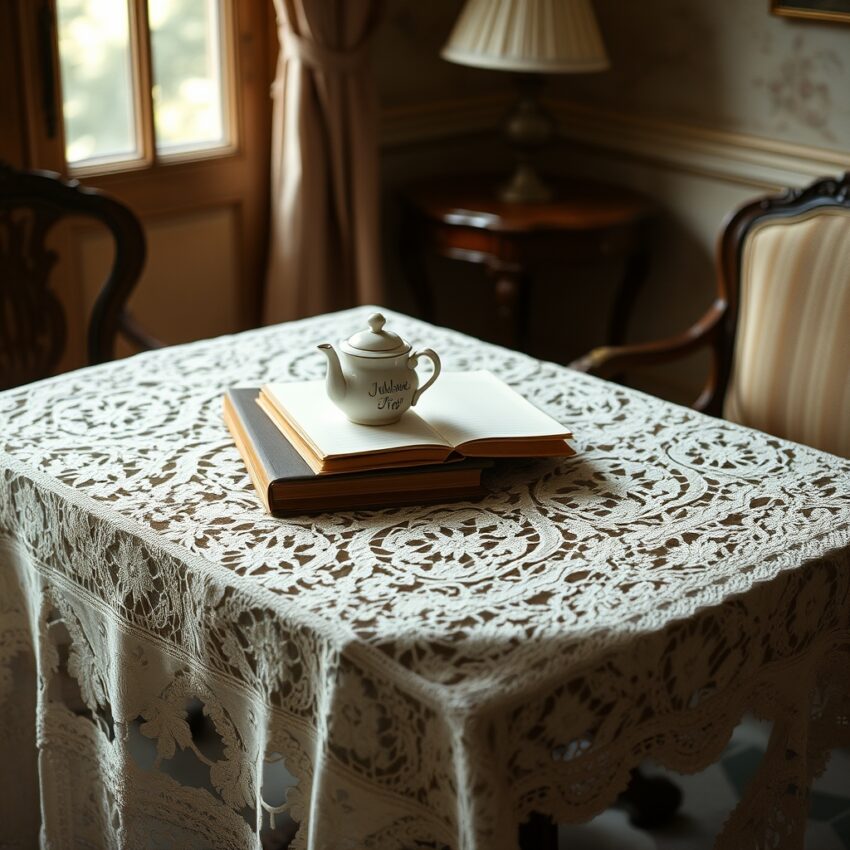
Bazı objeler evin en görünür yerinde durur ama varlığı, yokluğuyla anlaşılır. Ajurlu masa örtüsü tam da böyle bir eşikti. Salonun ortasındaki masaya serildiğinde kimse ona uzun uzun bakmazdı; çünkü aile fotoğrafı kadar doğal, saat kadar tanıdıktı. Fakat kaldırıldığında oda bir anda çıplak görünürdü. Nostalji meraklılarının bu örtüyü görür görmez duygulanmasının nedeni, yalnız dantel işçiliği değil; gündelik hayatın en sıradan anlarına sessizce eşlik etmiş olmasıdır.
Obje Hikayeleri perspektifinde ajur, ev içi estetik ile kullanım arasındaki ince dengeyi anlatır. Örtü hem korurdu hem süslerdi. Çay tepsisinden damlayan izleri, ders defterinin sert kenarını, misafir tabağının sıcaklığını taşırken masanın yüzeyini sakınırdı. Bir yandan da evin terbiyesini gösterirdi: düzenli, özenli, ama gösterişsiz. Bu yüzden ajurlu örtü, yalnız kumaş değil; bir kuşağın “evi toplu tutma” anlayışının maddi karşılığıydı.
Bu objenin hafızadaki parlaklığı, el emeğiyle kurduğu bağdan gelir. Birçok evde örtü satın alınsa bile kenar düzeltmesi, nişasta ayarı, ütü çizgisi evde tamamlanırdı. Bazı örtüler anneannenin sandığından çıkar, bazıları komşu tavsiyesiyle seçilirdi. Bayramdan bir gün önce örtünün değiştirilmesi küçük ama anlamlı bir tören sayılırdı. Çocuklar için bu değişim, “yarın misafir gelecek” bilgisinin en somut işaretiydi.
Gündelik kullanımın içinde görünmeden iz bırakması da tam burada başlar. Üstünde yapılan sohbetler, kâğıt oyunları, dikiş akşamları, okul ödevleri objenin dokusuna görünmez katmanlar ekler. Bir fincanın bıraktığı hafif halka, aceleyle silinen reçel lekesi ya da güneşten açılan ton farkı kusur değil, yaşamın izi olarak kalır. Nostalji gözünde parlayan şey pürüzsüzlük değil; tam tersine, kullanıldıkça derinleşen bu yaşanmışlık hissidir.
Bugünün hızlı iç mekân düzeninde masa örtüleri çoğu zaman dekor trendi olarak görünüp hızla değişiyor. Oysa ajurlu örtünün temsil ettiği kültür daha yavaştı: eşya sezonluk değil kuşaklıktı. Tamir edilir, kolalanır, gerektiğinde ters çevrilip yeniden kullanılırdı. Bu döngü, sürdürülebilirlik kelimesi moda olmadan önce var olan bir ev ekonomisini işaret eder. Obje, tüketim zincirinin değil bakım zincirinin parçasıydı.
Nostalji meraklılarının gözünde ajurlu örtünün hemen parlaması, geçmişin “büyük olaylarını” değil küçük düzenini hatırlatmasındandır. O örtü, evin merkezinde toplanan hayatı sessizce bir arada tutan altyapı gibiydi. Bugün bir vitrinde görüldüğünde ya da bir çekmeceden çıkarıldığında, insanlar yalnız bir tasarım öğesine bakmaz; aile ritmini, misafir hazırlığını, gündelik emeğin zarif yüzünü görür. Görünmeden bırakılan iz, tam da bu yüzden en kalıcı izdir.
Ajurlu örtüye bakıldığında parlayan şey, çoğu zaman nesnenin kendisinden önce o nesnenin çevresinde kurulmuş gündelik dikkat kültürü ve ev içi nezaketin yıllar boyunca birikmiş sessiz devamlılığı oluyor.
Nesne tarihine bu açıdan bakınca ajurlu örtü, tasarımın gündelik hayata karıştığında nasıl görünmeden karakter kazandığını ve bir evin duygusal iklimini yıllar boyunca sessizce taşıyabildiğini açıkça gösteriyor.
🇬🇧 English | The Quiet Shine of the Lace Tablecloth: Invisible Traces of Everyday Aesthetic Memory
Some objects sit in the most visible part of a home, yet their importance appears only when they are absent. The lace tablecloth is one of those thresholds. Spread across the central table, it rarely drew long attention because it felt as natural as a family portrait or a wall clock. But once removed, the room suddenly looked bare. What makes nostalgia lovers react instantly to it is not only craft detail, but its silent companionship with ordinary daily life.
Through the lens of object stories, lace shows the fine balance between domestic aesthetics and practical use. It protected and decorated at the same time. It carried tea drips, notebook edges, warm serving plates, while preserving the tabletop beneath. It also reflected household manners: orderly, careful, and modest rather than flashy. For that reason, the lace cloth was not merely fabric, but a material expression of a generation’s ethic of keeping a home dignified.
Its brightness in memory comes from its tie to hand labor. Even when purchased ready-made, final starching, edge correction, and ironing lines were often completed at home. Some cloths came from grandmothers’ chests, others from neighbor recommendations. Replacing the cloth one day before a holiday counted as a small but meaningful ritual. For children, that change signaled one clear message: guests are coming tomorrow.
Its invisible trace in everyday life begins exactly there. Conversations, card games, sewing evenings, and school homework all layered meaning into the fabric. A faint cup ring, a quickly cleaned jam mark, a sun-faded corner were not defects but evidence of lived time. In nostalgic perception, what shines is not perfection; it is the depth created by repeated use and care.
In today’s faster interior cycles, table coverings are often treated as trend items and replaced quickly. The culture represented by lace cloth was slower: objects were intergenerational, not seasonal. They were mended, starched, ironed, and reused from another side when needed. This routine points to a home economy that existed long before sustainability became a modern keyword. The object belonged to a chain of maintenance, not a chain of disposal.
That is why lace cloth lights up immediately in nostalgic eyes. It recalls not grand events, but the micro-order of daily life. It functioned like quiet infrastructure holding family rhythm together at the center of the house. Seen in a display or found in a drawer today, people are not just viewing a design artifact; they see guest preparations, shared meals, and the elegant face of routine labor. The most enduring mark is often the one left without noise.
🇧🇷 Português (Brasil) | O Brilho Silencioso da Toalha Rendilhada: Marcas Invisíveis da Memória Doméstica
Alguns objetos ficam no lugar mais visível da casa, mas sua importância aparece de verdade quando faltam. A toalha de mesa rendilhada é esse tipo de presença. Estendida no centro da sala, quase ninguém ficava observando por muito tempo, porque ela parecia natural como retrato de família ou relógio de parede. Mas, quando era retirada, o ambiente ficava subitamente “nu”. O que faz amantes de nostalgia se emocionarem ao vê-la não é só o desenho da renda, e sim sua companhia silenciosa no cotidiano.
Pela perspectiva de histórias de objetos, a renda mostra o equilíbrio entre estética e uso. A toalha enfeitava e protegia ao mesmo tempo. Recebia pingos de chá, bordas de caderno, calor de travessas, e preservava a superfície da mesa. Também comunicava um modo de cuidar da casa: organizado, atento e sem ostentação. Por isso, não era apenas tecido; era expressão material de uma geração que entendia o lar como espaço de zelo contínuo.
A força dessa lembrança vem do vínculo com o trabalho manual. Mesmo quando comprada pronta, a etapa final de engomar, ajustar borda e passar ferro era feita em casa. Algumas toalhas saíam do baú da avó, outras eram escolhidas por indicação de vizinha. Trocar a toalha na véspera de feriado era um pequeno ritual. Para as crianças, esse gesto dizia claramente: amanhã teremos visita.
As marcas invisíveis do uso diário começam aí. Conversas, jogos de cartas, noites de costura e dever de escola deixavam camadas de memória no tecido. Um círculo suave de xícara, uma mancha de geleia limpa às pressas, um canto desbotado pelo sol não eram defeitos; eram sinais de vida. Na nostalgia, o que brilha não é a perfeição, mas a textura do tempo vivido.
No ritmo atual de decoração, toalhas muitas vezes viram tendência passageira e são trocadas rápido. A cultura da toalha rendilhada era mais lenta: objeto de geração, não de estação. Consertava-se, engomava-se, virava-se do avesso quando necessário e continuava em uso. Esse ciclo revela uma economia doméstica existente antes de a palavra sustentabilidade virar moda. O objeto fazia parte de uma cadeia de cuidado, não de descarte.
Por isso ela acende imediatamente no olhar nostálgico. A toalha lembra menos os grandes acontecimentos e mais a organização íntima dos dias comuns. Funcionava como infraestrutura silenciosa que mantinha o ritmo da família no centro da casa. Hoje, numa vitrine ou gaveta, ninguém vê apenas design; vê preparação de visita, conversa longa e a elegância do trabalho cotidiano. A marca mais duradoura é justamente a que foi deixada sem chamar atenção.