🇹🇷 Türkçe | bayramlık yaprak sarma ve kalabalık aile sofralarının unutulmayan tadı: neden bugün bile ilk lokmada çocukluğu hatırlatıyor
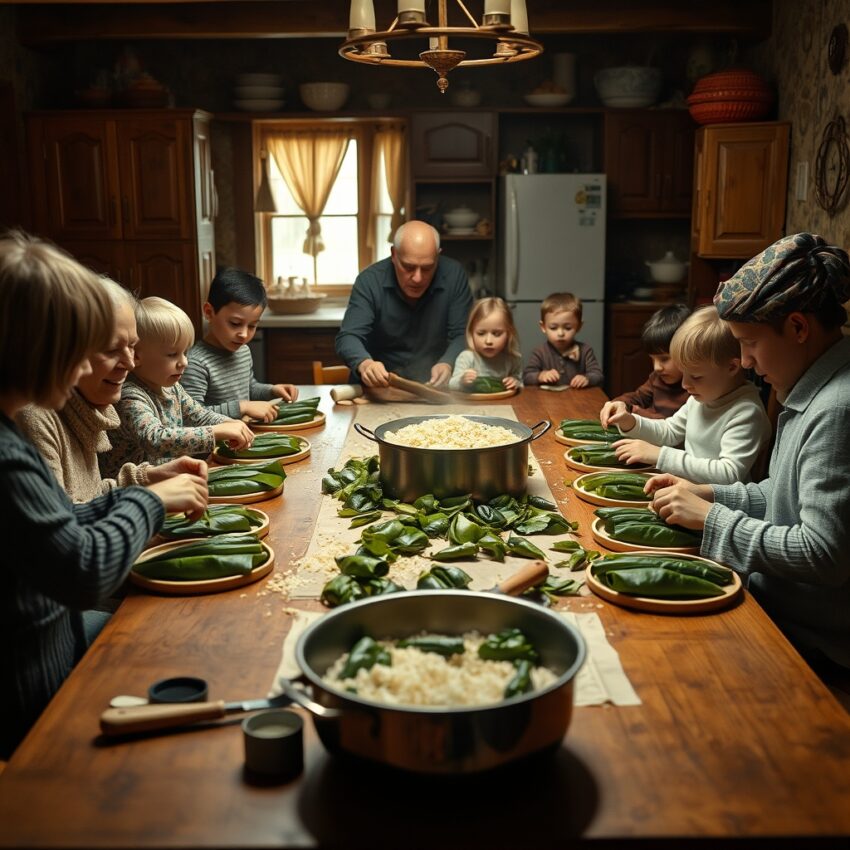
Bayram sabahına yaklaşırken evlerde yaprak sarma hazırlığı başlı başına bir telaş olurdu. Salamura yapraklar sudan geçirilir, iç harç büyük bir kapta yoğrulur, pirincin, soğanın, baharatın ve zeytinyağının kokusu mutfağa yayılırdı. Masanın etrafında birkaç kişi bir araya gelir; biri yaprağı açar, biri içi koyar, biri ince ince sarar, biri tencereye dizerdi. Çocuklar bazen kenarda izler, bazen küçük ve yamuk sarmalarıyla işe katıldığını sanırdı. Bayramlık yaprak sarma, yalnız bir yemek değil, sofradan önce başlayan aile beraberliğiydi.
Damak Hafızası açısından yaprak sarma, kalabalık aile sofralarının en güçlü hatırlatıcılarından biridir. İlk lokmada gelen ekşi, yağlı, baharatlı ve yaprak kokulu tat, insanı yalnız lezzete değil, o lezzetin hazırlandığı zamana götürür. Büyük tencerenin kapağı açıldığında yükselen buhar, bayram kıyafetlerinin hışırtısı, mutfaktan salona taşınan tabaklar ve misafirlerin geliş sesi aynı hafızada birleşir. Her ailenin sarması biraz farklı olurdu; kimi daha ekşi, kimi daha küçük, kimi daha bol baharatlı. Bu farklar, aile tarifinin imzası gibi kuşaktan kuşağa aktarılırdı.
Yaprak sarmanın çocukluğu hatırlatmasının nedeni, hazırlanışının çocukların gözünde büyülü bir emek sahnesi oluşturmasıdır. Aynı hareketin defalarca tekrarlanması, yaprakların avuç içinde şekil alması, tencereye dizilen sarmaların düzeni ve pişerken eve yayılan koku, çocuk hafızasına güçlü biçimde yerleşirdi. Büyükler sohbet ederken eller durmaz, tarifler ölçüden çok göz kararıyla yürürdü. Çocuk için bu, mutfağın gizli bilgisiydi. Bir gün kendisinin de aynı incelikle sarabileceğini düşünmek, aile zincirine dahil olmanın küçük bir hayaliydi.
Kalabalık sofralarda yaprak sarma, paylaşımın en pratik ve en zarif biçimlerinden biriydi. Herkesin tabağına birkaç tane konur, sonra isteyen yeniden uzanır, büyükler çocukların tabağında kalıp kalmadığını kontrol ederdi. Yanına yoğurt, limon ya da başka bayram yemekleri gelse de sarma sofranın merkezindeki hatıralı lezzetlerden biri olurdu. Bayram ziyaretleri sırasında bir tabak sarma komşuya gönderilir, dönüşte başka bir evden tatlı ya da börek gelirdi. Böylece yemek, aile sınırını aşar ve mahallenin bayram dolaşımına katılırdı.
Bugün bayramlık yaprak sarmanın ilk lokmada çocukluğu hatırlatması şaşırtıcı değildir. Çünkü o lokmanın içinde yalnız pirinç ve yaprak değil, masanın etrafında toplanan eller, bayram sabahının heyecanı ve kalabalık sofranın güveni vardır. Modern sofralar sadeleşse de bu tat, aile olmanın emekle kurulan tarafını canlı tutar. Yaprak sarma bize şunu hatırlatır: Bazı yemekler tariften çok ritüeldir; çocukluk da çoğu zaman ilk lokmada geri dönen o ortak mutfak ritüellerinin içinde saklıdır.
Sarmanın tencerede yan yana dizili hâli bile aile düzenine benzerdi. Küçük büyük herkesin emeği aynı kapta toplanır, piştikçe kokusu bütün eve yayılırdı. Bu yüzden bir tabak sarma, yalnız bayram ikramı değil, ev halkının birlikte yaptığı işin yenilebilir hatırasıydı.
🇬🇧 English | Holiday Grape-Leaf Rolls and the Unforgotten Taste of Crowded Family Tables: Why Does It Still Recall Childhood at the First Bite?
As a holiday morning approached, preparing grape-leaf rolls became a bustle in itself inside the home. Brined leaves were rinsed, the filling was mixed in a large bowl, and the scent of rice, onion, spices, and olive oil spread through the kitchen. Several people gathered around the table: one opened the leaf, one placed the filling, one rolled it thinly, and one arranged it in the pot. Children sometimes watched from the side and sometimes believed they had joined the work with their small, crooked rolls. Holiday grape-leaf rolls were not only a dish, but a family togetherness that began before the table was set.
From the perspective of taste memory, grape-leaf rolls are among the strongest reminders of crowded family tables. The sour, oily, spiced, leaf-scented taste that comes with the first bite carries a person not only to flavor, but to the time in which that flavor was prepared. The steam rising when the lid of the large pot opened, the rustle of holiday clothes, plates carried from kitchen to living room, and the sound of arriving guests merge within the same memory. Every family’s rolls were slightly different: some more sour, some smaller, some richer in spice. These differences passed from generation to generation like the signature of a family recipe.
The reason grape-leaf rolls recall childhood is that their preparation formed a magical scene of labor in children’s eyes. The same motion repeated again and again, leaves taking shape in the palm, the order of rolls arranged in the pot, and the smell filling the house while they cooked settled deeply into childhood memory. While elders talked, their hands did not stop, and recipes moved by judgment rather than measurement. For a child, this was the hidden knowledge of the kitchen. Imagining that one day they too would roll with the same delicacy was a small dream of entering the family chain.
At crowded tables, grape-leaf rolls were one of the most practical and elegant forms of sharing. A few were placed on everyone’s plate, then those who wanted reached again, while elders checked whether children still had some left. Even when yogurt, lemon, or other holiday dishes stood beside it, the roll remained one of the table’s most memorable tastes. During holiday visits, a plate of rolls might be sent to a neighbor, and another home might return sweets or pastry. Thus the dish crossed the border of the family and joined the holiday circulation of the neighborhood.
It is not surprising that holiday grape-leaf rolls recall childhood at the first bite today. That bite contains not only rice and leaves, but also the hands gathered around the table, the excitement of a holiday morning, and the safety of a crowded family meal. Even as modern tables grow simpler, this taste keeps alive the labor through which family is made. Grape-leaf rolls remind us that some foods are rituals more than recipes; childhood is often hidden inside those shared kitchen rituals that return with the first bite.
🇧🇷 Português (Brasil) | Charutos de Folha de Uva de Festa e o Sabor Inesquecível das Mesas Familiares Cheias: Por que Ainda Lembra a Infância na Primeira Mordida?
Quando a manhã de festa se aproximava, preparar charutos de folha de uva virava uma correria própria dentro de casa. As folhas em conserva eram lavadas, o recheio misturado numa grande tigela, e o cheiro de arroz, cebola, temperos e azeite se espalhava pela cozinha. Várias pessoas se reuniam em volta da mesa: uma abria a folha, outra colocava o recheio, outra enrolava fino, outra arrumava na panela. As crianças às vezes observavam de lado, às vezes achavam que participavam com seus rolinhos pequenos e tortos. O charuto de folha de uva de festa não era apenas comida, mas uma união familiar que começava antes da mesa ser posta.
Do ponto de vista da memória gustativa, o charuto de folha de uva é um dos lembretes mais fortes das mesas familiares cheias. O sabor azedo, oleoso, temperado e com cheiro de folha que chega na primeira mordida leva a pessoa não só ao gosto, mas ao tempo em que esse gosto era preparado. O vapor que subia quando a tampa da panela grande era aberta, o ruído das roupas de festa, os pratos levados da cozinha para a sala e o som das visitas chegando se juntam na mesma memória. O charuto de cada família era um pouco diferente: alguns mais azedos, outros menores, outros mais temperados. Essas diferenças passavam de geração em geração como assinatura da receita familiar.
O motivo de esse prato lembrar a infância está no fato de sua preparação formar, aos olhos das crianças, uma cena quase mágica de trabalho. O mesmo movimento repetido muitas vezes, as folhas tomando forma na palma da mão, a ordem dos rolinhos na panela e o cheiro enchendo a casa enquanto cozinhavam ficavam profundamente na memória infantil. Enquanto os mais velhos conversavam, as mãos não paravam, e as receitas seguiam mais pelo olhar do que pela medida. Para a criança, esse era o saber secreto da cozinha. Imaginar que um dia também enrolaria com a mesma delicadeza era um pequeno sonho de entrar na corrente da família.
Nas mesas cheias, o charuto de folha de uva era uma das formas mais práticas e elegantes de partilha. Alguns eram colocados no prato de cada um, depois quem queria pegava de novo, enquanto os mais velhos conferiam se ainda havia no prato das crianças. Mesmo com iogurte, limão ou outros pratos de festa ao lado, o charuto ficava entre os sabores mais lembrados da mesa. Nas visitas de festa, um prato podia ser enviado à vizinha, e outra casa mandava de volta doce ou salgado. Assim, a comida atravessava o limite da família e entrava na circulação festiva do bairro.
Não surpreende que hoje o charuto de folha de uva de festa lembre a infância na primeira mordida. Dentro dessa mordida não há apenas arroz e folha, mas as mãos reunidas em volta da mesa, a emoção da manhã de festa e a segurança de uma refeição cheia de família. Mesmo que as mesas modernas estejam mais simples, esse sabor mantém viva a parte trabalhosa e carinhosa de ser família. O charuto de folha de uva lembra que algumas comidas são mais rituais do que receitas; a infância muitas vezes está guardada nesses rituais de cozinha que voltam na primeira mordida.