🇹🇷 Türkçe | pirinç kapı tokmağı ve salon vitrininin en görünür köşesi: bir dönemin zevk anlayışını nasıl yansıttı
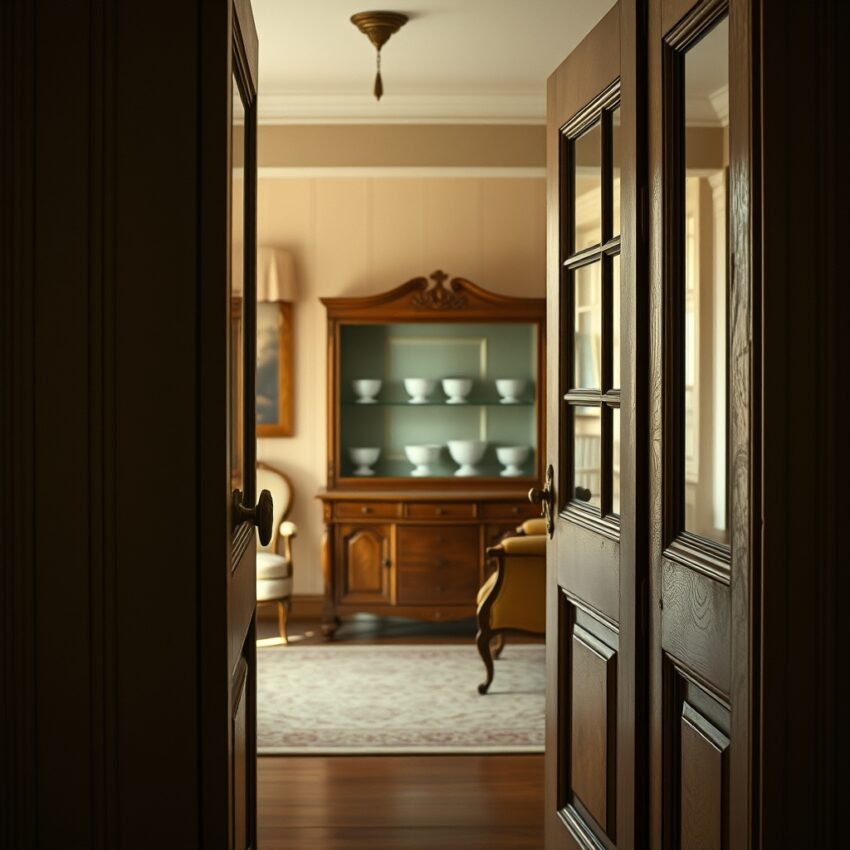
Eski evlerde zevk anlayışı çoğu zaman en yüksek sesle konuşan eşyalarda değil, en görünür yere konan küçük parıltılarda saklıydı. Bir kapının üstünde yıllarca el değmiş pirinç tokmak, eve girenin ilk karşılaştığı işaretti; salon vitrininin en görünür köşesinde duran fincan takımı, kristal kâse ya da aile yadigârı biblo ise evin iç dünyasını sessizce anlatırdı. Kapı dışarıya, vitrin içeriye dönük birer yüz gibiydi. Biri misafiri karşılar, diğeri ev sahibinin düzenini ve beğenisini gösterirdi. Bu yüzden pirinç kapı tokmağıyla salon vitrini, yalnız iki eşya değil, bir dönemin estetik terbiyesini taşıyan iki küçük sahneydi.
Obje Hikayeleri açısından pirinç tokmak, gündelik kullanım ile sembolik değer arasında duran özel bir nesneydi. Soğuk demir kapının üzerinde sıcak bir renk bırakır, her çalındığında evin içine metalik ama tanıdık bir ses taşırdı. Zamanla parlaklığı azalır, parmak izleri ve hava izleri üzerinde ince bir yaşanmışlık tabakası oluştururdu. Bazı evlerde tokmak özel günlerden önce ovulur, parlatılır, kapının yüzü misafire hazır hâle getirilirdi. Bu küçük bakım, ev sahibinin dışarıyla kurduğu saygılı ilişkinin parçasıydı. Kapı tokmağı tasarım olarak sade ya da süslü olabilir; ama her durumda evin eşiğinde duran bir nezaket dili kurardı.
Salon vitrini ise başka bir zevk dünyasını temsil ederdi. Cam kapakların arkasında saklanan porselenler, kahve fincanları, gümüş renkli şekerlikler, kesme cam kâseler ve kimi zaman uzak bir şehirden getirilmiş küçük hatıralar, yalnız dekorasyon sayılmazdı. Onlar aile hikâyesinin düzenlenmiş parçalarıydı. En görünür köşeye konan nesne çoğu zaman en pahalı olan değil, en çok anlam yüklenen parçaydı. Düğünde alınmış bir takım, ilk maaşla satın alınmış bir vazo ya da büyükanneden kalan bir şekerlik, evin zevkini aynı zamanda hatırayla birleştirirdi. Vitrin, sergilemenin yanı sıra korumayı da öğretirdi; çünkü güzel görünen şeyler gündelik telaşın uzağında, cam arkasında saklanırdı.
Bir dönemin zevk anlayışını bu iki nesne üzerinden okumak, gösterişle ölçülülük arasındaki ince çizgiyi anlamayı sağlar. Pirinç tokmak sokaktan görülecek kadar açıktaydı, ama bağırmazdı; salon vitrini misafire gösterilecek kadar özenliydi, ama evin bütününü ele geçirmezdi. Eski evlerde güzellik çoğu zaman düzen, temizlik, parlatılmış yüzey ve doğru yere konmuş eşya ile kurulurdu. Dantel örtünün kenarı, vitrin camının silinmiş izi, tokmağın parıltısı ve fincanların simetrisi, birlikte bir ev dili oluştururdu. Bu dil, insanların sınırlı imkânlarla da incelik kurabileceğini gösterirdi. Estetik, yalnız satın alınan şeyin değeri değil, ona ayrılan yer ve gösterilen bakım meselesiydi.
Bugün pirinç kapı tokmaklarına ya da eski salon vitrinlerine bakınca, geçmişin yalnız eşyalarını değil, kendini gösterme biçimini de görürüz. O dönemlerde ev, dışarıya karşı kapısıyla, içeriye karşı vitriniyle konuşurdu. Kapı tokmağı misafire “buyurun” demenin maddi hâliydi; vitrin ise aile hafızasının düzenlenmiş ve parlatılmış yüzüydü. Bir dönemin zevk anlayışı tam da bu iki eşya arasında, kamusal eşik ile özel salon arasında gidip gelirdi. Onları hatırlamak, sadece eski tasarımları sevmek değildir; gündelik hayatın içinde inceliğe, bakıma ve hatıraya ayrılan yeri yeniden fark etmektir.
🇬🇧 English | The Brass Door Knocker and the Most Visible Corner of the Living Room Display Cabinet: How It Reflected the Taste of an Era
In old homes, taste was often hidden not in the loudest objects, but in the small glimmers placed where they could be seen. A brass knocker touched by hands for years on the front door was the first sign encountered by anyone entering the house. A coffee set, crystal bowl, or family keepsake standing in the most visible corner of the living room display cabinet quietly described the inner world of the home. The door faced outward, while the cabinet faced inward like two different faces of the same house. One welcomed the guest, the other showed the order and preference of the host. For this reason, the brass door knocker and the living room cabinet were not merely two objects, but two small stages carrying the aesthetic discipline of an era.
From the perspective of object stories, the brass knocker was a special item standing between everyday use and symbolic value. It left a warm color on a cold iron door and carried a metallic yet familiar sound into the house whenever it was struck. Over time its shine faded, and fingerprints and weather formed a thin layer of lived experience on its surface. In some homes, the knocker was rubbed and polished before special days, preparing the face of the door for visitors. This small act of care was part of the respectful relationship the household formed with the outside world. A door knocker might be plain or ornate in design, but in every case it established a language of courtesy at the threshold.
The living room display cabinet represented another world of taste. Porcelain pieces, coffee cups, silver-colored sugar bowls, cut-glass dishes, and sometimes little souvenirs brought from distant cities were kept behind glass doors, yet they were not merely decorations. They were arranged fragments of family history. The object placed in the most visible corner was often not the most expensive one, but the one carrying the greatest meaning. A set received at a wedding, a vase bought with a first salary, or a sugar bowl inherited from a grandmother joined taste with memory. The cabinet taught not only display, but also preservation, because beautiful things were kept behind glass, away from the haste of daily life.
Reading the taste of an era through these two objects helps us understand the fine line between display and restraint. The brass knocker was visible enough to be seen from the street, yet it did not shout. The living room cabinet was careful enough to be shown to guests, yet it did not take over the whole home. In old houses, beauty was often built through order, cleanliness, polished surfaces, and objects placed correctly. The edge of a lace cloth, the wiped trace of cabinet glass, the shine of the knocker, and the symmetry of cups formed a household language together. That language showed that refinement could be created even with limited means. Aesthetic value was not only the price of what was purchased, but the place given to it and the care shown toward it.
When we look today at brass door knockers or old living room cabinets, we see not only the objects of the past, but also a way of presenting the self. In those years, a home spoke to the outside through its door and to the inside through its cabinet. The knocker was the material form of saying “welcome” to the guest, while the cabinet was the arranged and polished face of family memory. The taste of an era moved precisely between these two objects, between the public threshold and the private living room. To remember them is not simply to admire old designs. It is to notice again the place once given to refinement, care, and memory within everyday life.
🇧🇷 Português (Brasil) | A Aldrava de Latão e o Canto Mais Visível da Cristaleira da Sala: Como Refletiu o Gosto de uma Época
Nas casas antigas, o gosto muitas vezes não estava nos objetos que falavam mais alto, mas nos pequenos brilhos colocados nos lugares mais visíveis. A aldrava de latão tocada por mãos durante anos na porta era o primeiro sinal encontrado por quem chegava. Já o jogo de xícaras, a tigela de cristal ou o bibelô de família no canto mais visível da cristaleira da sala descreviam em silêncio o mundo interior da casa. A porta se voltava para fora, a cristaleira para dentro, como dois rostos da mesma morada. Uma recebia a visita; a outra mostrava a ordem e a preferência dos donos. Por isso, a aldrava de latão e a cristaleira da sala não eram apenas dois objetos, mas dois pequenos palcos da educação estética de uma época.
Do ponto de vista das histórias de objetos, a aldrava de latão era uma peça especial entre o uso cotidiano e o valor simbólico. Ela deixava uma cor quente sobre a porta fria de ferro e levava para dentro da casa um som metálico, mas familiar, sempre que era batida. Com o tempo, seu brilho diminuía, e marcas de dedos e de clima formavam uma fina camada de vida sobre a superfície. Em algumas casas, a aldrava era esfregada e polida antes de dias especiais, deixando o rosto da porta pronto para a visita. Esse pequeno cuidado fazia parte da relação respeitosa da casa com o mundo exterior. A aldrava podia ser simples ou enfeitada, mas sempre criava uma linguagem de gentileza no limiar.
A cristaleira da sala representava outro universo de gosto. Porcelanas, xícaras de café, açucareiros prateados, tigelas de vidro lapidado e às vezes pequenas lembranças trazidas de uma cidade distante ficavam atrás das portas de vidro, mas não eram apenas decoração. Eram pedaços organizados da história familiar. O objeto colocado no canto mais visível muitas vezes não era o mais caro, e sim o mais carregado de sentido. Um jogo recebido no casamento, um vaso comprado com o primeiro salário ou um açucareiro herdado da avó unia o gosto à memória. A cristaleira ensinava não só a mostrar, mas também a preservar, porque as coisas bonitas ficavam protegidas atrás do vidro, longe da pressa diária.
Ler o gosto de uma época por meio desses dois objetos ajuda a entender a linha fina entre exibição e medida. A aldrava de latão era aberta o bastante para ser vista da rua, mas não gritava. A cristaleira era cuidadosa o bastante para ser mostrada às visitas, mas não tomava conta da casa inteira. Nas casas antigas, a beleza muitas vezes era criada por ordem, limpeza, superfícies polidas e objetos colocados no lugar certo. A borda da toalha de renda, o vidro limpo da cristaleira, o brilho da aldrava e a simetria das xícaras formavam juntos uma linguagem doméstica. Essa linguagem mostrava que era possível criar delicadeza mesmo com recursos limitados. O valor estético não estava só no preço do que se comprava, mas no lugar dado ao objeto e no cuidado dedicado a ele.
Quando hoje olhamos para aldravas de latão ou antigas cristaleiras de sala, vemos não apenas objetos do passado, mas também uma maneira de se apresentar. Naqueles tempos, a casa falava com o lado de fora por meio da porta e com o lado de dentro por meio da vitrine. A aldrava era a forma material de dizer “entre” à visita; a cristaleira era o rosto organizado e polido da memória familiar. O gosto de uma época circulava justamente entre esses dois objetos, entre o limiar público e a sala privada. Lembrá-los não é apenas gostar de desenhos antigos. É perceber de novo o espaço que a vida cotidiana reservava à delicadeza, ao cuidado e à lembrança.