🇹🇷 Türkçe | kış gecelerinde bahçe duvarından sarkan erik dalları neden eski mahallelerin en sıcak sahnesiydi
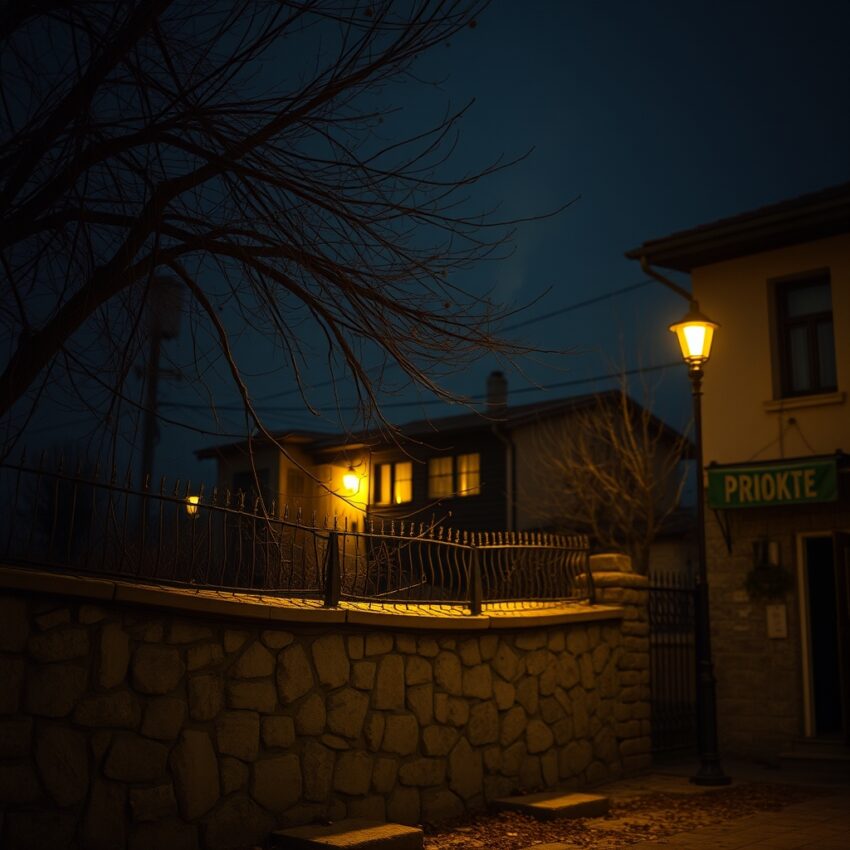
Eski mahallelerin sıcaklığı her zaman sobanın içinden gelmezdi; bazen sokakta yürürken karşına çıkan küçük bir görüntü bütün geceyi yumuşatmaya yeterdi. Kış akşamlarında yüksek olmayan bahçe duvarlarının üzerinden sarkan erik dalları tam da böyle bir sahneydi. Yaprakları çoktan dökülmüş, ince gövdeleri ayaza karşı koymuş bu dallar, sarı sokak lambasının altında hem çıplak hem de davetkâr görünürdü. Arkalarında çoğu zaman tek katlı ya da cumbalı bir evin ışığı yanar, mutfaktan buhar, salondan konuşma sesi, kapı aralığından kömür kokusu sokağa karışırdı. Dalın kendisi belki meyvesizdi ama taşıdığı görüntü, ev içi sıcaklıkla sokak serinliği arasında kurulan görünmez bağı temsil ederdi. Bu yüzden o manzara, eski mahallelerin en sıcak sahnelerinden biri olarak hafızada kaldı.
Mahalle Kültürü içinde bahçe duvarı, özel hayat ile kamusal alan arasındaki en nazik sınırlardan biriydi. Ne bütünüyle kapalıydı ne de bütünüyle açıktı. Duvarın üzerinden sarkan bir dal, “burada bir ev hayatı var” demenin en yumuşak biçimiydi. Kış gecelerinde sokaktan geçen biri, o dal sayesinde içeride bir soba yandığını, belki mutfakta çorba kaynadığını, belki çocukların ödev başında olduğunu hayal ederdi. Eski mahallelerde komşuluk çoğu zaman tam da böyle dolaylı işaretlerle kurulurdu. Herkes birbirinin kapısını çalmazdı belki, ama herkes birbirinin ışığını, dumanını, ağaç gölgesini ve mevsimlik sesini bilirdi. Erik dalı, bu sessiz tanışıklığın en şiirsel parçalarından biriydi.
Bu sahnenin sıcaklığı biraz da mevsimlerin eski şehir hayatında bugünkünden daha belirgin yaşanmasından geliyordu. Kış gerçekten sokakta hissedilir, eve dönme isteği bedende açıkça duyulurdu. Eller ceplerde yürünür, atkılar boyna sıkı sarılır, bakkaldan alınan ekmek kâğıt torbasında elde taşınırdı. Tam o sırada bir bahçe duvarının üstünden eğilen erik dalı, mahalleyi yalnız doğal bir ayrıntıyla değil, bir ev vaadiyle tamamlar gibiydi. O dalın arkasında bir aile düzeni, akşam yemeği, demli çay ya da sobanın üstünde kabaran kestane ihtimali vardı. İnsan bazen görmediği şeyin sıcaklığını daha derinden hisseder. Eski mahalleler, tam da bu görünmeyeni sezdirme becerisi sayesinde iç burkutan bir yakınlık taşırdı.
Erik ağacının seçilmiş bir ağaç olması da boşuna değildir. Baharda çiçeğiyle, yaz sonunda meyvesiyle tanınan bu ağaç, kışın yapraksız hâliyle bile canlı bir hafıza taşır. Mevsim dönüşlerini görünür kılan, çocukların tırmandığı, annelerin dallarına göz koyduğu, komşuların “bu yıl erken açtı” diye konuştuğu ağaçlardan biridir. Kış gecesinde duvardan sarkan çıplak dal, yalnız o anı değil, ağacın bütün yıl boyunca mahalleyle kurduğu ilişkiyi de çağırır. Bu nedenle bakıldığında sadece soğuk bir dal görülmez; geçmiş ilkbaharlar, yaz meyveleri ve gelecek tomurcuklar da hissedilir. Sıcaklık biraz da bu süreklilik duygusundan doğar.
Bugün apartman duvarları yükselip bahçeler azalmış olsa da, eski mahalleleri hatırlatan şeylerden biri hâlâ bu küçük sahnedir. Çünkü o dal, komşuluğun gösterişsiz tarafını anlatır: Kendini sergilemeden var olan sıcaklık. Kimse onu özel olarak düzenlemez, kimse altına tabela koymaz, ama oradan geçen herkes içten içe aynı duyguyu alır. Bir evin sokağa taşan en sessiz selamıdır sanki. Kış gecelerinde bahçe duvarından sarkan erik dallarının en sıcak sahne olarak hatırlanması bu yüzden tesadüf değildir. Onlar, eski mahallelerin insanı yalnız barındıran değil, uzaktan da ısıtan yerler olduğunu anlatan canlı işaretlerdi.
🇬🇧 English | Why Were the Plum Branches Hanging Over the Garden Wall on Winter Nights the Warmest Scene of Old Neighborhoods?
The warmth of old neighborhoods did not always come from the stove alone. Sometimes a small image encountered while walking down the street was enough to soften the whole night. The plum branches hanging over low garden walls on winter evenings were exactly such a scene. Their leaves long fallen, their slender bodies holding against the frost, those branches looked both bare and inviting beneath the yellow streetlamp. Behind them there was often the lit window of a one-story or bay-fronted house, steam rising from the kitchen, the sound of conversation from the sitting room, and the smell of coal drifting out through a half-open door. The branch itself might hold no fruit, yet the image it carried represented the invisible bond between domestic warmth and the chill of the street. That is why it remained in memory as one of the warmest scenes of old neighborhoods.
Within neighborhood culture, the garden wall was one of the gentlest boundaries between private life and public space. It was never fully closed, yet never entirely open. A branch leaning over the top was the softest way of saying: a household lives here. A passerby on a winter night could imagine, through that branch alone, that a stove was burning inside, soup was simmering in the kitchen, or children were bent over homework. In old neighborhoods, neighborliness was often built through just such indirect signs. People did not always knock on one another’s doors, yet they knew one another’s lights, smoke, tree shadows, and seasonal sounds. The plum branch was one of the most poetic parts of that silent familiarity.
Part of the warmth of the scene came from the fact that seasons were once felt more distinctly in city life than they often are today. Winter was sensed directly in the street, and the desire to return home could be felt clearly in the body. Hands were tucked into pockets, scarves were wrapped tight, and bread bought from the grocer was carried in a paper bag through the cold. At just such a moment, a plum branch bending over a garden wall seemed to complete the neighborhood not only with a natural detail, but with a promise of home. Behind it lay the possibility of an ordered household, an evening meal, strong tea, or chestnuts swelling on top of a stove. Often people feel the warmth of what they cannot fully see more deeply than what is visible. Old neighborhoods carried their bittersweet closeness through exactly this ability to suggest rather than display.
It is no coincidence that the plum tree held this role. Known in spring for its blossoms and in late summer for its fruit, it carried a living memory even in winter when stripped of leaves. It was one of those trees that made the passing of seasons visible, that children climbed, mothers watched, and neighbors commented on by saying it bloomed early that year. A bare winter branch hanging over a wall did not call up only that moment. It evoked the tree’s relationship with the neighborhood across the entire year. Looking at it, one saw not merely a cold branch, but sensed former springs, summer fruit, and buds yet to come. Part of the warmth came from that feeling of continuity.
Today apartment walls are higher and gardens fewer, yet one of the images that still recalls old neighborhoods is this modest scene. The branch describes the unshowy side of neighborliness: a warmth that exists without displaying itself. No one arranges it deliberately, no one places a sign beneath it, yet everyone passing by receives the same inward impression. It is like the quietest greeting a home can offer to the street. That is why plum branches hanging from garden walls on winter nights are remembered as the warmest scene. They were living signs that old neighborhoods did not merely shelter people, but warmed them from a distance.
🇧🇷 Português (Brasil) | Por Que os Galhos de Ameixeira que se Estendiam Sobre o Muro do Jardim nas Noites de Inverno Eram a Cena Mais Acolhedora dos Bairros Antigos?
A acolhida dos bairros antigos nem sempre vinha apenas do fogão ou do braseiro. Às vezes bastava uma pequena cena encontrada na rua para suavizar a noite inteira. Os galhos de ameixeira que se estendiam sobre os muros baixos dos jardins nas noites de inverno eram exatamente assim. Sem folhas, resistindo à geada, eles pareciam ao mesmo tempo nus e convidativos sob a luz amarelada do poste. Atrás deles geralmente havia a janela acesa de uma casa térrea ou com sacada, vapor saindo da cozinha, vozes vindas da sala e cheiro de carvão escapando pela porta entreaberta. O galho talvez não tivesse fruto algum, mas a imagem que carregava representava a ligação invisível entre o calor da casa e o frio da rua. Por isso permaneceu na memória como uma das cenas mais acolhedoras dos bairros antigos.
Na cultura do bairro, o muro do jardim era uma das fronteiras mais delicadas entre a vida privada e o espaço comum. Não era completamente fechado, mas também não era inteiramente aberto. Um galho passando por cima dele era a forma mais suave de dizer: aqui existe uma casa viva. Quem passava por ali numa noite de inverno podia imaginar, só por causa daquele galho, que havia um fogo aceso, uma sopa fervendo na cozinha ou crianças fazendo lição. Nos bairros antigos, a boa vizinhança se construía muitas vezes por sinais indiretos como esses. Nem todos batiam à porta uns dos outros, mas todos reconheciam a luz, a fumaça, a sombra das árvores e os sons de estação de cada casa. O galho da ameixeira era uma das partes mais poéticas dessa familiaridade silenciosa.
Parte do calor dessa cena vinha do fato de que as estações eram sentidas de modo mais nítido na vida urbana de antes. O inverno se percebia diretamente na rua, e a vontade de voltar para casa aparecia no corpo com clareza. As mãos iam para os bolsos, o cachecol apertava o pescoço, e o pão comprado na mercearia era levado em saco de papel. Nesse instante, um galho de ameixeira inclinado sobre o muro parecia completar o bairro não só com um detalhe natural, mas com uma promessa de casa. Atrás dele havia a possibilidade de uma família reunida, do jantar da noite, do chá forte ou das castanhas assando sobre o fogão. Muitas vezes se sente com mais intensidade o calor daquilo que não se vê totalmente. Os bairros antigos guardavam justamente essa proximidade melancólica por saber sugerir mais do que mostrar.
A escolha da ameixeira também não é casual. Conhecida pelas flores da primavera e pelos frutos do fim do verão, ela carrega uma memória viva mesmo no inverno sem folhas. É uma árvore que torna visível a passagem das estações, que as crianças escalavam, as mães observavam e os vizinhos comentavam dizendo que naquele ano floresceu cedo. O galho nu que passa por cima do muro numa noite fria não chama apenas aquele momento. Ele evoca a relação da árvore com o bairro durante o ano inteiro. Ao olhar para ele, não se vê somente um ramo frio, mas também se pressentem primaveras passadas, frutos do verão e brotos que ainda virão. Parte do acolhimento nasce dessa sensação de continuidade.
Hoje os muros dos prédios são mais altos e os jardins mais raros, mas uma das imagens que ainda faz lembrar os bairros antigos é justamente essa pequena cena. O galho fala do lado menos exibido da vizinhança: um calor que existe sem se mostrar. Ninguém o organiza de propósito, ninguém põe uma placa sob ele, mas quem passa recebe por dentro a mesma impressão. É como a saudação mais silenciosa que uma casa pode oferecer à rua. Por isso os galhos de ameixeira que se estendiam sobre o muro nas noites de inverno ficaram na memória como a cena mais acolhedora. Eles eram sinais vivos de que os bairros antigos não apenas abrigavam as pessoas, mas também as aqueciam à distância.