🇹🇷 Türkçe | fırın sütlaç günleri: bir dönemin paylaşma kültürünü nasıl taşıyor
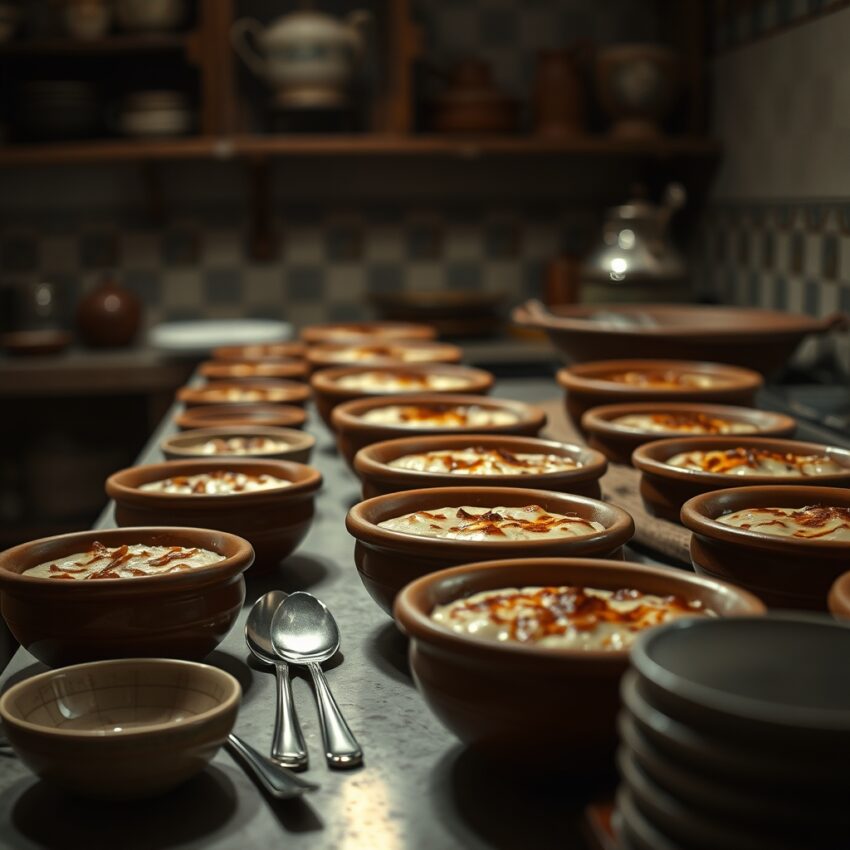
Bazı tatlılar yalnız kaşıkla yenmez; evden eve dolaşan bir niyet gibi yaşar. Fırın sütlaç da böyleydi. Üstü hafifçe yanmış, kenarları ince bir kabuk tutmuş toprak kaplar tepsiye dizildiğinde, mutfağın havası yalnız vanilya ve süt kokusuyla değil, paylaşılacak bir şeyin yaklaşmasıyla da değişirdi. Sütlaç günü çoğu evde sıradan bir tatlı hazırlığından daha fazlasını anlatırdı. Tencerenin başında karıştırılan pirinç, kaynayan süt ve kıvamı tutturma telaşı kadar, “birkaç kâse komşuya da çıkar” düşüncesi de tarifin parçasıydı. Bu yüzden fırın sütlaç, eski mutfaklarda sadece lezzet değil; ölçülü ikramın, komşuluğun ve ev içi cömertliğin de adıydı.
Damak Hafızası bakımından fırın sütlacın güçlü yeri, gündelikle özel olanı aynı tabakta buluşturmasından gelir. Malzemesi gösterişli değildir: süt, pirinç, şeker, biraz nişasta, belki vanilya. Ama pişirme biçimi ve sunuluşu ona törensel bir hava verir. Özellikle fırına verilip üstü kızartıldığında, evin içinde “bugün başka bir şey var” duygusu oluşurdu. Aile sofralarında yemeğin ardından gelmesi, akşam misafirliğinde küçük tabaklarla dolaştırılması ya da çocuklar için buzdolabında soğumaya bırakılırken bile göz hapsinde tutulması, onun yalnız bir tarif değil, zaman ayarlayan bir tatlı olduğunu gösterir. Bir dönemin paylaşma kültürü tam da bu tür tatlarda görünür olur; çünkü ikramın ölçüsü, ev ekonomisiyle birlikte düşünülür ama eli daraltmaz.
Fırın sütlaç günlerinin paylaşma kültürünü taşıması biraz da porsiyon mantığından kaynaklanır. Tepside pişen tek bir büyük tatlı yerine, ayrı kaplara bölünen sütlaç her bir kişinin payını baştan düşünür. Bu pratik ayrım, evdeki herkese ve kapı komşusuna uzanabilecek bir dağıtım fikri yaratır. Kimi evde bir kap hasta komşuya gider, kimi evde üst kata yeni taşınan aileye, kimi zaman da akşam çaya gelecek misafir için önceden ayrılırdı. Tatlının kendisi sade olsa da, etrafında kurulan dolaşım zengindi. Kaşığın tencereye değme sesi, fırından çıkan kapların tezgâhta dizilişi, üzerine serpilen tarçın ya da bırakılan yalın kızarmış yüzey; bütün bunlar evin paylaşma dilini görünür kılardı. Sütlaç, çoğu zaman sessiz bir “sizi de düşündük” cümlesi gibi dolaşırdı mahallede.
Eski mutfak kültüründe bu tatlının ayrı bir yeri olmasının nedeni, israf etmeyen ama eksik de bırakmayan ev anlayışıyla uyumlu olmasıdır. Sütlacın bereket hissi, malzemenin pahalı oluşundan değil, iyi ayarlanan ölçülerden gelirdi. Büyük tencerede taşmadan pişmesi, kıvamının sabırla kurulması, kaplara dengeli paylaştırılması ve fırında üstlerinin aynı özenle kızartılması; bunların hepsi mutfakta görünen bir disiplin kadar görünmeyen bir ahlakı da taşırdı. Çocuklara “önce soğusun” denmesi, misafir gelmeden tabaklara kaşık konması, birkaç kabın özellikle sonraki güne ayrılması, ev içinde zamanı ve ikramı yönetmenin incelikli yollarıydı. Fırın sütlaç günü, aile sofrasının ötesine geçen bir ev terbiyesi sahnesi kurardı.
Bugün fırın sütlaç neden bir dönemin paylaşma kültürünü hatırlatıyor diye sorduğumuzda, cevabı tatlının sadeliğinde ve dolaşımında buluruz. O, büyük gösteriler istemeden ev sıcaklığı üretebilen, bir tepsiden çok sayıda küçük sevinç çıkarabilen tatlardan biridir. İnsanlar yalnız yiyerek değil, birbirine götürerek, soğumasını bekleyerek, kapları geri alırken yeni cümleler kurarak bu kültürü yaşatırdı. Fırın sütlaç günleri bu yüzden sadece damakta kalmaz; komşulukta, mutfak düzeninde ve aile hafızasında da yaşar. Eski bir dönemin paylaşma kültürünü taşıyan şey bazen tam olarak budur: kaşığın dibinde kalan son lokmadan çok, o lokmanın kimlerle bölüşüldüğünü hatırlamak.
🇬🇧 English | Oven-Baked Rice Pudding Days: How Does It Carry the Sharing Culture of an Era?
Some desserts are not eaten only with a spoon. They live like an intention moving from one home to another. Oven-baked rice pudding was exactly like that. When the earthen bowls with their lightly browned tops and thin crusted edges were lined up on a tray, the atmosphere of the kitchen changed not only because of the smell of milk and vanilla, but because something meant to be shared was approaching. In many homes, rice pudding day meant more than preparing a sweet. Alongside the stirring of rice, boiling milk, and the careful search for the right consistency, there was always the thought that a few bowls should be sent to the neighbors. For that reason, oven-baked rice pudding in older kitchens stood not only for flavor, but also for measured hospitality, neighborliness, and domestic generosity.
In the memory of taste, its strong place comes from the way it brought the everyday and the special together on the same plate. Its ingredients were not extravagant: milk, rice, sugar, a little starch, perhaps some vanilla. Yet the way it was cooked and served gave it a ceremonial air. Especially once it was placed in the oven and its surface browned, a feeling spread through the house that “today there is something different.” It appeared after dinner at family tables, was carried in small bowls when guests came in the evening, and even when left to cool in the refrigerator for children, it remained under close watch. All this shows that it was not merely a recipe, but a dessert that organized time. The sharing culture of an era becomes visible in exactly such foods, because the measure of hospitality is considered together with household economy, yet never reduced by it.
Part of the reason rice pudding days carried a culture of sharing lies in the logic of portioning. Instead of one large dessert baked in a single tray, the pudding was divided into individual bowls, making each person’s share visible from the beginning. That practical division created the idea of distribution reaching everyone in the house and even the next-door neighbor. In some homes one bowl went to an ill neighbor, in others to a newly moved family upstairs, and sometimes a few were set aside in advance for evening guests. The dessert itself was simple, but the circulation around it was rich. The sound of the spoon touching the pot, the bowls lined up on the counter after coming from the oven, the cinnamon sprinkled above or the plain browned surface left untouched, all made the house’s language of sharing visible. Rice pudding often moved through the neighborhood like a quiet sentence saying, “we thought of you too.”
Its special place in older kitchen culture also came from how well it suited a domestic understanding that avoided waste without ever feeling stingy. The sense of abundance in rice pudding did not come from expensive ingredients, but from well-measured proportions. Letting it cook in a large pot without overflowing, building its consistency patiently, dividing it evenly into bowls, and browning the tops with equal care carried not only visible discipline in the kitchen, but an invisible ethic as well. Telling children to wait until it cooled, placing spoons beside the bowls before guests arrived, and reserving several portions especially for the next day were refined ways of managing time and hospitality inside the home. Rice pudding day created a scene of domestic manners that extended beyond the family table.
When we ask today why oven-baked rice pudding reminds us of an era’s sharing culture, the answer lies in both its simplicity and its circulation. It is one of those desserts capable of producing warmth without any grand display and of drawing many small joys from a single tray. People kept that culture alive not only by eating it, but by carrying it to others, by waiting for it to cool, and by starting new conversations when the bowls were returned. Rice pudding days therefore remain not only on the palate, but in neighborly relations, kitchen order, and family memory. Sometimes what carries the sharing culture of an older era is exactly this: not the last spoonful left at the bottom, but the memory of with whom that spoonful was shared.
🇧🇷 Português (Brasil) | Dias de Arroz-Doce de Forno: Como Carregam a Cultura de Partilha de uma Época?
Algumas sobremesas não são comidas apenas com colher. Elas vivem como uma intenção que circula de casa em casa. O arroz-doce de forno era exatamente assim. Quando os potinhos de barro, com a superfície levemente tostada e as bordas formando uma crosta fina, eram alinhados na assadeira, o ar da cozinha mudava não só pelo cheiro de leite e baunilha, mas também pela proximidade de algo feito para ser compartilhado. Em muitas casas, o dia do arroz-doce significava mais do que preparar um doce. Junto com o arroz sendo mexido, o leite fervendo e o cuidado para acertar o ponto, vinha também a ideia de separar algumas tigelas para os vizinhos. Por isso o arroz-doce de forno, nas cozinhas antigas, representava não apenas sabor, mas também hospitalidade medida, vizinhança e generosidade doméstica.
Na memória do paladar, sua força vem de juntar o cotidiano e o especial no mesmo prato. Os ingredientes não eram extravagantes: leite, arroz, açúcar, um pouco de amido, talvez baunilha. Mas o modo de preparo e de servir dava a ele um ar de pequena cerimônia. Especialmente quando ia ao forno e ganhava a camada dourada por cima, espalhava-se pela casa a sensação de que “hoje tem algo diferente”. Ele aparecia no fim da refeição em família, circulava em pequenas tigelas quando chegavam visitas e, mesmo quando ficava esfriando na geladeira para as crianças, continuava sendo vigiado de perto. Tudo isso mostra que não era apenas uma receita, mas uma sobremesa que organizava o tempo. A cultura de partilha de uma época aparece justamente em comidas assim, porque a medida da oferta é pensada junto com a economia da casa, sem nunca ficar mesquinha.
Parte da razão de os dias de arroz-doce de forno carregarem essa cultura de partilha está na lógica das porções. Em vez de um doce grande servido de um único recipiente, ele já nascia dividido em potes individuais, tornando visível desde o início a parte de cada pessoa. Essa divisão prática criava uma ideia de distribuição que podia alcançar todos da casa e também o vizinho da porta ao lado. Em algumas casas, um pote ia para a vizinha doente; em outras, para a família que acabara de se mudar para o andar de cima; às vezes alguns eram reservados para a visita da noite. A sobremesa em si era simples, mas a circulação em torno dela era rica. O som da colher no tacho, os potes alinhados na bancada depois de saírem do forno, a canela por cima ou a superfície dourada deixada lisa, tudo tornava visível a linguagem de partilha da casa. O arroz-doce circulava pelo bairro como uma frase silenciosa dizendo: “lembramos de vocês também”.
Seu lugar especial na antiga cultura da cozinha vinha ainda do fato de combinar com uma ideia de lar que evitava desperdício sem jamais parecer pobre. A sensação de fartura do arroz-doce não vinha de ingredientes caros, mas de medidas bem conduzidas. Cozinhar sem deixar transbordar, construir o ponto com paciência, repartir de forma equilibrada nos potes e dourar todas as superfícies com o mesmo cuidado carregava não apenas uma disciplina visível, mas também uma ética invisível. Dizer às crianças para esperar esfriar, deixar as colheres preparadas antes de a visita chegar e separar algumas porções para o dia seguinte eram formas refinadas de administrar o tempo e a hospitalidade dentro da casa. O dia do arroz-doce de forno criava uma cena de educação doméstica que ia além da mesa da família.
Quando perguntamos hoje por que o arroz-doce de forno lembra a cultura de partilha de uma época, a resposta está na sua simplicidade e na sua circulação. É uma dessas sobremesas capazes de produzir calor sem precisar de grande exibição e de tirar muitas pequenas alegrias de uma única assadeira. As pessoas mantinham viva essa cultura não apenas ao comer, mas ao levar o doce para outros, ao esperar que esfriasse e ao retomar a conversa quando os potes voltavam. Por isso os dias de arroz-doce de forno permanecem não só no paladar, mas também na vizinhança, na ordem da cozinha e na memória familiar. Às vezes, o que carrega a cultura de partilha de um tempo antigo é exatamente isso: não a última colher no fundo do pote, mas a lembrança de com quem ela foi dividida.