🇹🇷 Türkçe | okul çıkışı gazoz molası ile geçen saatler mahalle esnafıyla bağı nasıl güçlendirdi
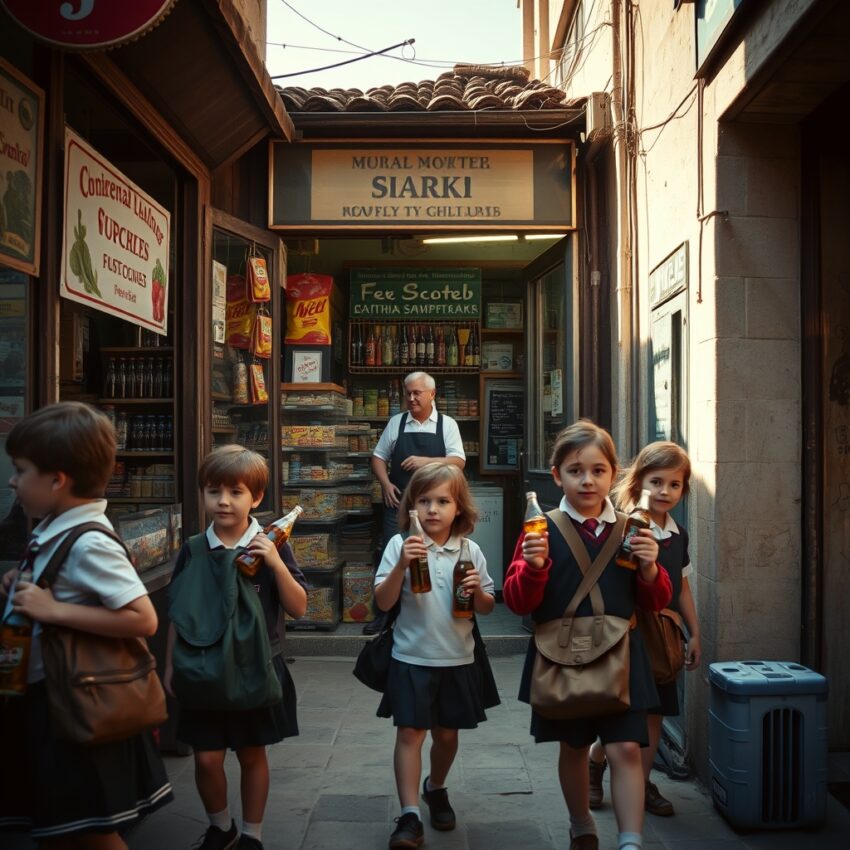
Bir zamanlar okul çıkışı eve dönmek, bugünkü gibi doğruca apartman kapısına yönelen kısa bir geçiş değildi. Çantalar omuzda biraz kayar, önlüklerin düğmeleri gevşer, günün yorgunluğu daha sokağın başında oyun isteğine dönüşürdü. O saatlerde mahallenin bakkalı, büfesi ya da küçük gazoz dolabı olan dükkânı çocuklar için yalnız alışveriş yapılan yer değil, günün ikinci durağı olurdu. Cam şişelerin buğulu yüzeyi, kapağın açılırken çıkardığı ses ve dükkân önünde birkaç dakikalık oyalanma, okul ile ev arasındaki zamanı bambaşka bir anlamla doldururdu. Gazoz molası dediğimiz şey, aslında çocukluğun sokakta uzamasına izin veren küçük bir toplumsal ara zamandı.
Mahalle Kültürü açısından bakıldığında bu molalar, esnaf ile çocuklar ve aileler arasında kurulan güven ilişkisinin görünür parçalarından biriydi. Mahalle bakkalı çoğu zaman yalnız mal satan kişi değil; kimin hangi evden olduğunu, hangi çocuğun neyi sevdiğini, kimin veresiye defterine ne yazıldığını bilen hafıza taşıyıcısıydı. Okul çıkışı dükkân önünde toplanan çocuklar, yalnız gazoz içmez; aynı zamanda mahallenin yetişkin dünyasına güvenli bir mesafeden katılırdı. Esnaf “evdekilere selam söyle” der, bazen bozuk para üstüne küçük bir şeker sıkıştırır, bazen de acele etmeden şişeyi açıp çocuğun kaldırıma oturmasına göz yumardı. Bu küçük jestler, alışverişin ötesine geçen bir bağ kurardı.
Gazoz molasının güçlendirdiği ilişki en çok süreklilikten beslenirdi. Her gün aynı dükkâna uğramak, aynı yüzü görmek, aynı rafta duran bisküvileri ya da sakızları tanımak, çocuk için mahallenin sınırlarını duygusal olarak güvenli kılardı. Esnaf da çocukların büyümesini adım adım izlerdi; önce ilkokul çantasıyla gelen, sonra tek başına ekmek almaya başlayan, yıllar sonra annesi adına alışveriş yapan genci tanırdı. Bu tanışıklık, mahallenin soyut bir yer olmaktan çıkıp ilişkiler ağına dönüşmesini sağlardı. Bir gazoz, bu yüzden yalnız serinletici bir içecek değil; çocuk ile çevresi arasındaki görünmez bağların tadıydı.
Bu sahnenin içinde dönemin toplumsal yapısına dair ince işaretler de vardır. Çocukların dükkân önünde oyalanmasına izin verilmesi, sokakta tek başına var olabilmeleri, mahallede herkesin birbirini az çok tanıması ve esnafın yarı akraba gibi görülen konumu, bugünün daha kapalı şehir hayatından farklı bir kamusallık anlatır. Okul çıkışı saatleri aynı zamanda annelerin pencereden sokağı gözettiği, babaların işten dönmeden önce mahallenin günlük ritminin çocuklar ve esnaf arasında kurulduğu saatlerdi. Gazoz molası, tam bu yüzden yalnız bir çocuk alışkanlığı değil; mahalle düzeninin nasıl işlediğini gösteren canlı bir ayrıntıydı.
Bugün o cam şişelerin sesini hatırladığımızda aslında daha büyük bir şeyi anımsıyoruz: çocukluğun sokağa, sokağın esnafa, esnafın da aileye bağlandığı eski bir güven düzenini. Okul çıkışı gazoz molası ile geçen saatler unutulmadıysa, bunun nedeni serin bir içeceğin verdiği sevinçten fazlasıdır. O saatler, mahalle esnafıyla kurulan bağı gündelik ve doğal biçimde güçlendiriyordu. Bir çocuğun adını bilen, içeceğini nasıl sevdiğini hatırlayan ve eve geç kalmaması için hafifçe uyaran esnaf, mahallenin sessiz terbiyesinin parçasıydı. Gazoz molası bu yüzden küçük görünür; ama eski mahalle kültürünü anlamak için büyük bir anahtardır.
🇬🇧 English | How Did the Hours Spent in a Post-School Soda Break Strengthen the Bond With Neighborhood Shopkeepers?
There was a time when walking home after school was not the short transition that today leads straight to an apartment door. Schoolbags slipped a little on the shoulder, the buttons of uniforms loosened, and the tiredness of the day turned into a desire to linger in the street before one had even reached the corner. At that hour the neighborhood grocer, kiosk, or small shop with a soda cooler became for children not merely a place of purchase, but the day’s second stop. The mist on glass bottles, the sound of a cap being opened, and a few minutes spent lingering outside the shop gave the time between school and home an entirely different meaning. What we call a soda break was in fact a small social interval that allowed childhood to stretch a little longer in the street.
Viewed through the lens of neighborhood culture, these pauses were visible parts of the trust built between shopkeepers, children, and families. The grocer of the neighborhood was usually not only someone who sold goods, but also a keeper of memory who knew which child belonged to which home, what each liked, and what had been written in the family credit notebook. The children gathering outside the shop after school did not only drink soda. They also entered the adult world of the neighborhood from a safe distance. The shopkeeper might say, “give my greetings at home,” slip a small candy in with the change, or open the bottle without hurry and allow the child to sit for a moment on the curb. These modest gestures created a bond that extended beyond commerce.
What made the soda break strengthen that bond was above all its continuity. Stopping at the same shop every day, seeing the same face, recognizing the same biscuits or chewing gum on the shelf made the neighborhood feel emotionally secure to a child. The shopkeeper, in turn, watched the children grow step by step, first with a primary school satchel, later coming alone to buy bread, and years afterward shopping on behalf of their mothers. This familiarity kept the neighborhood from remaining an abstract place and turned it into a web of relationships. A bottle of soda was therefore not just a refreshing drink, but the taste of invisible ties between a child and the world around them.
Within this scene there are also subtle signs of the period’s social structure. The fact that children were allowed to linger outside a shop, to exist on their own in the street, that everyone in the neighborhood knew one another to some degree, and that the shopkeeper occupied a position almost like a distant relative all point to a public life different from the more enclosed cities of today. The hours after school were also the hours when mothers watched the street from the window and the daily rhythm of the neighborhood was carried by children and shopkeepers before fathers returned from work. The soda break was therefore not only a childish habit, but a living detail that showed how the order of the neighborhood functioned.
When we remember the sound of those glass bottles today, we are in fact recalling something larger: an older order of trust in which childhood was tied to the street, the street to the shopkeeper, and the shopkeeper to the family. If the hours spent in a post-school soda break have not been forgotten, the reason is greater than the delight of a cool drink. Those hours strengthened the bond with neighborhood tradesmen in an ordinary and natural way. A shopkeeper who knew a child’s name, remembered which drink they preferred, and gently warned them not to be late going home was part of the neighborhood’s quiet etiquette. That is why the soda break may seem small, yet it remains a large key to understanding older neighborhood culture.
🇧🇷 Português (Brasil) | Como as Horas Passadas na Pausa do Refrigerante Depois da Escola Fortaleceram o Vínculo com os Comerciantes do Bairro?
Houve um tempo em que voltar para casa depois da escola não era uma passagem curta que terminava direto na porta do prédio. As mochilas escorregavam um pouco no ombro, os botões do uniforme se afrouxavam, e o cansaço do dia já virava vontade de ficar mais um pouco na rua antes mesmo da esquina. Nessa hora, o mercadinho, a banca ou a pequena loja do bairro com garrafas geladas deixava de ser apenas um lugar de compra para se tornar a segunda parada do dia. O vidro embaçado das garrafas, o som da tampinha sendo aberta e os poucos minutos passados na frente da loja davam ao tempo entre escola e casa um sentido completamente diferente. O que chamamos de pausa do refrigerante era, na verdade, um pequeno intervalo social que permitia que a infância se estendesse um pouco mais na rua.
Vistas pela cultura do bairro, essas pausas eram partes visíveis da confiança construída entre comerciantes, crianças e famílias. O dono do mercadinho geralmente não era só alguém que vendia produtos, mas um guardião da memória que sabia de que casa vinha cada criança, do que cada uma gostava e o que estava anotado no caderno da venda fiada. As crianças reunidas na porta da loja depois da escola não apenas bebiam refrigerante. Elas também entravam, a uma distância segura, no mundo adulto do bairro. O comerciante dizia “mande lembranças em casa”, colocava um doce junto com o troco ou abria a garrafa com calma e deixava a criança se sentar um instante na calçada. Esses gestos simples criavam um vínculo que ia além da compra.
O que fazia a pausa do refrigerante fortalecer esse vínculo era, acima de tudo, a continuidade. Passar todos os dias na mesma loja, ver o mesmo rosto, reconhecer os mesmos biscoitos ou chicletes na prateleira fazia o bairro parecer emocionalmente seguro para a criança. O comerciante, por sua vez, acompanhava o crescimento das crianças passo a passo: primeiro com a mochila da escola primária, depois indo sozinhas comprar pão e, anos mais tarde, fazendo compras em nome da mãe. Essa familiaridade impedia que o bairro permanecesse um lugar abstrato e o transformava numa rede de relações. Por isso uma garrafa de refrigerante não era apenas uma bebida gelada, mas o gosto dos laços invisíveis entre a criança e o mundo ao redor.
Dentro dessa cena também existem sinais sutis da estrutura social daquele período. O fato de as crianças poderem demorar um pouco na frente da loja, existir sozinhas na rua, de todos se conhecerem ao menos de vista e de o comerciante ocupar um lugar quase de parente distante aponta para uma vida pública diferente da cidade mais fechada de hoje. As horas depois da escola também eram as horas em que as mães observavam a rua pela janela e o ritmo diário do bairro era sustentado pelas crianças e pelos comerciantes antes da volta dos pais do trabalho. Por isso a pausa do refrigerante não era apenas um hábito infantil, mas um detalhe vivo que mostrava como funcionava a ordem do bairro.
Quando hoje lembramos o som daquelas garrafas de vidro, estamos na verdade recordando algo maior: uma antiga ordem de confiança em que a infância se ligava à rua, a rua ao comerciante, e o comerciante à família. Se as horas passadas nessa pausa do refrigerante depois da escola não foram esquecidas, o motivo é maior do que a alegria de uma bebida fresca. Aquelas horas fortaleciam o vínculo com os comerciantes do bairro de forma natural e cotidiana. Um vendedor que sabia o nome da criança, lembrava de sua bebida preferida e avisava com delicadeza que já estava na hora de ir para casa fazia parte da etiqueta silenciosa do bairro. Por isso essa pausa parece pequena, mas é uma grande chave para entender a antiga cultura de vizinhança.