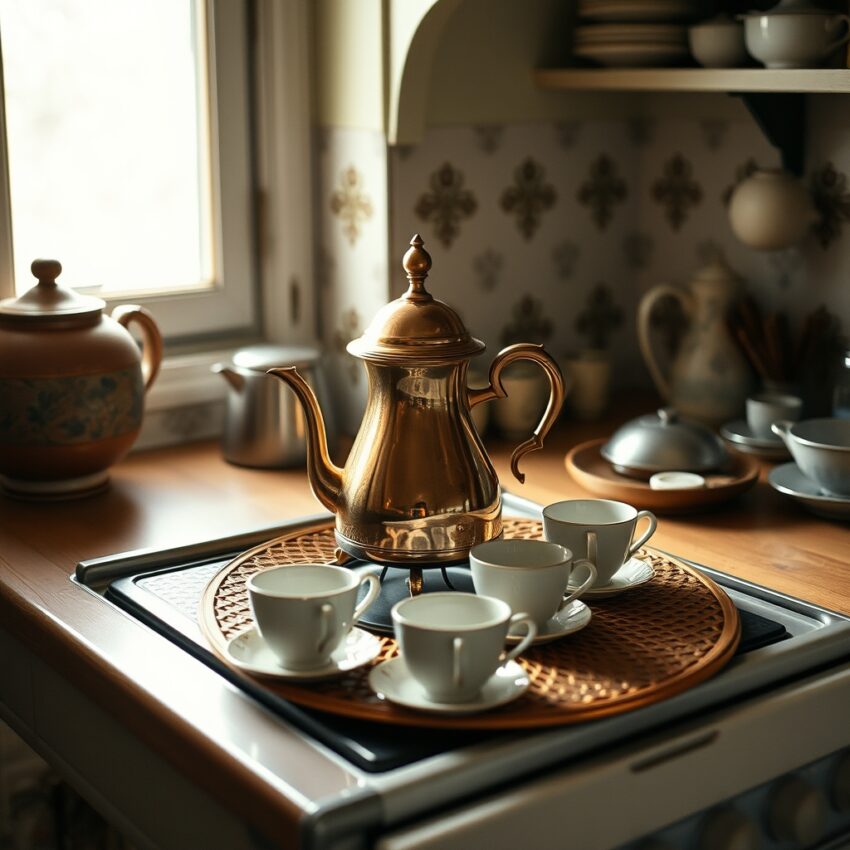
🇹🇷 Türkçe | bakır kahve cezvesi ve gündelik kullanımın içinde görünmeden bıraktığı iz: bir dönemin zevk anlayışını nasıl yansıttı
Bir zamanlar mutfakta en çok kullanılan eşyalardan bazıları, en az konuşulan ama en çok hatırlananlardı. Bakır kahve cezvesi de onlardan biriydi. Ocağın kenarında hafif kararmış gövdesiyle duran bu küçük nesne, yalnız kahve pişirmeye yarayan pratik bir kap gibi görünürdü; ama evin içindeki ritmi, misafir ağırlama anlayışını ve gündelik zarafeti sessizce taşırdı. Sabahın erken saatinde tek kişilik bir kahve için ateşe konduğunda başka, öğleden sonra komşu gelmişken birkaç fincanlık hazırlanırken bambaşka bir anlam kazanırdı. Sapının elde bıraktığı tanıdık his, kahvenin kabarmasını beklerken duyulan dikkat ve mutfakta dolaşan koku, bu küçük objeyi yalnız kullanım eşyası olmaktan çıkarıp hafızanın bir parçası yapıyordu.
Obje Hikayeleri açısından bakıldığında bakır cezve, gündelik hayat ile estetik zevkin birbirine en doğal biçimde karıştığı eşyalardan biridir. Bakırın seçilmesi yalnız iletkenliği nedeniyle değil, mutfakta bıraktığı sıcak ve gösterişsiz parıltı yüzündendi. Kalaylı iç yüzey, dövme izleri, ince uzun sap ve zamanla oluşan renk değişimleri, seri üretim öncesi ya da erken sanayileşme dönemlerinin el emeğiyle kurduğu ilişkiyi taşır. Eski çeyiz listelerinde, mutfak vitrinlerinde ve kahve takımlarında bakır cezvenin özel bir yer tutması boşuna değildir. Çünkü o nesne, bir evin yalnız işlevsel değil, aynı zamanda görgülü ve ölçülü görünmesini sağlayan ayrıntılardan biriydi. Kahvenin sunumu kadar, onu pişiren kabın inceliği de zevk anlayışının bir parçası sayılırdı.
Bu görünmeden bırakılan iz, en çok tekrar eden hareketlerde saklıdır. Su ölçüsünün göz kararı değil el alışkanlığıyla ayarlanması, kahvenin köpüğünü kaçırmamak için ocağın başından ayrılmamak, cezvenin ağzındaki ince kabarmayı dikkatle izlemek, bütün bunlar nesne ile insan arasında sessiz bir uyum kurardı. Cezve mutfağın içinde hep orada durduğu için çoğu zaman fark edilmezdi; ama misafire sunulan ilk fincandan sabah yalnızlığına eşlik eden kahveye kadar sayısız ânın ortağındaydı. Bir annenin kızına kahve pişirmeyi öğretirken eline ilk verdiği eşya çoğu zaman bakır cezve olurdu. Bu yüzden nesnenin taşıdığı kültürel miras, sadece maddesinde değil, kuşaktan kuşağa aktarılan hareket bilgisinde de saklıydı.
Bir dönemin zevk anlayışını yansıtması, bakır cezvenin aşırı gösterişli oluşundan değil; sade ama özenli bir hayat fikrine hizmet etmesindendi. Eski evlerde güzellik çoğu zaman büyük ve iddialı eşyalarda değil, sık kullanılan küçük nesnelerde aranırdı. Parlatılmış bir cezve, dantel örtülü bir tepsi, ince belli bardaklar ya da düzgün yerleştirilmiş fincanlar, ev sahibinin dünyaya bakışını ortaya koyardı. Gündelik olanla güzel olan birbirinden ayrılmazdı. Bu yüzden kahve cezvesi, yalnız mutfakta bulunan bir araç değil; ev içi terbiyenin, misafirperverliğin ve ölçülü estetik anlayışın küçük ama güçlü bir simgesiydi.
Bugün bakır kahve cezvesine baktığımızda çoğu kez yalnız eski bir mutfak objesi görmüyoruz. Onun içinde sabah kahveleri, komşu ziyaretleri, bayram telaşları, kız isteme hazırlıkları ve akşamüstü sessizlikleri birikmiş durumda. Gündelik kullanımın içinde görünmeden bıraktığı iz tam da burada belirginleşiyor: bazı nesneler hayatı değiştirdikleri için değil, hayatın en doğal akışına eşlik ettikleri için unutulmaz hâle geliyor. Bakır cezve, bir dönemin zevk anlayışını bu nedenle güçlü biçimde yansıtır; çünkü güzelliğin, kullanımın içinden eksilmeden yaşayabildiği zamanları hatırlatır.
🇬🇧 English | The Copper Coffee Pot and the Trace It Left Unseen Within Everyday Use: How Did It Reflect the Taste of an Era?
There was a time when some of the most frequently used objects in the kitchen were also the least discussed and the most deeply remembered. The copper coffee pot was one of them. Standing by the stove with its body slightly darkened by use, this small object looked like nothing more than a practical vessel for making coffee, yet it quietly carried the rhythm of the home, the manner of receiving guests, and the grace of ordinary life. When it was placed on the heat for a single morning cup, it meant one thing; when several portions were prepared in the afternoon because a neighbor had come by, it meant another. The familiar feel of its handle, the attention required while waiting for the coffee to rise, and the scent moving through the kitchen turned this small object from a utensil into a part of memory.
Viewed through the lens of object stories, the copper pot is one of the clearest examples of everyday life and aesthetic taste blending naturally into one another. Copper was chosen not only because it conducted heat well, but because of the warm, unpretentious shine it brought to the kitchen. Its tinned inner surface, hammered traces, slender handle, and the changing tones formed over time all carried the relationship that hand labor once established with domestic objects before or during early industrial production. It is no coincidence that the copper coffee pot held a special place in dowry lists, kitchen displays, and coffee sets. It was one of the details that made a household appear not only functional, but measured and refined. The elegance of the vessel that prepared the coffee mattered almost as much as the coffee itself.
The trace it left without calling attention to itself is hidden above all in repeated gestures. Measuring the water not by strict calculation but by practiced instinct, staying beside the stove so the foam would not be lost, watching the thin rise at the lip of the pot with care, all of these created a quiet harmony between object and person. Because the pot always stood in the same place in the kitchen, it often went unnoticed, yet it shared in countless moments, from the first cup offered to a guest to the coffee that accompanied a solitary morning. When a mother taught her daughter how to prepare coffee, the first object she placed in her hand was often the copper pot. That is why the cultural inheritance carried by the object lives not only in its material, but in the knowledge of movement passed from one generation to another.
Its ability to reflect the taste of an era came not from excessive display, but from serving an idea of life that was simple and attentive at once. In older homes, beauty was often sought not in large and assertive furnishings, but in small objects used every day. A polished coffee pot, a tray covered with lace, narrow-waisted glasses, or neatly arranged cups all revealed the household’s way of looking at the world. The ordinary and the beautiful were not kept apart. For that reason, the copper coffee pot was not just a tool in the kitchen, but a small and powerful sign of domestic etiquette, hospitality, and restrained aesthetic judgment.
When we look at a copper coffee pot today, we rarely see only an old kitchen object. Morning coffees, neighborly visits, holiday rushes, marriage visit preparations, and the stillness of late afternoon all seem to have gathered inside it. The unseen trace it left within everyday use becomes clear precisely here: some objects become unforgettable not because they changed life, but because they accompanied its most natural flow. The copper coffee pot reflects the taste of an era so strongly for this reason. It reminds us of a time when beauty could continue to live inside use without diminishing.
🇧🇷 Português (Brasil) | O Cezve de Cobre para Café e a Marca que Deixou sem Ser Notada Dentro do Uso Cotidiano: Como Refletiu o Gosto de uma Época?
Houve um tempo em que alguns dos objetos mais usados da cozinha eram também os menos comentados e os mais lembrados. O cezve de cobre para café era um deles. Parado ao lado do fogão com o corpo levemente escurecido pelo uso, esse pequeno objeto parecia apenas um recipiente prático para preparar café, mas carregava em silêncio o ritmo da casa, a maneira de receber visitas e a graça da vida comum. Quando ia ao fogo para uma única xícara de café pela manhã, tinha um sentido; quando à tarde se preparavam várias xícaras porque uma vizinha tinha chegado, ganhava outro. A sensação familiar do cabo na mão, a atenção exigida enquanto o café subia e o aroma que se espalhava pela cozinha transformavam esse pequeno utensílio em parte da memória.
Visto pelo prisma das histórias dos objetos, o cezve de cobre é um dos exemplos mais claros da mistura natural entre vida cotidiana e gosto estético. O cobre era escolhido não apenas por conduzir bem o calor, mas pelo brilho quente e discreto que trazia à cozinha. A parte interna estanhada, as marcas do martelo, o cabo fino e as mudanças de cor formadas com o tempo guardavam a relação que o trabalho manual mantinha com os objetos domésticos antes ou durante a industrialização inicial. Não é por acaso que o cezve ocupava um lugar especial nas listas de enxoval, nas vitrines da cozinha e nos conjuntos de café. Ele era um daqueles detalhes que faziam uma casa parecer não só funcional, mas também medida e elegante. A delicadeza do recipiente que preparava o café importava quase tanto quanto o próprio café.
A marca deixada por esse objeto sem chamar atenção aparece sobretudo nos gestos repetidos. Medir a água não por cálculo rígido, mas por hábito da mão, não sair do fogão para não perder a espuma, observar com cuidado a subida fina na borda do recipiente, tudo isso criava uma harmonia silenciosa entre pessoa e objeto. Como o cezve ficava sempre no mesmo lugar da cozinha, muitas vezes passava despercebido, mas participava de inúmeros momentos, da primeira xícara oferecida a uma visita ao café que acompanhava a solidão da manhã. Quando uma mãe ensinava a filha a preparar café, o primeiro objeto que costumava colocar em sua mão era justamente o cezve de cobre. Por isso a herança cultural trazida por ele vive não apenas no material, mas também no conhecimento do gesto transmitido de geração em geração.
O fato de refletir o gosto de uma época não vinha de qualquer exibicionismo, mas de servir a uma ideia de vida ao mesmo tempo simples e cuidadosa. Nas casas antigas, a beleza era procurada menos nos móveis grandes e vistosos do que nos pequenos objetos usados todos os dias. Um cezve bem polido, uma bandeja coberta por renda, copos delicados ou xícaras organizadas com esmero revelavam a maneira como aquela casa via o mundo. O cotidiano e o belo não estavam separados. Por isso o cezve de cobre não era apenas uma ferramenta de cozinha, mas um sinal pequeno e forte de etiqueta doméstica, hospitalidade e senso estético contido.
Quando hoje olhamos para um cezve de cobre, raramente vemos apenas um antigo objeto de cozinha. Dentro dele parecem ter se acumulado cafés da manhã, visitas de vizinhas, pressas de festa, preparativos para pedir a mão de alguém e os silêncios do fim da tarde. A marca que ele deixou sem ser notada dentro do uso cotidiano se torna clara justamente aqui: alguns objetos se tornam inesquecíveis não porque mudaram a vida, mas porque acompanharam seu curso mais natural. O cezve de cobre reflete com força o gosto de uma época por essa razão. Ele nos lembra um tempo em que a beleza podia continuar vivendo dentro do uso sem se perder.