🇹🇷 Türkçe | anteni çevirdikçe netleşen umut eşliğinde kasetçalar kullanmak neden başlı başına bir törendi tatil rehavetinin ortasında dilden dile taşınan bir hatıra gibi
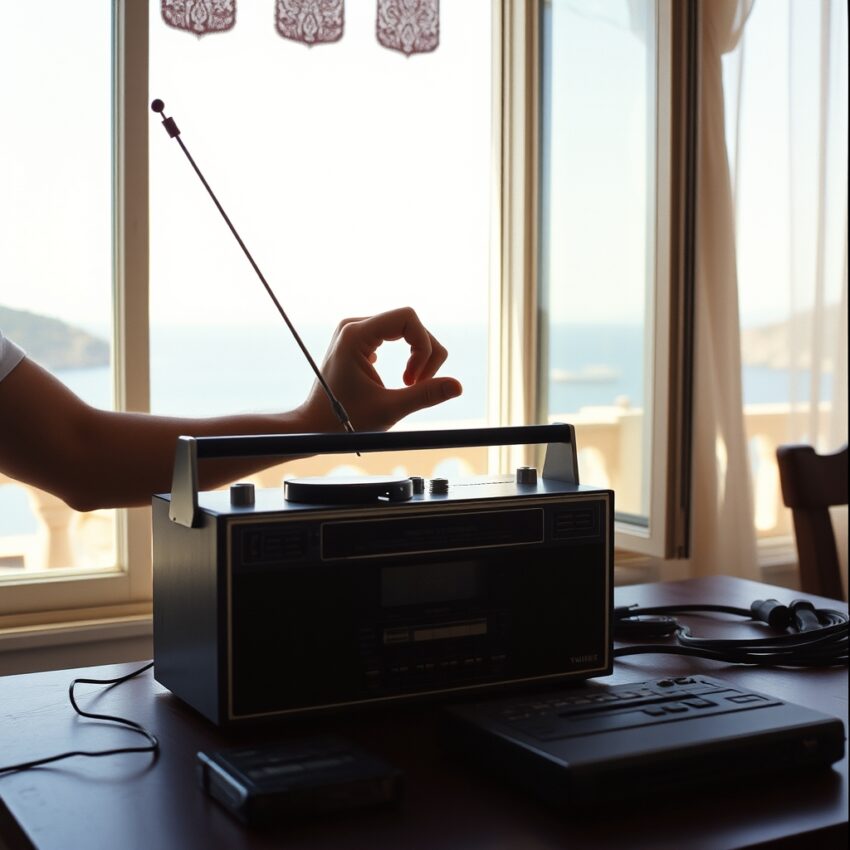
Bir zamanlar yazlık evlerde, pansiyon odalarında ya da balkon kapısı açık salonlarda müzik dinlemek düğmeye basıp geçilen sıradan bir hareket değildi. Kasetçalar masaya yerleştirilir, anteni dikkatle uzatılır, cızırtının içinden en temiz ses bulunana kadar elle küçük küçük ayarlar yapılırdı. Bazen bir radyo yayını yakalanır, bazen sevilen bir kaset başa sarılır, bazen de ikisi arasında gidip gelen o teknik uğraş başlı başına günün ritmini belirlerdi. Tatilin gevşek zamanı içinde herkes biraz daha yavaş davranır, biri “şimdi daha net oldu” der, bir başkası cihazın durduğu yeri değiştirirdi. Umudun anten çevirdikçe netleşmesi denilen şey tam da buydu: sesin berraklaşmasıyla birlikte günün de yerine oturması.
Teknoloji Mirası açısından bakıldığında kasetçalar, yalnızca ses taşıyan bir cihaz değil; analog çağın sabır, el alışkanlığı ve ortak dikkat isteyen gündelik nesnelerinden biriydi. Bugün dijital listeler birkaç saniyede açılıyor, ama o yıllarda müziğe ya da habere ulaşmak için cihazla gerçekten temas kurulurdu. Teleskopik antenin yönü, kasetin şeridinin sarılışı, pillerin zayıflaması, tuşların sertliği ve hoparlörden gelen hışırtı, deneyimin ayrılmaz parçasıydı. Cihazın verdiği ses kusursuz olmasa bile ona ulaşmak için gösterilen çaba, duyulan melodiyi daha kıymetli kılardı. Belki de bu yüzden kasetçalar kullanmak, teknik bir işlem olmaktan çıkıp küçük bir törene dönüşürdü.
Tatil rehavetinin ortasında bu törenin kendine özgü bir sahnesi vardı. Denizden dönülmüş, havlular balkona serilmiş, limonata bardakları yarım kalmış olurdu. Güneş evi ağır ağır ısıtırken bir köşede kasetçalar kurulurdu. Bir yandan sevilen şarkılar çalar, bir yandan radyo spikerinin uzak ama tanıdık sesi gelir, bir yandan da çocuklar “o şarkıyı bir daha açalım” diye etrafında dolanırdı. Kasetin kalemiyle sarıldığı, düğmenin hafif takıldığı, antenin pencereye doğru eğildiği bu küçük uğraşlar, teknolojiyi mekanik olmaktan çıkarırdı. Cihaz aile ya da arkadaş çevresinin ortasında, ortak zamanı ayarlayan bir merkez gibi çalışırdı.
Bu hatıranın dilden dile taşınmasının sebebi, herkesin kendi yazına yerleşen benzer bir ses manzarası taşımasıdır. Kimi için öğle sıcağında dinlenen arabesk kasetler, kimi için akşamüstü yakalanan yabancı müzik yayını, kimi için haber bülteninden önce duyulan parazit sesi bellekte kaldı. Aynı cihaz, farklı evlerde başka başka duygulara eşlik etti ama ortak bir duygu bıraktı: sesin kolay gelmediği zamanlarda müziğin daha dikkatle dinlendiği hissi. Anteni biraz daha sağa çevirmenin, kaseti başa sarmanın, sesi komşuyu rahatsız etmeyecek kadar açmanın içinde dönemin gündelik terbiyesi de saklıydı.
Bugün kasetçalarlar çoğu evde sessiz birer eşya ya da koleksiyon parçası olabilir; fakat onlara yüklenen hatıra hâlâ canlıdır. Çünkü o cihaz, teknolojinin insanı aceleye değil, ritüele çağırdığı bir dönemin simgesidir. Anteni çevirdikçe netleşen umut, yalnız yayın kalitesini değil, o anın ruhunu da anlatır. Tatilin ortasında dilden dile yayılan bu anı, bize sesin bir zamanlar yalnız duyulmadığını; kurulduğunu, beklendiğini ve birlikte paylaşıldığını hatırlatır. Kasetçalar kullanmak bu yüzden başlı başına törendi: küçük teknik ayrıntılarla örülen, ama asıl sıcaklığını insanlardan alan bir tören.
🇬🇧 English | Why Was Using a Cassette Player, Accompanied by Hope Growing Clearer as the Antenna Was Turned, a Ceremony in Itself, Like a Memory Passed from Tongue to Tongue in the Languor of a Holiday
There was a time when listening to music in summer houses, boarding rooms, or living rooms with the balcony door open was not an ordinary act done by pressing a button and moving on. The cassette player would be placed on the table, its antenna carefully extended, and small manual adjustments would be made until the cleanest sound could be found inside the crackle. Sometimes a radio broadcast was caught, sometimes a favorite tape was rewound and started again, and sometimes moving back and forth between those two possibilities became the rhythm of the day itself. In the loosened time of a holiday, everyone moved a little more slowly. One person would say, “now it is clearer,” and another would change the position of the machine. That was exactly what it meant for hope to grow sharper as the antenna turned: together with the sound, the day itself came into focus.
Seen as technological heritage, the cassette player was not only a device that carried sound, but one of the everyday objects of the analog age that demanded patience, practiced hands, and shared attention. Today digital playlists open in seconds, yet in those years one had to establish real contact with the device in order to reach music or news. The direction of the telescopic antenna, the way the tape was wound, the weakness of the batteries, the stiffness of the buttons, and the hiss coming from the speaker all formed inseparable parts of the experience. Even if the sound was not perfect, the effort made to reach it gave the melody greater value. That may be why using a cassette player ceased to be a technical action and turned into a small ceremony.
In the languor of holiday time, that ceremony had its own distinct scene. People had returned from the sea, towels were hanging on the balcony, glasses of lemonade had been left half finished. As the sun slowly heated the house, the cassette player would be set up in one corner. Favorite songs would play, the distant but familiar voice of a radio announcer would drift in, and children would hover nearby asking for the same song again. These small labors, rewinding a tape with a pencil, nudging a sticky button, bending the antenna toward the window, kept the technology from feeling mechanical. In the middle of family or friends, the device worked like a center that tuned shared time itself.
The reason this memory has been carried from tongue to tongue is that nearly everyone preserves a similar soundscape in his or her own memory of summer. For some it was arabesque tapes listened to in the noon heat; for others a foreign music station caught toward evening; for others still, the soft interference heard before the news bulletin. The same machine accompanied different feelings in different houses, yet left behind one common sensation: when sound did not come easily, music was listened to more carefully. Inside turning the antenna a little farther to the right, rewinding the tape, and adjusting the volume so as not to trouble the neighbors, the everyday manners of the era were also hidden.
Today cassette players may stand silent in many homes, as objects or collector’s pieces, yet the memory attached to them is still alive. That is because the device symbolizes a time when technology called people not toward haste, but toward ritual. The hope that became clearer as the antenna turned described not only the quality of the signal, but the spirit of the moment. This memory, spreading from one person to another in the middle of a holiday, reminds us that sound was once not only heard; it was arranged, awaited, and shared together. That is why using a cassette player was a ceremony in itself: a ceremony woven from small technical details, but warmed above all by people.
🇧🇷 Português (Brasil) | Por Que Usar um Toca-fitas, Acompanhado pela Esperança que Ficava Mais Nítida à Medida que a Antena Era Girada, Era por Si Só uma Cerimônia, Como uma Lembrança Passada de Boca em Boca no Langor das Férias
Houve um tempo em que ouvir música em casas de veraneio, quartos de pensão ou salas com a porta da varanda aberta não era um gesto comum feito ao apertar um botão e seguir adiante. O toca-fitas era colocado sobre a mesa, a antena era estendida com cuidado, e pequenos ajustes manuais eram feitos até que o som mais limpo aparecesse no meio do chiado. Às vezes se captava uma transmissão de rádio, às vezes uma fita querida era rebobinada e tocada de novo, e às vezes o vai e vem entre essas duas possibilidades definia o ritmo do próprio dia. No tempo frouxo das férias, todos se moviam um pouco mais devagar. Um dizia “agora ficou mais claro”, outro mudava o lugar do aparelho. Era exatamente isso que significava a esperança ficar mais nítida à medida que a antena era girada: junto com o som, o próprio dia encontrava seu lugar.
Pela perspectiva do patrimônio tecnológico, o toca-fitas não era apenas um aparelho que transportava som, mas um dos objetos cotidianos da era analógica que exigiam paciência, hábito das mãos e atenção compartilhada. Hoje listas digitais se abrem em segundos, mas naqueles anos era preciso estabelecer contato real com o aparelho para chegar à música ou às notícias. A direção da antena telescópica, a forma como a fita era enrolada, o enfraquecimento das pilhas, a rigidez dos botões e o sopro vindo do alto-falante faziam parte inseparável da experiência. Mesmo quando o áudio não era perfeito, o esforço para alcançá-lo tornava a melodia mais preciosa. Talvez por isso usar um toca-fitas deixasse de ser uma simples ação técnica e se transformasse numa pequena cerimônia.
No langor das férias, essa cerimônia tinha sua própria cena. Todos já tinham voltado do mar, as toalhas estavam estendidas na varanda, os copos de limonada tinham ficado pela metade. Enquanto o sol aquecia lentamente a casa, o toca-fitas era montado num canto. Tocavam músicas preferidas, a voz distante mas familiar do locutor do rádio entrava pelo ambiente, e as crianças rondavam o aparelho pedindo para ouvir a mesma canção outra vez. Essas pequenas tarefas, rebobinar a fita com um lápis, empurrar um botão que travava, inclinar a antena em direção à janela, impediam que a tecnologia parecesse mecânica. No meio da família ou dos amigos, o aparelho funcionava como um centro que afinava o tempo compartilhado.
A razão de essa lembrança ter passado de boca em boca é que quase todo mundo guarda uma paisagem sonora parecida em sua própria memória de verão. Para uns eram fitas de arabesco ouvidas no calor do meio-dia; para outros, uma emissora estrangeira captada no fim da tarde; para outros ainda, o ruído delicado ouvido antes do boletim de notícias. O mesmo aparelho acompanhou sentimentos diferentes em casas diferentes, mas deixou uma impressão comum: quando o som não vinha com facilidade, a música era escutada com mais atenção. Dentro do gesto de girar mais um pouco a antena para a direita, rebobinar a fita e baixar o volume para não incomodar os vizinhos, também se escondia a delicadeza cotidiana daquele tempo.
Hoje os toca-fitas podem estar silenciosos em muitas casas, como objetos ou peças de coleção, mas a lembrança que carregam continua viva. Isso porque o aparelho simboliza um tempo em que a tecnologia não convidava à pressa, mas ao ritual. A esperança que ficava mais nítida com a antena girando descrevia não apenas a qualidade do sinal, mas o espírito do momento. Essa memória, espalhada de uma pessoa para outra no meio das férias, nos lembra que o som um dia não foi apenas ouvido; ele era preparado, esperado e compartilhado em conjunto. Por isso usar um toca-fitas era por si só uma cerimônia: uma cerimônia tecida por pequenos detalhes técnicos, mas aquecida sobretudo pelas pessoas.