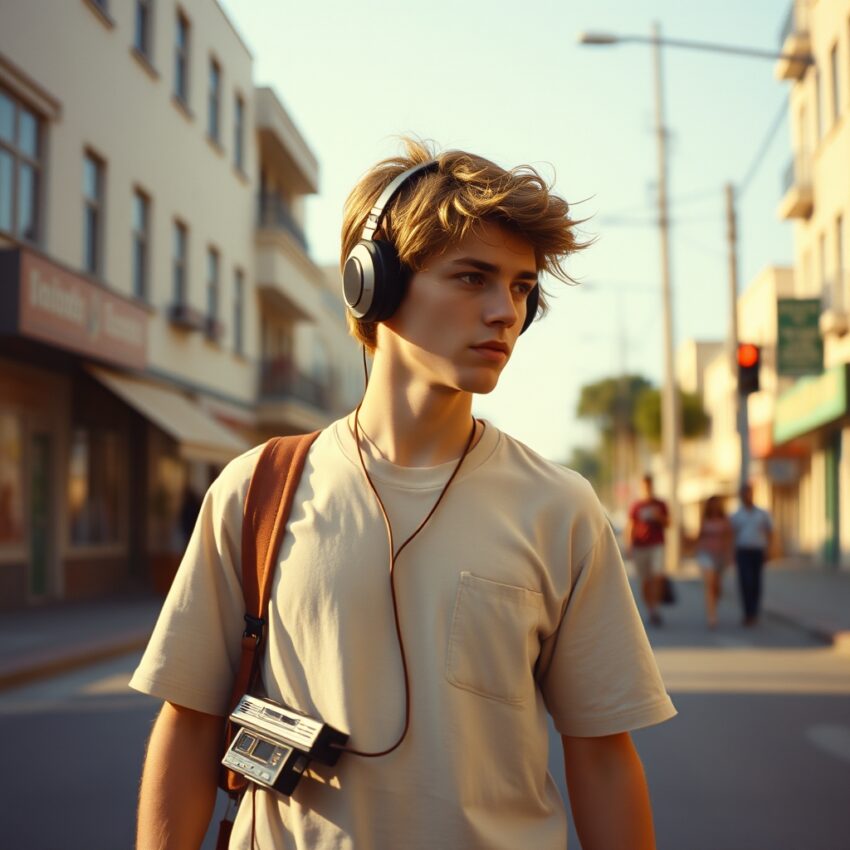
🇹🇷 Türkçe | walkman günleri: anteni çevirdikçe netleşen umut ile büyüyen bir alışkanlık neden unutulmadı yaz sonu esintisinde sade ama derin bir iz bırakarak
Bir zamanlar yaz sonu akşamlarında sokaktan eve dönen gençlerin omzunda, elinde ya da masa kenarında mutlaka küçük bir müzik cihazı dururdu. Walkman yalnız bir alet değildi; insanın kendine ait kısa bir dünyayı yanında taşımasının en görünür işaretiydi. Kulaklığın süngerleri kulağa tam oturmaz, kaset bazen hafifçe dalgalanır, pil zayıfladığında ses yavaşlar ama yine de o cihazın verdiği his eksilmezdi. Anteni çevirdikçe netleşen umut ifadesi bugün biraz şiir gibi duyulabilir; yine de o dönemde gerçekten de insanlar cızırtı azaldığında yalnız sesi değil, ruh hâlini de toparlar gibiydi. Yaz sonu esintisi sokaktan geçerken, kasetin içindeki şarkı insanın iç sesine karışır, sade ama derin bir iz bırakırdı.
Teknoloji Mirası açısından walkman ve benzeri taşınabilir ses cihazları, analog çağın kişisel alanı büyüten en önemli eşyalarındandı. Evdeki teyp ortak dinleme düzeni kurarken, walkman sesi bireyin adımına bağladı. Böylece mühendisliğin gündelik hayata etkisi çok görünür bir hale geldi: daha küçük mekanizma, daha hafif kulaklık, daha taşınabilir pil sistemi, daha kişisel bir ritim. İnsanlar ilk kez aynı caddede yürüyüp başka başka şarkılarla düşünmeye başladı. Kayıt tuşunun ciddiyeti kadar, kaseti geri sararken geçen sabırsız saniyeler de bu teknolojinin duygusal parçasıydı. Bazen otobüste cam kenarına yaslanırken, bazen bir park bankında beklerken, bazen de ders çıkışında tek başına yürürken, walkman yalnız vakit geçirmek için değil, duyguları düzenlemek için kullanılırdı.
Bu alışkanlığın unutulmamasının nedeni, cihazın hayatı sadeleştirirken aynı zamanda derinleştirmesiydi. Bugün telefonlar binlerce şarkıyı saniyeler içinde önümüze getiriyor; oysa walkman döneminde seçilen kaset günün ruhunu daha baştan belirlerdi. Yanına hangi albüm alınacak, A yüzü mü yoksa B yüzü mü daha çok dinlenecek, pil yeter mi, kaset sarma kalemi çantada mı, bunların hepsi küçük ama etkili kararlardı. İnsan kendi müziğini taşırken kendine ait bir duygu düzeni de kuruyordu. Bu yüzden yaz sonu esintisinde yürürken kulakta beliren ilk ritim, yalnız melodiyi değil, o anki yalnızlığı, büyüme hissini, hafif umudu ve geleceğe dair belirsiz beklentiyi de taşıyordu.
Anten çevirmek ifadesi radyolu walkman modellerinin hafızada bıraktığı ayrı bir ayrıntıyı da taşır. Frekansı bulmak için ince bir hareket yapılır, bir anda cızırtının içinden temiz bir ses yükselir, insan o kısacık anda sanki hayat da doğru ayara gelmiş gibi hissederdi. Sokakta aynı kaldırım taşları, aynı reklam panoları, aynı apartman cepheleri dururdu; fakat kulağa dolan ses onları bambaşka bir sahneye çevirirdi. Gençlik duygusunun bu kadar kolay hatırlanmasının bir nedeni de budur. Walkman, sıradan yürüyüşü kişisel filme dönüştürürdü. Yaz bitiyor olsa bile insanın içinde devam eden bir şey olduğunu fısıldardı.
Belki de bugün bu alışkanlığı unutulmaz kılan, teknolojinin henüz hayatın önüne geçmeden duygulara eşlik ettiği bir dönemi temsil etmesidir. Walkman gösterişsizdi; cebinize sığmazsa ele alınır, kablosu düğümlenirse çözülür, pil biterse ses de biterdi. Ama tam da bu sınırlılık yüzünden her dinleme daha bilinçli, her yürüyüş daha kişisel, her şarkı daha kalıcı olurdu. Yaz sonu esintisinde sade ama derin bir iz bırakmasının nedeni buydu: insanı dünyanın gürültüsünden koparmadan, kendi içine hafifçe yaklaştırması. O yüzden walkman günleri bugün yalnız teknolojik bir aşama olarak değil, umutla ayar arayan bir kuşağın sessiz hafızası olarak yaşıyor.
🇬🇧 English | Walkman Days: Why Was a Habit Growing with Hope Becoming Clearer as the Antenna Turned Never Forgotten, Leaving a Simple Yet Deep Trace in the Late Summer Breeze
There was a time when, on late summer evenings, young people returning home from the street carried a small music device on a shoulder, in a hand, or beside a desk. A walkman was never just a gadget; it was the clearest sign that a person could carry a small private world along with them. The foam on the headphones did not always sit perfectly, the cassette sometimes wavered slightly, and when the batteries weakened the sound slowed down, yet the feeling of the device remained intact. The phrase hope becoming clearer as the antenna turned may sound poetic today, but in those years people really did feel that when static faded, not only the music but the mood inside them gathered itself. As the late summer breeze passed through the street, the song inside the cassette blended with one’s inner voice and left a trace that was simple yet deep.
As technological heritage, walkmans and similar portable audio devices were among the most important objects of the analog age because they expanded personal space. The tape deck at home created a shared listening order, but the walkman tied sound to the rhythm of a single person’s steps. In that way, the effect of engineering on daily life became strikingly visible: a smaller mechanism, lighter headphones, more portable batteries, and a more personal tempo. For the first time, people could walk down the same avenue while thinking inside entirely different songs. Just as the seriousness of the record button belonged to the era, so did the impatient seconds spent rewinding a cassette. On a bus by the window, on a park bench, or walking alone after school, the walkman was not only used to pass time, but to arrange feeling.
The reason this habit was not forgotten is that the device simplified life while also deepening it. Phones today offer thousands of songs in seconds, but in the walkman era the cassette chosen in advance defined the mood of the day. Which album would be taken along, whether side A or side B would be heard more, whether the batteries would last, whether the pen for rewinding loose tape was in the bag, all of these were small yet meaningful decisions. Carrying music meant carrying an emotional order as well. That is why the first rhythm heard while walking in a late summer breeze carried not only melody, but solitude, the feeling of growing up, mild hope, and an indistinct expectation of the future.
The image of turning the antenna also preserves the memory of radio walkman models. A fine movement was made to find the right frequency, and suddenly a clean voice rose out of the static, making it feel for a brief second as if life itself had also found the correct setting. The same pavement stones, the same apartment facades, the same advertisement boards remained in place, yet the sound entering the ear transformed them into a different scene. This is one reason youthful feeling is remembered so easily. The walkman turned an ordinary walk into a private film. Even if summer was ending, it whispered that something inside the person was still continuing.
Perhaps what keeps this habit unforgettable today is that it represents a period when technology accompanied emotion without yet overpowering life. The walkman was modest; if it did not fit in your pocket, you carried it in your hand, if the cable tangled, you untied it, if the battery died, the sound ended too. Yet precisely because of these limits, every listening felt more intentional, every walk more personal, and every song more lasting. That is why it left a simple but deep mark in the late summer breeze: it drew a person slightly closer to the self without fully cutting them off from the noise of the world. For that reason, walkman days survive not merely as a technological phase, but as the quiet memory of a generation that searched for hope by adjusting the dial.
🇧🇷 Português (Brasil) | Dias de Walkman: Por Que um Hábito que Crescia com a Esperança Ficando Mais Nítida à Medida que a Antena Girava Nunca Foi Esquecido, Deixando um Rastro Simples, mas Profundo, na Brisa do Fim do Verão
Houve um tempo em que, nas tardes do fim do verão, jovens voltando da rua para casa levavam um pequeno aparelho de música no ombro, na mão ou apoiado na mesa. O walkman nunca foi apenas um aparelho; era o sinal mais visível de que alguém podia carregar consigo um pequeno mundo próprio. As espumas do fone nem sempre se ajustavam bem às orelhas, a fita às vezes oscilava de leve, e quando a pilha enfraquecia o som desacelerava, mas a sensação que o aparelho dava não diminuía. A ideia de a esperança ficar mais nítida à medida que a antena girava pode soar poética hoje, mas naquela época as pessoas realmente sentiam que, quando o chiado diminuía, não era só a música que se organizava, mas também o estado de espírito. Enquanto a brisa do fim do verão passava pela rua, a canção da fita se misturava à voz interior e deixava uma marca simples, porém profunda.
Como legado tecnológico, o walkman e os aparelhos portáteis semelhantes estavam entre os objetos mais importantes da era analógica porque ampliavam o espaço pessoal. O toca-fitas da casa organizava a escuta coletiva; o walkman, por sua vez, prendia o som ao ritmo dos passos de uma única pessoa. Assim, o efeito da engenharia na vida cotidiana ficava muito visível: mecanismo menor, fones mais leves, pilhas mais práticas, um tempo mais íntimo. Pela primeira vez, as pessoas caminhavam pela mesma rua pensando dentro de músicas totalmente diferentes. O mesmo período que exigia atenção ao botão de gravação também incluía os segundos impacientes de rebobinar uma fita. No ônibus junto à janela, num banco de praça ou numa caminhada solitária depois da escola, o walkman não servia apenas para passar o tempo, mas para organizar emoções.
O motivo de esse hábito não ter sido esquecido é que o aparelho simplificava a vida e, ao mesmo tempo, a tornava mais profunda. Hoje os celulares oferecem milhares de músicas em segundos, mas na época do walkman a fita escolhida com antecedência definia o clima do dia. Qual álbum levar, se o lado A ou o lado B seria mais ouvido, se a pilha daria conta, se havia uma caneta na bolsa para rebobinar a fita, tudo isso eram decisões pequenas, porém expressivas. Carregar música era também carregar uma ordem afetiva. Por isso, o primeiro ritmo ouvido ao caminhar na brisa do fim do verão levava consigo não só a melodia, mas a solidão, a sensação de crescer, uma esperança discreta e a expectativa indefinida do futuro.
A imagem de girar a antena também preserva uma lembrança própria dos modelos com rádio. Fazia-se um movimento delicado para encontrar a frequência certa e, de repente, uma voz limpa surgia do meio do chiado, como se por um instante a própria vida tivesse encontrado o ajuste correto. As mesmas calçadas, os mesmos prédios, os mesmos painéis de propaganda continuavam ali, mas o som no ouvido transformava tudo em outra cena. É por isso que o sentimento da juventude se recorda com tanta facilidade. O walkman transformava uma caminhada comum em um filme particular. Mesmo quando o verão chegava ao fim, ele sussurrava que algo dentro da pessoa ainda continuava.
Talvez o que torna esse hábito inesquecível hoje seja o fato de ele representar um período em que a tecnologia acompanhava as emoções sem ainda tomar o centro da vida. O walkman era discreto; se não cabia no bolso, ia na mão, se o fio embolava, era preciso desfazer o nó, se a pilha acabava, o som acabava também. Mas justamente por causa desses limites, cada escuta era mais intencional, cada caminhada mais pessoal e cada música mais duradoura. Por isso ele deixou um rastro simples, mas profundo, na brisa do fim do verão: aproximava a pessoa de si mesma sem isolá-la completamente do ruído do mundo. Assim, os dias de walkman permanecem não apenas como uma etapa tecnológica, mas como a memória silenciosa de uma geração que procurava esperança ajustando o dial.