🇹🇷 Türkçe | kartpostal albümü ve koleksiyonerlerin iz sürdüğü geçmişi: neden bugün yeniden ilgi görüyor
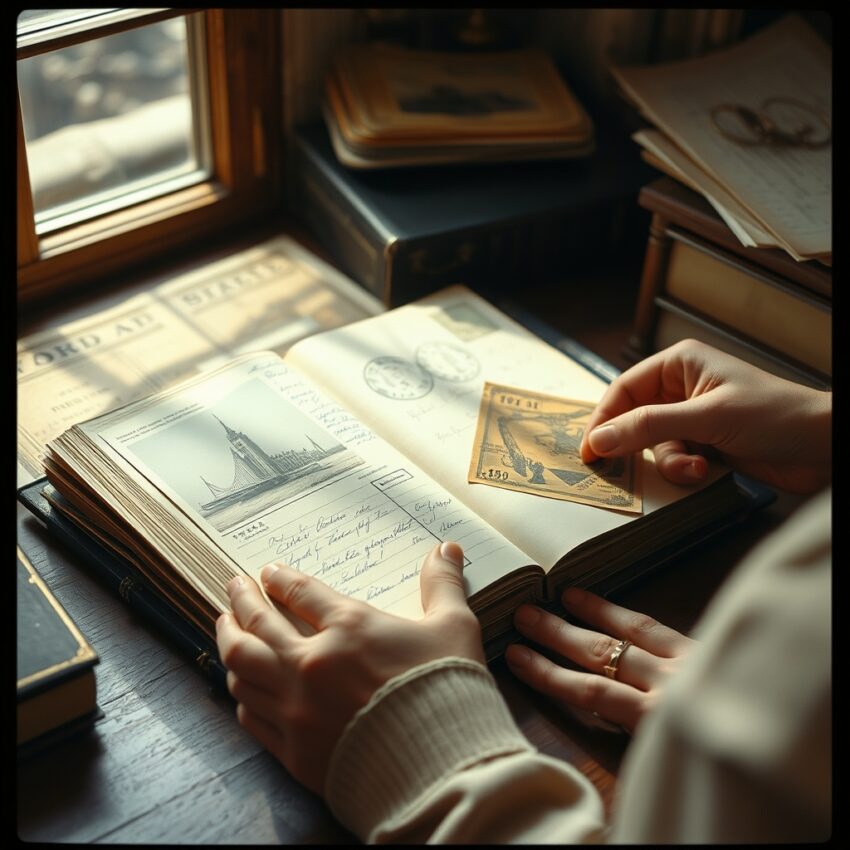
Bir zamanlar çekmecelerin en korunaklı köşelerinde, vitrinlerin üst raflarında ya da dantelli örtülerin altında kartpostal albümleri saklanırdı. Sayfalar çevrildiğinde yalnız manzaralar değil, geçmişin eli değmiş yüzeyi de hissedilirdi. Hafif sararmış kâğıt, kenarı yuvarlanmış köşeler, pul izleri ve arkasına düşülmüş kısa notlar, bir şehrin ya da bir yolculuğun tek başına fotoğraftan daha fazlasını anlattığını gösterirdi. Kartpostal albümü, ev içinde sessizce bekleyen küçük bir arşiv gibiydi; her açılışında uzak bir istasyonun, bir sahil kasabasının ya da çoktan değişmiş bir caddenin havasını yeniden içeri taşırdı. Bugün bu nesnelere duyulan ilginin yeniden yükselmesinde, belki de tam bu dokunsal hafıza duygusu etkili oluyor.
Obje Hikayeleri bakımından kartpostal albümü yalnız bir koleksiyon eşyası değil, tasarım ile kişisel tarihin birbirine değdiği zarif bir nesnedir. Kapak kumaşı, sayfaların kartları tutan yarıkları, altın yaldızlı çerçeveler ya da elle yazılmış tarih notları, her albümü sahibinin yaşam biçimine bağlar. Koleksiyonerlerin iz sürdüğü geçmiş de tam burada başlar: yalnız kartın üzerindeki görüntüde değil, kartın nasıl saklandığında, kimin elinden geçtiğinde ve ne amaçla gönderildiğinde. Bir kartpostal, bir şehri tanıtmak için basılmış olabilir; ama zamanla o kart, postane damgası, mürekkep tonu ve hitap biçimi sayesinde daha geniş bir kültürel belgeye dönüşür. Eski istasyon binaları, vapur iskeleleri, bahçe içindeki konaklar ya da tatil sahilleri, böylece yalnız mimari değil, dolaşım kültürünün de tanığı hâline gelir.
Kartpostal albümlerinin bugün yeniden ilgi görmesinin bir nedeni de dijital görüntü bolluğu içinde seçilmiş nesnelere duyulan özlemdir. Artık milyonlarca manzaraya bir ekranda birkaç saniyede ulaşılabiliyor; fakat bir kartpostalın yüzeyinde birikmiş zaman, hızlı kaydırmalarla edinilemeyen bir derinlik taşıyor. Koleksiyonerler bu yüzden yalnız “eski” olanı toplamıyor; kaybolan dikkat biçimlerini de koruyor. Bir kartın basım tekniğine, renk kullanımına, yazı karakterine ve gönderildiği tarihe bakmak, geçmişe sabırla yaklaşmanın bir yoluna dönüşüyor. Bu nesneler, bakmayı yavaşlatıyor. Aynı görüntüye biraz daha uzun süre bakınca, arka plandaki tramvay hattı, vitrin yazısı ya da gölgede kalmış insan figürü de görünür oluyor. Kartpostal albümü, bugünün aceleci görme alışkanlığına karşı sessiz bir direnç gibi duruyor.
Gündelik hayat açısından bu ilginin bir başka boyutu da aile hafızasıyla ilgilidir. Birçok evde kartpostal albümleri, büyüklerden küçüklere geçen nesneler arasında yer aldı. “Bunu deden Beyrut’tan göndermişti” ya da “bu kart İzmir fuarından alınmıştı” gibi cümleler, albümün yalnız bir obje değil, anlatı başlatıcısı olduğunu gösterir. Koleksiyonerlerin bugün bu albümlere yaklaşımı da çoğu zaman kuru bir katalog merakından ibaret değildir; her kartın arkasındaki yaşam biçimini, seyahat imkânını, hitap dilini ve estetik zevki anlamaya çalışırlar. Bu nedenle kartpostal toplamak, yalnız biriktirmek değil, geçmişin dolaşım yollarını okumaktır. Bir kartın üzerinde görülen deniz, belki artık doldurulmuş bir kıyıdır; o küçük meydan belki çoktan yoğun bir kavşağa dönüşmüştür. Nesnenin değeri, tam da kaybolan manzarayı ve değişen hayat ritmini bir arada taşımasında yatar.
Bugün kartpostal albümleri ve koleksiyonerlerin iz sürdüğü geçmiş yeniden ilgi görüyorsa, bunun nedeni nostaljinin yüzeysel çekiciliğinden daha fazlasıdır. Bu ilgi, kaydedilmiş zamanın maddi izlerine, yavaş bakışa ve hikâyesi olan nesnelere dönüş arzusunu anlatıyor. Kartpostal albümü, bize görmenin yalnız görüntü tüketmek olmadığını; tutmak, çevirmek, okumak ve hayal etmek olduğunu hatırlatıyor. Belki de modern hayatın dağınık hızında tam eksik olan şey budur. Eski kartların arasında dolaşırken insan yalnız geçmişe bakmaz; bugünün hangi dikkat biçimlerini kaybettiğini de fark eder. Bu yüzden kartpostallar yeniden ilgi görüyor: çünkü geçmişi bir vitrin objesi gibi değil, elde tutulur bir insan hikâyesi gibi geri çağırıyorlar.
🇬🇧 English | The Past Traced by Postcard Albums and Collectors: Why Is It Drawing Interest Again Today
There was a time when postcard albums were kept in the safest corners of drawers, on the highest shelves of display cabinets, or beneath lace covers. When their pages were turned, one felt not only landscapes, but the surface touched by the hand of the past. Slightly yellowed paper, rounded corners, stamp marks, and short notes written on the back showed that a city or a journey could be told through more than an image alone. The postcard album stood like a quiet archive within the home; each opening brought back the atmosphere of a distant station, a seaside town, or a street long changed. Perhaps the renewed interest in these objects today comes precisely from that tactile sense of memory.
Seen through the lens of object stories, the postcard album is not merely a collectible, but a graceful object where design and personal history meet. The fabric on the cover, the slots holding the cards in place, the gold-pressed frames, and handwritten dates all connect each album to the life of its owner. The past traced by collectors begins exactly here: not only in the image printed on the card, but in how the card was preserved, whose hands it passed through, and for what reason it was sent. A postcard may have been printed simply to introduce a city, yet over time it becomes a wider cultural document through its postmark, ink tone, and form of address. Old station buildings, ferry piers, garden mansions, or holiday shores thus become witnesses not only to architecture, but to a culture of circulation.
One reason postcard albums draw interest again today is the longing for selected objects within the abundance of digital images. Millions of views can now be reached on a screen in seconds, yet the time gathered on the surface of a postcard carries a depth that rapid scrolling cannot offer. Collectors therefore do not gather only what is “old”; they also preserve ways of paying attention that are disappearing. Looking at a card’s printing technique, color use, typography, and mailing date becomes a way of approaching the past with patience. These objects slow down the act of seeing. When one looks at the same image a little longer, the tramline in the background, the writing on a shop window, or a figure left in shadow also begins to appear. In that sense, the postcard album stands like a quiet resistance to the hurried visual habits of the present.
From the perspective of everyday life, another layer of this renewed interest is linked to family memory. In many homes, postcard albums were among the objects passed from elders to the younger generation. Sentences such as “Your grandfather sent this from Beirut,” or “This card was bought at the Izmir fair,” show that the album is not only an object, but also a beginning for stories. The way collectors approach these albums today is often more than a dry cataloging curiosity; they try to understand the mode of life, the travel possibilities, the language of address, and the aesthetic taste behind each card. For that reason, collecting postcards is not only accumulating, but reading the routes through which the past once moved. The sea seen on a card may now be a filled shoreline; the small square may have become a crowded intersection. The value of the object lies precisely in carrying both the lost landscape and the changed rhythm of life together.
If postcard albums and the past pursued by collectors are attracting interest again today, the reason is more than the surface charm of nostalgia. This renewed attention speaks of a desire to return to the material traces of recorded time, to slow looking, and to objects that carry stories. The postcard album reminds us that seeing is not only consuming images; it is also holding, turning, reading, and imagining. Perhaps that is exactly what is missing in the scattered speed of modern life. While moving through old cards, a person does not only look at the past; one also realizes which forms of attention the present has lost. That is why postcards are drawing interest again: because they call the past back not as a decorative display, but as a human story that can still be held in the hand.
🇧🇷 Português (Brasil) | O Passado Seguido por Álbuns de Cartões-Postais e Colecionadores: Por que Volta a Despertar Interesse Hoje
Houve um tempo em que os álbuns de cartões-postais eram guardados nos cantos mais protegidos das gavetas, nas prateleiras mais altas dos armários ou sob toalhas rendadas. Quando as páginas eram viradas, sentia-se não apenas a paisagem, mas também a superfície tocada pela mão do passado. O papel levemente amarelado, os cantos arredondados, as marcas do selo e os pequenos bilhetes no verso mostravam que uma cidade ou uma viagem podiam ser contadas por algo maior do que a imagem sozinha. O álbum de cartões-postais era como um pequeno arquivo silencioso dentro de casa; cada abertura trazia de volta o ar de uma estação distante, de uma cidade litorânea ou de uma rua que já mudou completamente. Talvez o interesse renovado por esses objetos venha justamente dessa memória tátil.
Pela ótica das histórias dos objetos, o álbum de cartões-postais não é apenas um item de coleção, mas um objeto delicado em que design e história pessoal se tocam. O tecido da capa, os encaixes que seguram os cartões, as molduras douradas e as datas escritas à mão ligam cada álbum ao modo de vida de seu dono. O passado que os colecionadores seguem começa exatamente aí: não apenas na imagem impressa no cartão, mas em como ele foi guardado, por quais mãos passou e por que foi enviado. Um cartão-postal pode ter sido impresso apenas para apresentar uma cidade; com o tempo, porém, ele se transforma em documento cultural mais amplo por meio do carimbo, do tom da tinta e da forma de tratamento. Antigas estações, píeres, casarões com jardim ou praias de veraneio tornam-se, assim, testemunhas não só da arquitetura, mas também da cultura de circulação.
Uma das razões para esses álbuns voltarem a despertar interesse hoje é a saudade de objetos escolhidos em meio à abundância de imagens digitais. Hoje se pode chegar a milhões de paisagens em poucos segundos numa tela, mas o tempo acumulado na superfície de um cartão-postal traz uma profundidade que a rolagem rápida não oferece. Por isso, os colecionadores não reúnem apenas o que é “antigo”; eles também preservam formas de atenção que estão desaparecendo. Observar a técnica de impressão, o uso da cor, a tipografia e a data de envio de um cartão torna-se um modo de se aproximar do passado com paciência. Esses objetos desaceleram o olhar. Quando se observa a mesma imagem por mais tempo, a linha do bonde ao fundo, a escrita na vitrine ou uma figura deixada na sombra também aparece. O álbum de cartões-postais se coloca, assim, como uma resistência silenciosa ao hábito apressado de ver no presente.
Na vida cotidiana, outra camada desse interesse renovado está ligada à memória familiar. Em muitas casas, os álbuns de cartões-postais estavam entre os objetos passados dos mais velhos aos mais novos. Frases como “seu avô mandou este de Beirute” ou “este cartão foi comprado na feira de Izmir” mostram que o álbum não é apenas um objeto, mas também um disparador de narrativas. A maneira como os colecionadores se aproximam desses álbuns hoje também vai além de uma curiosidade seca de catálogo; eles procuram entender o modo de vida, as possibilidades de viagem, a linguagem de tratamento e o gosto estético por trás de cada cartão. Por isso, colecionar cartões-postais não é apenas juntar peças, mas ler os caminhos por onde o passado circulava. O mar visto num cartão talvez hoje seja uma orla aterrada; aquela pequena praça talvez tenha virado um cruzamento movimentado. O valor do objeto está justamente em carregar ao mesmo tempo a paisagem perdida e o ritmo de vida transformado.
Se os álbuns de cartões-postais e o passado seguido por colecionadores voltam a atrair atenção hoje, a razão é maior do que o charme superficial da nostalgia. Esse interesse fala de um desejo de voltar aos rastros materiais do tempo registrado, ao olhar lento e aos objetos com história. O álbum de cartões-postais nos lembra que ver não é apenas consumir imagens; é também segurar, virar, ler e imaginar. Talvez seja exatamente isso que falta no ritmo disperso da vida moderna. Ao folhear cartões antigos, a pessoa não olha apenas para o passado; também percebe quais formas de atenção o presente perdeu. É por isso que os cartões-postais voltam a interessar: porque chamam o passado de volta não como peça de vitrine, mas como uma história humana que ainda cabe na mão.