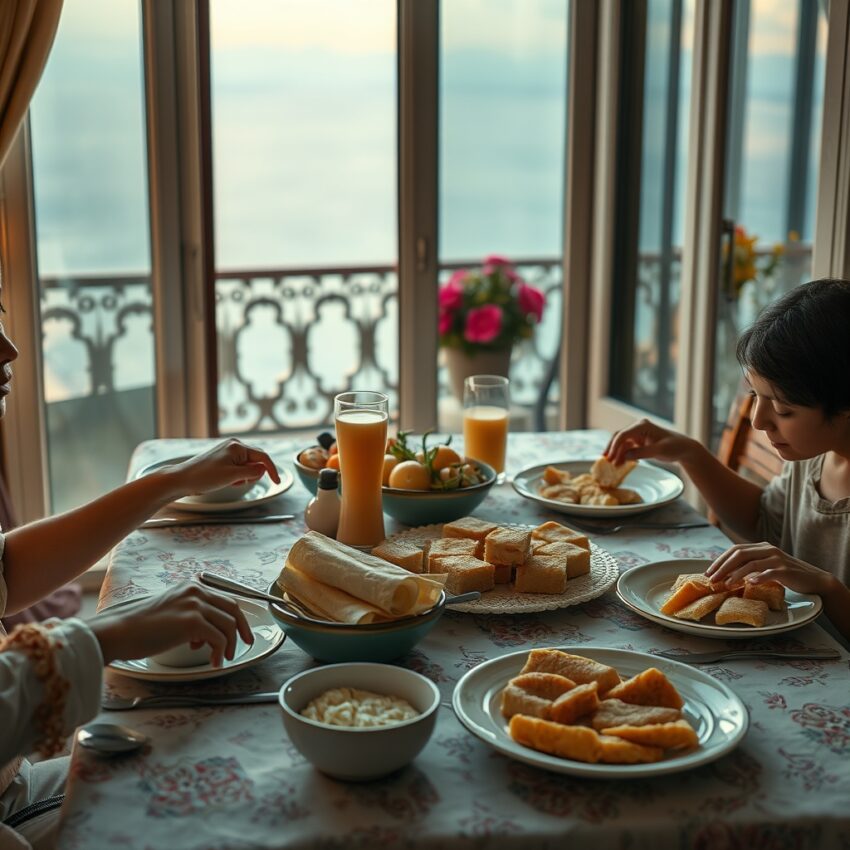
🇹🇷 Türkçe | Kâğıt Helvanın Sofraya Bıraktığı Yaz Sessizliği
Bir zamanlar kâğıt helva sofraya geldiğinde evin içindeki hava değişirdi. Bu değişim yalnız tatlı bir şey yenileceği için değil, onun taşıdığı yazlık hafifliğin ve çocukça sevincin masaya yayılması yüzündendi. İnce, kırılgan yaprakların arasına sıkışmış helva, ne şerbetli tatlılar kadar ağır ne de sıradan bir atıştırmalık kadar önemsizdi. Daha çok, deniz kıyısındaki gezintilerden, lunapark dönüşlerinden, sahil büfelerinden ve ailece paylaşılan akşamlardan eve taşınmış bir mevsim kokusu gibiydi. Paketi açıldığında vanilyaya, şekere ve hafifçe kavrulmuş una benzeyen koku hemen dağılır; salondan mutfağa, balkondan koridora kadar aynı tatlı serinlik hissedilirdi. Tatil rehavetinin ortasında bu koku, günü aceleye getirmeyen, zamanı biraz daha uzatan bir davet gibiydi.
Damak Hafızası açısından kâğıt helva, yalnız bir tatlı değil, eski yazların ritmini taşıyan bir kültür öğesidir. Sokakta alınan küçük bir mutluluğun eve getirilmiş hâlidir. Özellikle yazlık beldelerde ya da akşam serinliğinde sahile inilen şehirlerde, kâğıt helva satıcısının sesi çocukların kulağında hemen tanınırdı. Bazen arasına dondurma konur, bazen sade yenir, bazen de çay sonrası sofraya son bir gülümseme gibi bırakılırdı. Onu özel kılan şey biraz da gösterişsizliğiydi. Gümüş tepsiler, ağır sunumlar, uzun hazırlıklar istemezdi. Paket açılır, parçalar pay edilir ve konuşmaların arasına tatlı bir çıtırtı karışırdı. Bu basitlik, onu aile sofrasının en samimi tatlarından biri hâline getirdi. Kâğıt helva sofraya geldiğinde herkes aynı çocukluk kapısına biraz yaklaşırdı.
Evin aynı kokuyla dolması ise yalnız fiziksel bir durum değil, duyusal bir birlik hissiydi. Eski evlerde yaz akşamı yemek sonrası masa hemen toplanmaz, biri çay koyar, biri meyve getirir, biri de en sonunda kâğıt helvayı ortaya çıkarırdı. Pencereler açıksa dışarıdan deniz ya da toprak kokusu, içeriden ise şekerli helvanın hafif aroması dolaşır; bu karışım evin hafızasında yer eden özel bir yaz kokusu yaratırdı. Çocuklar helvayı düzgün kırmaya çalışırken çıkan çatırdıya güler, büyükler “bizim çocukluğumuzda da böyleydi” diyerek kendi sahil anılarını anlatırdı. Böylece tat yalnız damakta kalmaz, hikâyeye dönüşürdü. Dilden dile taşınan hatıra tam da bu sofralarda çoğalırdı: bir tat, bir koku ve bir yaz akşamı aynı cümlede buluşurdu.
Kâğıt helvanın hatırda kalmasının bir başka nedeni de onun mevsim duygusunu güçlü biçimde taşımasıdır. Bazı tatlar kışa, bazıları bayrama, bazıları büyük kutlamalara aittir; kâğıt helva ise çoğu zaman hafifliğe, yol üstü neşesine, tatilin gevşek saatlerine yakışır. Bu yüzden sofraya geldiğinde yalnız bir tatlı değil, bütün günün temposunu yeniden tanımlar. Günün koşuşturması yerini rahat bir sohbete bırakır, çocuklar biraz daha masada kalır, balkon kapısı açık tutulur, uzaklardan gelen müzik ya da sokak sesi tatlının çıtırtısına karışır. Hafif bir tatlının bu kadar güçlü hatırlanması şaşırtıcı değildir; çünkü insan bazen en derin anıları tam da gösterişsiz şeylerle kurar. Kâğıt helva da o gösterişsiz derinliğin en lezzetli örneklerinden biridir.
Bugün birçok tatlı daha yoğun, daha süslü ve daha kolay ulaşılır olabilir. Yine de kâğıt helvanın sofraya gelişini unutulmaz yapan şey, bir evi aynı koku etrafında kısa süreliğine birleştirebilmesidir. Herkesin aynı anda tanıdığı, aynı anda çocuklukla ilişkilendirdiği o hafif koku, kültürel hafızada küçük ama parlak bir yer açar. Bu yüzden kâğıt helva yalnız yenilen bir tatlı değil, yaz akşamlarının ailece paylaşılan ferahlığıdır. Tatil rehavetinin ortasında dilden dile taşınan hatıra gibi kalmasının sebebi de budur: insanı yalnız doyurmaz, aynı masada biraz daha uzun tutar.
🇬🇧 English | The Summer Quiet Left on the Table by Wafer Halva
There was a time when the air inside a house changed as soon as wafer halva arrived at the table. This change did not happen only because something sweet was about to be eaten, but because the lightness of summer and a childlike joy spread with it across the meal. The sweet pressed between thin, fragile wafers was neither as heavy as syrup-soaked desserts nor as unimportant as an ordinary snack. It felt more like a season carried home from seaside walks, amusement-park returns, beach kiosks, and evenings shared by the family. Once the package was opened, a scent resembling vanilla, sugar, and lightly toasted flour spread at once, from the living room to the kitchen, from the balcony to the corridor. In the ease of vacation days, that fragrance was like an invitation not to hurry the day, but to let time stretch a little longer.
From the standpoint of taste memory, wafer halva is not only a dessert, but a cultural marker carrying the rhythm of old summers. It is the form in which a small happiness bought on the street entered the home. Especially in summer resorts or in cities where people went down to the waterfront in the evening cool, the call of the wafer-halva seller was recognized immediately by children. Sometimes ice cream was tucked inside it, sometimes it was eaten plain, and sometimes it was placed on the table after tea like one final smile. Part of what made it special was its lack of pretension. It required no silver trays, no heavy presentation, no long preparation. The package was opened, pieces were shared, and a sweet crackle mixed into the conversation. That simplicity made it one of the most intimate tastes of the family table. When wafer halva arrived, everyone stepped a little closer to the same doorway of childhood.
The sense that the whole house filled with the same smell was not merely physical, but a feeling of sensory unity. In old homes on summer evenings, the table was not cleared at once after dinner; someone poured tea, someone brought fruit, and at the very end someone set down the wafer halva. If the windows were open, the smell of sea air or dry earth drifted in from outside while the light aroma of sweet wafers moved through the rooms inside, and together they created a summer scent that lodged in the memory of the house. Children laughed at the crackling sound while trying not to break the wafers unevenly, and adults said, “it was like this in our childhood too,” then began telling their own seaside stories. In that way, the taste did not remain only on the tongue, but became a story. The memory carried from tongue to tongue multiplied precisely at such tables, where a flavor, a smell, and a summer evening entered the same sentence.
Another reason wafer halva remains memorable is the strength with which it carries a sense of season. Some desserts belong to winter, some to holidays, some to large celebrations; wafer halva belongs mostly to lightness, to cheer found on the way home, to the loose hours of vacation. That is why, when it comes to the table, it does not bring only a dessert, but quietly redefines the pace of the whole day. The rush of the day gives way to relaxed conversation, children stay at the table a little longer, the balcony door remains open, and distant music or street sounds mix with the crisp sweetness of the wafers. It is not surprising that such a light dessert is remembered so strongly, because people often build their deepest memories from the most unshowy things. Wafer halva is one of the most delicious examples of that unshowy depth.
Today, many desserts may be richer, more elaborate, and easier to find. Yet what makes the arrival of wafer halva unforgettable is its power to gather a household for a brief moment around the same familiar scent. That light fragrance, recognized by everyone at once and tied by everyone to childhood, opens a small but bright space in cultural memory. For that reason wafer halva is not only a dessert that is eaten, but the shared freshness of summer evenings around a family table. That is why it remains like a memory passed from tongue to tongue in the ease of vacation days: it does not only satisfy hunger, it keeps people at the same table a little longer.
🇧🇷 Português (Brasil) | O Silêncio de Verão que a Hóstia Doce Deixava na Mesa
Houve um tempo em que o ar da casa mudava quando a hóstia doce chegava à mesa. Essa mudança não acontecia apenas porque algo doce seria servido, mas porque a leveza do verão e uma alegria infantil se espalhavam junto com ela. O recheio prensado entre folhas finas e frágeis não era tão pesado quanto as sobremesas com calda, nem tão banal quanto um simples lanche. Parecia mais uma estação trazida para dentro de casa depois de passeios à beira-mar, voltas do parque de diversões, compras em quiosques de praia e noites divididas em família. Quando a embalagem era aberta, um cheiro lembrando baunilha, açúcar e farinha levemente torrada se espalhava de imediato, da sala à cozinha, da varanda ao corredor. No sossego das férias, esse aroma parecia um convite para não apressar o dia, para deixar o tempo durar um pouco mais.
Do ponto de vista da memória do paladar, a hóstia doce não é apenas uma sobremesa, mas um traço cultural que carrega o ritmo dos verões antigos. É a forma doméstica de uma pequena felicidade comprada na rua. Principalmente nas cidades de veraneio ou nos lugares onde se descia para a orla no frescor do fim do dia, o chamado do vendedor era reconhecido de imediato pelas crianças. Às vezes ela vinha com sorvete no meio, às vezes era comida simples, e às vezes aparecia depois do chá como um último sorriso sobre a mesa. Parte do que a tornava especial era justamente a ausência de ostentação. Não pedia bandejas de prata, apresentações pesadas nem longos preparos. Abria-se o pacote, repartiam-se os pedaços e um crocante doce entrava nas conversas. Essa simplicidade a transformou num dos sabores mais íntimos da mesa familiar. Quando chegava, todos se aproximavam um pouco da mesma porta da infância.
O fato de a casa inteira se encher do mesmo cheiro não era apenas uma questão física, mas também uma sensação de unidade pelos sentidos. Nas casas antigas, nas noites de verão, a mesa não era desfeita logo depois do jantar; alguém servia o chá, alguém trazia fruta, e por fim aparecia a hóstia doce. Se as janelas estivessem abertas, o cheiro do mar ou da terra vinha de fora, enquanto o aroma leve do doce circulava por dentro, criando juntos um perfume de verão que ficava gravado na memória da casa. As crianças riam do estalo das folhas ao tentar quebrá-las com cuidado, e os adultos diziam: “na nossa infância também era assim”, começando então a contar suas próprias histórias de praia. Desse modo, o sabor não permanecia apenas na boca, mas virava narrativa. A lembrança passada de boca em boca crescia exatamente nessas mesas, onde um gosto, um cheiro e uma noite de verão cabiam na mesma frase.
Outra razão para a hóstia doce permanecer tão viva é a força com que carrega a sensação de estação. Há sobremesas que pertencem ao inverno, outras às festas, outras às grandes celebrações; a hóstia doce combina sobretudo com leveza, alegria de caminho e com as horas frouxas das férias. Por isso, quando chega à mesa, não traz apenas um doce, mas redefine discretamente o ritmo de todo o dia. A correria cede lugar à conversa tranquila, as crianças ficam um pouco mais sentadas, a porta da varanda continua aberta e a música distante ou os sons da rua se misturam ao crocante do doce. Não surpreende que uma sobremesa tão leve seja lembrada com tanta força, porque muitas vezes as memórias mais profundas são construídas com coisas simples. A hóstia doce é um dos exemplos mais saborosos dessa profundidade sem ostentação.
Hoje, muitas sobremesas podem ser mais intensas, mais enfeitadas e mais fáceis de encontrar. Ainda assim, o que torna inesquecível a chegada da hóstia doce à mesa é sua capacidade de reunir a casa por alguns instantes em torno do mesmo cheiro conhecido. Esse aroma leve, reconhecido por todos ao mesmo tempo e ligado por todos à infância, abre um espaço pequeno, porém luminoso, na memória cultural. Por isso ela não é apenas uma sobremesa consumida, mas o frescor compartilhado das noites de verão em família. É por isso que permanece como uma lembrança passada de boca em boca no sossego das férias: não apenas alimenta, mas faz com que todos fiquem um pouco mais à mesa.