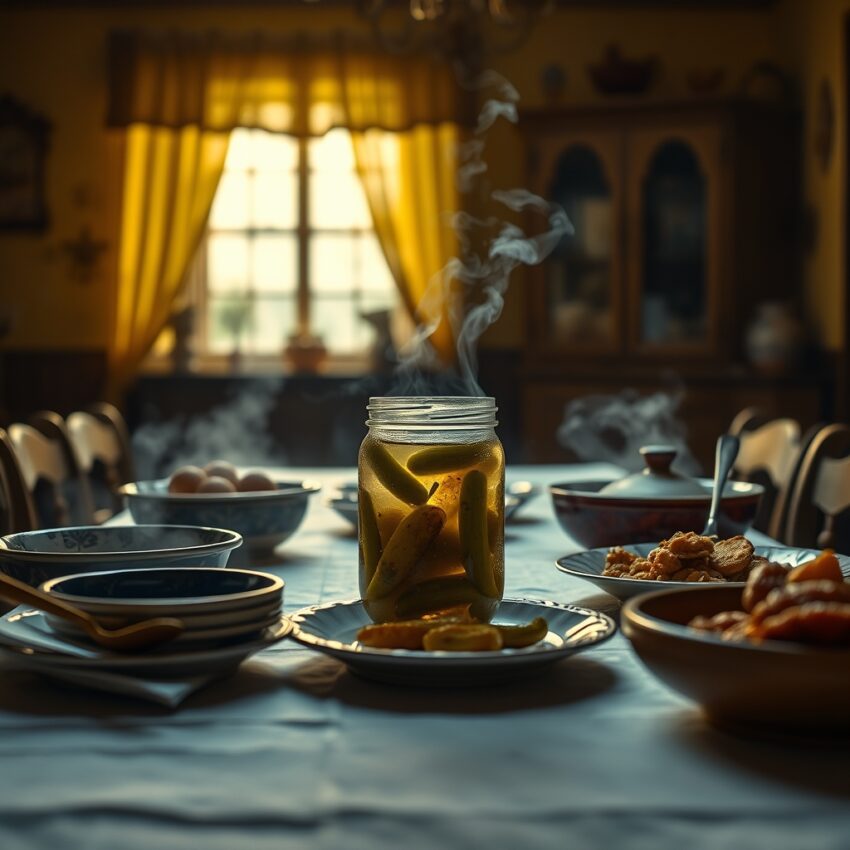
🇹🇷 Türkçe | kışlık turşu sofraya geldiğinde neden bütün ev aynı kokuyla dolardı anneanne evinin gölgesinde eski filmlerin ışığında
Bazı kokular yalnız mutfaktan değil, bir evin bütün geçmişinden yükselir. Kışlık turşu sofraya geldiğinde yayılan keskin ama iştah açıcı koku tam da böyledir. Özellikle anneanne evinde, ağır ahşap dolapların, ince belli çay bardaklarının ve eski filmlerden kalmış sarı ışığın içinde bu koku yalnız bir yan lezzeti haber vermezdi; mevsimin, emeğin ve aile düzeninin aynı anda sofraya geldiğini duyururdu. Kavanoz kapağı açıldığında çıkan o kısa ses, sonra sirke, sarımsak, tane karabiber ve sebzenin kendi suyu birbirine karışarak odanın içine yayılırdı. Mutfakla salon arasında kapı açık kalsa da kalmasa da aynı koku evin her köşesine ulaşırdı. Çünkü turşu, yalnız yenilen bir şey değil, aylar öncesinden hazırlanmış sabrın somut hâliydi.
Damak Hafızası içinde kışlık turşunun yeri yalnız tadından ibaret değildir; onun hazırlanış biçimi de kültürel belleğin önemli parçasıdır. Yaz sonu ya da güz başında alınan salatalık, lahana, biber, fasulye ya da yeşil domatesler seçilir, yıkanır, kurulanır, kavanozlara düzenle yerleştirilirdi. Tuz ölçüsü dikkatle konuşulur, sarımsak dişleri aralara pay edilir, nohut atılsın mı atılmasın mı üzerine küçük tartışmalar yaşanırdı. Kavanozların pencere önünde ya da serin kilerde bekleyişi, ev içi zaman duygusunu uzatırdı. Sonra bir kış akşamı, sulu yemeğin ya da pilavın yanına turşu konduğunda, sofraya yalnız ekşi bir tat değil, aylardır bekleyen bir hazırlık da gelirdi. Ev aynı kokuyla dolardı; çünkü herkes o kavanozun yalnız açılma anını değil, kurulma mevsimini de hatırlardı.
Anneanne evinin gölgesi burada yine tesadüfi değildir. Böyle evlerde yemek yalnız karın doyurmaz; kuşakların birlikte yaşadığı ya da birbirini ziyaret ettiği bir düzen kurardı. Turşu bu düzenin en konuşkan eşlikçilerinden biriydi. Bir tabak kuru fasulye, bir kase tarhana çorbası ya da kalan pilavın yanına konan turşu, sofraya hem renk hem canlılık getirirdi. Büyükler “bu biber bu sene iyi tutmuş” der, çocuklar daha az ekşisini seçmeye çalışır, biri mutlaka turşu suyunun da ayrı bir lezzet olduğunu söylerdi. Eski filmlerin ışığında ifadesi, işte bu sofraların görsel hafızasına işaret eder: televizyonun açık olduğu akşamlar, sarı ışığın tabakların kenarına düştüğü, yemek sonrası sessizce film izlenirken turşu kavanozunun kapağının mutfakta yeniden kapatıldığı o tanıdık ev atmosferi.
Kışlık turşunun kokusunun bütün evi sarması biraz da onun gizlenemeyen karakterinden gelir. Çorba ocakta kalabilir, pilavın buharı mutfakta toplanabilir, ama turşunun kokusu kapı aralıklarından geçer, perdede hafifçe asılı kalır, hatta ertesi sabah bile hatırlanır. Bu yayılma, turşuyu sıradan bir garnitür olmaktan çıkarır. O, sofraya geldiğini duyuran bir yiyecektir. Eski evlerde bu duyuru çoğu zaman iştah kadar tanışıklık da yaratırdı. “Turşu açıldı” demek, akşam yemeğinin biraz daha evcimen, biraz daha tamamlanmış olacağı anlamına gelirdi. Koku, sofraya oturmadan bile önce herkesi aynı histe buluştururdu. Bu yüzden damak hafızası çoğu zaman dilden çok burunla başlar.
Bu kokunun kültürel derinliği, saklama ve mevsime direnme bilgisinden de beslenir. Turşu, bolluk zamanını darlık gününe taşımayı bilen mutfak aklının ürünüdür. Yazın ya da sonbaharın taze sebzesini kış sofrasına aktarmak, yalnız pratik bir çözüm değil, ev ekonomisinin ve kuşaktan kuşağa geçen mutfak bilgisinin göstergesidir. Kavanozun dibindeki sarımsak, suyun bulanıklığı, kapağın açılırken çıkardığı dirençli ses, hepsi bu uzun hikâyenin ayrıntılarıdır. Bir çocuk için belki önce fazla keskin gelen bu koku, yıllar sonra en çok aranan ev kokularından birine dönüşür. Çünkü insan büyüdükçe yalnız tadı değil, o tadın hazırlanabilmesi için gereken emeği de hatırlar.
Bugün market raflarında türlü türlü hazır turşu bulunabilir; ama kışlık turşunun sofraya geldiğinde bütün evi aynı kokuyla doldurmasının neden hâlâ unutulmadığı açıktır. O koku, evin birlikte yaşama düzenini görünür kılar. Anneannenin ölçüsü, annenin sofra eli, çocuğun yüzünü buruşturup sonra yeniden uzanması, hepsi aynı kavanozun etrafında toplanır. Turşu, eski filmlerin ışığında yalnız yemeklere eşlik eden ekşi bir tat değil; sabır, saklama bilgisi ve aile içi yakınlığın keskin bir hatırasıdır. Bu yüzden kapağı açıldığında bütün ev aynı kokuyla dolar; çünkü kavanozun içinden yalnız sebze değil, bir evin bütün mevsimleri çıkar.
🇬🇧 English | Why Did the Whole House Fill with the Same Scent When Winter Pickles Reached the Table in the Shadow of Grandmother’s House and the Light of Old Films?
Some scents rise not only from the kitchen, but from the whole past of a household. The sharp yet appetite-opening smell that spread when winter pickles reached the table was exactly like that. Especially in grandmother’s house, among heavy wooden cupboards, slim tea glasses, and the yellowish glow remembered from old films, this scent announced more than a side dish. It signaled that season, labor, and household order had all arrived at the table together. When the jar lid opened with its brief sound, vinegar, garlic, peppercorns, and the vegetables’ own water blended into the room. Whether the kitchen door stayed open or closed, the same smell made its way to every corner of the house. Pickles were not merely something eaten. They were patience prepared months earlier and made tangible.
Within taste memory, the place of winter pickles is not only about flavor. Their method of preparation is itself part of cultural memory. At the end of summer or beginning of autumn, cucumbers, cabbage, peppers, beans, or green tomatoes would be selected, washed, dried, and arranged carefully into jars. The salt ratio would be discussed, garlic cloves distributed between layers, and small debates would arise over whether chickpeas should be added. The waiting of those jars on a windowsill or in a cool pantry stretched the household’s sense of time. Then on a winter evening, when pickles were placed beside a stew or a dish of rice, what came to the table was not only a sour taste. A preparation that had been waiting for months arrived as well. The house filled with the same smell because everyone remembered not only the moment the jar opened, but the season in which it had first been made.
The shadow of grandmother’s house is not accidental here either. In such homes, food did not merely satisfy hunger. It organized a pattern in which generations lived together or visited each other. Pickles were among the most talkative companions to that order. Set beside beans, tarhana soup, or leftover rice, they brought both color and liveliness to the table. Elders would say the peppers had turned out well that year, children would search for the less sour pieces, and someone would always remark that the brine itself had its own pleasure. The phrase in the light of old films points to the visual memory of those tables: evenings when the television remained on, yellow light touched the edges of plates, and after the meal the pickle jar was closed again quietly in the kitchen while a film continued in the next room.
The reason the smell of winter pickles filled the whole house also lies in their impossible-to-hide character. Soup could stay on the stove, steam from rice might gather only in the kitchen, but pickle scent slipped through doorways, lingered lightly on curtains, and could even be remembered the next morning. That spreading quality made pickles more than an ordinary accompaniment. They were a food that announced their own arrival. In older homes, that announcement often created not only appetite but familiarity. To say “the pickles have been opened” meant the evening meal would feel a little more homelike, a little more complete. Even before anyone sat down, the smell brought everyone into the same emotional register. This is why taste memory often begins with the nose before it reaches the tongue.
The cultural depth of this smell also comes from knowledge of preservation and resistance to the seasons. Pickling is the wisdom of carrying abundance into leaner months. To move the fresh vegetable of late summer or autumn onto a winter table was not merely practical. It showed household economy and kitchen knowledge passed from one generation to the next. The garlic at the bottom of the jar, the cloudiness of the liquid, the resistant sound of the lid opening all belong to that long story. For a child, the smell may at first have felt too sharp. Years later, it becomes one of the most desired scents of home. As people grow older, they remember not only the taste, but the labor required to prepare it.
Today store shelves may offer every kind of ready-made pickle. Yet it remains clear why the moment winter pickles reached the table and filled the whole house with one shared scent has never been forgotten. That smell made the order of living together visible. Grandmother’s measure, the mother’s way of setting the table, the child’s face wrinkling and then reaching again, all gathered around the same jar. In the glow of old films, pickles were not merely a sour side dish. They were a sharp memory of patience, preservation, and household closeness. That is why the whole house filled with the same scent when the lid was opened: because what emerged from the jar was not only vegetables, but all the seasons of a home.
🇧🇷 Português (Brasil) | Por Que a Casa Inteira se Enchia do Mesmo Cheiro Quando o Picles de Inverno Chegava à Mesa à Sombra da Casa da Avó e à Luz dos Filmes Antigos?
Alguns cheiros sobem não apenas da cozinha, mas de todo o passado de uma casa. O aroma forte, mas ao mesmo tempo apetitoso, que se espalhava quando o picles de inverno chegava à mesa era exatamente assim. Especialmente na casa da avó, entre armários de madeira pesada, copos finos de chá e aquela luz amarelada que parecia sair dos filmes antigos, esse cheiro não anunciava só um acompanhamento. Anunciava que a estação, o trabalho e a ordem doméstica tinham chegado juntos à refeição. Quando a tampa do vidro se abria com aquele som curto, vinagre, alho, pimenta em grão e o líquido dos próprios legumes se misturavam no ar. Com a porta da cozinha aberta ou fechada, o mesmo cheiro alcançava todos os cantos da casa. O picles não era apenas algo que se comia. Era a paciência preparada meses antes e tornada concreta.
Na memória do paladar, o lugar do picles de inverno não depende apenas do sabor. O modo como ele era preparado também faz parte da memória cultural. No fim do verão ou começo do outono, pepinos, repolho, pimentões, vagens ou tomates verdes eram escolhidos, lavados, secos e acomodados com cuidado nos vidros. Discutia-se a medida do sal, distribuíam-se os dentes de alho entre as camadas e às vezes surgia uma pequena conversa sobre colocar ou não grão-de-bico. A espera dos potes na janela ou na despensa fresca alongava a percepção do tempo dentro da casa. Depois, numa noite de inverno, quando o picles era servido ao lado de um ensopado ou de um prato de arroz, o que chegava à mesa não era apenas um sabor ácido. Chegava também uma preparação guardada por meses. A casa inteira ficava com o mesmo cheiro porque todos se lembravam não apenas do instante de abrir o vidro, mas da estação em que ele tinha sido montado.
A sombra da casa da avó também não é casual aqui. Nessas casas, a comida não servia apenas para matar a fome. Organizava uma forma de convivência na qual gerações moravam juntas ou se visitavam com frequência. O picles era um dos companheiros mais eloquentes dessa ordem. Ao lado do feijão, da sopa de tarhana ou do arroz que tinha sobrado, ele trazia cor e vivacidade à mesa. Os mais velhos comentavam que o pimentão daquele ano tinha ficado especialmente bom, as crianças procuravam os pedaços menos ácidos, e sempre havia alguém para dizer que a salmoura em si também era deliciosa. A expressão à luz dos filmes antigos aponta para a memória visual dessas refeições: noites em que a televisão ficava ligada, a luz amarela caía nas bordas dos pratos e, depois da comida, o pote de picles era fechado novamente na cozinha enquanto um filme seguia ao fundo.
O motivo de o cheiro do picles tomar a casa inteira também está no seu caráter impossível de esconder. A sopa podia ficar no fogão, o vapor do arroz podia permanecer mais na cozinha, mas o cheiro do picles atravessava frestas de portas, ficava leve nas cortinas e às vezes ainda podia ser lembrado na manhã seguinte. Essa capacidade de se espalhar fazia do picles algo maior que um simples acompanhamento. Era um alimento que anunciava a própria chegada. Nas casas antigas, esse anúncio criava não apenas apetite, mas familiaridade. Dizer “o picles foi aberto” significava que o jantar seria um pouco mais caseiro, um pouco mais completo. Antes mesmo de todos se sentarem, o cheiro já colocava a casa inteira no mesmo estado de espírito. Por isso a memória do paladar costuma começar pelo nariz antes de chegar à língua.
A profundidade cultural desse cheiro também vem do conhecimento de conservação e de resistência às estações. Fazer picles é a sabedoria de levar a abundância para os meses mais escassos. Transportar o legume fresco do fim do verão ou do outono para a mesa do inverno não era apenas uma solução prática. Era uma demonstração de economia doméstica e de saber culinário transmitido entre gerações. O alho no fundo do vidro, o líquido levemente turvo, o som resistente da tampa ao ser aberta, tudo faz parte dessa longa história. Para uma criança, o cheiro talvez parecesse forte demais no começo. Anos depois, ele se transforma num dos aromas de casa mais procurados. Conforme se envelhece, passa-se a lembrar não apenas do sabor, mas também do trabalho necessário para criá-lo.
Hoje as prateleiras do mercado oferecem todo tipo de picles pronto. Ainda assim, é fácil entender por que o momento em que o picles de inverno chegava à mesa e enchia a casa inteira de um só cheiro nunca foi esquecido. Esse aroma tornava visível a ordem de viver junto. A medida da avó, a mão da mãe arrumando a mesa, a criança que primeiro torce o rosto e depois pega mais um pedaço, tudo se reunia ao redor do mesmo vidro. À luz dos filmes antigos, o picles não era apenas um acompanhamento azedo. Era uma lembrança intensa de paciência, conservação e proximidade familiar. É por isso que a casa inteira se enchia do mesmo cheiro quando a tampa era aberta: porque do vidro saíam não só legumes, mas todas as estações de uma casa.