🇹🇷 Türkçe | salonda toplanan ailelerin sessiz heyecanı eşliğinde atari konsolu kullanmak neden başlı başına bir törendi anneanne evinin gölgesinde eski filmlerin ışığında
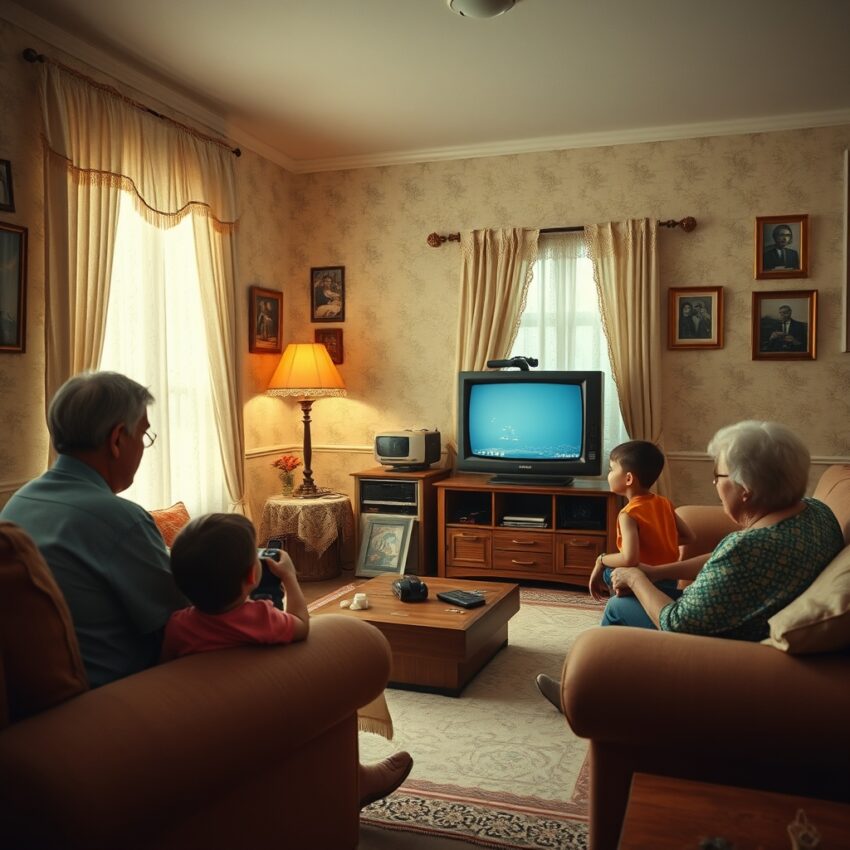
Bazı teknolojiler eve yalnız bir cihaz olarak değil, küçük bir tören düzeniyle girer. Atari konsolu da tam böyle hatırlanır. Hele bu deneyim anneanne evinin ağır perdeli salonunda, duvarda çerçeveli aile fotoğrafları dururken ve televizyonun hemen yanında eski filmlerden kalma bir ışık duygusu dolaşırken yaşanıyorsa, oyun açmak neredeyse başlı başına bir merasime dönüşürdü. Önce cihazın kutusu dikkatle yerinden çıkarılır, kablolar düğüm olmadan çözülür, kartuşun tozu üflenerek giderilir, televizyonun doğru kanalı bulunur, sonra herkes sesini biraz kısardı. Oyunu oynayan kişi kadar izleyenler de bu anın parçasıydı. Çünkü salonun içindeki sessiz heyecan, yalnız skorla ilgili değildi; bir evin kuşaklar arası ritmi ilk kez yeni bir teknoloji etrafında yan yana geliyordu.
Teknoloji Mirası açısından bakıldığında atari konsolu, 1980’ler ve 90’lar boyunca ev içi dijital deneyimin en erken ortak biçimlerinden birini temsil eder. Bugünün bireysel ekran alışkanlıklarından farklı olarak o yıllarda oyun, çoğu zaman tek kişinin elinde ama birçok kişinin bakışında yaşanırdı. Konsolun düğmesi açıldığında duyulan hafif elektronik uğultu, televizyon ekranında beliren ilk renkler, joystick’in elde bıraktığı plastik hissi, yalnız teknik ayrıntılar değildi; aile içi merakın biçim kazandığı işaretlerdi. Anneanne evinin gölgesi burada önemlidir, çünkü böyle evler yalnız fiziksel bir mekân değil, toplumsal hafızanın en yoğun depolarındandı. Köşede dantel örtüler, vitrin içinde kristal bardaklar, sehpanın altında dergiler, duvarda belki bir takvim yaprağı. Yeni gelen teknoloji, bu köklü düzeni bozmadan onun içine usulca yerleşirdi.
Bu yüzden atari oynamak çoğu zaman aceleyle yapılan bir eğlence değil, hazırlanılan bir seanstı. Eski filmlerin ışığında ifadesi boşuna çağrışım yaratmaz. Birçok evde televizyon, gün içinde Yeşilçam filmleri, haberler ve aile dizileriyle zaten evin ortak bakış noktasını oluşturuyordu. Akşamüstü o ekranın karşısına bu kez atari için oturulunca, salonun anlamı biraz değişir ama tamamen değişmezdi. Büyükler oyunun ne olduğunu tam çözmese bile ekrandaki hareketi izler, çocukların sevinç ya da hayal kırıklığına eşlik eder, bazen “bir daha dene” diyerek oyunun ritmine dahil olurdu. O anlarda teknoloji yabancı bir makine olmaktan çıkar, sohbet edilen, etrafına toplanılan, hatta kimi zaman misafire gösterilen bir ev olayı haline gelirdi.
Atari konsolunu törene dönüştüren şeylerden biri de kıtlıkla özen arasında kurulan dengedir. Her evde yoktu; olan evde de her zaman uzun uzun oynanmazdı. Elektrik, televizyon zamanı, dersler, misafir saatleri, büyüklerin dinlenme ihtiyacı, hepsi bu deneyimin sınırını çizerdi. Sınır olduğu için an daha kıymetli olurdu. Joystick sırayla el değiştirir, kartuş bazen komşudan ödünç alınır, oyunu iyi bilen çocuk yarı öğretmen gibi diğerlerine taktik verirdi. Anneanne ise bir köşede örgü örerken göz ucuyla ekrana bakabilir, “şu adam niye hep düşüyor” diye gülümseyebilirdi. İşte bu yumuşak karışım, yani yeni teknolojinin eski ev terbiyesiyle yan yana duruşu, hafızada derin iz bırakır. Konsolun etrafında yalnız oyun oynanmaz; aile içi roller de yeni bir sesle yeniden düzenlenirdi.
Bu deneyimin kültürel kıymeti, analog ile dijital arasındaki geçişi görünür kılmasında da saklıdır. Bir tarafta eski filmlerin duygusu, dantelli televizyon örtüsü, salondaki ağır mobilyalar; diğer tarafta piksel hareketleri, elektronik sesler ve oyun mantığı. Bu iki dünya çatışmadan aynı odada bulunabildiğinde, evin hafızası zenginleşirdi. Çocuk için bu sahne ileride teknolojiyle kuracağı ilişkinin ilk duygusal çerçevesini belirlerdi: cihaz, yalnız kullanım nesnesi değil, ailece etrafında toplanılan bir olaydır. Büyükler içinse oyun, genç kuşakların dünyasına uzaktan da olsa temas etme imkânı sunardı. Bu yüzden atari, anneanne evinin gölgesinde yalnız nostaljik bir cihaz değil, kuşaklar arasında sessiz bir tercümandı.
Bugün oyun dünyası taşınabilir ekranlar, çevrim içi bağlantılar ve kişisel hesaplarla çok daha yalnız bir kullanım biçimine sahip olabilir. Ama salonda toplanan ailelerin sessiz heyecanı eşliğinde atari konsolu kullanmanın neden tören gibi hatırlandığı açıktır. Çünkü orada teknoloji, evin gündelik düzenine saygı duyarak yer bulmuştu. Her düğme açılışı biraz hazırlık, biraz seyir, biraz bekleyiş, biraz da birlikte olma hissi taşıyordu. Anneanne evinin gölgesi derken kastedilen tam da budur: eşyanın ve insanların birbirini acele etmeden kabul ettiği, eski filmlerin ışığının yeni piksel dünyasına yumuşakça karıştığı bir kültürel eşik. Atariyi unutulmaz yapan, sadece oyunun kendisi değil; o oyunun oynanabilmesi için bir evin hep birlikte kurduğu sessiz törendir.
🇬🇧 English | Why Using a Game Console Alongside the Quiet Excitement of Families Gathered in the Living Room Was a Ceremony in Itself in the Shadow of Grandmother’s House and the Light of Old Films
Some technologies enter a home not merely as devices, but with the order of a small ceremony. The game console is remembered exactly that way. When the experience took place in the heavy-curtained living room of grandmother’s house, with framed family photographs on the wall and a television carrying the emotional glow of old films, turning on a game became almost ritual in itself. First the box was carefully taken out, the cables were untangled without knots, dust was blown off the cartridge, the correct television channel was found, and then everyone lowered their voice a little. The person holding the controller was not the only participant. Those watching were equally part of the moment. The quiet excitement filling the room was not only about the score. It was about different generations of a household gathering side by side around a new technology for the first time.
Seen as technological heritage, the console represents one of the earliest collective forms of digital experience inside the home during the 1980s and 1990s. Unlike the individual screen habits of today, gaming in those years was often lived in one person’s hands and many people’s gaze. The faint electronic hum when the console switched on, the first colors appearing on the television, the plastic feel of the joystick in the hand were not only technical details. They were signs of family curiosity taking shape. The shadow of grandmother’s house matters here because such houses were not just physical places. They were dense warehouses of social memory. Lace covers, crystal glasses behind the cabinet door, magazines under the table, perhaps a calendar page on the wall. New technology entered that established order quietly, without breaking it.
That is why playing the console was less a hurried amusement than a prepared session. The phrase in the light of old films is no empty image. In many homes, the television was already the common point of attention because of melodramas, news bulletins, and family series. When the same screen was claimed for a game in the late afternoon or evening, the meaning of the room shifted a little, but not completely. Older relatives might not fully understand the game, yet they still followed the movement on the screen, joined the children’s delight or disappointment, and sometimes entered the rhythm with a simple “try once more.” In those moments technology ceased to be a foreign machine. It became a household event, something spoken about, gathered around, and even shown to visitors.
One reason the console felt ceremonial was the balance between scarcity and care. Not every home had one, and even in homes that did, it was not used endlessly. Electricity, television time, homework, visiting hours, and adults’ need for quiet all drew the limits of the experience. Because there were limits, the moment became more precious. The joystick passed from hand to hand in turns, cartridges were sometimes borrowed from neighbors, and the child who knew the game best half became a teacher, giving tactics to the others. Grandmother might knit in the corner, watching the screen from the edge of her eye and smiling at the character who kept falling. This gentle mixture, new technology standing beside the old discipline of the home, is exactly what leaves such a deep mark in memory. Around the console, people were not only playing a game. Family roles themselves were being rearranged in a quieter tone.
The cultural value of this memory also lies in how clearly it reveals the passage between analog and digital. On one side stood the feeling of old films, the lace cover on the television, the heavy furniture of the living room. On the other stood pixel motion, electronic sounds, and game logic. When those two worlds shared the same room without conflict, the memory of the home became richer. For the child, the scene framed future relations with technology in emotional terms: a device is not merely something used, but something around which a household can gather. For elders, the game offered a way to touch the younger generation’s world from a respectful distance. That is why the console in grandmother’s house was not only a nostalgic object. It was a silent translator between generations.
Today the world of games may belong more to portable screens, online connections, and personal accounts. Yet it remains clear why using a console in the quiet excitement of families gathered in the living room is remembered almost as ceremony. Technology had found a place there without insulting the household’s everyday order. Every push of the power button carried preparation, watching, waiting, and togetherness. This is what is meant by the shadow of grandmother’s house: a cultural threshold where objects and people accepted one another without hurry, and where the glow of old films blended softly into the new world of pixels. What made the console unforgettable was not only the game itself, but the silent ritual a whole household built so that the game could happen at all.
🇧🇷 Português (Brasil) | Por Que Usar um Console de Atari Acompanhado pela Excitação Silenciosa das Famílias Reunidas na Sala Era por Si Só uma Cerimônia à Sombra da Casa da Avó e à Luz dos Filmes Antigos
Algumas tecnologias entram na casa não apenas como aparelhos, mas acompanhadas por uma pequena ordem cerimonial. O console de Atari é lembrado exatamente assim. Quando a experiência acontecia na sala de cortinas pesadas da casa da avó, com fotografias de família na parede e a televisão carregando aquela luz emocional dos filmes antigos, ligar um jogo virava quase um ritual completo. Primeiro a caixa era tirada do lugar com cuidado, os cabos eram desenrolados sem nós, a poeira do cartucho era soprada, o canal correto da televisão era encontrado e, então, todos baixavam um pouco o tom de voz. A pessoa com o controle na mão não era a única participante. Quem assistia também fazia parte do momento. A excitação silenciosa que enchia a sala não tinha a ver apenas com pontuação. Tinha a ver com diferentes gerações de uma casa ficando lado a lado diante de uma nova tecnologia.
Como herança tecnológica, o console representa uma das primeiras formas coletivas de experiência digital dentro do lar durante as décadas de 1980 e 1990. Diferentemente do hábito individual de telas de hoje, jogar naquele tempo era viver algo nas mãos de uma pessoa e no olhar de muitas. O leve zumbido eletrônico quando o aparelho era ligado, as primeiras cores aparecendo na televisão, a sensação plástica do controle eram mais do que detalhes técnicos. Eram sinais de uma curiosidade familiar ganhando forma. A sombra da casa da avó importa porque essas casas não eram apenas lugares físicos. Eram depósitos densos de memória social. Toalhinhas de renda, copos de cristal na cristaleira, revistas embaixo da mesa, talvez uma folhinha na parede. A nova tecnologia entrava nessa ordem antiga com delicadeza, sem desmontá-la.
Por isso jogar Atari era menos uma diversão apressada do que uma sessão preparada. A expressão à luz dos filmes antigos não é gratuita. Em muitas casas a televisão já era o ponto comum do olhar por causa dos melodramas, do jornal e das séries familiares. Quando aquela mesma tela era ocupada pelo jogo no fim da tarde ou à noite, o significado da sala mudava um pouco, mas não completamente. Os mais velhos talvez não entendessem o jogo por inteiro, mas acompanhavam o movimento na tela, partilhavam a alegria ou a frustração das crianças e às vezes entravam no ritmo com um simples “tenta mais uma vez”. Nesses instantes a tecnologia deixava de ser uma máquina estranha. Transformava-se num acontecimento doméstico, algo sobre o qual se conversava, em torno do qual se reunia a família e que até podia ser mostrado às visitas.
Uma das razões pelas quais o console parecia uma cerimônia estava no equilíbrio entre escassez e cuidado. Nem toda casa tinha um, e mesmo nas casas que tinham, ele não era usado sem limite. A conta de luz, o tempo da televisão, as lições da escola, o horário das visitas e a necessidade de descanso dos adultos desenhavam os contornos da experiência. Justamente por haver limites, o momento se tornava mais precioso. O controle passava de mão em mão, o cartucho às vezes vinha emprestado do vizinho e a criança que conhecia melhor o jogo virava meio professora, ensinando truques aos outros. A avó podia estar num canto tricotando, olhando de lado para a tela e sorrindo com o boneco que caía o tempo todo. Essa mistura suave, a nova tecnologia ao lado da velha disciplina da casa, é o que fica tão fundo na memória. Em volta do console, não se jogava apenas. Os papéis familiares também eram reorganizados em voz baixa.
O valor cultural dessa lembrança também está em mostrar com nitidez a passagem entre o analógico e o digital. De um lado estavam a sensação dos filmes antigos, a toalha rendada sobre a televisão, os móveis pesados da sala. Do outro estavam os pixels em movimento, os sons eletrônicos e a lógica do jogo. Quando esses dois mundos dividiam o mesmo cômodo sem conflito, a memória da casa se tornava mais rica. Para a criança, a cena definia de maneira afetiva sua futura relação com a tecnologia: o aparelho não é apenas algo que se usa, mas algo em torno do qual a família pode se reunir. Para os mais velhos, o jogo oferecia um modo de tocar o universo da geração jovem sem invadi-lo. Por isso o Atari na casa da avó não era apenas um objeto nostálgico. Era um tradutor silencioso entre gerações.
Hoje o universo dos jogos pode pertencer mais a telas portáteis, conexões online e contas pessoais. Ainda assim, é fácil entender por que usar um console acompanhado pela excitação silenciosa da família reunida na sala é lembrado como uma cerimônia. A tecnologia encontrou ali um lugar sem desrespeitar a ordem cotidiana do lar. Cada botão de ligar trazia preparação, observação, espera e convivência. É exatamente isso que significa a sombra da casa da avó: um limiar cultural em que objetos e pessoas se aceitavam sem pressa, e em que a luz dos filmes antigos se misturava suavemente ao novo mundo dos pixels. O que tornou o Atari inesquecível não foi apenas o jogo em si, mas o ritual silencioso que toda uma casa montava para que aquele jogo pudesse acontecer.