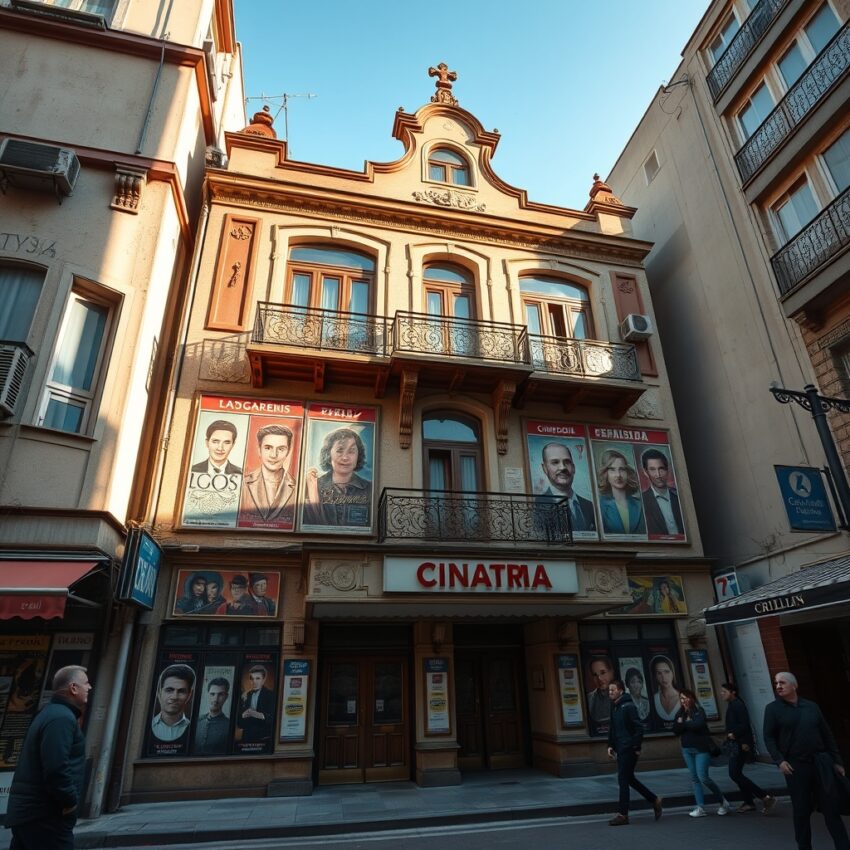
🇹🇷 Türkçe | Eski şehir hayatında konak sinemalarının yıldızlı afişlerle sokağı çağırdığı zaman: hafızada neden hâlâ bu kadar canlı cam açtıran sabahlar
Bazı sabahlar vardır; insan uyandıktan sonra önce ışığı değil sesi hatırlar. Eski şehirlerde konak sinemalarının bulunduğu sokaklarda sabah böyle açılırdı. Kepenkler yeni yeni kalkarken gece boyunca duvarda asılı kalmış yıldızlı afişler sabah güneşini ilk alan yüzler gibi parlar, pencereyi açanların gözü ister istemez o renkli kâğıtlara takılırdı. Bir önceki akşamın kalabalığı dağılmış olsa bile, afişlerin üzerinde hâlâ bir hareket hissi dururdu; iri harflerle yazılmış film isimleri, yana dönük bakışlarıyla ünlü oyuncular, abartılı el hareketleri, bazen bir kovboy şapkası, bazen işlemeli bir gece elbisesi. Mahallenin çocukları okula yetişmeden önce kısa bir an için başlarını kaldırır, büyükler ekmek almaya inerken vitrinin önünde yavaşlar, sinemanın henüz açılmamış kapısı bile sokağı kendi etrafında toplamayı başarırdı.
Zamanın İzinde bakıldığında konak sinemaları yalnız bir eğlence mekânı değildi; şehir hayatının gündelik ritmini belirleyen kültürel işaret taşlarıydı. 1950’lerden 80’lere kadar birçok Anadolu ve büyük şehir semtinde sinema binaları, belediye binası, pastane, fotoğrafçı ve eczane kadar tanınan yerlerdi. Gazetelerin ilan sayfalarında bugün vizyonda olan filmler küçük kutular içinde duyurulur, mahallelinin sohbetinde “öğlen seansı” ya da “cumartesi matinesi” sözü kendine kolayca yer bulurdu. Sinemanın afişi, gazetedeki ilanı ve hoparlörden duyulan fragman sesi aynı kültürel çevrimi tamamlıyordu. Bu yüzden sabah pencereyi açınca afişi görmek yalnız yeni bir film haberi almak değildi; şehrin o gün de yerinde durduğunu, tanıdık hayatın kendi törenini sürdürdüğünü anlamaktı.
Konak sinemalarının yıldızlı afişleri sokakla salon arasında kurulan görünmez köprünün en canlı parçasıydı. Afiş asan ustanın merdivenini duvara dayayıp nişan alarak kâğıdı germesi, köşelerde unlu yapıştırıcının hafif iz bırakması, bir önceki haftanın filmini söküp yerine yenisini yerleştirirken duvarda kısa süreli boşluklar açılması, bütün bunlar şehir estetiğinin gündelik ayrıntılarıydı. O afişler profesyonel grafik tasarım örnekleri oldukları kadar halkın hayal dünyasına açılan pencerelerdi. Bir melodramın iri gözlü kadın yüzü, bir tarihi filmin kılıçlı sahnesi, bir komedinin şen renkleri sokağın sabah ciddiyetini dağıtırdı. İnsanlar belki o gün sinemaya gitmeyeceklerdi ama afişe bakınca akşam için içlerinde küçük bir yer ayırırlardı. Şehir, böylece henüz yaşanmamış saatleri de hayal ederek genişlerdi.
Bu sabahların hafızada bu kadar canlı kalmasının bir nedeni de sinemanın toplumsal çeşitliliği aynı cephede buluşturmasıydı. Terzi çırağı, lise öğrencisi, öğretmen, memur eşi, bakkal çırağı, emekli dede; herkes aynı afişe bakar ama kendi içinden başka bir hikâye geçirirdi. Kimisi sevdiği oyuncunun adını arar, kimisi ailece gidilip gidilemeyeceğini düşünür, kimisi yalnızca renklerin sokağı nasıl değiştirdiğine bakardı. Sinema kapısı daha açılmadan bir ortak beklenti üretirdi. Bugünün dijital ekranlarından farklı olarak bu çağrı maddi ve yavaştı; duvara asılmış kâğıt rüzgârla hafifçe kıpırdar, güneş yükseldikçe renkleri değişir, akşama doğru gölgeler içinde başka bir hava kazanırdı. Yani afiş yalnız görüntü taşımıyor, gün boyunca şehrin ışığıyla birlikte yaşıyordu.
Ev içi hayat da bu afişlerin çevresinde görünmez biçimde şekillenirdi. Sabah çayı hazırlanırken “bugün şu film başlıyormuş” denir, öğleden sonra misafir varsa akşam programı ona göre ayarlanır, çocuklar iyi hal sözü verip pazar matinesine gitmenin hesabını yapardı. Sinema bir lüks olduğu kadar aile bütçesi içinde dikkatle seçilen bir sevinçti. Bu yüzden afiş, henüz satın alınmamış biletin heyecanını taşırdı. Pencereyi açan annenin afişe bakıp kendi gençliğinden bir oyuncuyu hatırlaması, babanın “bu artist eskiden de çok tutulurdu” diye söze karışması, çocukların renkli kılıçları ya da dans sahnelerini merak etmesi, sabahı sıradanlıktan çıkaran küçük kültürel alışkanlıklardı. Kent belleğinde iz bırakan tam da bu gündelik sahnelerdir.
Bugün eski konak sinemalarının çoğu kapanmış, bir kısmı düğün salonuna, mağazaya ya da boş bir cepheye dönüşmüş olabilir. Yine de o yıldızlı afişlerin sabah pencerelerini açtıran gücü hafızadan silinmiyor. Çünkü mesele yalnız film izlemek değildi; şehirle birlikte hayal kurabilmekti. Sokağın bir duvarında asılı duran afiş, gündelik hayatın içine biraz ihtimal, biraz şıklık, biraz başka dünya karıştırıyordu. Bir kentin kültürel mirası bazen en büyük anıtlarında değil, sabah güneşinde parlayan o kâğıt yüzeylerde saklanır. Konak sinemaları insanlara yalnız hikâye göstermedi; sokağın da bir sahne olabileceğini, pencere açmanın bile küçük bir kültür eylemine dönüşebileceğini öğretti. Bu yüzden o cam açtıran sabahlar hâlâ canlıdır; çünkü şehir, hafızasında kendi afişlerine uzun süre bakmayı hiç bırakmaz.
🇬🇧 English | When Mansion Cinemas in Old City Life Called the Street with Star-Filled Posters: Why Do Those Window-Opening Mornings Still Live So Vividly in Memory?
There are some mornings that people remember first by sound rather than by light. On the streets where old mansion cinemas stood, morning used to open exactly like that. As shutters slowly rose, the star-filled posters that had remained on the walls through the night caught the first sunlight like faces being awakened, and anyone opening a window found their eyes drawn toward those bright sheets of paper. Even after the crowd of the previous evening had disappeared, the posters still seemed full of motion: film titles written in oversized letters, famous actors turning their gaze toward the street, dramatic gestures, perhaps a cowboy hat, perhaps an embroidered evening dress. Children on their way to school lifted their heads for a moment, adults going down to buy bread slowed before the display, and even the unopened cinema door managed to gather the street around itself.
Seen along the trail of time, these mansion cinemas were never only entertainment venues. They were cultural markers that helped set the daily rhythm of urban life. From the 1950s through the 1980s, in many Anatolian towns and city districts, the cinema building was as recognizable as the municipality office, the pastry shop, the photographer, or the pharmacy. In newspaper listings, the films of the day appeared in small boxed advertisements, and in neighborhood conversations words like matinee and afternoon screening came naturally. The poster on the wall, the printed notice in the paper, and the trailer voice drifting from a loudspeaker formed one complete cultural circuit. For that reason, opening a window in the morning and seeing the poster was not merely learning about a new film. It was understanding that the city still held together, that the familiar life of the neighborhood was continuing its own ceremony.
The starry posters of the cinema were the liveliest part of the invisible bridge between street and auditorium. The man hanging them would lean a ladder against the wall, stretch the paper carefully into place, and leave faint traces of paste in the corners. He would remove the previous week’s film, creating a brief emptiness on the wall before fixing the new image there. All of this belonged to the everyday aesthetics of the city. Those posters were examples of graphic craft, but they were also windows into the public imagination. The large-eyed woman of a melodrama, the sword raised in a historical epic, the bright colors of a comedy all interrupted the morning seriousness of the street. People might not even plan to attend that day, yet after looking at the poster they silently set aside a small place in themselves for the evening. In that way the city widened through hours not yet lived.
Another reason those mornings remain so vivid is that the cinema brought social variety together on one façade. Apprentice tailors, high school students, teachers, grocers’ assistants, retired grandfathers all looked at the same poster and carried away a different story. One searched for the name of a beloved actor, another wondered whether the film was suitable for the whole family, another simply watched how the colors altered the street. The cinema produced a shared expectation before its doors even opened. Unlike today’s digital displays, that call was material and slow. The paper shifted slightly in the wind, its colors changed as the sun rose, and by evening it acquired a different mood in shadow. The poster did not only carry an image. It lived through the day along with the light of the city.
Domestic life, too, was quietly shaped around these posters. Over morning tea someone would say, “A new film starts today.” If there were guests in the afternoon, the evening plan would be adjusted around that possibility. Children would promise good behavior in hopes of earning a Sunday matinee. Going to the cinema was a pleasure, but also a carefully chosen expense within the family budget. That is why the poster held the excitement of a ticket not yet bought. A mother opening the window might remember an actor from her own youth, a father might add that the star had long been admired, and children might become curious about the colorful swords or dance scenes. These were the small cultural habits that lifted an ordinary morning beyond routine.
Today many of those old cinemas are closed, and some have become wedding halls, shops, or blank facades. Yet the force of those star-filled posters that once made people open their windows still has not left memory. The point was never only to watch a film. It was to imagine alongside the city. A poster hanging on a wall mixed possibility, elegance, and another world into everyday life. The cultural heritage of a city does not always survive in its grand monuments. Sometimes it remains in those paper surfaces shining in the morning sun. Mansion cinemas did not only show stories. They taught people that the street itself could become a stage, and that even opening a window could turn into a small act of culture. That is why those mornings remain vivid: because a city rarely stops looking at the posters it once loved.
🇧🇷 Português (Brasil) | Quando os Cinemas de Palacete na Vida das Cidades Antigas Chamavam a Rua com Cartazes Cheios de Estrelas: Por Que Aquelas Manhãs de Abrir a Janela Ainda Permanecem Tão Vivas na Memória?
Existem manhãs que a gente recorda primeiro pelo som, e só depois pela luz. Nas ruas onde ficavam os antigos cinemas de palacete, o dia começava exatamente assim. Enquanto as portas de ferro iam subindo devagar, os cartazes cheios de estrelas que tinham passado a noite inteira na parede recebiam o primeiro sol como rostos despertando, e quem abria a janela acabava olhando para aquelas folhas coloridas quase sem querer. Mesmo depois de a multidão da noite anterior já ter ido embora, os cartazes ainda pareciam guardar movimento: títulos de filmes em letras enormes, atores famosos olhando de lado, gestos exagerados, às vezes um chapéu de caubói, às vezes um vestido de festa bordado. As crianças a caminho da escola levantavam a cabeça por um instante, os adultos que desciam para comprar pão diminuíam o passo diante da vitrine, e até a porta ainda fechada do cinema conseguia reunir a rua ao seu redor.
No rastro do tempo, esses cinemas nunca foram apenas lugares de diversão. Eram marcos culturais que ajudavam a organizar o ritmo cotidiano da cidade. Entre as décadas de 1950 e 1980, em muitas cidades da Anatólia e em bairros urbanos, o prédio do cinema era tão reconhecível quanto a prefeitura, a confeitaria, o fotógrafo ou a farmácia. Nos anúncios dos jornais, os filmes do dia apareciam em pequenos quadros, e nas conversas do bairro expressões como sessão da tarde ou matinê de sábado circulavam com naturalidade. O cartaz na parede, o anúncio impresso no jornal e a voz do trailer vinda de um alto-falante completavam um mesmo circuito cultural. Por isso, abrir a janela de manhã e ver o cartaz não significava apenas descobrir um novo filme. Significava perceber que a cidade continuava no lugar, que a vida conhecida seguia realizando o seu próprio ritual.
Os cartazes estrelados dos cinemas eram a parte mais viva da ponte invisível entre a rua e a sala de exibição. O homem que os colava apoiava a escada na parede, esticava o papel com cuidado e deixava um leve vestígio de cola nos cantos. Retirava o filme da semana anterior, abria por um breve instante um vazio na parede e logo fixava ali a nova imagem. Tudo isso fazia parte da estética cotidiana da cidade. Esses cartazes eram exemplos de trabalho gráfico, mas também janelas para o imaginário popular. O rosto de olhos grandes de um melodrama, a espada erguida de um filme histórico, as cores alegres de uma comédia interrompiam a seriedade da manhã. As pessoas talvez nem fossem ao cinema naquele dia, mas depois de olhar o cartaz guardavam dentro de si um pequeno espaço para a noite. Desse modo, a cidade se ampliava com horas que ainda nem tinham acontecido.
Outra razão para essas manhãs continuarem tão vivas é que o cinema reunia diferentes camadas sociais numa mesma fachada. Aprendiz de alfaiate, estudante do ensino médio, professora, ajudante de mercearia, avô aposentado: todos olhavam para o mesmo cartaz, mas cada um levava consigo uma história diferente. Um procurava o nome do ator preferido, outro pensava se o filme era adequado para toda a família, outro simplesmente observava como as cores mudavam a rua. O cinema produzia uma expectativa comum antes mesmo de abrir as portas. Diferentemente das telas digitais de hoje, esse chamado era material e lento. O papel se mexia um pouco com o vento, as cores mudavam conforme o sol subia e, ao cair da tarde, o cartaz ganhava outro humor nas sombras. Ele não carregava apenas uma imagem. Vivia ao longo do dia junto com a luz da cidade.
A vida dentro de casa também se organizava silenciosamente em torno desses cartazes. Durante o chá da manhã alguém dizia “hoje estreia aquele filme”. Se houvesse visita à tarde, o plano da noite podia mudar. As crianças prometiam bom comportamento para ganhar a matinê de domingo. Ir ao cinema era um prazer, mas também uma alegria escolhida com cuidado dentro do orçamento doméstico. Por isso o cartaz carregava a excitação de um ingresso ainda não comprado. A mãe que abria a janela podia lembrar de um ator da própria juventude, o pai podia comentar que aquela estrela sempre fora muito admirada, e as crianças ficavam curiosas com espadas coloridas ou cenas de dança. São justamente esses pequenos hábitos culturais que retiravam a manhã da rotina comum.
Hoje muitos desses antigos cinemas já fecharam, e alguns viraram salões de casamento, lojas ou paredes vazias. Ainda assim, a força daqueles cartazes cheios de estrelas que faziam as pessoas abrir a janela de manhã não desapareceu da memória. A questão nunca foi apenas assistir a um filme. Foi imaginar junto com a cidade. Um cartaz preso na parede misturava possibilidade, elegância e outro mundo dentro da vida diária. O patrimônio cultural de uma cidade nem sempre sobrevive apenas em grandes monumentos. Às vezes permanece nessas superfícies de papel brilhando ao sol da manhã. Os cinemas de palacete não mostraram apenas histórias. Ensinaram que a própria rua podia virar palco e que até abrir uma janela podia se transformar num pequeno gesto cultural. É por isso que aquelas manhãs seguem tão vivas: porque uma cidade raramente deixa de olhar para os cartazes que um dia amou.