🇹🇷 Türkçe | Dönemin ruhunu ele veren o eski saatlerde kışın uzayan elektrik kesintilerinin sohbeti çoğalttığı akşamlar: geçmişe bakınca neden daha parlak görünüyor ıhlamur kokusuna dönen bahçeler
Kış akşamı erken iner, sokağın üstüne maviye çalan bir karanlık usulca serilirken evlerde ışıklar birer birer yanardı. Sonra, hiç beklenmedik bir anda, bütün mahalleyi aynı sessizlikte buluşturan o kesinti gelirdi. Televizyonun cızırtısı susar, buzdolabının uğultusu çekilir, odalarda yalnız sobanın içinden gelen hafif çıtırtı ile dışarıdaki rüzgârın sesine yer kalırdı. İlk birkaç saniye çocuklar şaşırır, büyükler pencereye yönelip karşı apartmanın da karanlığa gömüldüğünü görünce durum anlaşılırdı. Ardından çekmeceden mumlar çıkar, kibritin kısa parıltısı mutfakta belirir, salon başka bir zamana aitmiş gibi yeniden kurulurdu. Elektrik kesintisi bir eksiklikten çok, hayatın ritmini ansızın değiştiren ortak bir perde aralığıydı.
Zamanın İzinde bakıldığında bu uzun kesintiler, eski şehir hayatının teknik yetersizliğinden daha fazlasını anlatır. O yıllarda enerji altyapısındaki aksaklıklar sık yaşansa da mahalle insanı bu boşluğu yalnız şikâyetle değil, yeni bir birlikte olma biçimiyle doldururdu. Günlük telaşın üstünü örten cihazlar susunca ev içindeki sesler yeniden değer kazanırdı. Anne mutfaktan tarçınlı çayın kokusunu gönderir, baba sandalyesini sobaya biraz daha yaklaştırır, büyükanneler eski kışlardan söz açardı. Bir anda konuşmaların konusu okul notlarından komşu düğünlerine, odun fiyatlarından eski tramvay hatıralarına kadar genişlerdi. Sanki elektrik gidince yalnız ampuller değil, acele de kapanır; insanlar birbirine bakmak ve cümlelerini biraz daha uzun kurmak için zaman bulurdu.
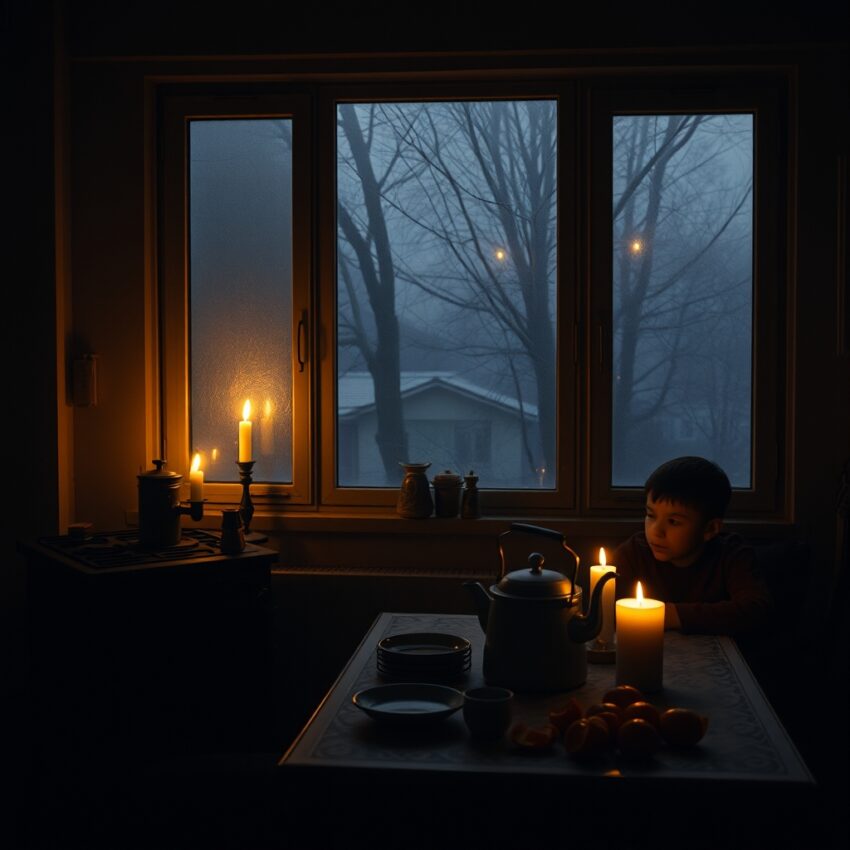
Bu akşamların hafızada parlak kalmasının nedeni yalnız mum ışığının sıcaklığı değildir. Asıl parıltı, karanlığın içinde belirginleşen ayrıntılardadır. Camın önünde bekleyen buğu, emaye çaydanlığın kapağındaki hafif titreşim, sehpanın üstüne bırakılan mandalina kabuklarının kokusu, battaniyenin altına toplanan kardeşlerin gölgeleri… Çocuklar için kesinti biraz oyundu; gölgeler duvara yansıtılır, fısıltıyla hikâyeler anlatılır, pencerenin ardından uzaktaki tek tük ışıklara bakılıp hangi sokakta elektrik geldiği tahmin edilirdi. Yetişkinler içinse bu saatler hayatın durup nefes aldığı aralıklardı. Komşular kapı aralığından seslenir, “sizdə de gitti mi” diye sorar, kimi zaman bir tabak sıcak çörek ya da demlikten bir bardak çay eşliğinde sohbet sahanlığa taşardı.
İlginç olan, elektrik kesintisinin yalnız ev içini değil bahçelerin hafızasını da değiştirmesiydi. Yazdan kalma kurumuş yaprakların arasına sinmiş ıhlamur kokusu, kış nemiyle yeniden yükselir; karanlık arttıkça dışarının kokusu eve daha belirgin gelirdi. Sokak lambaları yanmayınca pencere önündeki ağaçlar daha canlı görünür, dalların kıpırtısı daha dikkatle seçilirdi. Bugün geçmişe dönüp bakıldığında bahçelerin daha parlak görünmesinde biraz da bu vardır: Elektrik çekildiğinde göz yapay ışığın değil, gecenin ve kokunun tonlarına alışırdı. Karanlık, eşyayı eksiltmek yerine duyuyu çoğaltır; insanı bulunduğu yere daha dikkatle bağlardı.
Bugünün kesintisiz ekran çağında o akşamlar belki zahmetli görünebilir. Ama hatırada kalan şey mağduriyet değil, çoğalan sohbetin insana bıraktığı sıcaklıktır. Uzayan elektrik kesintileri mahalleyi aynı kırılganlıkta buluşturur, evleri birbirine biraz daha yaklaştırır, gündelik hayatın içindeki kültürel mirası görünür kılardı. Bugün bir mum kokusu, bir soba sesi ya da ıhlamur demlenen bir mutfak, o akşamları hemen geri çağırıyorsa bunun nedeni tam da budur: Karanlık, o yıllarda insanları birbirinden uzaklaştırmadı; aksine, aynı masanın çevresine biraz daha sıkı topladı.
🇬🇧 English | In Those Old Hours That Revealed the Spirit of an Era, the Evenings When Lengthening Winter Power Outages Multiplied Conversation: Why Do the Gardens Turning into the Scent of Linden Seem Brighter in Hindsight?
Winter evenings used to arrive early, laying a bluish darkness across the street while lights came on one by one inside the apartments. Then, without warning, the outage would come, bringing the whole neighborhood into the same hush. The hiss of television vanished, the refrigerator’s hum withdrew, and only the soft crackle of the stove and the wind outside remained. For a few seconds children looked startled, while adults moved toward the window, saw the building opposite had also fallen into darkness, and understood immediately. Candles were taken from drawers, a match flashed briefly in the kitchen, and the living room seemed to rebuild itself as if it belonged to an older time. A power cut was not only a lack. It was a shared opening in the curtain of daily life, abruptly changing the rhythm of the evening.
Seen along the trail of time, those long outages tell more than a story of technical insufficiency in old city life. Energy problems were indeed common, yet neighborhood life filled that gap not only with complaint, but with another form of togetherness. Once the devices that covered daily haste fell silent, the sounds inside the home regained their value. A mother sent the scent of cinnamon tea from the kitchen, a father drew his chair closer to the stove, grandmothers opened stories about older winters. Conversation widened at once, moving from school grades to wedding news, from the price of firewood to memories of old tram lines. It was as though electricity did not only take away light; it also switched off urgency itself, allowing people to look at one another and shape longer sentences.
What keeps those evenings bright in memory is not simply the warmth of candlelight. The real glow lies in details made sharper by darkness: mist gathering on the window, the faint tremor on the lid of an enamel kettle, mandarin peels left on the coffee table, the shadows of siblings gathered beneath the same blanket. For children, an outage carried an element of play. Hands became shadow figures on the wall, stories were told in whispers, and distant lights were watched from the window to guess in which street power had returned first. For adults, these hours were pauses in which life exhaled. Neighbors called through half-open doors to ask whether the electricity had also gone out there, and sometimes the conversation spilled into the landing with tea glasses or a plate of warm pastries.
What is striking is that the outage changed not only the rooms, but also the memory of the gardens outside. Linden fragrance caught in summer branches seemed to rise again through winter dampness, and the darker the street became, the more clearly the scent of the outdoors entered the house. Without streetlamps, the trees at the window appeared more alive, and the movement of branches became easier to notice. When the past is recalled now, perhaps that is one reason the gardens seem brighter: once artificial light withdrew, the eyes adjusted to the tones of night and scent instead. Darkness did not diminish the world. It deepened sensation and tied people more attentively to the place they inhabited.
In today’s age of uninterrupted screens, those outages may seem like inconvenience. Yet what remains in memory is not hardship, but the warmth left by conversation made fuller. The long winter cuts gathered the neighborhood into the same fragility, drew homes slightly closer to one another, and made everyday cultural inheritance visible. If a candle’s smell, the sound of a stove, or linden steeping in a teapot can still call those evenings back at once, the reason is simple: darkness did not push people apart then. It gathered them more tightly around the same table.
🇧🇷 Português (Brasil) | Naquelas Velhas Horas que Revelavam o Espírito de uma Época, as Noites em que os Longos Cortes de Energia do Inverno Multiplicavam as Conversas: Por que os Jardins Tomados pelo Perfume de Tília Parecem Mais Luminosos Quando Olhamos para Trás?
Nas antigas noites de inverno, a escuridão chegava cedo e pousava sobre a rua com um tom azulado, enquanto as luzes se acendiam uma a uma dentro das casas. Então, sem aviso, vinha o corte de energia e colocava o bairro inteiro dentro do mesmo silêncio. O chiado da televisão sumia, o zumbido da geladeira desaparecia, e restavam apenas o estalo suave do fogão e o vento do lado de fora. Por alguns segundos, as crianças se assustavam; os adultos iam até a janela, viam que o prédio em frente também estava apagado e entendiam na hora. As velas saíam das gavetas, o fósforo riscava um brilho breve na cozinha, e a sala parecia montada outra vez, como se pertencesse a um tempo mais antigo. A falta de luz não era apenas ausência. Era uma fresta comum que mudava de repente o ritmo da vida.
No rastro do tempo, esses longos apagões contam mais do que uma limitação técnica da antiga vida urbana. Os problemas de energia eram frequentes, mas o bairro preenchia esse vazio não só com reclamação, e sim com outra forma de convivência. Quando os aparelhos que cobriam a correria do dia se calavam, os sons da casa voltavam a ter valor. A mãe trazia da cozinha o cheiro do chá com canela, o pai puxava a cadeira para mais perto do fogão, as avós começavam a falar de invernos ainda mais antigos. A conversa se alargava depressa, passando das notas da escola para notícias de casamento, do preço da lenha para lembranças dos velhos bondes. Era como se a eletricidade não apagasse apenas as lâmpadas; apagasse também a pressa, devolvendo às pessoas o tempo de se olhar e de alongar as frases.
O que mantém essas noites luminosas na memória não é apenas o calor da vela. O verdadeiro brilho está nos detalhes que a escuridão deixava mais nítidos: o vapor na janela, a pequena vibração da tampa da chaleira esmaltada, as cascas de mexerica sobre a mesa, as sombras dos irmãos reunidos debaixo da mesma manta. Para as crianças, havia nisso um pouco de brincadeira. Faziam-se figuras na parede, contavam-se histórias em voz baixa, observavam-se luzes distantes para adivinhar em qual rua a energia tinha voltado. Para os adultos, eram horas em que a vida respirava devagar. Vizinhos chamavam pela porta entreaberta para perguntar se ali também tinha faltado luz, e às vezes a conversa avançava para o corredor com copos de chá ou um prato de bolo quente.
O mais curioso é que o apagão transformava não só o interior da casa, mas também a memória dos jardins. O perfume de tília preso aos galhos parecia subir de novo com a umidade do inverno, e quanto mais escura ficava a rua, mais claramente o cheiro de fora entrava em casa. Sem os postes acesos, as árvores diante da janela pareciam mais vivas, e o movimento dos galhos podia ser percebido com maior atenção. Talvez por isso, ao lembrar hoje, os jardins pareçam mais luminosos: quando a luz artificial saía de cena, os olhos se acostumavam aos tons da noite e do perfume. A escuridão não diminuía o mundo. Ela ampliava a sensibilidade e prendia as pessoas com mais cuidado ao lugar em que estavam.
Na era atual das telas sem interrupção, aquelas faltas de luz podem parecer apenas incômodo. Mas o que permanece na memória não é o desconforto, e sim o calor das conversas que cresciam. Os longos cortes de inverno reuniam o bairro na mesma fragilidade, aproximavam um pouco mais as casas e tornavam visível uma herança cultural do cotidiano. Se o cheiro de vela, o som do fogão ou uma chaleira com tília ainda conseguem trazer essas noites de volta, é por uma razão simples: a escuridão não afastava as pessoas. Ela as reunia com mais força ao redor da mesma mesa.