🇹🇷 Türkçe | Antenle Ayarlanan Şarkıların Etrafında Kurulan Analog Heyecan
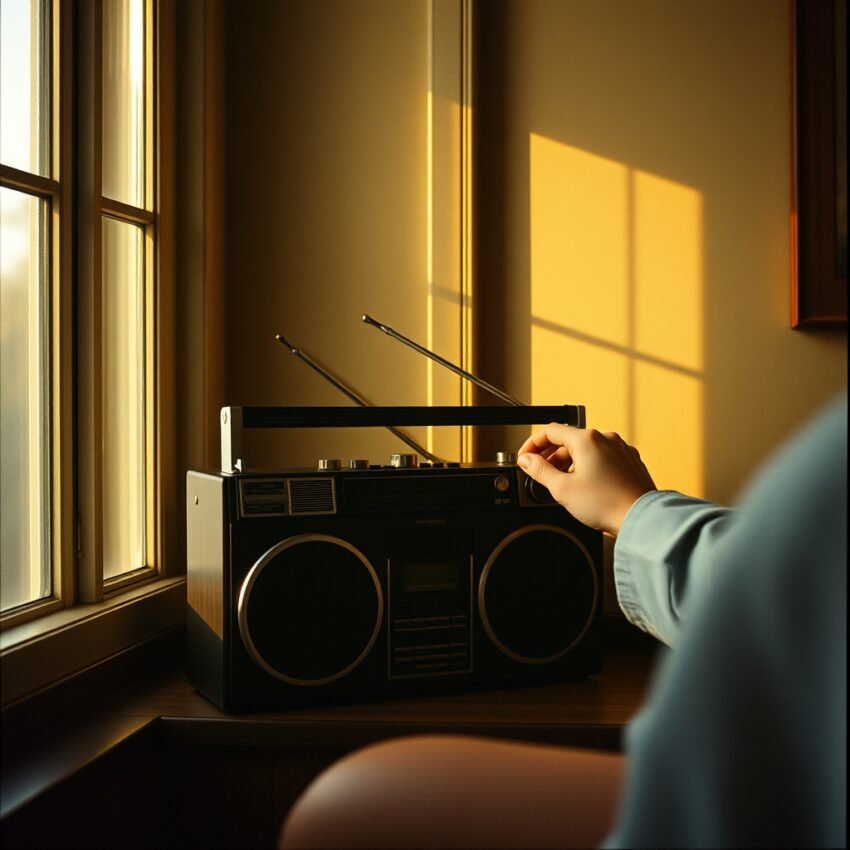
Bir zamanlar bir boombox açmak, bugünkü gibi tek tuşla arka plan sesi başlatmak değildi; başlı başına hazırlık, dikkat ve biraz da talih isteyen bir törendi. Cihaz pencereye yakın bir yere çekilir, teleskopik anten yavaşça uzatılır, sonra istasyonun sesi parazit içinden temiz çıkana kadar ince ayar başlardı. Kimi zaman çocuklardan biri cihazın yanında bekler, biri anteni tutar, biri de “şimdi oldu, biraz geri” diye seslenirdi. O küçücük hareketlerle netleşen müzik, sadece teknik bir başarı gibi hissedilmezdi. Sanki uzak bir yerden gelen ses, evin içine güçlükle ama gururla kabul edilmiş olurdu. Umut da tam o anda netleşirdi.
Teknoloji Mirası açısından boombox, taşınabilir olmasına rağmen etrafında insan toplayan nadir analog cihazlardan biriydi. İçindeki kaset mekanizması, radyo frekansı, çift hoparlörün hacimli sesi ve pil ya da priz arasında kurduğu ilişki, onu sadece dinleme aracı olmaktan çıkarırdı. Boombox bir dönemin sesle kurduğu özgürlük duygusunu temsil ediyordu. Ev içinde odadan odaya taşınabilir, balkona çıkarılabilir, yazlıkta verandaya konabilir ya da piknikte herkesin merkezine yerleşebilirdi. Fakat bütün bu serbestliğin içinde bir emek vardı: frekansı bulmak, cızırtıya sabretmek, doğru anda kayıt tuşuna basmak, sevilen şarkıyı kasete denk getirmek. Teknoloji ile kullanıcı arasında bugün pek az rastlanan karşılıklı bir dikkat ilişkisi kurulurdu.
Bu yüzden boombox kullanmak neden başlı başına bir törendi sorusunun cevabı, yalnız cihazın gösterişli oluşunda değil, etrafında gelişen ortak davranışlarda saklıdır. Yeni bir şarkı yakalanınca odadaki herkes susar, sunucunun araya girip girmeyeceği merak edilir, kaset koyulduysa “başladı mı” diye teyit alınırdı. Anten bazen sağa çevrilir, bazen pencere demirine yaklaştırılır, bazen cihazı birkaç santim kaldırmak bile sesi değiştirirdi. Çocuklar için bu, teknolojinin sihre benzeyen yüzüydü; yetişkinler içinse sabırla ödül arasındaki tanıdık köprü. Bir şarkının tertemiz gelmesi, o günün en küçük ama en gerçek başarısı sayılabilirdi. Çünkü alınan keyif kadar, ona ulaşmak için verilen uğraş da hafızaya yazılırdı.
Gündelik hayat ayrıntıları bu tören duygusunu iyice görünür kılar. Yaz akşamı balkon kapısı açıkken radyodan gelen hafif dip sesi, pilin zayıfladığını anlatan yorgun bir ton, kasetin dönmeye başlamasıyla birlikte çıkan mekanik güven hissi, hepsi aynı deneyimin parçasıydı. Mahallede yeni çıkan şarkılar böyle öğrenilir, maç anlatımı böyle kovalanır, hafta sonu programları böyle beklenirdi. Kimi evde boombox salondaki vitrinin yanına konur, kimi evde mutfakta yemek hazırlığına eşlik ederdi. Bir yerden sonra cihaz, sadece müzik çalmıyor; evin zamanını ayarlıyordu. Hangi saatte hangi programın başlayacağı, ne zaman sevilen DJ’in konuşacağı ya da hangi istasyonda daha temiz yayın alınacağı aile içinde bilinen küçük bir takvim hâline gelirdi.
Anteni çevirdikçe netleşen umut ifadesi, bu cihazın duygusal tarafını da güzelce anlatır. Çünkü boombox çağında ses hiçbir zaman tamamen hazır değildi; ona biraz yaklaşmak, biraz aramak gerekirdi. Bu arayış insanı pasif dinleyici olmaktan çıkarırdı. Kimi zaman frekans kaçar, kimi zaman komşu apartmanın duvarı sinyali bozar, kimi zaman aynı istasyona tekrar ulaşmak için hafızaya güvenmek gerekirdi. Fakat tam da bu yüzden, bulunan yayın daha değerli hissedilirdi. Bugün sonsuz seçenekler birkaç dokunuşla önümüze gelirken, o yıllarda bir şarkının temiz duyulması hem teknik hem duygusal bir kazanımdı. Boombox töreninin özü de buydu: sesin kendisi kadar, ona doğru birlikte yönelmek.
Sonuçta boombox kullanmak bir dönemde neden başlı başına tören sayıldı sorusunun cevabı, analog hayatın ölçüsünde saklıdır. O cihaz, anteniyle, kasetiyle, cızırtısıyla ve aniden temizleşen sesiyle insanlara yalnız müzik vermedi; beklemeyi, ayarlamayı, birlikte sevinmeyi de öğretti. Umut her çevrilen antenle biraz daha belirginleşir, şarkı odanın ortasına yerleşince sanki küçük bir zafer kazanılmış gibi hissedilirdi. Bu yüzden boombox, bir ses makinesinden fazlasıydı; bir kuşağın kulakla kurduğu ritüelin en canlı araçlarından biriydi.
🇬🇧 English | The Analog Excitement Built Around Songs Tuned by the Antenna
There was a time when turning on a boombox did not mean starting background sound with a single effortless touch. It was a ceremony of preparation, attention, and a little luck. The device was pulled close to a window, the telescopic antenna slowly extended, and then the fine adjustments began until the station emerged cleanly from the static. Sometimes one child stood by the machine, another held the antenna, and someone else called out, “Now it’s right, go back a little.” Music clarified by such tiny gestures never felt like a merely technical achievement. It felt as though a distant voice had been accepted into the home with difficulty, and with pride. Hope became clearer at the same moment the signal did.
From the perspective of technological heritage, the boombox was one of the rare analog devices that gathered people around itself even while promising portability. Its cassette mechanism, radio frequency tuning, the roomy sound of its twin speakers, and the choice between batteries and wall power made it more than a listening tool. It represented a period’s sense of freedom through sound. It could be carried from one room to another, set on a balcony, placed on a summer veranda, or taken to a picnic and made the center of everyone’s attention. Yet all of that freedom still required labor: finding the frequency, tolerating the hiss, pressing the record button at the right instant, and catching a beloved song on tape. A mutual relationship of attention existed between technology and user that is now far less common.
That is why using a boombox felt like a ceremony in itself. The answer lies not only in the device’s appearance, but in the shared behavior that developed around it. When a new song was finally caught, everyone in the room fell silent, wondering whether the radio host would interrupt, and if a cassette was in place someone asked whether the recording had begun. The antenna might be turned right, then left, brought closer to the window grille, or the machine itself lifted a few centimeters because even that could change the signal. For children this was the magical side of technology. For adults it was the familiar bridge between patience and reward. To hear a song arrive perfectly clear could feel like the smallest yet most genuine success of the day. The effort required to reach that moment became part of the memory along with the pleasure.
The details of daily life make that ceremonial feeling even more visible. The low background hum of the radio on a summer evening with the balcony door open, the tired sound that suggested the batteries were weakening, and the mechanical reassurance that came when the cassette began to turn all belonged to the same experience. New songs were learned this way, football commentary was chased this way, and weekend programs were waited for this way. In some homes the boombox stood beside the display cabinet in the living room, while in others it accompanied food preparation in the kitchen. After a point the device was not only playing music. It was organizing the time of the house. Families knew at what hour a favorite host would speak, when a particular program would begin, and which station could be received most clearly.
The phrase “hope growing clearer as the antenna turned” also explains the emotional side of the device. In the age of the boombox, sound was never entirely ready-made. One had to approach it, search for it, and earn it a little. That search kept people from being passive listeners. Sometimes the frequency slipped away, sometimes the neighboring building interfered, and sometimes one had to trust memory to find the same station again. Yet that was precisely why the signal, once found, felt more valuable. Today endless choices appear with a few taps, but then the clean arrival of a song was both a technical and emotional gain. That was the heart of the boombox ceremony: not only the sound itself, but the act of turning toward it together.
In the end, the reason a boombox felt like a ceremony lies in the scale of analog life itself. With its antenna, cassette, hiss, and suddenly clearing signal, it gave people not only music, but the habit of waiting, adjusting, and rejoicing together. Hope sharpened with every turn of the antenna, and when the song finally settled in the middle of the room it felt like a small victory had been won. That is why the boombox was more than a sound machine. It was one of the liveliest instruments of a generation’s ritual relationship with listening.
🇧🇷 Português (Brasil) | A Emoção Analógica Construída em Torno das Canções Sintonizadas pela Antena
Houve um tempo em que ligar um boombox não significava simplesmente colocar um som de fundo com um toque. Era uma cerimônia feita de preparo, atenção e um pouco de sorte. O aparelho era levado para perto da janela, a antena telescópica era erguida devagar e então começavam os ajustes finos até que a emissora saísse limpa do meio do chiado. Às vezes uma criança ficava ao lado do aparelho, outra segurava a antena, e alguém dizia “agora ficou bom, volta um pouco”. A música que se tornava nítida por meio desses pequenos gestos nunca parecia apenas um êxito técnico. Parecia que um som vindo de longe tinha sido recebido em casa com esforço e com orgulho. A esperança se tornava mais clara no mesmo instante em que o sinal se firmava.
Do ponto de vista do patrimônio tecnológico, o boombox era um dos raros aparelhos analógicos capazes de reunir pessoas à sua volta mesmo sendo portátil. O mecanismo da fita cassete, a sintonia da frequência, o volume generoso dos dois alto-falantes e a escolha entre pilha e tomada faziam dele algo mais do que um simples instrumento de escuta. Ele representava a sensação de liberdade que uma época construiu através do som. Podia ser levado de um cômodo a outro, colocado na varanda, usado na casa de veraneio ou levado a um piquenique para se tornar o centro da atenção. Mas toda essa liberdade exigia esforço: encontrar a frequência, suportar o chiado, apertar o botão de gravação no instante certo, capturar a música querida na fita. Havia uma relação de atenção mútua entre tecnologia e usuário que hoje quase não existe.
É por isso que usar um boombox parecia uma cerimônia em si. A resposta não está só no visual do aparelho, mas nos comportamentos coletivos que se formavam ao redor dele. Quando uma música nova era finalmente capturada, todos na sala ficavam em silêncio, curiosos para saber se o locutor entraria no meio, e se havia fita colocada alguém perguntava se a gravação já tinha começado. A antena era girada para um lado, depois para o outro, aproximada da grade da janela, e às vezes bastava levantar o aparelho alguns centímetros para o som mudar. Para as crianças, era o lado mágico da tecnologia; para os adultos, a velha ponte entre paciência e recompensa. Ouvir uma canção chegar limpa podia parecer a menor e mais verdadeira vitória do dia. O esforço de alcançar esse momento também ficava gravado na memória.
Os detalhes do cotidiano tornam essa sensação ainda mais visível. O ruído de fundo do rádio numa noite de verão com a porta da varanda aberta, o tom cansado que denunciava pilhas fracas, a segurança mecânica quando a fita começava a girar, tudo fazia parte da mesma experiência. As músicas novas eram conhecidas assim, a narração do jogo era perseguida assim, os programas de fim de semana eram esperados assim. Em algumas casas o boombox ficava ao lado da cristaleira; em outras, acompanhava o preparo da comida na cozinha. Depois de algum tempo, ele já não tocava apenas música. Passava a organizar o tempo da casa. Sabia-se em que hora o locutor favorito falaria, quando certo programa começaria e qual emissora chegava mais limpa.
A ideia de uma esperança que fica mais nítida a cada giro na antena também explica o lado afetivo desse aparelho. Na era do boombox, o som nunca vinha totalmente pronto. Era preciso se aproximar dele, procurá-lo, conquistá-lo um pouco. Essa busca impedia uma escuta passiva. Às vezes a frequência escapava, às vezes o prédio vizinho atrapalhava o sinal, e às vezes era preciso confiar na memória para encontrar a mesma estação de novo. Justamente por isso, o som encontrado parecia mais valioso. Hoje as opções infinitas aparecem com alguns toques, mas naquele tempo ouvir uma música sem ruído era uma conquista técnica e emocional. Esse era o centro da cerimônia do boombox: não apenas o som, mas o gesto de se voltar juntos para ele.
No fim, a razão de o boombox ter parecido uma cerimônia está na medida da própria vida analógica. Com sua antena, sua fita, seu chiado e seu som subitamente limpo, ele oferecia não só música, mas também o hábito de esperar, ajustar e se alegrar em conjunto. A esperança ganhava forma a cada giro da antena, e quando a canção se instalava no meio do cômodo parecia que uma pequena vitória tinha sido conquistada. Por isso o boombox era mais do que uma máquina de som. Era um dos instrumentos mais vivos do ritual de escuta de toda uma geração.