🇹🇷 Türkçe | Pencere Pervazlarında Kurulan Mahalle Sıcaklığı
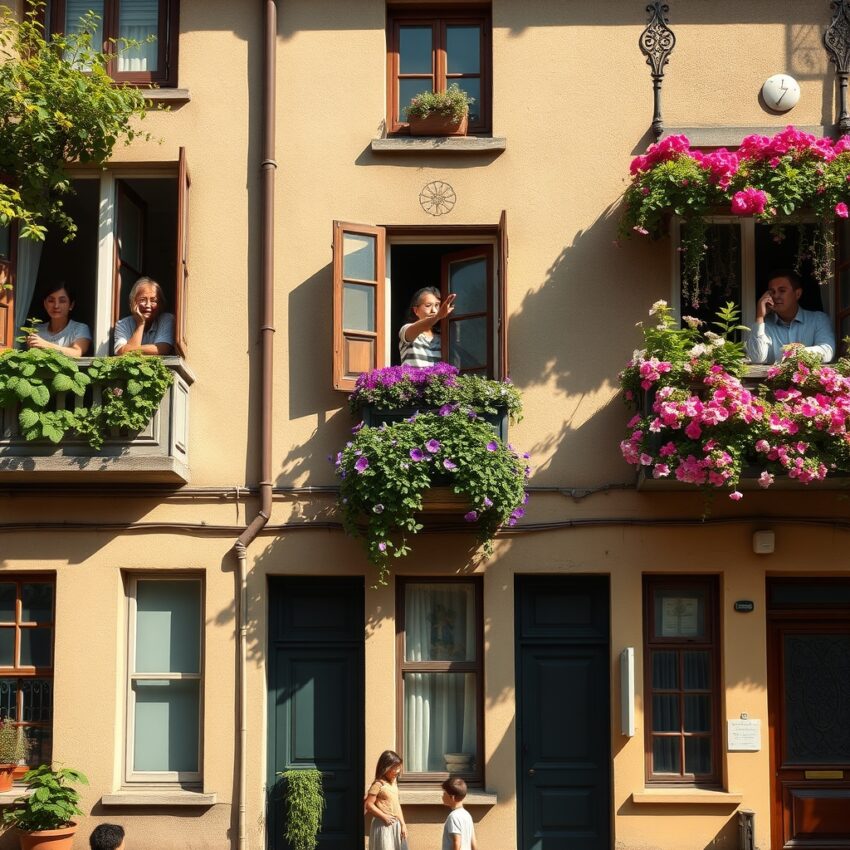
Bir zamanlar bir sokağın ne kadar yaşadığını anlamak için uzun uzun bakmaya gerek kalmazdı; pencere pervazlarına dizilmiş saksılar yeterdi. Sardunyalar, fesleğenler, menekşeler ve mevsime göre değişen küçük çiçekler, evlerin dışarıya bıraktığı en sessiz ama en içten selamdı. Sabah erken saatlerde perdeler aralanır, saksıların toprağı yoklanır, bakır bir ibrikten su dökülür, kuruyan yapraklar parmak ucuyla koparılırdı. Böylece pencere, yalnız ışık ve hava alan bir açıklık değil, ev ile sokak arasında kurulan sıcak bir temas noktası olurdu. Aşağıdan geçen komşu yukarı bakar, “çiçekler yine açmış” der, karşılıklı birkaç cümle bütün mahallenin gününü yumuşatmaya yeterdi.
Mahalle Kültürü içinde pencere pervazları, gündelik komşuluğun görünür hâle geldiği küçük sahnelerdendi. Kapı önü sohbetleri kadar dikkat çekmez, ama aynı derecede kuvvetli bir yakınlık üretirdi. Bir apartman cephesinin birbirinden farklı saksılarla canlanması, her evin kendi mizacını sokağa belli etmesi demekti. Kimi kırmızı sardunya sever, kimi reyhan koyar, kimi teneke kutuyu bile boyayıp saksıya çevirirdi. Bu küçük estetik uğraş, mahalle hayatının süssüz ama özenli tarafını gösterirdi. İnsanlar yaşadıkları yeri yalnız içeriden düzenlemez, dışarıdan görünen yüzüne de emek verirdi. Pencere pervazı bu yüzden sadece mimari bir detay değil, komşuluğun ince diliydi.
Bu sıcaklığın bugünün sitelerinde eksik hissedilmesinin nedeni yalnız mimari değişim değildir. Eski sokaklarda pencere, insanı dışarıdan tamamen ayıran bir sınır değil; sesi, kokuyu, selamı ve merakı geçiren yarı açık bir yerdi. Çocuklar sokakta oynarken yukarıdan saksı gölgeleri düşer, anneler pencereye dayanıp birini çağırır, akşamüstü yemek kokuları çiçek toprağına karışırdı. Site hayatında ise balkonlar camla kapanmış, cepheler birbirine benzemiş, ortak alanlar profesyonel peyzaja bırakılmıştır. Bitki vardır ama kişisel iz daha azdır. Saksının yerini düzenli çim, spontane selamın yerini güvenlik kapısı alınca sıcaklık da biraz kurumsallaşır. Eksilen şey çiçeğin kendisi değil, onun etrafında oluşan gündelik ilişki ağıdır.
Gündelik yaşam örnekleri bu farkı daha da belirginleştirir. Eskiden sabahları biri pencere önünde çiçek sularken karşı binadan reçel tarifi sorulur, öğleye doğru yaşlı bir teyze güneş alan saksıyı biraz sağa çeker, akşamüzeri çocuklardan biri topunu almak için zile basmadan önce yukarı bakıp “teyze atar mısın” diye seslenirdi. Çiçekler bu konuşmaların bahanesi gibi görünür, ama aslında onların düzenli olmasını sağlayan sosyal akışı beslerdi. Herkes birbirinin pencere pervazını az çok tanır, hangi evde hangi çiçeğin iyi tuttuğunu bilirdi. Böylece mahalle, yalnız adreslerden değil, görünür alışkanlıklardan oluşan bir canlılık kazanırdı.
Nostaljide parlayan şey biraz da bu görünür emektir. Pencere pervazına saksı koymak büyük bir yatırım değil, küçük ama süreklilik isteyen bir ilgiydi. Toprağı değiştirmek, yaprakları silmek, kırılan dalı bağlamak ve mevsime göre yerini ayarlamak, ev sahibinin sokağa karşı taşıdığı zarif sorumluluklardan biriydi. Bugün sitelerde temiz, düzenli ve güvenli bir yaşam olabilir; ama o eski sıcaklık, bireysel dokunuşların ortak manzaraya katılmasından doğuyordu. İnsanlar bir çiçeği göstererek birbirine yaklaşabiliyor, bir pencereyi görünce ev hakkında fikir edinebiliyordu. Bu yüzden bugünün düzenli cephelerinde aynı içtenlik her zaman bulunmuyor.
Sonuçta çiçek saksılarıyla süslenen pencere pervazları günleri, yalnız estetik bir mahalle ayrıntısı değil, birlikte yaşamanın görünür bir terbiyesiydi. O pervazlarda duran her saksı, eve ait bir özenin sokağa taşmış hâliydi. Bugün aynı sıcaklık bulunmuyorsa, bunun nedeni çiçeğin eksikliği değil; pencere ile sokak, komşu ile ev sahibi, içerisi ile dışarısı arasındaki ilişkinin seyrelmesidir. Eski mahalleler bazen bir sardunyanın kırmızısında, bazen ıslak toprağın kokusunda, bazen de yukarıdan aşağıya bırakılan kısa bir selamda yaşardı.
🇬🇧 English | Neighborhood Warmth Built on Window Sills
There was a time when one did not need to study a street for long to understand whether it was truly lived in. The flower pots lined along window sills were enough. Geraniums, basil, violets, and small seasonal blossoms were the quietest and most sincere greeting that homes offered to the outside world. Early in the morning curtains were parted, the soil in each pot was checked, water was poured from a copper pitcher, and dried leaves were pinched away with fingertips. In this way the window ceased to be merely an opening for light and air. It became a warm point of contact between home and street. A neighbor passing below would look up and say, “The flowers have opened again,” and a few exchanged words were enough to soften the whole day.
Within neighborhood culture, window sills were among the small stages on which everyday closeness became visible. They drew less attention than doorstep conversations, yet created an equally powerful familiarity. A building façade enlivened by different pots meant that each home revealed a little of its temperament to the street. One household preferred red geraniums, another basil, another turned a painted tin can into a planter. This modest aesthetic effort showed the unpretentious yet careful side of neighborhood life. People did not organize the place they lived only from within. They also gave care to the face that appeared outside. The window sill was therefore not simply an architectural detail, but a delicate language of neighborliness.
The reason that same warmth feels missing in today’s housing complexes is not only architectural change. In older streets, the window was not a firm barrier separating people from the outside, but a half-open place through which voices, scents, greetings, and curiosity could pass. While children played below, the shadows of flower pots fell over the pavement; mothers leaned out to call someone; in late afternoon the smell of dinner mingled with flower soil. In contemporary residential compounds, balconies are enclosed in glass, façades resemble one another, and shared outdoor beauty is handed over to professional landscaping. Plants are still present, but personal traces are fewer. Once the pot is replaced by uniform lawn and the spontaneous greeting by a security gate, warmth begins to feel institutional. What has diminished is not the flower itself, but the network of everyday relations around it.
The difference becomes clearer in daily scenes. In earlier times, while someone watered flowers at the window in the morning, a recipe for jam might be shouted from the opposite building. Near noon, an older woman would move a pot a little to the right to catch the sun. In the evening, a child who had lost a ball would look upward and call before ringing the bell. The flowers seemed to provide an excuse for these exchanges, yet they were also nourishing the social flow that made them possible. People knew one another’s window sills almost by heart and could tell which house kept what plant alive best. The neighborhood thus gained vitality not only from addresses, but from visible habits.
What shines in nostalgia is partly this visible labor. Placing flower pots on a window sill was not a grand investment, but a small, continuous act of attention. Changing the soil, wiping the leaves, tying a broken branch, and adjusting the pot with the season were among the graceful responsibilities a household carried toward the street. Today housing complexes may offer cleanliness, order, and security, but the older warmth came from individual gestures entering a shared view. People could move closer to one another through a single flower, and understand something about a home simply by seeing its sill. That is why the same sincerity is not always found on today’s neat façades.
In the end, the days when window sills were decorated with flower pots were not only an attractive neighborhood detail. They were a visible discipline of living together. Every pot placed on that ledge was a form of domestic care extended into public sight. If the same warmth is missing today, the reason is not the absence of flowers, but the thinning of the relationship between window and street, neighbor and resident, inside and outside. Old neighborhoods often lived in the red of a geranium, the smell of wet soil, or a brief greeting dropped from above.
🇧🇷 Português (Brasil) | O Calor do Bairro Construído nas Soleiras das Janelas
Houve um tempo em que não era preciso observar muito uma rua para saber se ela era realmente vivida. Bastavam os vasos alinhados nas soleiras das janelas. Gerânios, manjericão, violetas e pequenas flores da estação eram a saudação mais silenciosa e mais afetuosa que as casas ofereciam ao lado de fora. Logo cedo, as cortinas se abriam, a terra dos vasos era tocada com a mão, a água vinha de uma jarra de cobre e as folhas secas eram retiradas com a ponta dos dedos. Assim, a janela deixava de ser apenas uma abertura para luz e ar. Tornava-se um ponto de contato caloroso entre a casa e a rua. Quem passava embaixo olhava para cima, comentava que as flores tinham aberto de novo, e poucas palavras bastavam para tornar o dia mais leve.
Dentro da cultura de bairro, as soleiras das janelas eram pequenos palcos onde a proximidade cotidiana ganhava forma visível. Chamavam menos atenção do que as conversas na porta, mas produziam intimidade com a mesma força. Uma fachada enfeitada por vasos diferentes mostrava que cada casa deixava escapar um pouco do seu temperamento para a rua. Uma família gostava de gerânios vermelhos, outra preferia manjericão, outra pintava até latas antigas para transformá-las em vaso. Esse esforço estético discreto revelava o lado simples, mas cuidadoso, da vida de bairro. As pessoas não arrumavam apenas o interior da casa. Também cuidavam da face que aparecia para fora. Por isso a soleira não era só um detalhe arquitetônico, mas uma linguagem delicada de convivência.
O motivo de esse mesmo calor parecer ausente nos condomínios de hoje não está apenas na mudança da arquitetura. Nas ruas antigas, a janela não funcionava como uma barreira total entre a pessoa e o lado de fora, mas como um espaço meio aberto por onde passavam vozes, cheiros, cumprimentos e curiosidade. Enquanto as crianças brincavam na rua, as sombras dos vasos caíam sobre o chão; as mães se apoiavam na janela para chamar alguém; no fim da tarde o cheiro da comida se misturava com a terra úmida das plantas. Nos conjuntos residenciais atuais, as varandas foram fechadas com vidro, as fachadas ficaram parecidas e a beleza externa passou a ser entregue ao paisagismo profissional. As plantas continuam existindo, mas os sinais pessoais diminuíram. Quando o vaso é substituído pelo gramado uniforme e o cumprimento espontâneo pelo portão com segurança, o calor se torna mais impessoal. O que se perdeu não foi a flor, mas a rede de relações cotidianas criada em torno dela.
Os exemplos do dia a dia tornam essa diferença ainda mais nítida. Antigamente, enquanto alguém regava as flores de manhã, uma receita de geleia podia ser pedida da janela do prédio em frente. Perto do meio-dia, uma senhora mudava um vaso de lugar para pegar mais sol. No fim da tarde, uma criança que havia perdido a bola olhava para cima antes de tocar a campainha e chamava a vizinha. As flores pareciam apenas desculpas para essas trocas, mas na verdade sustentavam o fluxo social que as mantinha vivas. Todos conheciam mais ou menos a soleira uns dos outros e sabiam em qual janela cada planta crescia melhor. Assim, o bairro ganhava vitalidade não só pelos endereços, mas pelos hábitos visíveis.
O que brilha na nostalgia é também esse trabalho visível. Colocar vasos na soleira não exigia grande investimento, mas um cuidado pequeno e contínuo. Trocar a terra, limpar as folhas, amarrar um galho quebrado e mudar o vaso conforme a estação faziam parte das responsabilidades elegantes que a casa assumia diante da rua. Hoje os condomínios podem oferecer limpeza, ordem e segurança, mas aquele calor antigo nascia da entrada dos gestos individuais na paisagem comum. As pessoas podiam se aproximar umas das outras por causa de uma flor e imaginar algo da vida de uma casa apenas vendo sua janela. É por isso que a mesma sinceridade nem sempre aparece nas fachadas organizadas de hoje.
No fim, os dias em que as soleiras eram enfeitadas com vasos de flores não foram apenas um detalhe bonito da vida de bairro. Foram uma disciplina visível de convivência. Cada vaso colocado ali era um cuidado doméstico levado para o olhar de todos. Se esse mesmo calor parece faltar hoje, não é por ausência de flor, mas pelo enfraquecimento da relação entre janela e rua, vizinho e morador, interior e exterior. Os bairros antigos muitas vezes viviam no vermelho de um gerânio, no cheiro de terra molhada ou num cumprimento breve lançado de cima.