🇹🇷 Türkçe | Fotoğraf Stüdyolarının Ağır Kadifesinde Parlayan Aile Zamanı
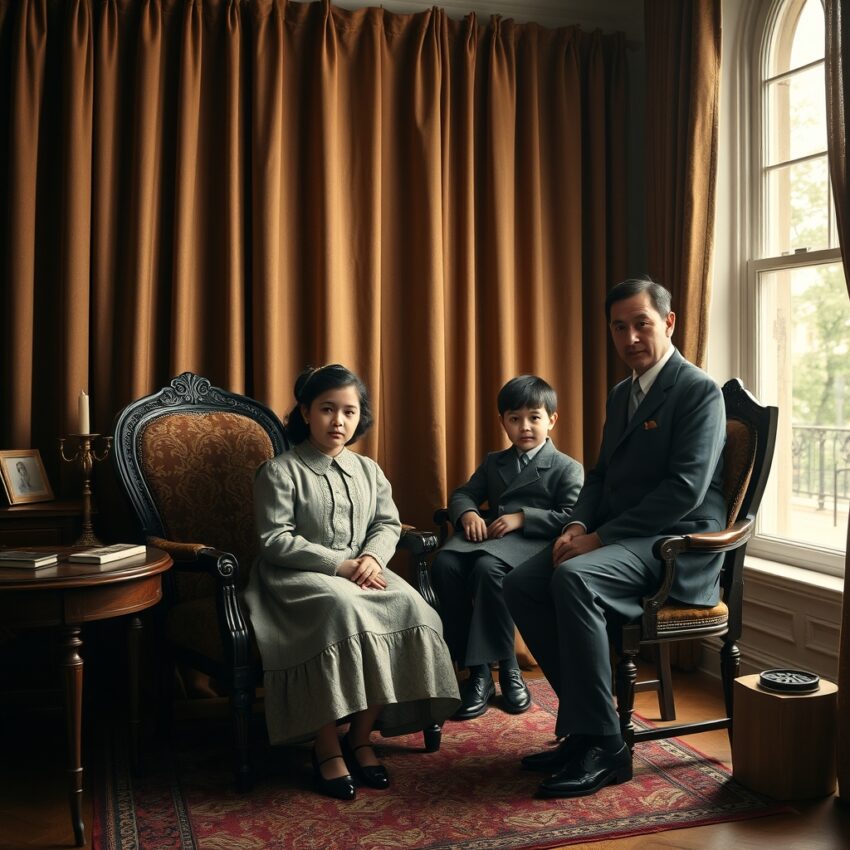
Bir zamanlar fotoğraf çektirmek, gündelik işlerin arasına sıkışan sıradan bir uğrak değil, aile tarihine usulca atılan ciddi bir imza sayılırdı. Mahallede “stüdyoya gidilecek” dendi mi evin içinde görünmez bir hazırlık başlar, ütü masası açılır, çocukların yakaları düzeltilir, ayakkabılara yeniden boya sürülürdü. Sokağa çıkıldığında havada ıhlamur, sabun ve hafif toz kokusu birbirine karışır; stüdyoya giden yol bile bir törene dönüşürdü. Camında solmuş harflerle fotoğrafçı yazan dükkânlar, dönemin ağırbaşlılığını taşıyan küçük mabedler gibiydi. İçeri girildiğinde kadife perde, işlemeli sandalye, sehpa üstündeki yapma çiçek ve fotoğrafçının temkinli sesi, insanların kendilerini bir anlığına gündelik hayattan daha düzenli, daha toplu, daha kalıcı hissetmesini sağlardı.
Zamanın İzinde bakıldığında fotoğraf stüdyoları yalnız portre üreten ticari mekânlar değildi; ailelerin kendilerini nasıl görmek istediklerini kayda geçiren kültürel alanlardı. Evlerin çoğunda günlük yaşamın koşuşturması, düzensiz odalar, aceleyle yenmiş sofralar ve sürekli hareket eden çocuklar vardı. Oysa stüdyo, bütün bu dağınıklığın karşısına seçilmiş bir düzen koyardı. Arkaya asılan fon, yan tarafa yerleştirilen sütun görünümlü dekor, koltuğun kenarına iliştirilen el ve objektife çevrilen sabırlı bakış, aileyi sanki zamanın önünde biraz daha derli toplu durmaya çağırırdı. Çekilen her kare, “biz buyuz” demekten çok, “biz böyle hatırlanmak istiyoruz” diyen bir niyet taşırdı. Bu yüzden stüdyo fotoğrafları sadece yüzleri değil, dönemin terbiyesini, sınıf arzusunu, zarafet anlayışını ve birlikte görünme biçimini de sakladı.
Geçmişe bakınca bu karelerin daha parlak görünmesinin bir nedeni de belleğin ışığı seçerek büyütmesidir. Eski albüm açıldığında yalnız fotoğrafın yüzeyi değil, o günün tamamı canlanır: annelerin saçları tararken söylediği sözler, babaların ceket düğmesini iliklemeden önce aynaya son kez bakışı, çocukların yerinde duramayıp azarlanışı, stüdyoya giderken uğranan pastane ya da dönüşte alınan kâğıt helva. Bahçelerde açan ıhlamur kokusu bu anların etrafına görünmez bir çerçeve kurar. Çünkü birçok aile için fotoğraf günü, mevsimin en güzel zamanlarına denk gelen bir dışarı çıkma vesilesiydi. Stüdyo dönüşünde gölgeli sokaklardan yürünür, elde zarif bir karton zarf taşınır, henüz basılmamış fotoğraf bile aile içinde şimdiden hatıraya dönüşmeye başlardı.
Gündelik hayatın içinden bakıldığında stüdyonun asıl büyüsü, insanlara kısa bir süreliğine kendi hayatlarının resmî misafiri olma duygusu vermesiydi. Fotoğrafçı çocukların çenesini hafifçe kaldırır, “kıpırdamayın” der, en küçük gülüşü bile ölçülü isterdi. Büyükanneler en iyi yazmalarını takar, genç kızlar tokalarının yamuk durup durmadığını kontrol eder, erkek çocukların saçları suyla bastırılırdı. Bazı aileler nişan öncesi, bazıları askere gidecek oğul için, bazıları ise şehir dışındaki akrabalara gönderilmek üzere fotoğraf çektirirdi. Böylece stüdyo, yalnız anı saklayan değil, uzakları birbirine bağlayan bir haberleşme alanına da dönüşürdü. Çerçevelenmiş bir aile fotoğrafı, salondaki vitrinin içinde, dantelin yanında, evin en sessiz tanıklarından biri hâline gelirdi.
Bugün bu görüntülerin daha sıcak ve parlak görünmesi biraz da eksiklerinden arınmış olmalarındandır. Siyah beyazın içine bakarken kimse o günkü geçim sıkıntısını, mutfakta eksik kalanları ya da aynı evde yaşanan küçük kırgınlıkları görmez; önce oturuş düzeni, sonra bakışların ciddiyeti, sonra da dönemin havası belirir. Bellek, ayrıntıları sertliklerinden arındırıp onları ıhlamur kokusuna dönen bir bahçe gibi yumuşatır. O yüzden fotoğraf stüdyolarının aile tarihini çerçevelediği dönem, geçmişe dönüp bakıldığında olduğundan daha aydınlık görünür. Çünkü insanlar yalnız yüzlerini değil, umutlarını da orada bir araya getirirdi.
Sonuçta eski saatlerde fotoğraf stüdyoları aile tarihini yalnız kaydetmedi; ona bir sahne, bir ciddiyet ve kalıcılık duygusu verdi. Bugün albümlerde duran o kareler, dönemin ruhunu taşıyan küçük belgeler gibi parlıyorsa, bunun nedeni yalnız teknik görüntü değil; o günün hazırlığı, sokağı, bahçesi, kokusu ve birlikte görünme arzusudur. İhlamura dönen bahçeler nasıl mevsimi hafızada yumuşatıyorsa, stüdyo fotoğrafları da aile geçmişini daha toplu, daha parlak, daha zarif bir hikâye olarak yeniden kurar. Onlara bakınca özlenen şey sadece genç yüzler değil, birlikte hatırlamanın eski terbiyesidir.
🇬🇧 English | Family Time Glowing Beneath the Heavy Velvet of the Photo Studio
There was a time when having a photograph taken was not an ordinary errand squeezed between daily tasks, but a serious signature gently placed into family history. Once it was said at home that “we are going to the studio,” an invisible preparation began. The ironing board was opened, children’s collars were straightened, and shoes were polished once more. Outside, the scent of linden, soap, and a little dust mixed in the air, and even the road to the studio became part of the ritual. Shops whose windows carried fading letters spelling photographer felt like small sanctuaries of the era’s dignity. Once inside, the velvet curtain, embroidered chair, side table with artificial flowers, and the photographer’s measured voice allowed people, for a brief moment, to feel more orderly, composed, and permanent than in everyday life.
Seen in historical perspective, photo studios were never merely commercial places that produced portraits. They were cultural rooms where families recorded how they wished to be seen. Most homes contained the rush of daily life: untidy rooms, hurried meals, restless children, unfinished tasks. The studio stood against all that with a chosen order. The backdrop hanging behind, the decorative column to the side, the hand placed carefully on the arm of the chair, and the patient gaze turned toward the lens all invited the family to stand a little more upright before time itself. Each photograph carried not only the statement “this is us,” but also the quieter intention “this is how we wish to be remembered.” That is why studio portraits preserved not only faces, but also the manners, aspirations, elegance, and shared posture of an era.
One reason these images seem brighter in memory is that memory enlarges light and softens difficulty. When an old album is opened, not only the photograph returns, but the entire day around it: mothers speaking while combing hair, fathers checking a jacket button one last time in the mirror, children being told to sit still, a stop at the pastry shop on the way, or the paper halva bought on the walk back. The scent of blooming linden trees frames these scenes with something almost invisible. For many families, a studio day was also an excuse to step out during the gentlest part of the season. They would return through shaded streets carrying an elegant cardboard sleeve, and even before the print was delivered, the moment had already begun turning into memory.
From the level of everyday life, the studio’s deepest charm lay in the way it made people feel like official guests in their own existence. The photographer would raise a child’s chin slightly and say, “Do not move,” asking even a smile to remain measured. Grandmothers wore their best scarves, young girls checked whether their hair clips sat straight, and boys had their hair pressed down with water. Some families came before an engagement, some for a son about to leave for military service, and some in order to send a portrait to relatives in another city. In that way, the studio became not only a keeper of memory, but also a quiet instrument of connection across distance. A framed family photograph placed inside the living room cabinet, beside lace and glassware, became one of the home’s most silent witnesses.
These images appear warmer and brighter today partly because they have been cleared of what weighed upon the day. Looking into black and white, no one immediately sees the worries over money, the shortages in the kitchen, or the small hurts that existed under the same roof. What appears first is the arrangement of bodies, the seriousness of the gaze, and the atmosphere of the era. Memory strips details of their sharpness and turns them into something gentler, like a garden transformed into the scent of linden. That is why the period when photo studios framed family history seems more luminous when we look back. People gathered not only their faces there, but also their hopes.
In the end, photo studios in those old hours did not simply record family history. They gave it a stage, a gravity, and a feeling of endurance. If those album photographs still shine like small documents of the era, it is not because of image quality alone, but because they hold the preparation, the street, the garden, the fragrance, and the desire to appear together. Just as linden-scented gardens soften the memory of a season, studio portraits rebuild family history as something more composed, more radiant, and more graceful. What we miss in them is not only youth, but the older discipline of remembering together.
🇧🇷 Português (Brasil) | O Tempo da Família Brilhando sob o Veludo Pesado do Estúdio Fotográfico
Houve um tempo em que tirar uma fotografia não era uma parada comum entre afazeres do dia, mas uma assinatura solene colocada com delicadeza na história da família. Quando se dizia em casa que “vamos ao estúdio”, começava uma preparação invisível. A tábua de passar era aberta, as golas das crianças eram ajeitadas, os sapatos recebiam mais uma camada de graxa. Na rua, o cheiro de tília, sabonete e um pouco de poeira se misturava no ar, e até o caminho até o estúdio ganhava tom de cerimônia. As lojas com a palavra fotógrafo escrita em letras já um pouco apagadas pareciam pequenos templos da compostura de outra época. Lá dentro, a cortina de veludo, a cadeira bordada, a mesinha com flores artificiais e a voz cautelosa do fotógrafo faziam todos se sentirem, por um instante, mais arrumados, mais compostos e mais duradouros do que na vida cotidiana.
Vista no tempo, a fotografia de estúdio nunca foi apenas um serviço comercial. Era um espaço cultural onde as famílias registravam como desejavam ser vistas. A maioria das casas era feita de pressa, quartos fora de ordem, refeições apressadas, crianças inquietas e tarefas interrompidas. O estúdio se erguia contra isso com uma ordem escolhida. O pano de fundo pendurado, a coluna decorativa ao lado, a mão pousada com cuidado no braço da cadeira e o olhar paciente dirigido à lente convidavam a família a se manter um pouco mais firme diante do próprio tempo. Cada retrato dizia não apenas “somos assim”, mas, de maneira mais silenciosa, “queremos ser lembrados assim”. Por isso as fotos de estúdio guardaram não só rostos, mas também a educação, a aspiração social, a ideia de elegância e a forma de aparecer junto de toda uma época.
Uma razão para essas imagens parecerem mais luminosas ao olhar para trás é que a memória amplia a luz e suaviza as durezas. Quando um álbum antigo se abre, não volta apenas a fotografia, mas o dia inteiro em torno dela: as mães falando enquanto penteavam os cabelos, os pais conferindo o botão do paletó pela última vez diante do espelho, as crianças sendo advertidas a ficar quietas, a parada na confeitaria ou a halva de papel comprada na volta. O perfume das tílias floridas emoldura tudo isso de modo quase invisível. Para muitas famílias, o dia do estúdio também era um motivo para sair de casa na parte mais bonita da estação. Voltava-se por ruas sombreadas com um envelope de papelão elegante nas mãos, e mesmo antes da revelação o momento já começava a virar lembrança.
No nível do cotidiano, o encanto mais profundo do estúdio estava em fazer as pessoas se sentirem hóspedes oficiais da própria vida. O fotógrafo levantava um pouco o queixo de uma criança e dizia para não se mexer, pedindo até que o sorriso fosse contido. As avós colocavam seus melhores lenços, as moças conferiam se as presilhas estavam direitas, e o cabelo dos meninos era abaixado com água. Algumas famílias iam antes do noivado, outras por causa de um filho que seguiria para o serviço militar, e outras para mandar um retrato a parentes distantes. Assim, o estúdio se transformava não só em guardião de memória, mas também em um instrumento discreto de ligação entre lugares. A foto da família emoldurada dentro do armário da sala, ao lado da renda e dos copos, tornava-se uma das testemunhas mais silenciosas da casa.
Hoje essas imagens parecem mais quentes e mais claras em parte porque já foram esvaziadas do peso do dia. Ao olhar para o preto e branco, ninguém vê primeiro a dificuldade financeira, as faltas na cozinha ou as pequenas mágoas sob o mesmo teto. O que aparece antes é a postura dos corpos, a seriedade dos olhares e o ar da época. A memória tira a aspereza dos detalhes e os transforma em algo mais macio, como um jardim convertido em perfume de tília. Por isso o período em que os estúdios fotográficos emolduravam a história da família parece mais luminoso quando olhamos para trás. Ali, as pessoas reuniam não só seus rostos, mas também suas esperanças.
No fim, os estúdios fotográficos daquelas velhas horas não registraram apenas a história familiar. Deram a ela um palco, uma solenidade e um sentimento de permanência. Se aquelas imagens de álbum ainda brilham como pequenos documentos de época, isso não se deve apenas à técnica da foto, mas ao fato de guardarem a preparação, a rua, o jardim, o cheiro e o desejo de aparecer juntos. Assim como os jardins perfumados de tília adoçam a memória de uma estação, os retratos de estúdio reconstroem o passado da família como algo mais composto, mais luminoso e mais elegante. O que se sente falta ali não é apenas da juventude, mas da antiga disciplina de recordar em conjunto.