Eski Pano
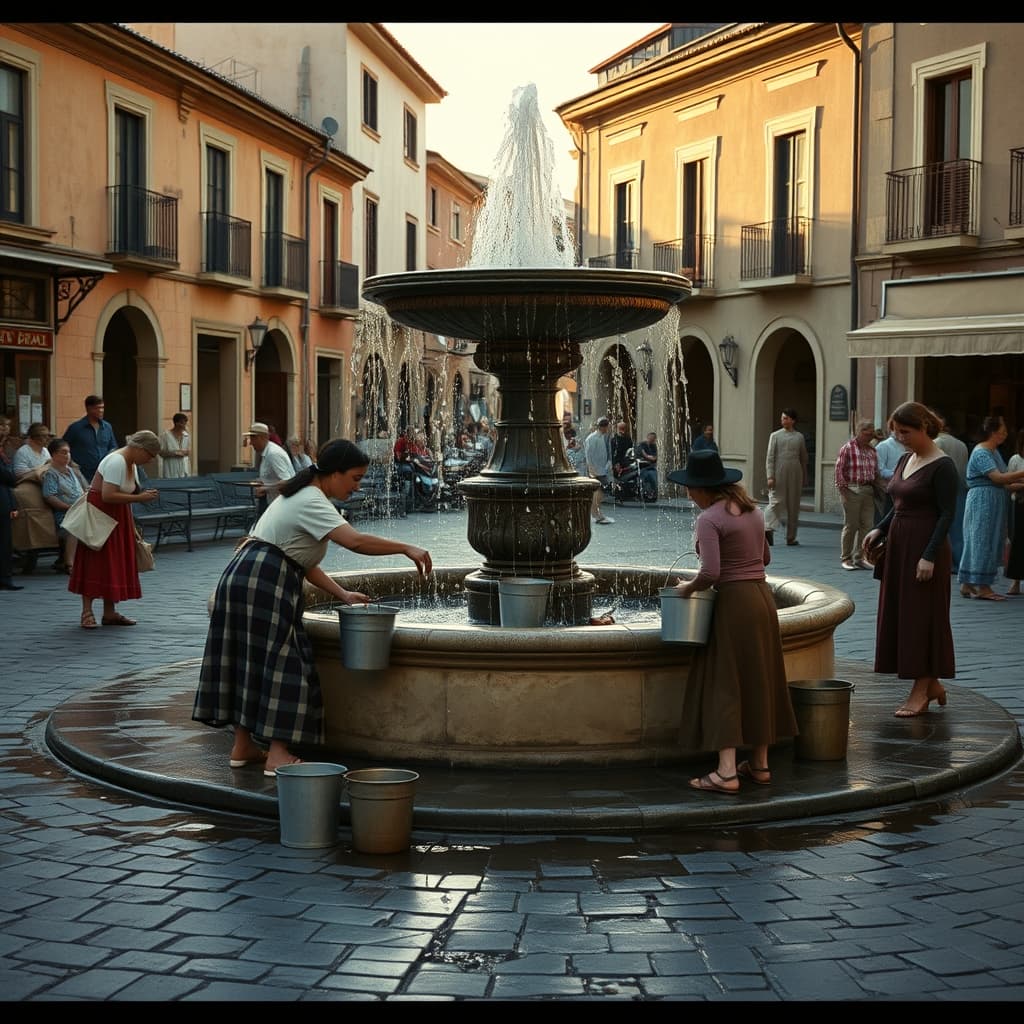
When the afternoon sun tilted over tiled roofs, the coolest shade of the neighborhood often gathered around the fountain. Tin buckets touched stone with a light metallic sound, and the thin ring of a copper ladle echoed through the street. People came not only for water but also for news, greetings, worry, and laughter. A child leaving home with the line “tell the neighbor on your way back” could turn a short water errand into a long conversation under shared shade.
In old urban life, the fountain was not merely infrastructure; it was a small public square that kept the rhythm of daily life. Before indoor plumbing became common, water was a blessing carried by effort, and that effort brought people to the same point. Some filled jars, some passed the ladle forward, some paused simply to breathe in cooler air. That pause taught a rhythm harder to find today: living without rushing, waiting in order, seeing one another in the process.
The micro-order around the fountain had its own etiquette. Newly married women learned which hour was less crowded in their first summers. Children learned how to fill a container without spilling by watching older hands. Elders watched sparrows on the trough and told stories: “Horse carts once passed this street.” In that way, the fountain carried oral history along with water. Memory was written less on walls and more in repeated encounters.
Season and weather deepened this scene. In hot months, cool water eased not only the body but also the tension of household routines. Before holidays, buckets filled and emptied quickly during deep-cleaning days. In Ramadan evenings, movement near the fountain connected naturally with last-minute grocery stops. The water route often became the bread route, the greeting route, the route of mutual support.
For children, this place became an early classroom of public life. They watched how adults asked after one another, who offered help first, who carried extra weight without being asked. Neighborhood culture was learned through these afternoon lessons, not from formal instruction. A social ethic grew there: asking for help was not shameful, delaying help was not admirable.
As technology advanced, homes gained plumbing systems and apartment buildings gained pressure pumps. Mandatory meetings at the fountain faded. Convenience increased, but spontaneous encounter decreased. Today one can live in the same building for years without learning a neighbor’s name; then, the time it took to fill one jar was enough to begin familiarity. That is why what remains in memory is not only the architecture of stone fountains, but the social feeling built around shared necessity.
Those cooling afternoons remain vivid because the city spoke a softer language there. A ladle of water offered to someone else, a gentle “you first,” a shared shoulder under a heavy bucket - these were forms of everyday grace. Many fountains are symbolic now, but their lesson is current: cities are made livable not only by structures, but by daily gestures that connect strangers. The coolness of those afternoons still flows in memory as a quiet correction to modern speed.
Neighborhood Fountain Afternoons: How Did Memories Accumulate in the Old City?