
Skip to content

Eski Pano

🇹🇷 Geçmişin güzelliğini keşfedin 🇬🇧 Exploring the beauty of the past 🇧🇷 Explorando a beleza do passado

Menu
  • Hakkımızda | About Us | Sobre Nós
  • İletişim | Contact | Contato
Menu

Anne Usulü Börek Geleneği: Eski Sofralarda Bu Lezzetin Yeri Neydi? | The Tradition of Homemade Börek: What Place Did This Flavor Hold at Old Tables? | A Tradição do Börek Caseiro: Qual Era o Lugar Desse Sabor nas Mesas de Antigamente?
Posted on 09/03/202609/03/2026 by admin

🇹🇷 Türkçe | Fırından Yükselen Koku, Evin Kalbine Kurulan Sofra

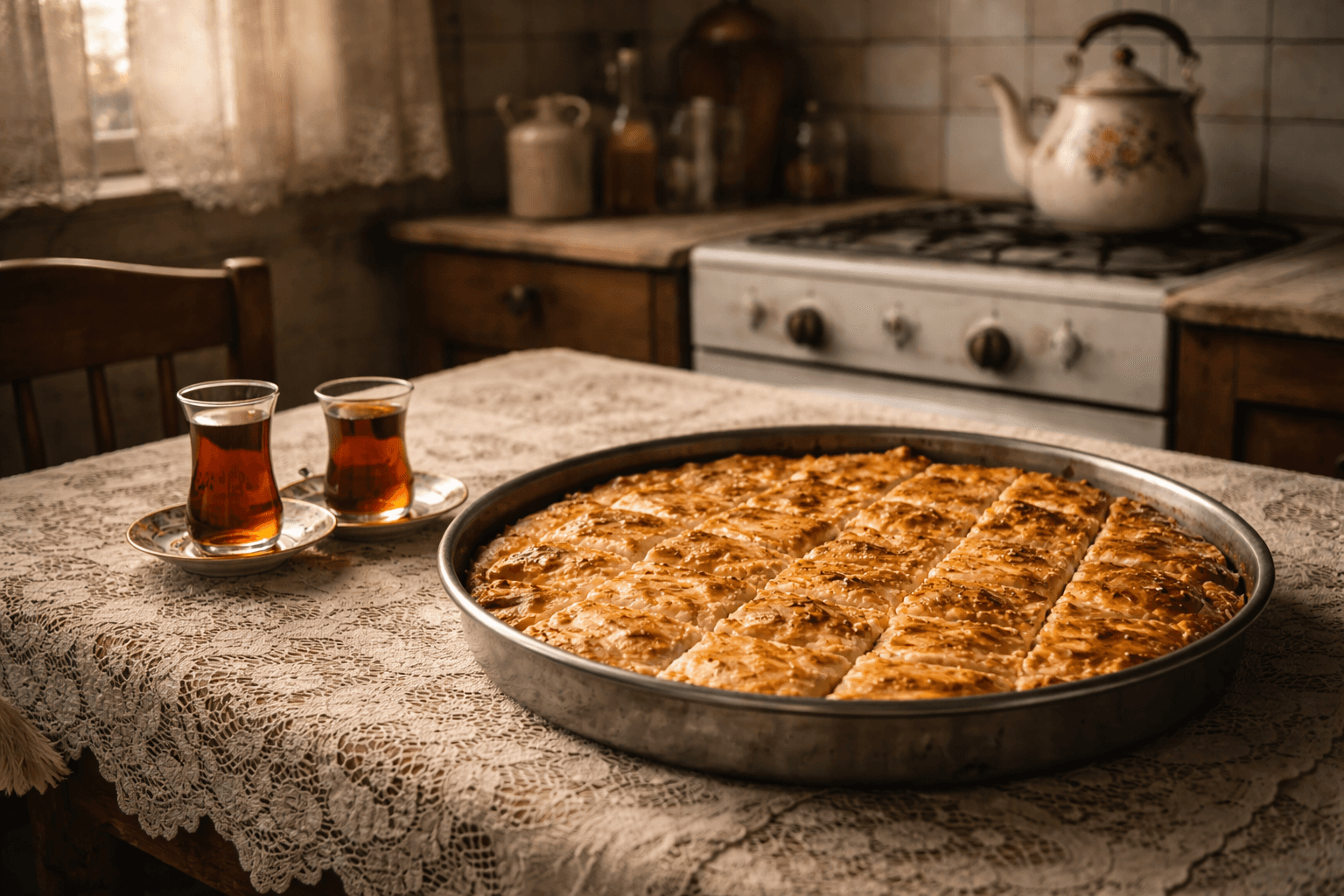
Bir zamanlar bir evin en tanıdık kokularından biri, fırından yeni çıkmış böreğin sıcak buharına karışan tereyağı ve hamur kokusuydu. Sabah erken saatlerde mutfaktan gelen o hazırlık sesi, günün sıradan başlamadığını haber verirdi. Tezgâha serilmiş ince yufkalar, derin bir kâsede hazırlanmış iç harç, ocağın yanında bekleyen çaydanlık ve mutfağın kapısından içeri sızan sabırsız bakışlar… Anne usulü börek, yalnızca bir yemek değil; evin ritmini, ailenin bir araya gelişini ve eski sofraların sessiz düzenini anlatan bir gelenekti.

Eski zamanlarda börek, gündelik hayatın içinde hem sade hem de özel bir yere sahipti. Her gün yapılmazdı belki ama yapıldığı gün evde küçük bir bayram havası oluşurdu. Komşu gelecektir, uzaktan akraba uğrayacaktır, çocukların okuldan dönüşü bekleniyordur ya da pazar sabahı aile biraz daha uzun oturacaktır… İşte o zaman mutfakta börek hazırlanırdı. Bu hazırlık, yalnızca karın doyurmak için değil, ev halkına “bugün biraz daha özenli bir gün” demek içindi.

Oklavanın Açtığı Yolda Saklı Emek

Anne usulü böreğin hikâyesi, çoğu zaman mutfağın en sessiz ama en çalışkan köşesinde başlardı. Hamur açılıyorsa un havaya hafifçe karışır, oklavanın tahtaya değen sesi evin içine düzenli bir ritim yayardı. Hazır yufka kullanılan evlerde bile bu iş basit sayılmazdı; her katın arasına sürülen yağ, iç harcın eşit dağıtılması, böreğin kenarlarının dikkatle kapatılması başlı başına bir özen işiydi.

Peynirli, kıymalı, patatesli ya da ıspanaklı… İç malzeme bazen mevsime göre, bazen evde ne varsa ona göre belirlenirdi. Ama sonucu değiştirmeyen bir şey vardı: börek her hâliyle “ev yapımı” olmalıydı. Çünkü onu değerli kılan yalnızca malzemesi değildi; onu hazırlayan elin ölçüsü, tecrübesi ve sevgisiydi. Bir annenin “göz kararı” dediği şey, aslında yılların biriktirdiği sessiz bir mutfak hafızasıydı.

Çay Saatlerinin ve Misafirliklerin Baş Tacı

Börek eski sofralarda çoğu zaman tek başına durmazdı. Yanında ince belli bardaklarda çay, küçük tabaklarda zeytin, domates, belki ev reçeli ya da birkaç parça beyaz peynir yer alırdı. Özellikle ikindi vakitlerinde, kapı çaldığında sofraya ilk konan şeylerden biri börek olurdu. Çünkü hem bereketliydi hem de paylaşmaya uygundu.

Mahalle kültürünün güçlü olduğu dönemlerde, komşuya “sıcak sıcak yaptım” diye tabakla börek gönderilirdi. Tepsiden birkaç dilim eksilir, biraz sonra tabak başka bir ikramla geri gelirdi. Böylece börek yalnızca ev içinde değil, evler arasında da bir bağ kurardı. Bayram sabahlarında, mevlit günlerinde, kız isteme akşamlarında, okuldan dönen çocukların açlığında… Her durumda börek sofraya yakışan, insanı mahcup etmeyen, evi temsil eden bir lezzetti.

Çocuklar için de böreğin ayrı bir yeri vardı. Fırından çıktığında ilk dilimi kimin alacağı küçük bir heyecan yaratırdı. Kızarmış üst katı hafifçe çıtırdar, içinden yükselen buhar mutfağın camını buğulandırırdı. Çoğu çocuk için börek, yalnızca bir tat değil; eve dönüş, güven ve sıcaklık hissiydi.

Eski Sofraların Sessiz Kahramanı

Bugün hızlı tarifler, hazır atıştırmalıklar ve tek kişilik öğünler daha yaygın olabilir. Ama anne usulü börek, eski sofralarda başka bir anlam taşırdı. O, sabrın yemeğe dönüştüğü bir tarifti. Tepsiyle yapılırdı; çünkü yalnızca bir kişiye değil, aileye, misafire, komşuya göre düşünülürdü. Sofraya konduğunda herkesin payı vardı.

Bu yüzden börek, eski sofralarda sadece “yenilen” bir şey değildi. O sofranın merkezine yerleşen, insanları masanın etrafında toplayan, kokusuyla evin ruhunu değiştiren bir unsurdu. Bir dilim börek bazen uzun bir sohbetin başlangıcı, bazen kalabalık bir pazar kahvaltısının neşesi, bazen de okuldan dönmüş bir çocuğa sessizce söylenen “hoş geldin” demekti.

Anne usulü börek geleneği bugün hâlâ yaşamaya devam ediyorsa, bunun sebebi yalnızca lezzeti değildir. Onun içinde aile hafızası, mutfak terbiyesi, paylaşma alışkanlığı ve geçmişten bugüne taşınan bir sıcaklık vardır. Eski sofralarda böreğin yeri tam da buydu: karın doyurmaktan öte, ev olmanın tadını hatırlatmak.


🇬🇧 English | The Aroma Rising from the Oven, the Table Set at the Heart of the Home

There was once a familiar household scent that could change the mood of an entire day: the warm, buttery aroma of freshly baked börek rising from the oven. From the early hours of the morning, the sounds coming from the kitchen signaled that this was not an ordinary day. Thin pastry sheets spread across the counter, a bowl of filling waiting nearby, the kettle murmuring on the stove, and impatient glances slipping through the kitchen door… Homemade börek was never just food. It was a tradition that reflected the rhythm of the home, the gathering of the family, and the quiet order of old tables.

In earlier times, börek held a place that was both simple and special in daily life. It may not have been made every day, but whenever it was prepared, the house seemed to enter a small celebration. A neighbor was expected, relatives might stop by, children would soon return from school, or perhaps it was a slow Sunday morning when the family would linger a little longer around the table. On such days, börek was made not merely to feed the household, but to say, in a quiet way, “today is a day prepared with care.”

Labor Hidden in the Path of the Rolling Pin

The story of homemade börek often began in the quietest but busiest corner of the kitchen. If the dough was made from scratch, a light cloud of flour would rise into the air, while the rolling pin tapped the board in a steady rhythm. Even in homes where ready-made pastry sheets were used, the process was never casual. The oil or butter spread between each layer, the filling distributed evenly, the edges carefully folded—each step required attention.

Cheese, minced meat, potato, spinach… the filling changed according to the season or according to whatever was available at home. Yet one thing never changed: börek had to taste homemade. What made it precious was not only the ingredients, but the hand that prepared it—the instinct, experience, and affection behind it. What mothers often called “measuring by eye” was in truth a quiet culinary memory built over many years.

The Crown of Tea Time and Hospitality

At old tables, börek rarely stood alone. It was often served with tea in tulip-shaped glasses, small plates of olives, sliced tomatoes, perhaps homemade jam or white cheese. Especially in the late afternoon, when a knock came at the door, börek was among the first dishes placed on the table. It was generous, practical, and made for sharing.

In neighborhoods where social ties were strong, warm slices of börek were often sent to neighbors with the simple phrase, “I just made it.” A few pieces would leave the tray, and before long the plate might return with another homemade treat. In this way, börek connected not only people within a household, but homes to one another. On holiday mornings, at prayer gatherings, on evenings of family visits, or when hungry children came back from school, börek was the kind of food that never felt out of place. It represented the home itself.

For children, too, börek had a special place. The question of who would get the first slice fresh from the oven brought a little excitement. The browned top layer crackled softly, and steam rose from the inside, fogging the kitchen windows. For many children, börek was more than flavor—it was the feeling of coming home, of safety, and of warmth.

The Quiet Hero of Old Tables

Today, quick recipes, packaged snacks, and individual meals may be more common. Yet homemade börek carried a different meaning at old tables. It was a recipe in which patience turned into nourishment. It was made in trays, because it was never meant for one person alone, but for family, guests, and neighbors. When it was set on the table, everyone had a place in it.

That is why börek was never merely something to be eaten. It sat at the center of the table, gathered people around it, and transformed the atmosphere of the house with its aroma. A slice of börek could be the beginning of a long conversation, the joy of a crowded Sunday breakfast, or a quiet way of saying “welcome home” to a child returning from school.

If the tradition of homemade börek still lives on today, it is not only because of its taste. Within it live family memory, kitchen discipline, the habit of sharing, and a warmth carried from one generation to the next. That was its place at old tables: not simply to satisfy hunger, but to remind people what it meant to belong to a home.


🇧🇷 Português (Brasil) | O Aroma que Saía do Forno, a Mesa Montada no Coração da Casa

Houve um tempo em que um dos cheiros mais familiares de uma casa era o aroma amanteigado do börek recém-saído do forno. Desde as primeiras horas da manhã, os sons vindos da cozinha já anunciavam que aquele não seria um dia comum. Massas finas abertas sobre a bancada, o recheio preparado em uma tigela funda, a chaleira aquecendo ao lado do fogão e olhares curiosos entrando pela porta da cozinha… O börek feito à moda da mãe nunca foi apenas uma comida. Era uma tradição que revelava o ritmo da casa, a reunião da família e a ordem silenciosa das mesas antigas.

Antigamente, o börek ocupava um lugar ao mesmo tempo simples e especial na vida cotidiana. Talvez não fosse preparado todos os dias, mas, quando era feito, o ambiente da casa parecia ganhar um pequeno ar de festa. Talvez viesse uma vizinha, um parente de longe aparecesse, as crianças estivessem voltando da escola ou fosse uma manhã de domingo em que a família ficaria mais tempo à mesa. Nesses momentos, o börek não era preparado apenas para matar a fome, mas para dizer, de forma silenciosa: “hoje é um dia feito com mais cuidado.”

O Trabalho Escondido no Caminho do Rolo de Massa

A história do börek caseiro quase sempre começava no canto mais silencioso e mais ocupado da cozinha. Quando a massa era aberta em casa, a farinha subia levemente no ar, e o som do rolo batendo na madeira criava um ritmo constante. Mesmo nas casas em que se usava massa pronta, o preparo nunca era algo banal. A manteiga ou o óleo entre as camadas, o recheio distribuído com atenção, as bordas fechadas com cuidado… tudo exigia dedicação.

Queijo, carne moída, batata, espinafre… o recheio variava conforme a estação do ano ou conforme aquilo que havia disponível em casa. Mas havia algo que não mudava: o börek precisava ter gosto de comida feita em casa. O que lhe dava valor não era apenas o ingrediente, mas a mão que o preparava — a experiência, a prática e o afeto. O famoso “olhômetro” das mães era, na verdade, uma memória culinária silenciosa construída ao longo dos anos.

A Estrela do Chá da Tarde e das Visitas

Nas mesas antigas, o börek quase nunca aparecia sozinho. Ao lado dele vinham copos delicados de chá, pequenos pratos com azeitonas, tomates fatiados, talvez geleia caseira ou queijo branco. Especialmente no meio da tarde, quando alguém batia à porta, o börek era uma das primeiras coisas colocadas sobre a mesa. Era farto, prático e perfeito para compartilhar.

Nos tempos em que a vida de bairro era mais próxima, era comum mandar alguns pedaços ainda quentes para a casa da vizinha com a frase: “fiz agora há pouco.” Alguns pedaços saíam da assadeira, e pouco depois o prato voltava com outro agrado. Assim, o börek criava laços não apenas dentro de casa, mas também entre as casas. Em manhãs de festa, reuniões familiares, encontros religiosos ou na volta das crianças da escola, ele era sempre uma presença acolhedora. Representava a própria casa.

Para as crianças, o börek também tinha um lugar especial. Quem ficaria com o primeiro pedaço saído do forno era sempre motivo de pequena disputa. A camada de cima, dourada, fazia um leve som crocante, e o vapor do recheio subia até embaçar os vidros da cozinha. Para muitas crianças, o börek era mais do que sabor — era a sensação de voltar para casa, de segurança e de aconchego.

O Herói Silencioso das Mesas Antigas

Hoje, receitas rápidas, lanches industrializados e refeições individuais podem ser mais comuns. Mas o börek feito à moda antiga tinha outro significado nas mesas do passado. Era uma receita em que a paciência se transformava em alimento. Era feito em grandes assadeiras porque nunca era pensado para uma só pessoa, mas para a família, os convidados e os vizinhos. Quando chegava à mesa, havia espaço para todos nele.

Por isso, o börek nunca foi apenas algo para ser comido. Ele ocupava o centro da mesa, reunia as pessoas ao redor e mudava a atmosfera da casa com o seu aroma. Um pedaço de börek podia marcar o começo de uma conversa longa, trazer alegria a um café da manhã de domingo ou dizer silenciosamente “bem-vindo de volta” a uma criança que acabava de chegar da escola.

Se a tradição do börek caseiro ainda vive hoje, não é apenas por causa do sabor. Dentro dela estão guardadas a memória familiar, a disciplina da cozinha, o hábito de compartilhar e um calor humano transmitido de geração em geração. Esse era o seu verdadeiro lugar nas mesas antigas: mais do que alimentar, lembrar às pessoas o gosto de estar em casa.


Category: Damak Hafızası / Taste of Memory / Memória do Paladar

Yazı gezinmesi

← Analog Hesap Makinesi Teknolojisinin Altın Çağı: Analog Cihazlar Günlük Hayatı Nasıl Değiştirdi? | The Golden Age of Analog Calculators: How Analog Devices Changed Everyday Life | A Era de Ouro das Calculadoras Analógicas: Como Dispositivos Analógicos Mudaram a Vida Cotidiana
Vintage Porselen Çay Takımı Hikâyesi: Bir Tasarım Nesnesi Nasıl İkon Haline Geldi? | The Story of a Vintage Porcelain Tea Set: How a Design Object Became an Icon | A História do Conjunto de Chá de Porcelana Vintage: Como um Objeto de Design se Tornou um Ícone →

Bir yanıt yazın Yanıtı iptal et

E-posta adresiniz yayınlanmayacak. Gerekli alanlar * ile işaretlenmişlerdir

🇹🇷 Retro, Tarih ve Nostaljik Hikayeler
🇬🇧 Retro, History & Vintage Stories
🇧🇷 Histórias Retro, Históricas e Vintage

Son Yazılar | Recent Posts | Postagens recentes

  • Tarihte Bugün (10 March): eski gazeteler Üzerinden Günlük Hayat | Today in History (10 March): Everyday Life Through Old Newspapers | Hoje na História (10 de Março): A Vida Cotidiana Através de Jornais Antigos
  • 1970–1990 Arası Türkiye’de Okul Dönüşü Sokak Hayatı: Mahalle Kültürünün Unutulmayan Günleri | After-School Street Life in Turkey (1970–1990): The Unforgettable Days of Neighborhood Culture | A Vida nas Ruas Após a Escola na Turquia (1970–1990): Os Dias Inesquecíveis da Cultura de Bairro
  • Vintage Porselen Çay Takımı Hikâyesi: Bir Tasarım Nesnesi Nasıl İkon Haline Geldi? | The Story of a Vintage Porcelain Tea Set: How a Design Object Became an Icon | A História do Conjunto de Chá de Porcelana Vintage: Como um Objeto de Design se Tornou um Ícone
  • Anne Usulü Börek Geleneği: Eski Sofralarda Bu Lezzetin Yeri Neydi? | The Tradition of Homemade Börek: What Place Did This Flavor Hold at Old Tables? | A Tradição do Börek Caseiro: Qual Era o Lugar Desse Sabor nas Mesas de Antigamente?
  • Analog Hesap Makinesi Teknolojisinin Altın Çağı: Analog Cihazlar Günlük Hayatı Nasıl Değiştirdi? | The Golden Age of Analog Calculators: How Analog Devices Changed Everyday Life | A Era de Ouro das Calculadoras Analógicas: Como Dispositivos Analógicos Mudaram a Vida Cotidiana

Son Yorumlar | Recent Comments | Comentários recentes

  1. fjuleir - Gazoz Kapaklarından Koleksiyonlara | Treasures of the Street: Soda Caps | Tesouros de Rua: Tampinhas de Garrafa
  2. nerpev - Kadifeden Atlasa: Sandık Mirası | Velvet and Silk: The Legacy of Hope Chests | Veludo e Seda: O Legado dos Baús de Enxoval

Arşivler | Archives | Arquivos

  • Mart 2026
  • Şubat 2026

Kategoriler | Categories | Categorias

  • Damak Hafızası / Taste of Memory / Memória do Paladar
  • Mahalle Kültürü / Neighborhood Culture / Cultura do Bairro
  • Obje Hikayeleri / Object Stories / Histórias de Objetos
  • Teknoloji Mirası / Tech Heritage / Herança Tecnológica
  • Zamanın İzinde / Traces of Time / Trilhas do Tempo
  • Gizlilik Politikası | Privacy Policy | Política de Privacidade
  • Hakkımızda | About Us | Sobre Nós
  • İletişim | Contact | Contato
  • Site Haritası | Sitemap | Mapa do site
© 2026 Eski Pano | Powered by Minimalist Blog WordPress Theme