
After-School Street Life in Turkey (1970–1990): The Unforgettable Days of Neighborhood Culture
1970-1990-turkey-after-school-street-life-neighborhood

🇬🇧 How After-School Streets Tell the Lively and Free Bond Between Childhood and the Neighbourhood

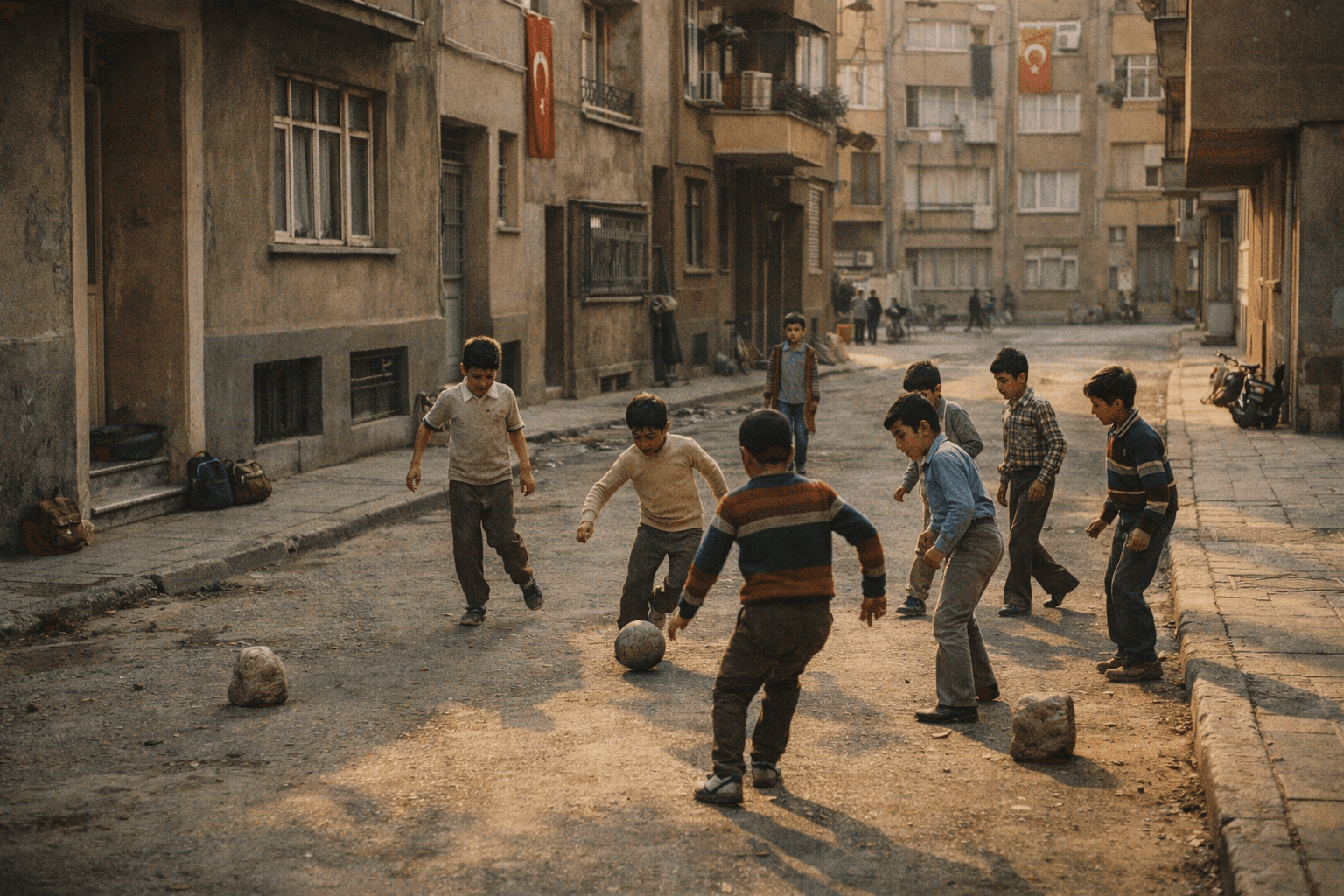
When School Bags Were Left at the Door: The Voices of Children in the Streets Between 1970 and 1990, one of the liveliest moments of the day in many Turkish neighborhoods began right after school ended. In the warm afternoon light, children would drop their school bags just inside their homes and quickly run back outside. In an era before computers, smartphones, and endless television channels, the streets themselves were the largest playground. Neighborhood streets were rarely quiet. In one corner, children played football; in another, girls jumped rope; somewhere nearby, a group crouched over marbles lined neatly on the pavement. Each street felt like its own small world.

From School to Home, and Straight Back to the Street

The daily rhythm was familiar. Children returned from school, quickly ate something prepared at home, and heard the familiar reminder from their mothers: “Don’t forget your homework, and don’t stay out too late.” Soon after, the front door would open again. Shoes were quickly put back on, and within minutes children gathered outside with friends. Often one child would ring a doorbell to call another outside, and soon the group grew larger. The neighborhood street belonged to everyone.

The Golden Age of Street Games

Street games were a defining part of childhood culture in Turkey during those decades. Football was usually the favorite. Two stones marked the goalposts, and a simple plastic ball became the center of attention. But football was only one of many games. Hopscotch, jump rope, marbles, hide-and-seek, dodgeball—each game found its own place in the street. Pavements, empty lots, and apartment courtyards all transformed into playgrounds through imagination. As the afternoon progressed, the energy of the games grew louder. Laughter and excited shouts echoed through the streets, forming the everyday soundtrack of neighborhood life.

Neighborhood Shops and Familiar Faces

Street life was not only about children. The neighborhood itself was a social space filled with familiar people. The small grocery store, known as the bakkal, often acted as the center of daily activity. Children ran there during game breaks with a few coins to buy chewing gum, soda, or roasted chickpeas. During summer evenings, the distant call of the ice cream vendor could be heard entering the street. Street vendors pushing small carts immediately attracted the curiosity of children. Meanwhile, neighbors chatted outside their doors while watching the lively street scene unfold.

When the Streetlights Turned On

As evening approached, the moment that marked the end of playtime was often the lighting of the street lamps. From balconies or windows, a familiar voice would call out: “Come home now!” Yet many children always asked for just one more game. Returning home tired but happy, those evenings became some of the warmest childhood memories for an entire generation.

A Living Memory of Neighborhood Culture

After-school street life in Turkey between 1970 and 1990 represented much more than children’s games. It reflected a time when neighborhood culture, community trust, and shared spaces defined daily life. Cities may have grown and lifestyles may have changed, but the memories of those lively streets remain vivid. Because on those streets, children were not only playing games—they were living their childhood.