
Skip to content

Eski Pano

🇹🇷 Geçmişin güzelliğini keşfedin 🇬🇧 Exploring the beauty of the past 🇧🇷 Explorando a beleza do passado

Menu
  • Hakkımızda | About Us | Sobre Nós
  • İletişim | Contact | Contato
Menu

Hesap Makinesi: Anteni Çevirdikçe Netleşen Umut İçinde Tamircilerin Elinde Neden İkinci bir Ömür Bulduğunu Açıklıyor | Calculator: Explaining Why It Found a Second Life in Repairmen’s Hands, with Hope Growing Clearer as the Antenna Turned | Calculadora: Explica Por Que Ganhou Uma Segunda Vida Nas Mãos dos Técnicos, Com a Esperança Ficando Mais Nítida À Medida Que a Antena Girava
Posted on 04/04/2026 by admin

🇹🇷 Türkçe | Cam Tezgâhlarda Yeniden Çalışan Küçük Cihazların İkinci Ömrü

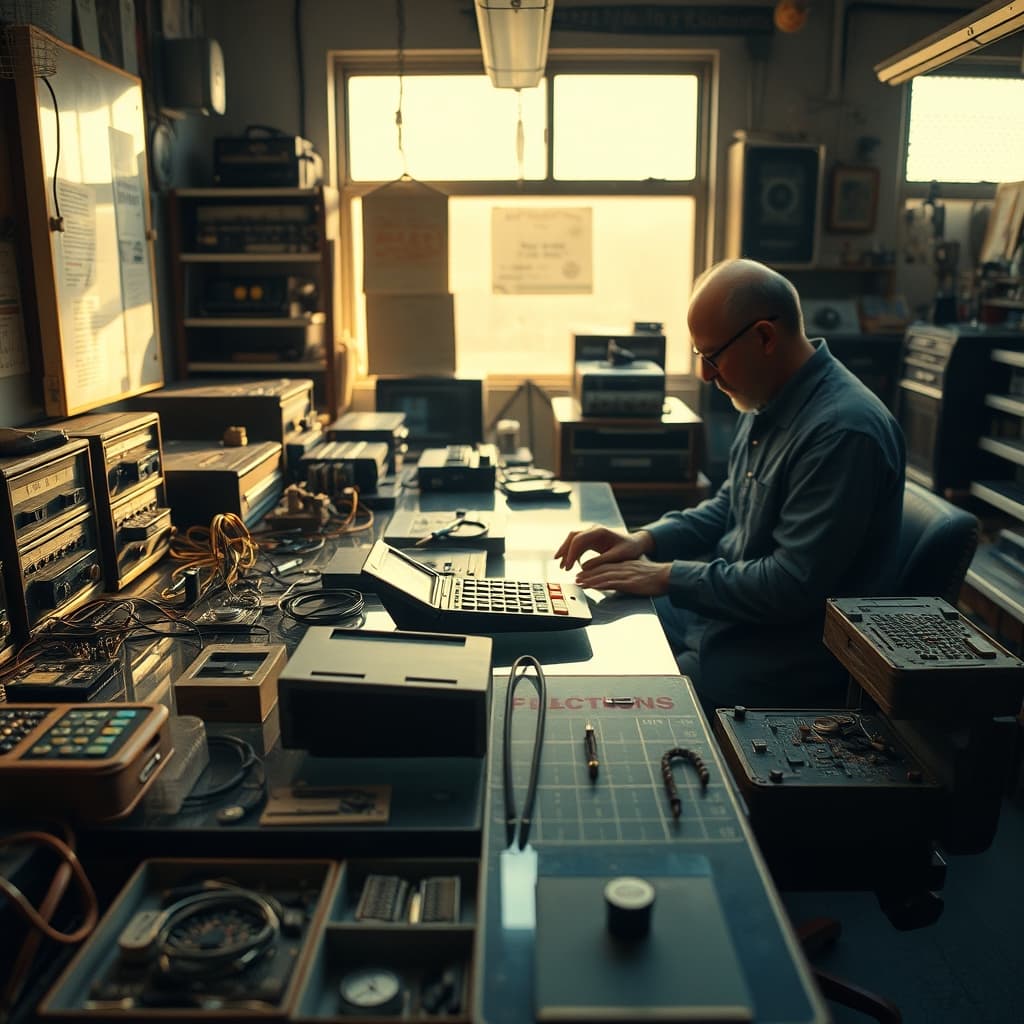
Elektronik çarşılarının dar koridorlarında öğleden sonra ışığı cam tezgâhlara vururken, küçük cihazların sessizliği bile bir hikâye taşırdı. Köşede vidaları sökülmüş bir hesap makinesi, yanında lehim kokusu, biraz ileride düğmeleri sararmış eski bir radyo ve çekmeceden taşan kablolar; hepsi aynı ustanın masasından geçmiş zaman parçaları gibiydi. O masalarda bozulmuş bir eşya çöpe gitmesi gereken bir nesne sayılmazdı. Aksine, biraz dikkat, biraz sabır ve usta eliyle yeniden çalışabilecek bir ihtimaldi. Tamircinin avuç içinde küçücük bir cihazın canlanması, o dönemin teknolojiye bakışını en iyi anlatan sahnelerden biriydi.

Teknoloji Mirası açısından hesap makineleri yalnız pratik araçlar değil, ev ve okul hayatına düzen getiren küçük mühendislik harikalarıydı. Çocukların matematik ödevlerinde, esnafın günlük hesabında, memurun masa çekmecesinde ve üniversite öğrencisinin çantasında kendine yer bulan bu cihazlar, sayının elle tutulur hâle geldiği bir dönemi temsil ederdi. Tuşların lastik hissi, küçük ekranın soluk parıltısı ve pil kapağının açılıp kapanma sesi bile kullanıcıyla cihaz arasında tanıdık bir bağ kurardı. Bozulduklarında hemen yenisi alınmaz, önce “bir tamirciye gösterelim” denirdi; çünkü eşyanın ömrü bitmiş sayılmazdı.

Tamircilerin elinde ikinci bir ömür bulmalarının en önemli nedeni, bu cihazların sökülüp anlaşılabilir yapılarda üretilmiş olmasıydı. İçlerinde bugünün kapalı kutu elektroniklerinden farklı olarak değiştirilebilen temas noktaları, temizlenebilen tuş takımları, lehimle yenilenebilen bağlantılar bulunurdu. Usta, büyüteç altında oksitlenmiş bir hattı temizler, gevşemiş pili sabitleyen yayı düzeltir, kimi zaman ekran bağlantısını yeniden oturturdu. O sırada dükkânda bekleyen müşteri de tamir sürecini izler, teknolojinin tamamen görünmez bir sihir değil, emeğe cevap veren bir düzenek olduğunu öğrenirdi.

Bu kültürün duygusal tarafı da güçlüydü. Bir hesap makinesi çoğu zaman yalnız hesap aracı değildi; sınavlara hazırlanılan yılların, babanın dükkân defterinin ya da anneden kalan çekmece düzeninin parçasıydı. Üzerindeki çizikler, düşme izleri ve silinmiş rakam tuşları eşyanın kullanım geçmişini taşırdı. Bu yüzden tamir edilen şey yalnız devre değildi. Hafızaya bağlı bir alışkanlık da onarılırdı. Cihaz yeniden açıldığında müşterinin yüzünde görülen sevinç, ucuz bir yenileme memnuniyetinden çok, kaybolmamış bir düzen duygusunun geri gelişi gibiydi.

Eski elektronik çarşılarında “anteni çevirdikçe netleşen umut” gibi tuhaf ama sıcak ifadeler boşuna doğmadı. İnsanlar bir cihazın ayar düğmesine, pil yuvasına, hassas vidasına ya da uzatılmış metal parçasına bakarken yalnız teknik çözüm aramaz, düzelecek bir gündelik akış umudu da taşırdı. Bir öğrencinin sınav haftasında çalışan hesap makinesine ihtiyacı vardı; bir esnaf akşam kapanış hesabını onunla hızla yapmak istiyordu. Bu küçük tamirler, büyük hayatların aksamasını engelleyen görünmez desteklerdi.

Bugün ucuz seri üretim ve hızlı tüketim yüzünden benzer cihazlar daha çabuk gözden çıkarılıyor. Arızalanan eşya çoğu zaman tamir masasına değil, geri dönüşüm kutusuna ya da çekmecenin dibine gidiyor. Oysa geçmişte tamir kültürü, teknolojiyi yalnız satın alınan bir hizmet değil, birlikte sürdürülen bir kullanım ilişkisi olarak düşünüyordu. Usta ile kullanıcı arasındaki bu bağ, cihazın değerini piyasa fiyatından daha derin bir yerde belirliyordu.

Bu nedenle hesap makineleri ve benzeri küçük elektronikler tamircilerin elinde ikinci bir ömür bulduğunda, aslında yalnızca yeniden çalışmaya başlamıyordu. Aynı zamanda bir dönemin sabırlı mühendislik anlayışını, onarmaya dayalı şehir esnafı kültürünü ve eşyanın hatırasına gösterilen saygıyı da görünür kılıyordu. Küçük ekran yeniden rakam verdiğinde, kurtarılan şey sadece cihaz değil; emekle korunmuş bir gündelik hayat terbiyesiydi.


🇬🇧 English | The Second Life of Small Devices Reawakened on Glass Counters

In the narrow corridors of old electronics bazaars, afternoon light falling across glass counters made even silent objects feel storied. A calculator with its screws removed, the smell of solder beside it, a yellowed radio a little farther down, drawers overflowing with wires: all of them looked like fragments of time passing through the same craftsman’s table. On those benches, a broken device was never treated as an object destined immediately for the trash. It was an opportunity that might work again with patience, attention, and skilled hands. Watching a tiny machine come back to life in a repairman’s palm was one of the clearest scenes of how that era understood technology.

From the perspective of technology heritage, calculators were not only practical tools. They were compact engineering companions that brought order into homes, schools, and shops. They lived in the school bags of students, the cash drawers of merchants, the desks of office workers, and the pockets of people who preferred certainty in numbers. The rubber feel of keys, the pale glow of the display, and the snap of a battery cover created familiarity between user and machine. When they failed, the first response was not always replacement. It was often, “Let’s have a repairman look at it,” because an object’s useful life was not considered finished so quickly.

One reason these devices found a second life in repairmen’s hands was their repairable construction. Unlike many sealed electronics today, they often contained contact points that could be cleaned, key membranes that could be reset, and solder joints that could be restored. A technician could scrape oxidation from a line, tighten the spring holding a battery in place, or reseat the display connection under magnification. Customers frequently watched the process from the other side of the counter. Technology was not an invisible miracle. It was a system that answered labor.

The emotional layer mattered too. A calculator was often more than a calculation tool. It might belong to exam seasons, to the daily accounting habits of a father’s shop, or to the drawer order inherited from a mother. Scratches, faded number keys, and marks from repeated use carried personal history. What was repaired, then, was not only circuitry. A familiar habit attached to memory was being restored. When the device powered on again, the owner’s relief felt less like the satisfaction of saving money and more like the return of a small but trusted order.

This is why phrases as odd and warm as “hope becoming clearer as the antenna turned” could emerge in old electronics markets. People looking at dials, battery bays, thin metal parts, or improvised fittings were not only seeking technical answers. They were hoping for the return of ordinary flow. A student needed a functioning calculator during exam week. A shopkeeper wanted to close the day’s accounts without delay. These tiny repairs quietly prevented larger lives from slipping out of rhythm.

Today, cheap mass production and rapid replacement have made such objects easier to discard. A device that fails often goes to a drawer, a recycling bin, or a quick online reorder instead of a repair table. In the past, repair culture framed technology differently. It was not only something purchased and consumed; it was something maintained through shared use, local knowledge, and mutual trust between user and craftsman. That relationship gave the device value beyond market price.

For that reason, when calculators and similar small electronics found a second life in the hands of repairmen, they were doing more than turning back on. They were making visible a patient engineering culture, a neighborhood economy built on repair, and a respect for the memory held by objects. When the little screen lit up with numbers again, what had been saved was not only a machine. It was a daily ethic preserved by labor.


🇧🇷 Português (Brasil) | A Segunda Vida dos Pequenos Aparelhos Reanimados sobre Balcões de Vidro

Nos corredores estreitos dos antigos centros de eletrônica, a luz da tarde batendo nos balcões de vidro fazia até os aparelhos silenciosos parecerem cheios de história. Uma calculadora com os parafusos soltos, o cheiro de solda ao lado, um rádio antigo com botões amarelados mais adiante, gavetas cheias de fios: tudo parecia fragmento de um tempo que passava pela mesma bancada. Naquele universo, um aparelho quebrado não era visto de imediato como lixo. Era uma possibilidade de voltar a funcionar com paciência, atenção e mão experiente. Ver um objeto tão pequeno despertar de novo na palma do técnico era uma das imagens mais claras de como aquela época entendia a tecnologia.

Na memória da tecnologia, as calculadoras não foram apenas ferramentas práticas. Eram pequenas companheiras de engenharia cotidiana, presentes na escola, no comércio, no escritório e em casa. Estavam na mochila do estudante, no caixa do lojista, na gaveta do funcionário e no bolso de quem precisava confiar nos números. A textura de borracha das teclas, o brilho discreto do visor e o clique da tampa da pilha criavam intimidade entre pessoa e aparelho. Quando quebravam, a reação natural nem sempre era comprar outro. Muitas vezes era: “vamos mostrar ao técnico”, porque a vida útil do objeto não era considerada encerrada tão cedo.

O fato de encontrarem uma segunda vida nas mãos dos técnicos tinha relação direta com sua construção. Diferentemente de muitos eletrônicos selados de hoje, esses aparelhos traziam contatos que podiam ser limpos, conexões que podiam ser refeitas e componentes simples que podiam ser ressoldados. O profissional limpava oxidação, endireitava a mola da pilha, reposicionava o encaixe do visor com lupa e paciência. Quem esperava do outro lado do balcão acompanhava o processo e entendia que tecnologia não era mágica invisível. Era um sistema que respondia ao trabalho humano.

O aspecto emocional também era forte. Muitas vezes, a calculadora não era apenas um instrumento de conta. Ela guardava os anos de prova, o fechamento diário das vendas do pai, a ordem silenciosa da gaveta da mãe. Riscos, desgaste nas teclas e marcas de uso carregavam a biografia do objeto. Por isso, o conserto não devolvia apenas a função elétrica. Devolvia um hábito ligado à memória. Quando o visor acendia de novo, a alegria do dono não vinha só da economia. Vinha da sensação de que uma pequena ordem conhecida tinha voltado ao lugar.

É por isso que, nos velhos mercados de eletrônica, surgiam expressões meio estranhas e ao mesmo tempo afetuosas, como a ideia de uma “esperança que ficava mais nítida à medida que a antena girava”. Ao observar um botão de ajuste, uma peça metálica fina ou um encaixe improvisado, as pessoas não procuravam apenas solução técnica. Procuravam o retorno do fluxo normal da vida. Um estudante precisava da calculadora funcionando na semana de prova. Um comerciante queria fechar as contas do dia sem atraso. Esses pequenos consertos impediam discretamente que grandes rotinas saíssem do eixo.

Hoje, com produção barata e troca rápida, aparelhos assim são descartados com muito mais facilidade. Quando falham, costumam ir para a gaveta, para o lixo eletrônico ou para uma nova compra pela internet, em vez de seguir para uma bancada de reparo. No passado, a cultura do conserto pensava a tecnologia de outra forma. Ela não era apenas um serviço comprado, mas uma relação de uso mantida por conhecimento local, confiança e continuidade. Isso dava ao objeto um valor mais fundo do que o preço.

Por isso, quando calculadoras e outros pequenos eletrônicos ganhavam segunda vida nas mãos de técnicos, não estavam apenas voltando a ligar. Estavam tornando visíveis uma cultura paciente de engenharia, um comércio urbano sustentado pelo reparo e um respeito pela memória das coisas. Quando o visor voltava a mostrar números, o que se salvava não era só o aparelho. Era uma ética cotidiana preservada pelo trabalho.


Category: Teknoloji Mirası / Tech Heritage / Herança Tecnológica

Yazı gezinmesi

← Dönemin Ruhunu Ele Veren o Eski Saatlerde Sahaf Çarşılarının Meraklı Ruhları Topladığı Öğleden Sonralar: Geçmişe Bakınca Neden Daha Parlak Görünüyor Ihlamur Kokusuna Dönen Bahçeler | In Those Old Hours That Revealed the Spirit of the Era, When Secondhand Book Bazaars Gathered Curious Souls in the Afternoon: Why do Gardens Turning Into the Scent of Linden Appear Brighter in Memory? | Naquelas Horas Antigas Que Revelavam o Espírito da Época, Quando Os Bazares de Sebo Reuniam Almas Curiosas Nas Tardes: Por Que Os Jardins Tomados Pelo Cheiro de Tília Parecem Mais Luminosos Quando Olhamos Para Trás?
Ahşap Dikiş Kutusu ve Sandıkların Dibinden Çıkan İnce Hikâyesi: Nostalji Meraklılarının Gözünde Neden Hemen Parlıyor | the Delicate Story of the Wooden Sewing Box and What Emerges from the Bottom of Chests: Why Does It Instantly Shine in the Eyes of Nostalgia Lovers? | A História Delicada da Caixa de Costura de Madeira E do Que Surge do Fundo dos Baús: Por Que Brilha Imediatamente Aos Olhos dos Amantes da Nostalgia? →

Bir yanıt yazın Yanıtı iptal et

E-posta adresiniz yayınlanmayacak. Gerekli alanlar * ile işaretlenmişlerdir

🇹🇷 Retro, Tarih ve Nostaljik Hikayeler
🇬🇧 Retro, History & Vintage Stories
🇧🇷 Histórias Retro, Históricas e Vintage

Son Yazılar | Recent Posts | Postagens recentes

  • Tahin Pekmezli Kahvaltı: Unutulan Mutfak Alışkanlıklarını Nasıl Geri Çağırıyor ve Eski Mutfak Kültürünü Nasıl Yaşatıyor | Breakfast with Tahini and Molasses: How Does It Recall Forgotten Kitchen Habits and Keep Old Culinary Culture Alive? | Café da Manhã Com Tahine E Melado: Como Ele Faz Voltar Hábitos Esquecidos da Cozinha E Mantém Viva a Antiga Cultura Culinária?
  • Esnaf Selamıyla Açılan Sabahlar Günleri: bir Neslin Güven Duygusunu Nasıl Besledi | Mornings Opened with the Shopkeeper’s Greeting: How They Nourished a Generation’s Sense of Security | as Manhãs Que Começavam Com o Cumprimento do Comerciante: Como Alimentaram o Sentimento de Segurança de Uma Geração
  • Duvar Halısı ve Elden Ele Geçen Aile Yadigârı Oluşu: Ustalık ve Sabrın İzini Neden Hâlâ Taşıyor | the Wall Tapestry and Its Life as a Family Heirloom Passed from Hand to Hand: Why Does It Still Carry the Trace of Craft and Patience? | A Tapeçaria de Parede E o Fato de Ser Uma Herança de Família Passada de Mão Em Mão: Por Que Ainda Carrega as Marcas da Maestria E da Paciência?
  • Dia Projektörü Başında Geçen Saatler: Analog Çağın Unutulmayan Heyecanını Anlatıyor | the Hours Spent Beside the Slide Projector: They Tell the Unforgotten Excitement of the Analog Age | as Horas Passadas Diante do Projetor de Slides: Elas Contam a Emoção Inesquecível da Era Analógica
  • Sokak Lambalarının Altında Büyüyen Anılarda Mahallenin İlk Apartmanlarının Eski Komşuluk Düzenini Değiştirdiği Dönem: Unutulan Ayrıntılarıyla Bize ne Söylüyor Çiçek Kokulu Sokaklar | In Memories Raised Beneath Streetlights, the Era When the Neighborhood’s First Apartment Buildings Changed the Old Order of Neighborliness: What do Flower-Scented Streets Tell Us Through Their Forgotten Details? | Nas Memórias Criadas Sob Os Postes de Luz, a Época Em Que Os Primeiros Prédios do Bairro Mudaram a Antiga Ordem da Vizinhança: O Que as Ruas Com Cheiro de Flores Nos Dizem Em Seus Detalhes Esquecidos?

Son Yorumlar | Recent Comments | Comentários recentes

  1. SheilaWex - Seramik Sürahi ve Gündelik Kullanımın İçinde Görünmeden Bıraktığı İz: bir Dönemin Zevk Anlayışını Nasıl Yansıttı | the Ceramic Pitcher and the Trace İt Left Almost İnvisibly in Everyday Use: How İt Reflected an Era’s Sense of Taste | A Jarra de Cerâmica E o Rastro Quase İnvisível Que Deixou No Uso Cotidiano: Como Refletiu o Senso de Gosto de Uma Época
  2. Susiewedia - Seramik Sürahi ve Gündelik Kullanımın İçinde Görünmeden Bıraktığı İz: bir Dönemin Zevk Anlayışını Nasıl Yansıttı | the Ceramic Pitcher and the Trace İt Left Almost İnvisibly in Everyday Use: How İt Reflected an Era’s Sense of Taste | A Jarra de Cerâmica E o Rastro Quase İnvisível Que Deixou No Uso Cotidiano: Como Refletiu o Senso de Gosto de Uma Época
  3. SheilaWex - Seramik Sürahi ve Gündelik Kullanımın İçinde Görünmeden Bıraktığı İz: bir Dönemin Zevk Anlayışını Nasıl Yansıttı | the Ceramic Pitcher and the Trace İt Left Almost İnvisibly in Everyday Use: How İt Reflected an Era’s Sense of Taste | A Jarra de Cerâmica E o Rastro Quase İnvisível Que Deixou No Uso Cotidiano: Como Refletiu o Senso de Gosto de Uma Época
  4. Susiewedia - Seramik Sürahi ve Gündelik Kullanımın İçinde Görünmeden Bıraktığı İz: bir Dönemin Zevk Anlayışını Nasıl Yansıttı | the Ceramic Pitcher and the Trace İt Left Almost İnvisibly in Everyday Use: How İt Reflected an Era’s Sense of Taste | A Jarra de Cerâmica E o Rastro Quase İnvisível Que Deixou No Uso Cotidiano: Como Refletiu o Senso de Gosto de Uma Época
  5. GregoryLossy - Seramik Sürahi ve Gündelik Kullanımın İçinde Görünmeden Bıraktığı İz: bir Dönemin Zevk Anlayışını Nasıl Yansıttı | the Ceramic Pitcher and the Trace İt Left Almost İnvisibly in Everyday Use: How İt Reflected an Era’s Sense of Taste | A Jarra de Cerâmica E o Rastro Quase İnvisível Que Deixou No Uso Cotidiano: Como Refletiu o Senso de Gosto de Uma Época

Arşivler | Archives | Arquivos

  • Nisan 2026
  • Mart 2026
  • Şubat 2026

Kategoriler | Categories | Categorias

  • Damak Hafızası / Taste of Memory / Memória do Paladar
  • Mahalle Kültürü / Neighborhood Culture / Cultura do Bairro
  • Obje Hikayeleri / Object Stories / Histórias de Objetos
  • Teknoloji Mirası / Tech Heritage / Herança Tecnológica
  • Zamanın İzinde / Traces of Time / Trilhas do Tempo
eskipano.com'da yer alan bilgi, yorum ve değerlendirmeler yatırım danışmanlığı kapsamında değildir. Yatırım danışmanlığı hizmeti; aracı kurumlar, portföy yönetim şirketleri, mevduat kabul etmeyen bankalar ve yatırımcı arasında imzalanacak sözleşme çerçevesinde sunulmaktadır.

Sitede paylaşılan içerikler genel bilgilendirme amacı taşımakta olup, bunları hazırlayanların kişisel görüş ve değerlendirmelerine dayanabilir. Bu içerikler, ziyaretçilerin mali durumu ile risk ve getiri tercihleri dikkate alınarak hazırlanmış özel öneriler niteliğinde değildir. Bu nedenle yalnızca burada yer alan bilgi, yorum ve değerlendirmelere dayanılarak yatırım kararı verilmesi, beklentilere uygun sonuçlar doğurmayabilir.

eskipano.com üzerinde yayımlanan bazı içeriklerde reklam, sponsorluk, tanıtım, iş birliği, bağlı kuruluş bağlantıları (affiliate links) veya ticari yönlendirmeler yer alabilir. Bu tür içerikler, ilgili durumun niteliğine göre açıkça belirtilmeye çalışılsa da, kullanıcıların sitede yer alan her içeriği kendi değerlendirmeleri çerçevesinde incelemesi tavsiye edilir. Reklam, sponsorluk veya benzeri ticari unsurlar içeren içerikler, hiçbir şekilde kesin tavsiye, garanti ya da taahhüt anlamına gelmez.

eskipano.com'da yayımlanan içeriklerde doğruluk ve güncellik konusunda azami özen gösterilmekle birlikte, sitede yer alan bilgi ve verilerde oluşabilecek hata, eksiklik, gecikme ya da farklılıklardan; ayrıca bu bilgilerin kullanılması veya kullanılmaması nedeniyle ortaya çıkabilecek doğrudan ya da dolaylı zararlardan, kar kaybından veya üçüncü kişilerin uğrayabileceği zararlardan site yönetimi sorumlu tutulamaz.
  • Gizlilik Politikası | Privacy Policy | Política de Privacidade
  • Hakkımızda | About Us | Sobre Nós
  • İletişim | Contact | Contato
  • Site Haritası | Sitemap | Mapa do site
© 2026 Eski Pano | Powered by Minimalist Blog WordPress Theme