 Eski Pano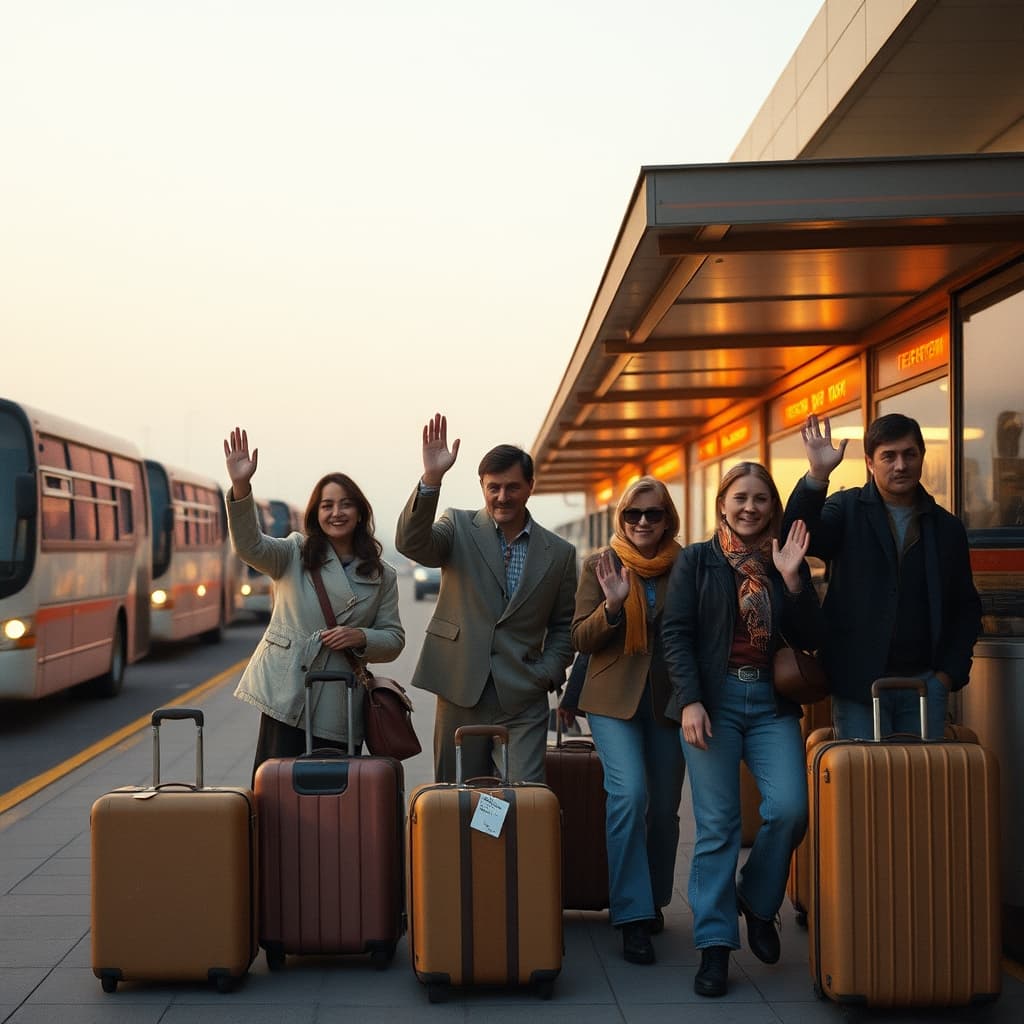
A bus terminal turned private departure into public choreography. Families arrived with suitcases, cloth bundles, food for the road, addresses, and advice repeated at the last minute. Porters, drivers, ticket clerks, tea sellers, cleaners, and dispatchers worked around them. An announcement or engine sound shifted the waiting room at once. The person leaving moved toward the platform while relatives remained behind the barrier or beside the bus.
Terminals differed greatly by city and period. Some were central buildings connected to markets and railway stations; others moved to urban edges as traffic grew. Waiting rooms, platforms, toilets, luggage systems, lighting, and access were uneven. The phrase cooling afternoon may describe a remembered farewell, but weather alone cannot date a photograph or represent every journey.
Migration Travelled with Objects
Passengers carried more than clothing. Parcels contained food, gifts, documents, tools, and household items moving between village and city or between regions. Labels, rope, reused boxes, and handwritten names reveal practical networks. A driver or company office might accept an unaccompanied parcel, relying on personal collection at the destination. Such practices varied and should not be assumed without testimony.
Tickets record operator, route, date, seat, price, and sometimes platform, but interpretation requires care. Printed departure time may differ from actual movement; a destination can be an interchange rather than the traveler’s final home. Receipts, letters, employment documents, and oral history help connect the ride to a larger migration story.
Waiting Was Unequal Work
Women managed children and food, older passengers guarded seats, porters lifted weight, and drivers prepared for long roads. Vendors worked through exhaust, noise, heat, and cold. Farewell photographs often centre emotion while leaving these workers at the edge. Recording their schedules and risks prevents the terminal from becoming an empty stage for family sadness.
Access was also uneven. Stairs, distant platforms, crowded toilets, unclear announcements, and narrow aisles created difficulty for disabled, elderly, or ill passengers. Money determined comfort, luggage allowance, route choice, and whether someone could accompany the traveler. Nostalgia should not erase fatigue, harassment, unsafe roads, or involuntary separation.
The City Remembered Repetition
One departure was personal; thousands made a civic pattern. Buses brought workers, students, soldiers, brides, patients, tourists, and returning relatives. Nearby hotels, restaurants, telephone offices, taxis, and shops adapted to their rhythms. The terminal became a gateway whose surrounding economy belonged to migration as surely as the highway did.
An archive should connect tickets, timetables, route maps, photographs, parcels, announcements, worker testimony, and passenger accounts. Dates and destinations must be verified, and private reasons for migration handled sensitively. The terminal left a deep mark because separation, employment, education, and family obligation repeatedly crossed the same platforms. Preserving that complexity gives the cooling afternoon its true scale: not a decorative mood, but a moment inside a long geography of leaving and return. Telephone booths and handwritten address books deserve special attention. Before mobile phones, a missed arrival or delayed bus required messages through terminal offices, relatives, taxis, and fixed lines. The effort of confirming safe arrival extended the journey long after the platform disappeared from view.