Eski Pano
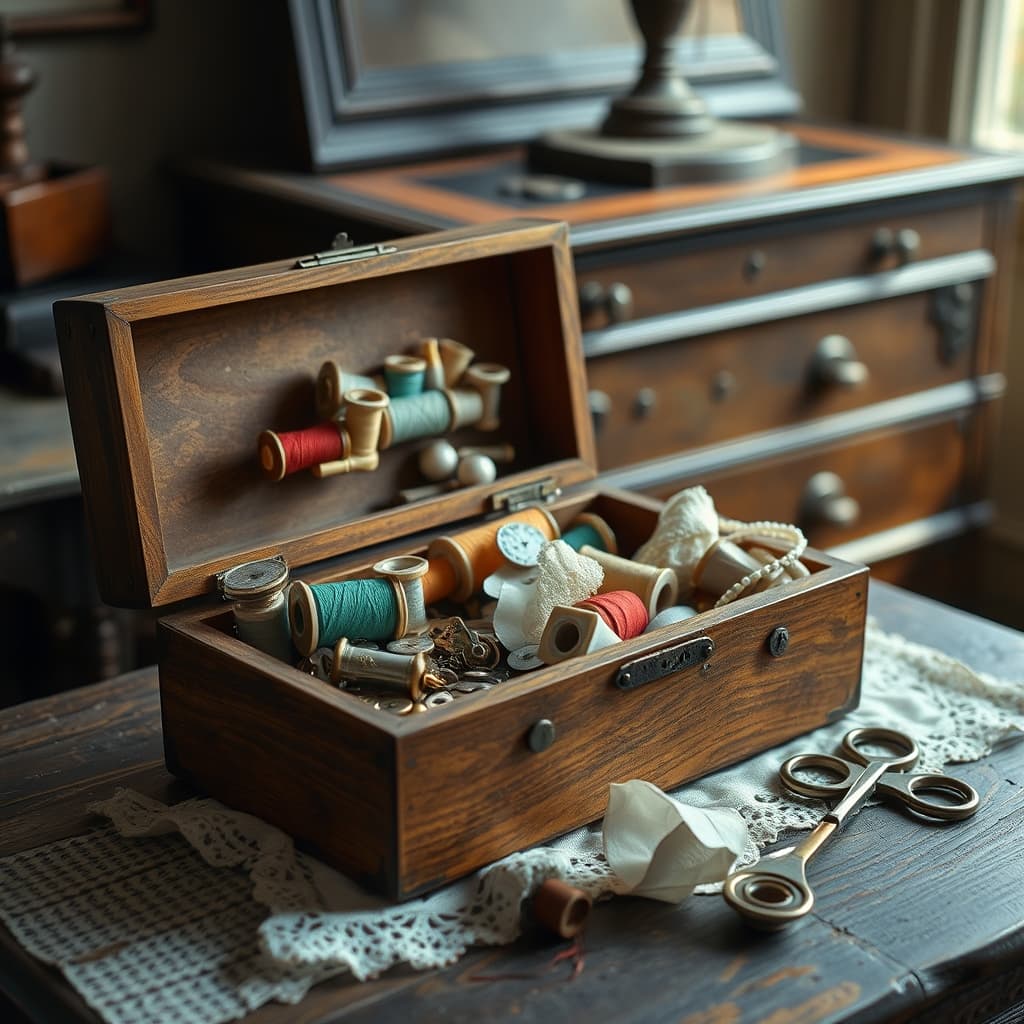
In the quietest corners of homes, often on the upper shelf of a bedroom wardrobe or at the bottom of a large chest, wooden sewing boxes appeared modest at first glance. Yet when the lid opened, more than thread, needles, and buttons emerged. The whole patience of domestic life became visible. Each small compartment held another color and another intention to mend what was missing. One might find lace sewn onto a handkerchief, a spare button saved from a school uniform, or a ribbon too precious to discard despite years of disuse. That is why the wooden sewing box was more than an object. It was a method of order and remembering.
Within object stories, these boxes occupy a special place because their design joined practical function with emotional attachment. Folding wings, tiny drawers, polished wood, and a handle meant for carrying made them not only useful but part of domestic aesthetics. Even placing the box on the table signaled preparation. When a loose seam appeared, no one searched frantically through cupboards. The sewing box was brought calmly, opened carefully, and the right thread was sought. That search itself carried a dignified slowness against haste.
The delicate story rising from the bottom of chests begins exactly there, because these boxes rarely belonged to one generation alone. A spool used by a grandmother, buttons added by a mother, colorful felt left from children’s school projects could all sit together in the same box. The object became a quiet witness to continuity across generations. It shines so quickly in the eyes of nostalgia lovers not only because of warm wood grain, but because it makes continuity tangible. To sort through the contents is to uncover the house’s little deficiencies and its long habit of repairing them.
What these boxes held was usually not materially precious. A single button, a short strip of lace, an extra zipper, cuff links removed from an old shirt. Yet that ordinariness is exactly what gives them power. The real memory of daily life often survives not in grand possessions but in small tools of completion. When a child’s trousers tore at the knee, when a holiday dress hem needed shortening, when a tablecloth edge had to be corrected before guests arrived, the sewing box entered the scene almost invisibly and restored the order of the home.
Tactile memory also helps explain why these boxes seem to glow. The slight roughness of polished wood, the fine sound of a metal hinge, the visual rhythm of spools lined in color, even the lavender or mothball scent that settled inside: these awaken memory more powerfully than a photograph. For a nostalgia lover, the box is not merely something to look at. It is a time capsule that engages nearly every sense. Even when displayed today as a decorative item, its true effect comes from the traces of use it still carries.
Modern life has changed the place of such repair rituals. Torn seams are taken to tailors, missing buttons are replaced cheaply, and many small mending acts no longer happen at home. The change offers convenience, but it also removes something from the household’s ability to complete itself. The wooden sewing box recalls precisely that missing area. It symbolizes not hiding flaws, but correcting them through care. The quiet will to mend visible disorder with patient hands lived inside those compartments.
In the end, the story of the wooden sewing box and what rises from the bottom of chests is the story of domestic attentiveness. It glows in the eyes of nostalgia lovers because it offers not only an aesthetic detail from the past, but a visible trace of a patience culture now fading. In every opened box there is a little family history, a little labor, and a subtle knowledge of repair. Sometimes even the smallest spool can retell an entire era.
The Delicate Story of the Wooden Sewing Box and What Emerges from the Bottom of Chests: Why Does It Instantly Shine in the Eyes of Nostalgia Lovers?