🇹🇷 Türkçe | Ihlamur Kokusuna Karışan Tramvay Zili
Bir zamanlar şehrin sabahı yalnız güneşin yükselmesiyle değil, tramvayların ray üstünde bıraktığı ritimle başlardı. Daha dükkân kepenkleri tam açılmadan, sokakların taşına gece serinliği sinmişken, uzaktan duyulan ince bir zil sesi bütün mahalleyi görünmez bir saat gibi yoklardı. Tramvay geçtiğinde camlar hafifçe titreşir, yol kenarındaki ağaçların yaprakları bir anlığına kıpırdar, bahçe duvarlarının ardından yükselen ıhlamur kokusu rayların metal kokusuna karışırdı. Mahalle takviminden düşmeyen bu sahne, yalnız bir ulaşım aracının gelişi değildi; şehir hayatının her gün yeniden kurulan nabzıydı.
Zamanın İzinde bakıldığında tramvay, kentin hafızasında mekanik bir araçtan çok daha büyük bir yer tutar. Eski gazetelerin şehir haberlerinde, kartpostallarda, belediye afişlerinde ve aile albümlerinin arka planında sık sık beliren bu araç, modernleşmenin gündelik hayata en zarif temaslarından biriydi. Raylar, semtleri birbirine bağlarken aynı zamanda farklı hayatların birbirine değmesini sağlardı. Memur sabah işe giderken, öğrenci çantasını dizine alıp camdan dışarı bakarken, pazara çıkan kadın filesini ayağının dibine koyarken aynı ritmin içine katılırdı. Böylece tramvay, şehrin yalnız yollarını değil, zaman duygusunu da düzenleyen sessiz bir düzenek hâline gelirdi.
Bu yılların bugün bile sızı gibi hatırlanmasının nedeni biraz da ayrıntılarda saklıdır. Durağın yakınındaki pastaneden yükselen vanilya kokusu, ray kıyısındaki kıraathaneden gelen kaşık şıngırtısı, okul önlüğüyle koşup son anda yetişen çocuklar, pencere kenarında oturmak için acele eden yolcular, biletçinin tok ama alışılmış sesi, bütün bu küçük parçalar aynı manzaranın içindeydi. Bir yandan şehir hızlanıyor, yeni apartmanlar yükseliyor, vitrinler değişiyor, diğer yandan bahçelerde kurutulan çamaşırlar ve akşamüstü sulanan sardunyalar eski düzenin sıcaklığını koruyordu. Tramvayın geçtiği sokakta modernlik ile mahalle hafızası birbirini itmeden yan yana durabiliyordu.
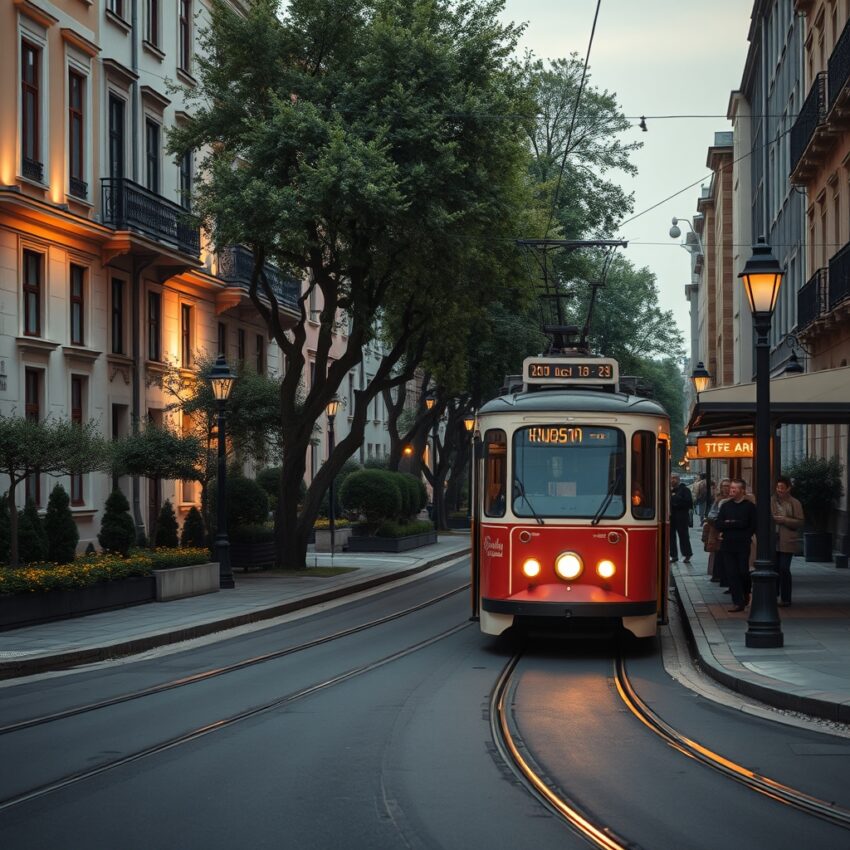
Ihlamur kokusuna dönen bahçeler bu hikâyede boşuna yer etmez. Çünkü tramvay hattı boyunca uzanan o ağaçlı yollar, kenti yalnız taş ve demirden ibaret olmayan bir yer gibi hissettirirdi. İnsanlar durağa yürürken gölgeli kaldırımlardan geçer, yaşlılar banklarda oturup giden geleni seyreder, çocuklar rayların yanından tembihlenerek geçerdi. Şehrin temposu sert değil, ölçülüydü; acele vardı ama telaş bugünkü kadar keskin değildi. Tramvayın sesi, mahalleye dağılmış hayatların ortak fon müziği gibiydi. Belki de bu yüzden o yıllar hatırlanırken akla önce bir araç değil, bir atmosfer gelir: bahçe kapıları, serin apartman girişleri, cilalı ayakkabılar, ütülü gömlekler ve hepsinin arasından usulca geçen kırmızı krem bir vagon.
Bugün geriye dönüp baktığımızda özlenen şey yalnız nostaljik bir ulaşım biçimi değildir. Asıl özlenen, tramvayın etrafında şekillenen ölçülü şehir yaşamıdır. Her durak, kısa bir karşılaşma mekânı; her sefer, günün akışını anlamlandıran küçük bir törendi. İnsanlar birbirine omuz vererek biner, aynı semtin hikâyelerini aynı camlardan izler, günün ilk ve son ışığını aynı rayların üstünde paylaşırdı. Bu yüzden tramvayların şehre tempo verdiği yıllar hâlâ bir sızıyla hatırlanır. Çünkü o hatıra, yalnız geçmişin kendisini değil; birlikte yaşamanın daha yavaş, daha kokulu, daha insani bir biçimini de taşır. Ihlamur kokusuna dönen bahçelerle rayların sesi hâlâ aynı yerde buluşur: şehir belleğinin en hassas köşesinde.
🇬🇧 English | The Tram Bell Blended with the Scent of Linden
There was a time when the city’s morning began not only with the rise of the sun, but with the rhythm trams left upon the rails. Before shop shutters were fully open, while the night’s coolness still clung to the stones of the street, a thin bell heard from afar checked the whole neighborhood like an invisible clock. When a tram passed, windows trembled lightly, the leaves of roadside trees stirred for a moment, and the scent of linden rising behind garden walls mixed with the metallic smell of the tracks. This scene, which never fell from the neighborhood calendar, was not merely the arrival of a vehicle. It was the pulse of urban life being established again each day.
Seen in the trail of time, the tram holds a place in the city’s memory far greater than that of a mechanical means of transport. Appearing again and again in old newspaper city columns, postcards, municipal posters, and the backgrounds of family albums, it was one of the most graceful daily touches of modernity. While the rails connected districts, they also allowed different lives to brush against one another. The clerk going to work in the morning, the student placing a schoolbag on their knees and looking out the window, the woman headed to the market with a mesh bag by her feet, all entered the same rhythm. In that way the tram became a quiet mechanism that arranged not only the roads of the city, but its sense of time.
Part of the reason those years are still remembered like an ache lies in the details. The smell of vanilla rising from the pastry shop near the stop, the clink of spoons from the coffeehouse by the rails, children in school uniforms running to catch the car at the last moment, passengers hurrying for the window seat, the conductor’s full and familiar voice, all belonged to the same scene. On one side the city was accelerating, new apartment buildings were rising, shop windows were changing; on the other, laundry drying in gardens and geraniums watered in the late afternoon kept the old order warm. On the streets where the tram passed, modernity and neighborhood memory could stand side by side without pushing each other away.
The gardens turning to the scent of linden are not remembered here by accident. Along the tram lines, those tree-lined roads made the city feel like something more than stone and iron. People walked to the stop beneath shaded pavements, older residents sat on benches watching who came and went, and children were warned carefully as they passed near the rails. The city’s tempo was not harsh but measured; there was haste, yet not the sharp strain of today. The sound of the tram was like a shared background music for lives scattered through the neighborhood. That may be why, when those years are remembered, what first comes to mind is not a vehicle but an atmosphere: garden gates, cool apartment entrances, polished shoes, ironed shirts, and a red-and-cream carriage moving quietly through them all.
Looking back now, what is missed is not only a nostalgic form of transportation. What is truly missed is the measured urban life shaped around the tram. Every stop was a small place of encounter; every trip, a little ceremony that gave form to the day. People boarded shoulder to shoulder, watched the stories of the same district through the same windows, and shared the first and last light of the day on the same rails. That is why the years when trams set the city’s tempo are still remembered with a sting. The memory carries not only the past itself, but also a slower, more fragrant, more human way of living together. The gardens turning to the scent of linden and the sound of the rails still meet in the same place: the most delicate corner of urban memory.
🇧🇷 Português (Brasil) | O Sino do Bonde Misturado ao Cheiro de Tília
Houve um tempo em que a manhã da cidade não começava apenas com o nascer do sol, mas com o ritmo que os bondes deixavam sobre os trilhos. Antes que as portas das lojas se abrissem por completo, enquanto o frescor da noite ainda permanecia nas pedras da rua, um som fino de campainha vindo de longe conferia o bairro inteiro como se fosse um relógio invisível. Quando o bonde passava, as janelas tremiam de leve, as folhas das árvores à beira da rua se moviam por um instante, e o cheiro de tília que subia por trás dos muros dos jardins se misturava ao odor metálico dos trilhos. Essa cena, que nunca saía do calendário do bairro, não era apenas a chegada de um veículo. Era o pulso da vida urbana sendo montado de novo a cada dia.
No rastro do tempo, o bonde ocupa na memória da cidade um lugar muito maior do que o de um simples meio de transporte. Presente nas colunas urbanas dos jornais antigos, nos cartões-postais, nos cartazes municipais e ao fundo dos álbuns de família, ele foi um dos toques mais elegantes da modernidade no cotidiano. Enquanto os trilhos ligavam bairros diferentes, também faziam vidas distintas se encostarem. O funcionário indo cedo para o trabalho, o estudante com a mochila no colo olhando pela janela, a mulher que seguia para a feira com a sacola aos pés, todos entravam no mesmo compasso. Assim, o bonde se tornava um mecanismo silencioso que organizava não apenas os caminhos da cidade, mas também a sua percepção do tempo.
Parte da razão de aqueles anos ainda serem lembrados como uma dor doce está nos detalhes. O cheiro de baunilha vindo da confeitaria perto do ponto, o tilintar das colheres na cafeteria junto aos trilhos, as crianças de uniforme correndo para alcançar o bonde no último instante, os passageiros apressados para conseguir um lugar na janela, a voz firme e familiar do cobrador, tudo pertencia à mesma paisagem. De um lado, a cidade ganhava velocidade, novos prédios surgiam, as vitrines mudavam; de outro, roupas secando nos jardins e gerânios regados no fim da tarde preservavam o calor da antiga ordem. Na rua por onde o bonde passava, modernidade e memória do bairro podiam caminhar lado a lado sem se empurrar.
Os jardins que se tornavam cheiro de tília não aparecem nessa lembrança por acaso. Ao longo da linha do bonde, aquelas vias arborizadas faziam a cidade parecer algo maior do que pedra e ferro. As pessoas iam até o ponto por calçadas sombreadas, os mais velhos se sentavam nos bancos para observar quem passava, e as crianças eram advertidas com cuidado ao cruzar perto dos trilhos. O ritmo da cidade não era duro, mas medido; havia pressa, porém não a tensão cortante de hoje. O som do bonde funcionava como uma música de fundo compartilhada pelas vidas espalhadas pelo bairro. Talvez por isso, quando aqueles anos são lembrados, o que vem primeiro não é um veículo, mas uma atmosfera: portões de jardim, entradas frescas de prédios, sapatos engraxados, camisas bem passadas e um vagão vermelho e creme seguindo devagar por entre tudo isso.
Quando olhamos para trás agora, o que faz falta não é apenas um meio de transporte nostálgico. O que realmente faz falta é a vida urbana mais medida que se formava em torno do bonde. Cada parada era um pequeno lugar de encontro; cada trajeto, uma cerimônia discreta que dava sentido ao dia. As pessoas embarcavam ombro a ombro, viam as histórias do mesmo bairro pelas mesmas janelas e dividiam a primeira e a última luz do dia sobre os mesmos trilhos. É por isso que os anos em que os bondes davam ritmo à cidade ainda são lembrados com um aperto no peito. Essa memória leva não só o passado em si, mas também uma forma mais lenta, mais perfumada e mais humana de viver em conjunto. O cheiro de tília dos jardins e o som dos trilhos continuam se encontrando no mesmo lugar: o canto mais delicado da memória urbana.