 Eski Pano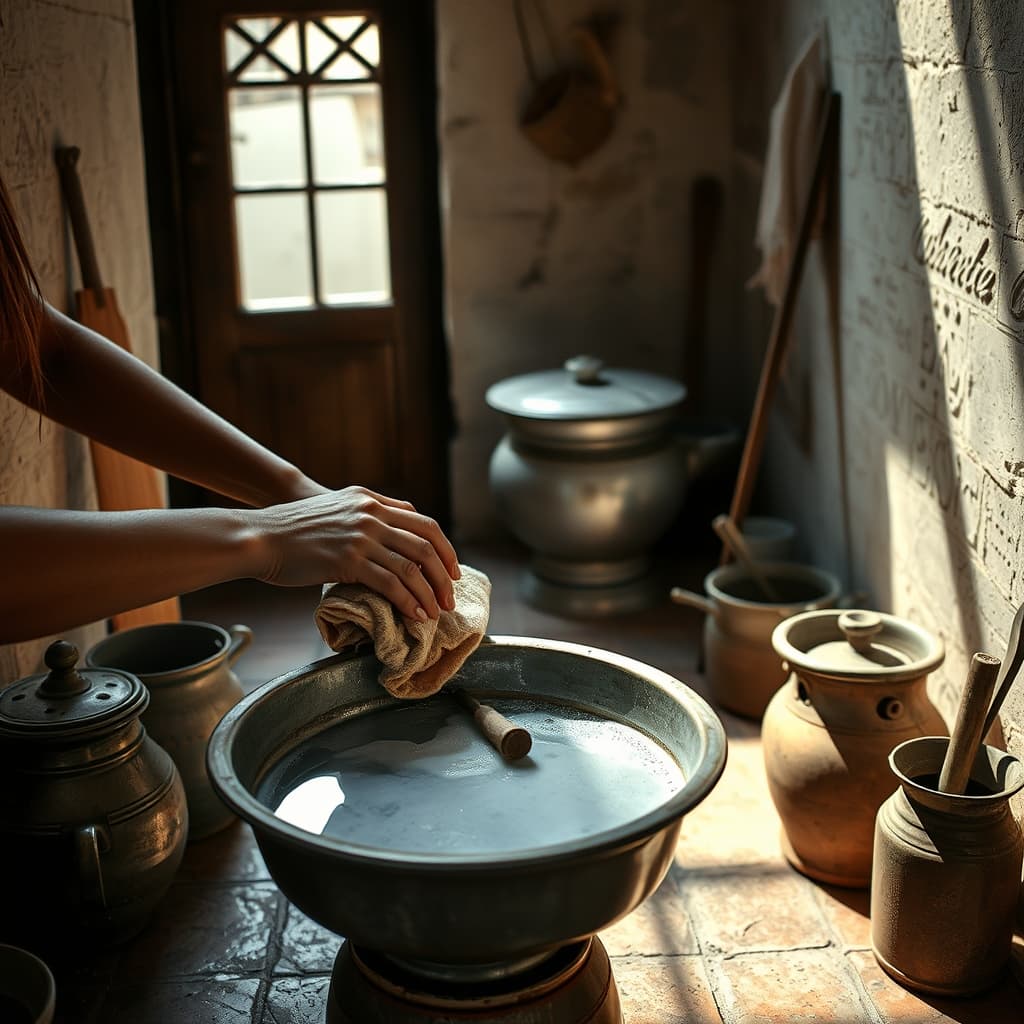
A zinc basin became especially visible during thorough cleaning before holidays or important visits. Light enough to move but large enough for water, cloths, laundry, or removable household parts, it carried work between rooms, courtyard, and tap. Its bright surface after washing suggested renewal, yet that shine came from repeated lifting, filling, emptying, scrubbing, and drying rather than from the object alone.
The familiar name covers basins made from sheet metal with protective zinc coating, produced in different sizes and qualities. Folded rims, seams, handles, hammer marks, and repairs reveal manufacture and use. A dent may record impact, while worn coating and rust show where water or abrasion reached the underlying metal. Appearance alone cannot establish an exact date or maker.
The Basin Organised Water and Work
Before cleaning products and running water reached every task conveniently, the basin helped measure and transport what was needed. Cloths were rinsed, small textiles soaked, and surfaces washed in sequence. Holiday cleaning intensified this organisation because several jobs had to be completed before guests arrived. The basin linked them, but it also made the weight of water and the repetition of cleaning physically visible.
That labour was not always shared equally. Women and girls often carried a disproportionate part of domestic preparation, though arrangements differed by household. Children might fetch cloths or hold doors; others polished metal or emptied water. A responsible memory should recognise cooperation without turning exhaustion, chemical exposure, or compulsory work into proof of a better past.
Marks and Repairs Belong to the Object’s History
Small holes might be patched or soldered, handles replaced, and sharp edges folded back. Repairs extended useful life and deserve documentation. Aggressive polishing can remove remaining coating or material evidence, while modern cleaning chemicals may accelerate damage. An old basin of uncertain condition should not be used for food or personal washing. Dry storage and conservation advice are safer for preservation.
Photographing the underside, rim, seams, repairs, and scale records more than a polished front view. Family information should identify where the basin was stored and used, while distinguishing memory from fact. A claim that it belonged to a particular person or event needs evidence; otherwise approximate language preserves honesty.
Its New Shine Came with a Changed Role
As plastic containers, washing machines, specialised tools, and household plumbing altered cleaning, many metal basins moved into storage. Some later became planters, decorative objects, or collected examples of domestic craft. Reuse can extend attention but may also create corrosion or erase original function. Preserving one means deciding whether alteration adds another documented chapter or destroys important evidence.
For a Digital Nostalgia Archive, the zinc basin matters because it makes household preparation tangible. Its rim, dents, coating, repairs, and water marks connect craft to the often unseen labour of making a home ready. The object should not be praised merely for being old or shiny. Its deeper value lies in showing how patience was organised through material: water carried, cloth wrung, rooms completed one by one, and the basin finally washed and set aside.