
🇹🇷 Türkçe | Bir Kâsede Toplanan Yakınlık: Yoğurtlu Semizotunun Paylaşım Hafızası
Kalabalık aile sofralarının gerçek gücü çoğu zaman gösterişli yemeklerde değil, herkesin kaşığını aynı kaseye yönelttiği sade lezzetlerde saklıydı. Yoğurtlu semizotu da o lezzetlerden biriydi. Yaz başına yaklaşan günlerde pazardan alınan taze semizotu, mutfakta ayıklanır, ince ince doğranır, sarımsaklı yoğurtla buluşur, üstüne zeytinyağı gezdirilirdi. Hazırlık sürecinin kendisi bile aile içi bir koordinasyon alanıydı: biri yaprakları yıkar, biri yoğurdu çırpar, biri sarımsağı ezerdi. Sofraya geldiğinde bu mütevazı tabak, yalnızca bir meze değil, birlikte üretmenin ve birlikte yemenin günlük kanıtına dönüşürdü.
Semizotunun kültürel yeri biraz da mevsimsel hafızadan gelir. Bahçede, pazarda, sokak tezgâhında kolay bulunan bu yeşillik, ev ekonomisinin ve mutfak zekâsının birleştiği bir noktayı temsil ederdi. “Az malzemeyle çok kişiyi doyurma” becerisi, geçmiş kuşakların en güçlü mutfak bilgelerinden biriydi. Yoğurtlu semizotu bu bilgeliği zarif biçimde taşır: pahalı olmayan, gösterişsiz ama sofranın ortasında herkesi bir araya getiren bir lezzet. O yüzden bu yemek yalnız damak tadı değil, aynı zamanda toplumsal adalet hissi de üretirdi. Herkesin payına düşen aynı serinlik, aynı ekşilik, aynı yoğurt ferahlığı.
Kalabalık sofralarda bu tabak etrafında kurulan küçük diyaloglar, paylaşma kültürünün canlı örnekleriydi. “Bana az bırakın, çocuklar yesin”, “Bir kaşık daha al, çok güzel olmuş”, “Bunun semizotu bizim bahçeden” gibi cümleler yemeğin tadını toplumsal bir tona çevirirdi. Yanında çoğu zaman taze ekmek, domates, bazen pilav, bazen kuru köfte olurdu; ama yoğurtlu semizotunun serin etkisi bütün menüyü dengelerdi. Özellikle yaz akşamlarında, balkon kapısı açıkken içeriden gelen kaşık seslerine karışan sohbet, yemeğin besleyiciliğini sadece bedensel olmaktan çıkarırdı. Sofra, o anda bir iletişim alanına dönüşürdü.
Bu yemeğin unutulmamasının bir nedeni de tarifinin esnek ama kimliğinin sabit olmasıdır. Bazı evler içine dereotu ekler, bazıları kırmızı biberli yağla bitirir, bazıları semizotunu hafif haşlayıp bazıları çiğ kullanırdı. Farklılıklar olsa da temel duygu değişmezdi: serinletici, toparlayıcı, sade bir yakınlık hissi. Yoğurtlu semizotu, gündelik hayatın acele günlerinde bile sofraya bir “durup birlikte yeme” çağrısı koyardı. Bu çağrı, aile bireylerini sadece fiziksel olarak bir masa etrafında toplamaz; ortak bir hafızanın parçası olduklarını da hatırlatırdı.
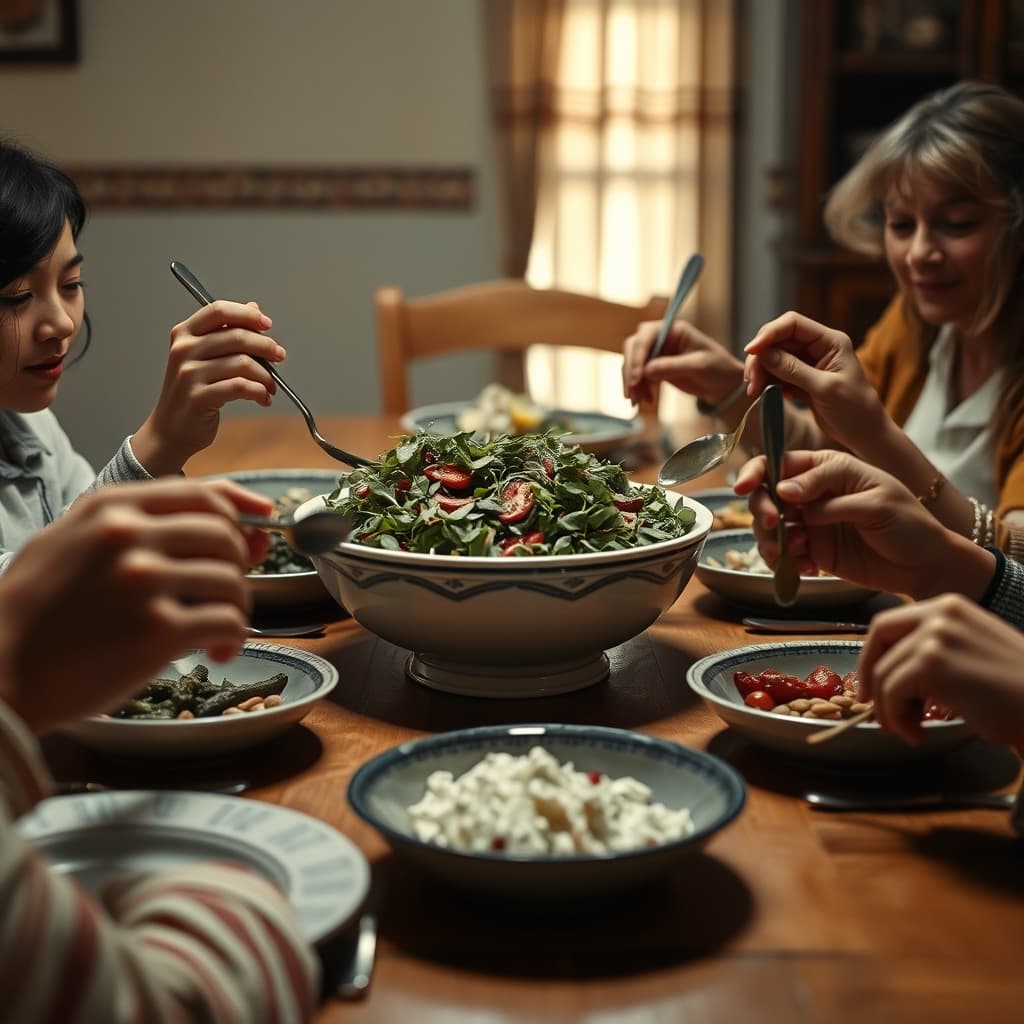
Bugün porsiyonlar küçüldü, yemek saatleri ayrıştı, aynı anda aynı masada buluşmak zorlaştı. Yine de yoğurtlu semizotu denince birçok insanın aklına önce tarif değil sahne geliyor: geniş masa, farklı kuşaklar, ortadaki kaseye uzanan eller, yavaşlayan zaman. Bir dönemin paylaşma kültürü tam da bu sahnede taşınıyor. Çünkü bazı yemekler yalnız mideyi değil, ilişki biçimini de besler. Yoğurtlu semizotu, kalabalık aile sofrasının unutulmayan tadı olarak, geçmişten bugüne uzanan en sade ama en güçlü ortaklık sembollerinden biri olmayı sürdürüyor.
Ayrıca bu tabağın hafızadaki gücü, ev içi rollerin görünürleştiği anları da taşımasından gelir. Masayı kuranla sofrayı toplayan, yoğurdu hazırlayanla ekmeği dilimleyen aynı hikâyenin parçası olurdu. Yoğurtlu semizotu sofraya geldiğinde herkes yalnız yemeğe değil, birbirinin emeğine de ortak olur; paylaşma kültürü gündelik bir davranışa dönüşürdü.
🇬🇧 English | Closeness Gathered in One Bowl: The Sharing Memory of Yogurted Purslane
The real strength of crowded family tables often lived not in spectacular dishes, but in simple foods toward which everyone reached with the same spoon. Yogurted purslane was one of those foods. As early summer approached, fresh purslane from local markets was cleaned in the kitchen, chopped finely, mixed with garlic yogurt, and finished with olive oil. Even preparation itself became a field of household coordination: one person washed leaves, one whisked yogurt, one crushed garlic. Once on the table, this modest plate became more than a side dish. It stood as daily proof of producing together and eating together.
The cultural place of purslane is tied to seasonal memory. Easy to find in gardens, markets, and street stalls, it represented a meeting point of household economy and kitchen intelligence. The ability to feed many with limited ingredients was one of the strongest culinary wisdoms of earlier generations. Yogurted purslane carried that wisdom elegantly: affordable, unpretentious, yet capable of uniting everyone around the center of the table. For that reason, the dish produced not only flavor but also a subtle sense of social fairness. Everyone received the same coolness, the same slight tang, the same yogurt freshness.
Small dialogues around this bowl on crowded tables were living examples of sharing culture. “Leave less for me, let the children have more,” “Take another spoon, it turned out great,” “This purslane came from our own garden.” Such lines transformed taste into a social tone. It was often served with fresh bread, tomatoes, sometimes rice, sometimes dry meatballs, yet the cooling effect of yogurted purslane balanced the whole menu. Especially on summer evenings with balcony doors open, spoon sounds mixed with conversation and made nourishment more than physical. At that moment, the table turned into a communication space.
Another reason the dish remains unforgettable is that its recipe is flexible while its identity is stable. Some homes add dill, some finish with chili oil, some blanch purslane lightly while others keep it raw. Variations exist, yet the core feeling remains unchanged: a refreshing, grounding, simple closeness. Even on rushed weekdays, yogurted purslane placed an invitation on the table to pause and eat together. That invitation gathered family members not only around one physical table, but around the awareness that they belonged to shared memory.
Today portions are individualized, meal schedules diverge, and gathering all generations at once is harder. Still, when people hear “yogurted purslane,” many remember a scene before they remember a recipe: a wide table, multiple generations, hands reaching toward the central bowl, time slowing down. The sharing culture of a period survives exactly in that scene. Some foods nourish not only the body but also the form of relationships. As the unforgettable taste of crowded family tables, yogurted purslane continues to stand as one of the simplest yet strongest symbols of togetherness from past to present.
🇧🇷 Português (Brasil) | Proximidade Servida em uma Tigela: A Memória de Partilha da Beldroega com Iogurte
A força real das mesas familiares cheias quase nunca estava nos pratos mais elaborados, mas nas receitas simples para as quais todos estendiam a colher. A beldroega com iogurte era uma delas. Quando o início do verão se aproximava, a beldroega fresca comprada na feira era limpa na cozinha, picada com cuidado, misturada ao iogurte com alho e finalizada com azeite. O próprio preparo já virava coordenação familiar: um lavava as folhas, outro batia o iogurte, outro amassava o alho. Quando chegava à mesa, esse prato modesto deixava de ser apenas acompanhamento. Virava prova cotidiana de produzir junto e comer junto.
O lugar cultural da beldroega também vem da memória sazonal. Fácil de encontrar em horta, feira ou banca de rua, ela representava o encontro entre economia doméstica e inteligência culinária. Alimentar muita gente com ingredientes simples foi uma das maiores sabedorias das gerações anteriores. A beldroega com iogurte carrega essa sabedoria com elegância: barata, sem ostentação, mas capaz de reunir todos no centro da mesa. Por isso, o prato oferecia não só sabor, mas também um senso de justiça afetiva. Todos recebiam o mesmo frescor, a mesma acidez leve, a mesma suavidade do iogurte.
As pequenas falas em torno dessa tigela, nas mesas cheias, eram exemplos vivos da cultura de partilha. “Deixa menos para mim, as crianças comem mais”, “Pega mais uma colher, ficou ótimo”, “Essa beldroega veio da nossa horta.” Essas frases transformavam o gosto em tom social. Ao lado vinham pão fresco, tomate, às vezes arroz, às vezes almôndega seca, mas o efeito refrescante da beldroega com iogurte equilibrava o conjunto. Principalmente nas noites de verão com a porta da varanda aberta, o som das colheres misturado à conversa fazia da alimentação algo além do físico. A mesa virava espaço de comunicação.
Outro motivo para o prato permanecer inesquecível é sua receita flexível com identidade estável. Algumas casas colocavam endro, outras finalizavam com azeite e pimenta, algumas escaldavam a beldroega, outras usavam crua. As variações existiam, mas o sentimento central era o mesmo: frescor, simplicidade e proximidade. Mesmo nos dias corridos, a beldroega com iogurte colocava sobre a mesa um convite para pausar e comer junto. Esse convite reunia a família não apenas em torno da mesa física, mas em torno da consciência de uma memória comum.
Hoje as porções ficaram individuais, os horários de refeição se separaram e reunir todas as gerações ao mesmo tempo ficou mais difícil. Ainda assim, quando alguém ouve “beldroega com iogurte”, costuma lembrar primeiro de uma cena e só depois da receita: mesa ampla, gerações diferentes, mãos alcançando a tigela central, tempo desacelerando. A cultura de partilha de uma época vive exatamente nessa imagem. Alguns pratos alimentam não só o corpo, mas também a forma de convivência. Como sabor inesquecível das mesas familiares cheias, a beldroega com iogurte segue como um dos símbolos mais simples e fortes de coletividade entre passado e presente.
