
🇹🇷 Türkçe | Yazlık Sinemaların Mahalleye Taşan Hikâyesi
1970’li ve 1980’li yılların bir yaz akşamını düşünün. Gün batarken mahallede hafif bir serinlik başlar. Sokak lambaları yavaş yavaş yanar, çocukların oyun sesleri hâlâ sokaklarda yankılanır. Bir süre sonra mahallede küçük bir hareketlilik başlar; çünkü akşamın en heyecanlı etkinliği yaklaşmaktadır: yazlık sinema.
Türkiye’de yazlık sinemalar yalnızca bir eğlence mekânı değildi. Onlar aynı zamanda mahalle kültürünün kalbinin attığı yerlerdi. Şehirlerin farklı semtlerinde kurulan açık hava sinemaları, insanların bir araya geldiği sosyal alanlar haline gelmişti. Yaz geceleri gökyüzünün altında film izlemek, o yılların en özel deneyimlerinden biriydi.
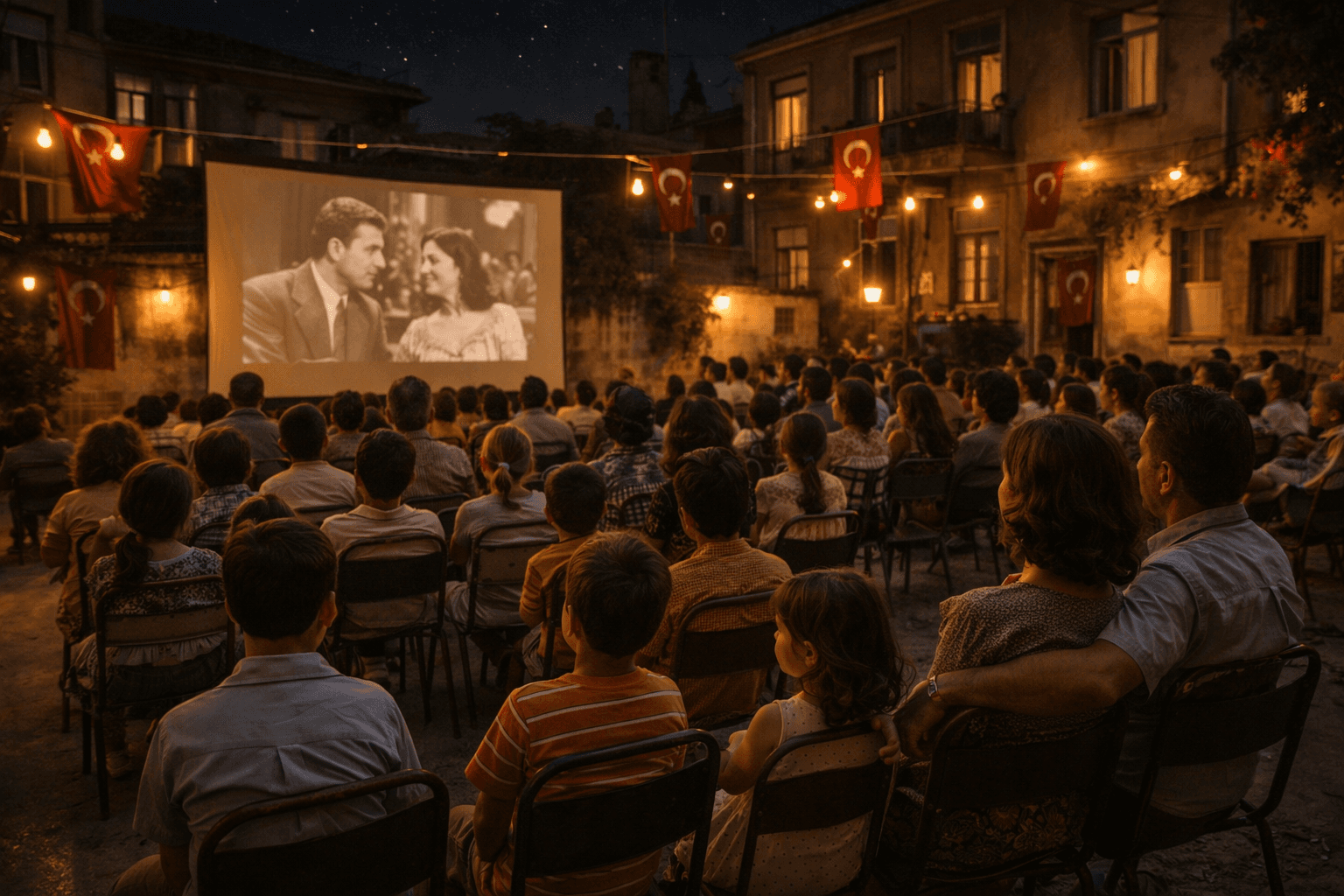
Sinema başlamadan önce mahallede farklı bir telaş olurdu. Aileler evde hazırlık yapar, bazıları yanına çekirdek veya gazoz alırdı. Çocuklar ise en ön sıralara oturabilmek için erkenden sinema alanına giderdi. Sinema bahçesinde genellikle metal sandalyeler veya ahşap sıralar bulunurdu. Beyaz bir perde ve projektör, o akşamın büyüsünü yaratmaya yeterdi.
Film başlamadan önce projektörün ışığı karanlığı yararak perdeye ulaşırdı. Makinenin çıkardığı hafif mekanik ses, izleyiciler için filmin başladığının habercisiydi. O an mahalledeki herkes sessizleşir, hikâyenin içine girerdi.
O dönemde gösterilen filmler çoğu zaman Yeşilçam’ın unutulmaz yapımlarıydı. Komediler, melodramlar ve aile filmleri yazlık sinemaların vazgeçilmezleriydi. Seyirciler film boyunca duygularını saklamazdı. Komik sahnelerde kahkahalar yükselir, dramatik anlarda ise derin bir sessizlik oluşurdu.
Mahalle kültürü yazlık sinemalarda daha da görünür hale gelirdi. Komşular yan yana oturur, film aralarında sohbet ederdi. Çocuklar bazen sandalyelerin arasında koşar, büyükler onları nazikçe uyarırdı. Birçok kişi için yazlık sinemalar yalnızca film izlenen yerler değil, aynı zamanda sosyal buluşma noktalarıydı.
Sinema bahçelerinde küçük büfeler de bulunurdu. Gazoz, dondurma ve çekirdek en çok satılan şeylerdi. Film boyunca çekirdek kabuklarının çıkardığı çıtırtı sesleri, yazlık sinemaların karakteristik seslerinden biriydi.
1980’lerin sonlarına doğru televizyonun yaygınlaşmasıyla birlikte yazlık sinemaların sayısı azalmaya başladı. İnsanlar artık filmleri evde izleyebiliyordu. Ancak bu değişim, açık hava sinemalarının yarattığı atmosferi tam olarak yerine koyamadı.
Bugün birçok kişi için yazlık sinemalar çocukluk anılarının en canlı parçalarından biridir. O akşamların serin rüzgârı, perdedeki siyah beyaz görüntüler ve mahallede paylaşılan kahkahalar hâlâ hatıralarda yaşamaya devam eder.
Belki de bu yüzden yazlık sinemalar yalnızca bir eğlence biçimi değil, aynı zamanda Türkiye’nin mahalle kültürünün unutulmaz bir parçasıdır.
🇬🇧 English | The Story of Summer Night Cinemas
Imagine a summer evening in Turkey during the 1970s or 1980s. As the sun sets, a gentle coolness spreads through the neighborhood. Streetlights begin to glow while the voices of children playing outside still echo through the streets. Soon a quiet excitement builds in the area because one of the most anticipated events of the evening is about to begin: the summer night cinema.
Open-air cinemas in Turkey were much more than entertainment venues. They were vibrant centers of neighborhood culture. Located in different districts of cities and towns, these outdoor theaters became places where communities gathered. Watching a film under the open sky was one of the most memorable experiences of those decades.
Before the movie started, the neighborhood often buzzed with preparation. Families got ready at home, some bringing sunflower seeds or soda to enjoy during the film. Children arrived early, hoping to secure seats in the front rows. Inside the cinema garden, rows of metal chairs or wooden benches were arranged neatly. A white screen and a film projector were enough to create the magic of the evening.
As darkness fell, the beam of light from the projector cut through the night and reached the screen. The soft mechanical sound of the machine signaled that the movie had begun. At that moment, the entire audience would grow quiet, drawn into the unfolding story.
The films shown in these cinemas were often classics of Turkish cinema, known as Yeşilçam productions. Comedies, melodramas, and family films were among the most popular choices. Audiences did not hide their emotions. Laughter echoed during humorous scenes, while dramatic moments filled the space with silence.
Neighborhood culture was clearly visible in these cinemas. Neighbors sat side by side, chatting during breaks between scenes. Children sometimes ran between rows of chairs while adults gently reminded them to stay quiet. For many people, summer cinemas were not just places to watch movies—they were important social meeting points.
Small kiosks inside the cinema gardens sold refreshments such as soda, ice cream, and sunflower seeds. The soft cracking sounds of sunflower seeds throughout the movie became one of the most recognizable sounds of summer cinema nights.
Toward the late 1980s, the spread of television gradually reduced the popularity of open-air cinemas. People could now watch films at home. Yet the unique atmosphere of watching a film under the stars could never be fully replaced.
Today, for many people in Turkey, summer cinemas remain vivid childhood memories. The cool evening breeze, the flickering images on the screen, and the shared laughter of neighbors still live in those recollections.
Perhaps that is why summer night cinemas are remembered not only as entertainment venues but also as cherished symbols of neighborhood life.
🇧🇷 Português (Brasil) | Os Cinemas de Verão e a Cultura de Bairro
Imagine uma noite de verão na Turquia entre as décadas de 1970 e 1980. Ao pôr do sol, uma brisa leve começa a percorrer o bairro. As luzes da rua acendem lentamente enquanto as vozes das crianças brincando ainda ecoam pelas ruas. Pouco a pouco surge uma expectativa no ar, pois o momento mais aguardado da noite está prestes a começar: o cinema ao ar livre.
Os cinemas de verão na Turquia eram muito mais do que simples lugares para assistir filmes. Eles eram centros vibrantes da vida comunitária. Espalhados por diferentes bairros das cidades, esses espaços reuniam moradores para compartilhar momentos especiais. Assistir a um filme sob o céu aberto era uma experiência única para muitas famílias.
Antes do início do filme, havia uma movimentação especial no bairro. As famílias se preparavam em casa e algumas levavam sementes de girassol ou refrigerantes para consumir durante a sessão. As crianças chegavam mais cedo para garantir lugares nas primeiras filas. Dentro do espaço do cinema, cadeiras metálicas ou bancos de madeira eram organizados diante de uma grande tela branca.
Quando a noite caía, a luz do projetor atravessava a escuridão até alcançar a tela. O som mecânico do equipamento anunciava que o filme havia começado. Nesse momento, o público inteiro se silenciava e mergulhava na história.
Os filmes exibidos eram frequentemente produções clássicas do cinema turco, conhecidas como filmes de Yeşilçam. Comédias, dramas e histórias familiares eram muito populares. O público reagia de forma espontânea — gargalhadas durante cenas engraçadas e silêncio profundo nos momentos mais emocionantes.
A cultura de bairro era claramente visível nesses cinemas. Vizinhos sentavam-se lado a lado, conversando nos intervalos. Crianças corriam entre as cadeiras enquanto os adultos pediam gentilmente que ficassem quietas. Para muitas pessoas, esses lugares eram também pontos de encontro social.
Pequenos quiosques vendiam refrigerantes, sorvetes e sementes de girassol. O som das cascas sendo quebradas durante o filme tornava-se parte da atmosfera dessas noites.
No final da década de 1980, com a popularização da televisão, muitos cinemas de verão começaram a desaparecer. As pessoas passaram a assistir filmes em casa. Mesmo assim, a experiência de assistir a um filme sob as estrelas jamais foi completamente substituída.
Hoje, para muitos turcos, os cinemas de verão representam algumas das lembranças mais queridas da infância. A brisa da noite, as imagens tremulando na tela e as risadas compartilhadas continuam vivas na memória.
