 Eski Pano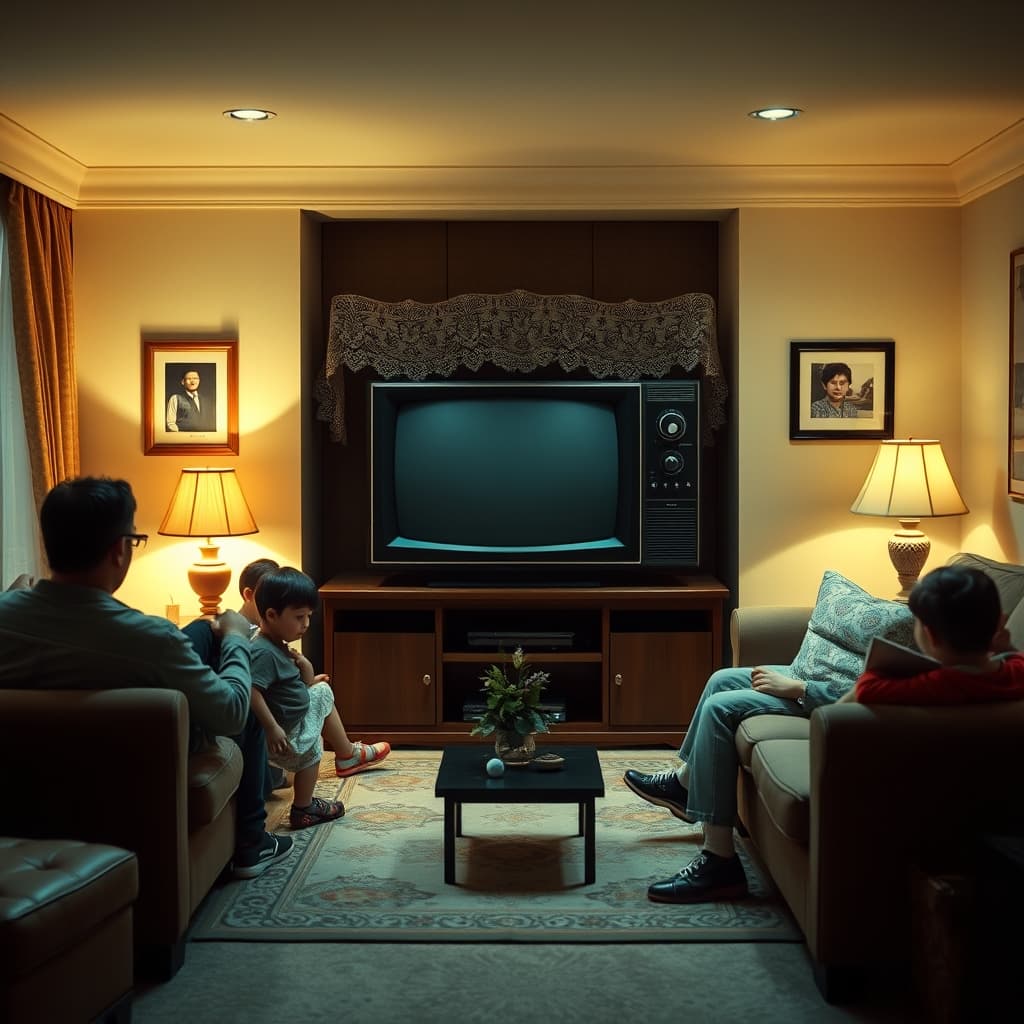
A tube television did not disappear into the room. Its deep cabinet required a stable surface, ventilation, and enough distance for chairs to face it. When switched on, sound or a bright point might arrive before the full picture settled. That brief wait helped mark the beginning of viewing. Family members finished small tasks, adjusted their seats, and looked towards one heavy object that would organise the next part of the evening.
The experience differed by model, broadcast system, location, and period. Some sets used rotary selectors, others push buttons or remote controls. Reception could depend on a rooftop aerial, an indoor antenna, cables, weather, and the building’s position. It is therefore misleading to describe one universal ritual. What many households shared was the practical work of obtaining a stable image before a programme could be enjoyed.
Tuning Made Viewers Part of the Machine
A rolling picture, snow, ghosting, or interrupted sound prompted a sequence of adjustments. Someone changed the channel control, moved an antenna, checked a connection, or asked another person to watch the screen and report improvement. Advice crossed the room in short commands. The person nearest the set became a temporary technician, while everyone else judged the result. Success was visible at once: faces sharpened, sound cleared, and conversation gave way to attention.
This participation had limits. Tube televisions contained high voltages and components that could remain dangerous even after disconnection. Opening the cabinet was not a safe casual household task. Repairs belonged with trained technicians, who diagnosed valves or later electronic components, power supplies, controls, and picture problems with appropriate precautions. Memories of tapping a cabinet or improvising a connection should not be presented as repair guidance.
One Screen Created a Negotiated Audience
Shared viewing required choices. News, a serial, sport, music, or a children’s programme competed for a limited schedule and a single screen. Adults often controlled the final decision, but requests, promises, and programme times shaped the evening. Conversation did not always stop. Viewers explained plots, challenged referees, compared performers, or called someone from another room when a favourite segment began.
The cabinet also altered domestic arrangement. Decorative covers, photographs, or small objects might be placed on top, although ventilation and heat made some choices unwise. Dusting the screen and cabinet became part of cleaning, and the set’s weight discouraged frequent movement. When a technician arrived, furniture shifted and the back of a familiar object was exposed, briefly turning entertainment into visible mechanical work.
The Excitement Came with Scarcity and Interruption
Broadcast hours, channel availability, electricity cuts, reception, and household access all varied. Not every family owned a television, and neighbours or relatives sometimes watched together. That gathering could strengthen connection but also produce crowding, hierarchy, and silence imposed on children. Analogue nostalgia should retain these differences rather than suggesting that every living room enjoyed the same comfort or choice.
For a Digital Nostalgia Archive, the tube television matters because it joined technology to a repeated social arrangement. Its warm-up, controls, aerial, cabinet, programme schedule, and repair needs shaped how people waited and watched. Modern screens offer immediate images and individual selection, but the older set records a different relationship: viewers adapted their room and evening to the machine. The excitement survives in memory because reception was achieved together and the picture, once stable, belonged briefly to everyone facing it.