
🇹🇷 Türkçe | Salonda Toplanan Ailenin Sessiz Merakıyla Hatırlanan Teleks Akşamları
Bazı teknolojiler evin tam ortasında durmasa bile bütün odayı kendi etrafında toplardı. Teleks makinesi böyle bir cihazdı. Her evde bulunmazdı; ama bulunduğu yerlerde yalnız bir araç olarak kalmaz, salonda toplanan ailelerin sessiz merakını da üzerinde toplardı. Tuşların sertliği, kâğıdın makaradan ilerleyişi, metal gövdenin hafif uğultusu ve uzak bir yerden haber taşıdığı hissi, analog çağın heyecanını neredeyse görünür kılardı. Akşamüstü misafir gelmişse konuşmalar biraz kısılır, çocuklar makineye gereğinden fazla yaklaşmamaları için uyarılır, büyükler “bak şimdi mesaj geçecek” diyerek o anın ciddiyetini artırırdı. Teleks, o yıllarda teknolojinin yalnız iş değil duygu da taşıyabildiğini gösteren az sayıdaki ev içi sahneden birini kuruyordu.
Teknoloji Mirası açısından düşünüldüğünde teleksin unutulmayan tarafı, onun hızdan çok bekleyiş üretmesidir. Bugünün anlık mesaj dünyasında iletişim görünmezleşti; oysa teleks çağında haberin gelişi bir süreç olarak yaşanırdı. Harfler bir yerden bir yere fiziksel bir disiplinle aktarılır, cihazın mekanik çalışması iletişimin somut yüzü olurdu. Bu yüzden teleks makinesi yalnız bir büro aygıtı değildi; aynı zamanda uzaklıkla kurulan ilişkinin sesi ve ritmiydi. Salonda duran bir teleks, aileye dış dünyanın yalnız radyodan ya da telefondan değil, yazılı ve titreşimli bir iz olarak da ulaşabildiğini hissettirirdi. Gelen kısa bir mesaj bazen gurbetten haber, bazen iş bağlantısı, bazen de beklenen bir teyit olur; ama her durumda evin havasını bir anda değiştirirdi.
Bu sessiz heyecanın hafızada kalmasının nedeni biraz da cihazın toplu dikkat istemesidir. Teleks çalışırken odaya dağılmış hayat kısa süre için tek noktada toplanırdı. Biri kâğıdın düzgün çıkıp çıkmadığına bakar, biri yazılan satırları yüksek sesle takip eder, biri mesajın kimden geldiğini tahmin etmeye çalışırdı. Çocuklar için bu, makinenin içinden kelimelerin çıktığı neredeyse büyülü bir andı. Yetişkinler içinse dünyanın başka bir köşesinden evin içine bir işaret düşmesiydi. Teknolojinin saygı uyandırdığı, hatta hafif bir mesafe istediği dönemlerde teleks, bu duyguyu en açık biçimde taşıyan araçlardan biriydi. Ona dokunmak, çalışmasını izlemek ve sesini dinlemek arasında bile ayrı bir hiyerarşi vardı.
Gündelik ayrıntılar o eski analog heyecanı daha da belirginleştirir. Sehpanın üstünde duran dantel örtünün yanında ağır bir makine gövdesi, hemen yakına bırakılmış gözlük, okunmayı bekleyen not kâğıtları, makaranın ucunu düzeltmek için uzatılan dikkatli parmaklar ve odada yükselmeyen ama hissedilen bir beklenti, teleksin çevresinde oluşan küçük töreni anlatır. Cihazın çıkardığı ses radyonun cızırtısından, daktilonun vuruşundan ve telefon zilinden farklıydı; kendi alanını kurardı. Mesaj basıldıktan sonra o kâğıt katlanır, bazen vitrin üstüne bırakılır, bazen mektup gibi saklanırdı. Böylece haber yalnız okunup geçilen bir şey olmaktan çıkar, aile arşivine karışan somut bir nesneye dönüşürdü.
Teleks makinesinin analog çağın unutulmayan heyecanını anlatmasının bir başka nedeni de güven duygusudur. Cihazın ağır görünüşü, çalışma ritminin ciddiyeti ve yazının kâğıtta bıraktığı iz, bilginin daha sağlam geldiği hissini doğururdu. Kimse “mesaj düştü mü” diye ekran yenilemiyordu; makine çalıştığında bunun fiziksel bir karşılığı vardı. Bu yüzden teleksin çevresinde toplanan aile, yalnız teknolojiye değil, haberin ağırlığına da tanıklık ediyordu. Belki her gün kullanılmıyordu, ama çalıştığı an salonun düzeni bile değişiyordu. Koltukta oturanlar doğrulur, sessizlik biraz koyulaşır, sonra ilk satırlar okununca odadaki merak yavaşça çözülürdü.
Sonuçta teleks makinesi bugün hatırlanıyorsa, bunun sebebi yalnız eski bir iletişim cihazı olması değildir. O, salonda toplanan ailelerin sessiz heyecanı içinde analog çağın haberle, bekleyişle ve maddi iz bırakan teknolojiyle kurduğu ilişkiyi anlatır. Hatırlanan şey tuşlar, rulo kâğıt ve metal ses kadar; bir haberin gelişine birlikte kulak veren aile tablosudur. Teleksin unutulmayan heyecanı biraz da bu ortaklıktan gelir: teknoloji o yıllarda yalnız bireysel kolaylık değil, birlikte yaşanan bir anın merkezinde duran şaşkınlık ve dikkat demekti.
🇬🇧 English | Telex Evenings Remembered Through the Quiet Curiosity of Families Gathered in the Living Room
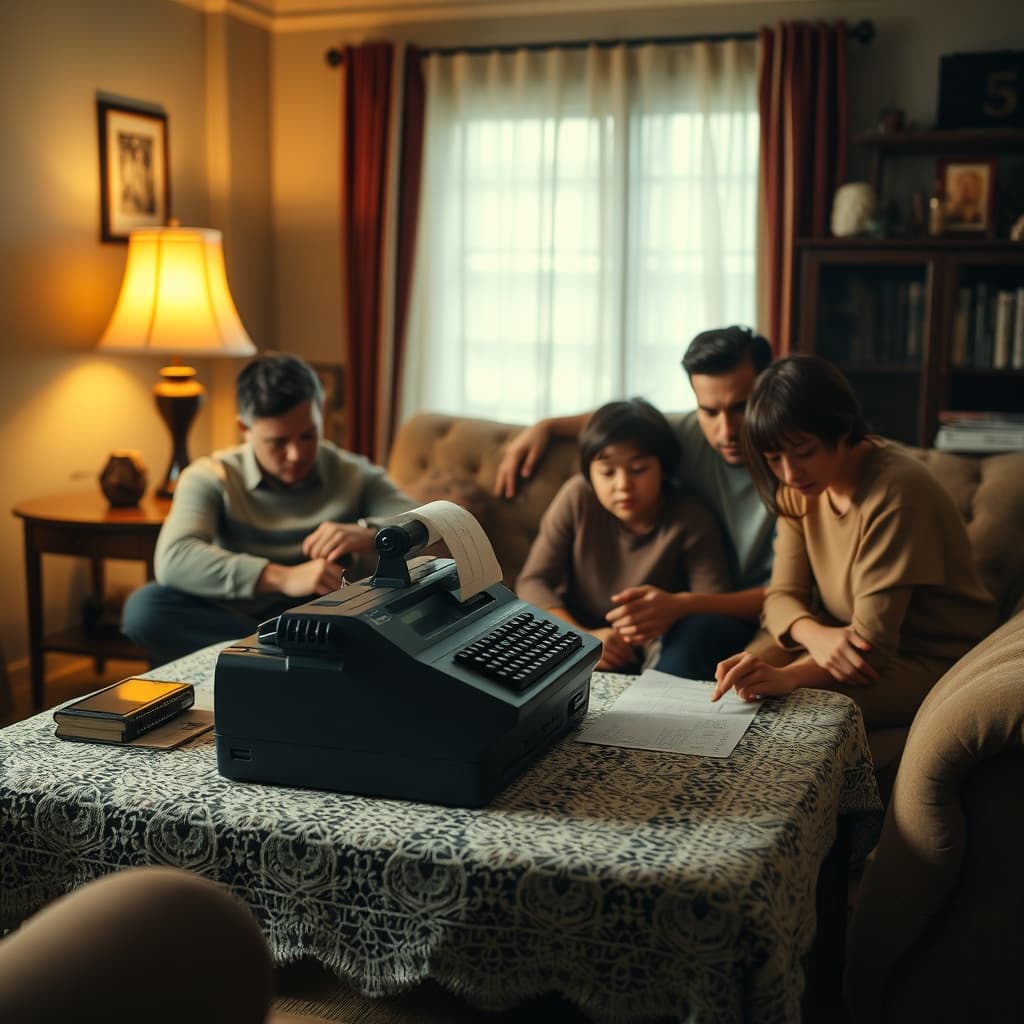
Some technologies did not need to stand physically at the center of a room in order to gather the whole room around themselves. The telex machine belonged to that kind. It was not found in every home, yet wherever it existed it never remained merely an instrument. It absorbed the quiet curiosity of families gathered in the living room. The firmness of its keys, the paper moving through the roll, the low hum of its metal body, and the sense that it was carrying news from somewhere far away made the excitement of the analog age almost visible. If visitors were present in the evening, conversations would soften, children would be warned not to come too close, and adults would say that a message was about to pass through. In those moments, the telex created one of the rare domestic scenes showing that technology of that era could carry emotion as well as function.
Seen as part of technology heritage, what makes the telex unforgettable is that it produced waiting rather than speed. In today’s world of instant messages, communication has become almost invisible. In the age of telex, by contrast, the arrival of information was experienced as a process. Letters were transmitted with physical discipline from one place to another, and the machine’s mechanical labor became the visible face of communication. For that reason, the telex was not merely an office device. It was also the sound and rhythm of a relationship with distance. A telex standing in the living room allowed a family to feel that the outside world could enter the house not only by radio or telephone, but also as a written, vibrating trace. A short incoming message might be news from a relative abroad, a business contact, or a long-awaited confirmation. In every case, it could change the atmosphere of the house at once.
Part of the reason this quiet excitement stayed in memory is that the device demanded collective attention. While the telex was working, the scattered life of the room gathered for a moment at a single point. One person checked whether the paper was feeding properly, another read the emerging lines aloud, and someone else guessed who the message might be from. For children, this was an almost magical scene in which words seemed to emerge from inside the machine itself. For adults, it meant that a sign from another corner of the world had dropped into the home. In an era when technology inspired respect and even required a slight distance, the telex was one of the clearest carriers of that feeling. Touching it, watching it work, and listening to it were all separate levels of contact.
Everyday details make that old analog thrill even clearer. A heavy machine body standing beside a lace cloth on the coffee table, glasses placed nearby, note papers waiting to be read, careful fingers reaching to straighten the end of the roll, and an expectation that did not rise into noise but still filled the room all describe the small ritual formed around the telex. The sound it made was different from radio static, typewriter blows, or a telephone ring. It established its own territory. Once a message was printed, the paper might be folded and placed on a display cabinet or kept like a letter. In that way, news stopped being something merely heard and forgotten. It became a physical object absorbed into the family archive.
Another reason the telex tells the unforgettable excitement of the analog age is the sense of trust it produced. The heavy appearance of the device, the seriousness of its working rhythm, and the trace of writing on paper created the feeling that information had arrived in a more solid form. No one refreshed a screen to check whether a message had come through. If the machine worked, there was a physical counterpart to that event. The family gathered around it was therefore witnessing not only technology, but the weight of news itself. It may not have been used every day, yet whenever it started running the arrangement of the living room changed. People sitting on the sofa straightened up, the silence deepened slightly, and the curiosity in the room slowly dissolved only after the first lines had been read.
In the end, the telex machine is remembered today not only because it was an old communication device. It is remembered because within the quiet thrill of families gathered in the living room, it tells of the analog age’s relationship to news, waiting, and technology that left a material trace. What remains in memory is not just the keys, the paper roll, and the metallic sound, but the family scene listening together for the arrival of a message. The telex’s unforgettable excitement comes partly from that shared experience: in those years, technology meant not only individual convenience, but wonder and concentration lived collectively.
🇧🇷 Português (Brasil) | Noites de Telex Lembradas pela Curiosidade Silenciosa da Família Reunida na Sala
Algumas tecnologias não precisavam estar exatamente no centro do cômodo para reunir todo o cômodo ao seu redor. A máquina de telex era assim. Não existia em todas as casas, mas, onde estava presente, nunca permanecia apenas como um aparelho. Ela atraía para si a curiosidade silenciosa das famílias reunidas na sala. A rigidez das teclas, o papel correndo pelo rolo, o leve zumbido do corpo metálico e a sensação de que trazia notícias de um lugar distante tornavam quase visível a emoção da era analógica. Se havia visitas no fim da tarde, as conversas diminuíam, as crianças eram advertidas para não chegar perto demais, e os adultos avisavam que uma mensagem estava para passar. Nesses instantes, o telex criava uma das raras cenas domésticas em que a tecnologia mostrava ser capaz de carregar emoção além de utilidade.
Visto como parte do patrimônio tecnológico, o que torna o telex inesquecível é o fato de ele produzir espera mais do que velocidade. No mundo de mensagens instantâneas de hoje, a comunicação quase se tornou invisível. No tempo do telex, ao contrário, a chegada da informação era vivida como processo. As letras eram transmitidas com disciplina física de um lugar ao outro, e o trabalho mecânico da máquina se tornava a face concreta da comunicação. Por isso, o telex não era apenas um aparelho de escritório. Era também o som e o ritmo da relação com a distância. Um telex na sala fazia a família sentir que o mundo exterior podia entrar em casa não só pelo rádio ou pelo telefone, mas também como um vestígio escrito e vibrante. Uma mensagem curta podia ser notícia de um parente distante, contato de trabalho ou confirmação aguardada. Em qualquer caso, mudava o ar da casa no mesmo instante.
Parte da razão de essa emoção silenciosa permanecer na memória está no fato de o aparelho exigir atenção coletiva. Enquanto o telex funcionava, a vida espalhada pela sala se concentrava por alguns minutos num único ponto. Alguém observava se o papel saía direito, outra pessoa lia em voz alta as linhas que surgiam, e alguém tentava adivinhar de quem vinha a mensagem. Para as crianças, era uma cena quase mágica, como se as palavras saíssem de dentro da máquina. Para os adultos, era o sinal de que algo de outra parte do mundo havia pousado dentro de casa. Num período em que a tecnologia despertava respeito e até pedia certa distância, o telex era um dos instrumentos que melhor carregavam essa sensação. Tocá-lo, vê-lo trabalhar e ouvi-lo eram formas diferentes de aproximação.
Os detalhes do cotidiano tornam essa antiga emoção analógica ainda mais nítida. Um corpo de máquina pesado ao lado de uma toalhinha rendada sobre a mesa, os óculos colocados perto, papéis de anotação à espera de leitura, dedos cuidadosos endireitando a ponta do rolo e uma expectativa que não virava barulho, mas preenchia o ambiente, tudo isso descreve o pequeno ritual formado em torno do telex. O som que ele produzia era diferente do chiado do rádio, do bater da máquina de escrever ou do toque do telefone. Criava o seu próprio espaço. Depois de impressa, a mensagem podia ser dobrada e guardada sobre o móvel da sala ou preservada como carta. Assim, a notícia deixava de ser algo apenas ouvido e esquecido. Tornava-se um objeto material incorporado ao arquivo afetivo da família.
Outra razão pela qual o telex conta a emoção inesquecível da era analógica é a confiança que inspirava. A aparência robusta do aparelho, a seriedade do seu ritmo de funcionamento e a escrita marcada no papel produziam a sensação de que a informação chegava de forma mais sólida. Ninguém atualizava tela para saber se a mensagem havia chegado. Quando a máquina funcionava, havia uma confirmação física desse acontecimento. A família reunida ao redor dela testemunhava, portanto, não só a tecnologia, mas o peso da própria notícia. Talvez não fosse usada todos os dias, mas, quando começava a operar, até a disposição da sala mudava. Quem estava sentado se endireitava, o silêncio ficava um pouco mais denso, e a curiosidade só se desfazia quando as primeiras linhas eram lidas.
No fim, a máquina de telex é lembrada hoje não apenas por ser um antigo aparelho de comunicação. Ela é lembrada porque, dentro da expectativa silenciosa da família reunida na sala, conta a relação da era analógica com a notícia, a espera e a tecnologia que deixava marca material. O que permanece na memória não são só as teclas, o rolo de papel e o som metálico, mas também a cena familiar de ouvir juntos a chegada de uma mensagem. A emoção inesquecível do telex nasce em parte dessa experiência compartilhada: naqueles anos, tecnologia significava não só conveniência individual, mas espanto e atenção vividos em conjunto.
