🇹🇷 Türkçe | Lehim Kokusu ve İnce Ayarın İçinde Uzayan Cihaz Ömrü
Eski evlerde bazı cihazlar yalnız kullanıldıkları için değil, bozulduklarında hemen vazgeçilmedikleri için de hatırlanır. Anteni çevirdikçe netleşen umut dediğimiz şey, bir radyonun ya da kasetli ses kayıt cihazının bir anda değil, küçük bir ayarla yeniden hayata dönmesiydi. Parazitli bir sesin berraklaşması, cızırtının arasından bir spikerin cümlesinin çıkması ya da kayıt tuşunun tekrar çalışması, teknolojiyle kurulan ilişkinin sabır tarafını gösterirdi. O sabır çoğu zaman tamircinin tezgâhında, lehim kokusu ve dikkatli parmaklar arasında görünür olurdu.
Teknoloji Mirası açısından ses kayıt cihazları ve antenli radyolar, dönemin gündelik mühendisliğini eve taşıyan aletlerdi. Onlar sadece haber dinlemek, müzik kaydetmek ya da bir ses saklamak için kullanılmıyordu; aynı zamanda kullanıcıyı cihazın çalışmasına yaklaştırıyordu. Anten uzatılır, yön değiştirilir, bant sarımı kontrol edilir, kafa temizliği yapılır, pil yatağına bakılırdı. Bu küçük müdahaleler, bugünün kapalı kutu cihazlarından farklı olarak insanı teknik sürecin dışına değil içine alıyordu. Arıza çıktığında ilk refleks çöpe atmak değil, tamir ettirmekti.
Tamircilerin elinde bu cihazların ikinci bir ömür bulmasının en önemli nedeni, onların parçalı ve anlaşılabilir bir teknolojiye ait olmasıydı. Vidaları sökülebilir, devresi izlenebilir, lastiği değiştirilebilir, potans düğmesi temizlenebilir, kablosu yenilenebilirdi. Mahalle arasındaki küçük elektronikçiler, raflarında transistör, lehim teli, kafa temizleme sıvısı ve yedek kayış tutar; çoğu zaman cihazın sahibinden çok onun huyunu tanırdı. “Bunun sesi açılınca düzeliyor”, “kayıtta bir temassızlık var”, “anteni tam orada tutunca çekiyor” gibi cümleler, eşya ile insan arasında kurulmuş pratik bir dilin parçalarıydı.
Bu ikinci ömür fikrini güçlü kılan şey yalnız ekonomi değildi. Elbette yeni cihaz almak her zaman kolay değildi; ama asıl mesele, cihazların hatıra taşımasıydı. Bir teyp içinde çocuğun ilk şiir kaydı, uzaktan gelen akrabanın sesi ya da düğünde çekilmiş amatör bir kayıt saklı olabilirdi. Bir radyonun etrafında yıllarca haber dinlenmiş, maç anlatımı takip edilmiş, pazar sabahları müzik programı açılmış olabilirdi. Tamir ettirmek bu yüzden yalnız bir aleti çalıştırmak değildi; evin ritmine karışmış bir sesi geri istemekti. Tamirci, teknik usta kadar hafıza koruyucusu gibiydi.
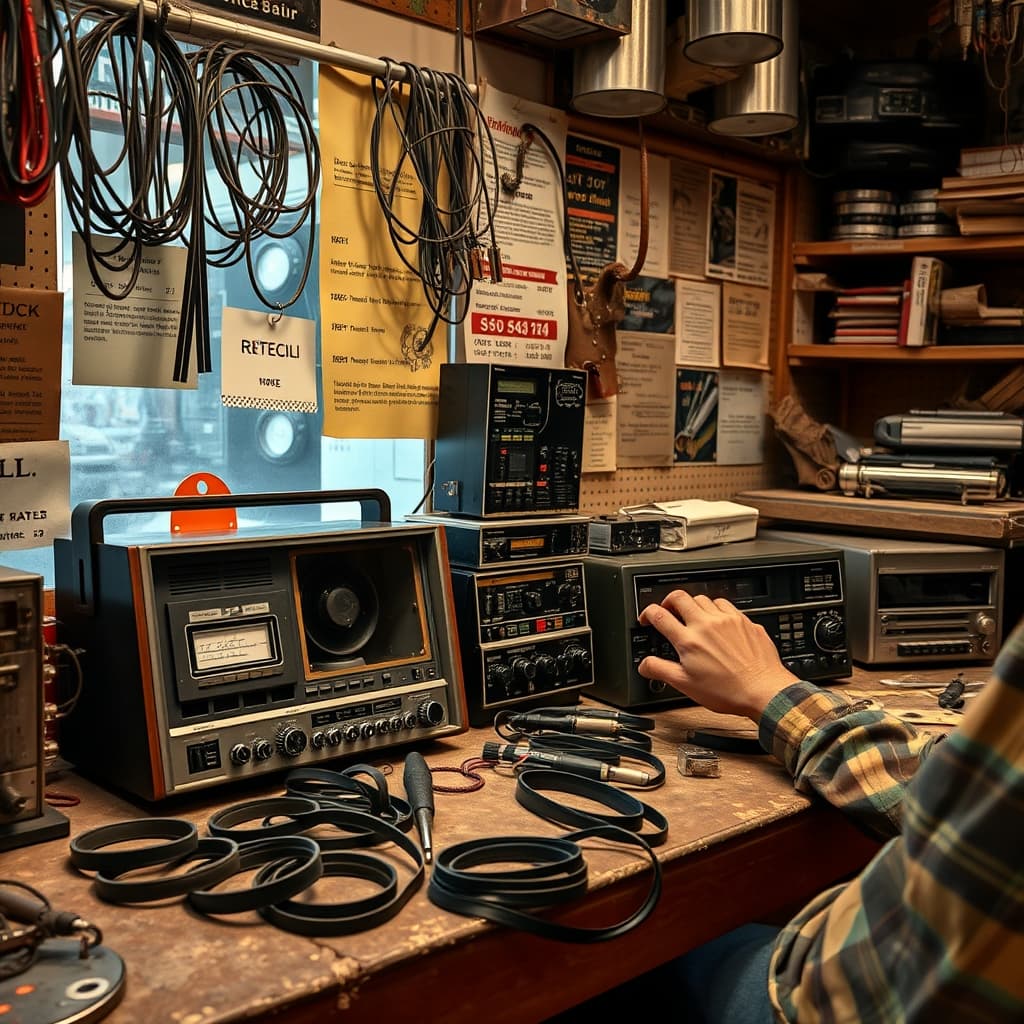
Gündelik hayatta tamir dükkânlarının kendine özgü bir sahnesi vardı. Tezgâhta kapağı açık cihazlar durur, küçük tornavidalar sırayla dizilir, duvarda eski takvim yaprakları asılı olur, arka taraftan hafif bir radyo sesi gelirdi. Müşteri bazen cihazı bırakıp gider, bazen tamircinin kısa test anını izlerdi. Hoparlörden gelen ilk net ses ya da bant makaralarının yeniden dönmeye başlaması, beklenmedik bir sevinç üretirdi. Orada teknoloji, soyut bir yenilik değil; elle tutulan, açılan, kapanan ve yeniden hayat bulan bir şeydi.
Bugün birçok elektronik eşya arızalandığında değişim daha kolay, tamir ise daha zor görülüyor. Parça bulunmuyor, gövde açılmıyor, kullanıcı müdahalesi istenmiyor. Bu nedenle eski ses kayıt cihazlarının tamircilerin elinde ikinci bir ömür bulması, yalnız nostaljik bir alışkanlık değil; başka bir teknik kültürün işaretidir. O kültürde dayanıklılık, bakım ve onarım birbirinden ayrı değildi. Cihazın kıymeti, yalnız satın alındığı anla değil, kullanılmaya devam ettiği yıllarla ölçülürdü.
Sonuçta anteni çevirdikçe netleşen umut ve ses kayıt cihazının tamircilerin elinde yeniden canlanması, geçmişte teknolojinin daha yavaş ama daha yakın yaşandığını anlatır. Cızırtıdan sese, arızadan düzene geçiş anı, insanın makineye yalnız tüketici olarak değil, bakım veren biri olarak da yaklaştığı bir dönemi gösterir. Belki de bu yüzden o eski cihazlar hâlâ duygusal bir ağırlık taşır; çünkü onların ikinci ömrü, aslında bir kuşağın sabır ve emek anlayışının da ikinci adıdır.
🇬🇧 English | A Lengthened Device Life in the Smell of Solder and Fine Adjustment
Some devices in older homes are remembered not only because they were used often, but because people did not give up on them the moment they failed. The hope that grew clearer as an antenna was turned belonged to the moment when a radio or tape recorder came back to life not all at once, but through a small adjustment. A voice emerging from static, interference becoming clear, or the record button working again revealed the patient side of people’s relationship with technology. That patience became visible on the repairman’s bench, among the smell of solder and the careful movement of hands.
From the perspective of technology heritage, tape recorders and antenna radios were devices that brought everyday engineering into the home. They were not used only to hear news, record music, or preserve a voice. They also drew the user into the workings of the machine. The antenna was extended and rotated, the tape transport was checked, the heads were cleaned, the battery compartment examined. These small interventions kept people inside the technical process rather than outside it, unlike many sealed contemporary devices. When something broke, the first instinct was not disposal. It was repair.
The main reason these machines found a second life in the hands of repairmen was that they belonged to a technology built from understandable parts. Screws could be removed, circuits followed, belts replaced, volume pots cleaned, cables renewed. The small electronics shops in neighborhood streets kept transistors, solder wire, cleaning fluid, and spare belts on their shelves, and often knew the temperament of a device almost better than its owner did. “It improves when the volume is raised,” “there is a loose contact in recording,” “it catches only if the antenna stays like that” were all parts of a practical language shared between people and objects.
What made this second life idea powerful was not only economy. Buying a new device was not always easy, of course, but the deeper reason was memory. A tape recorder might contain a child’s first recited poem, the voice of a distant relative, or an amateur wedding recording. Around a radio, a family might have listened for years to news bulletins, football commentary, or Sunday music programs. To have such a device repaired was therefore not only to restore an object. It was to ask for the return of a sound woven into the rhythm of the house. The repairman became not just a technician, but almost a custodian of memory.
Repair shops themselves formed a distinct everyday scene. Devices with their covers open stood on the bench, small screwdrivers were lined up in order, old calendar pages hung on the wall, and a faint radio played somewhere in the back. A customer sometimes left the device and returned later; sometimes they stayed to watch the brief test. The first clean sound from the speaker or the renewed turning of tape reels produced an unexpectedly strong joy. Technology there was not an abstract innovation. It was something grasped by hand, opened, closed, and brought back into life.
Today many electronic objects are easier to replace and harder to repair. Parts are unavailable, casings do not open easily, and user intervention is unwelcome. For that reason, the way old tape recorders found a second life with repairmen points to more than nostalgia. It indicates another technical culture altogether. In that culture, durability, maintenance, and repair were not separate ideas. The value of a device was measured not only by the day it was bought, but by the years it continued to serve.
In the end, the hope that sharpened as the antenna turned, and the tape recorder revived in a repairman’s hands, tell us that technology in the past was lived more slowly but also more intimately. The passage from static to sound, from malfunction to order, marks a period in which people approached machines not only as consumers, but as caretakers. That is why those old devices still carry emotional weight. Their second life was also the second expression of a generation’s patience and labor.
🇧🇷 Português (Brasil) | A Vida Alongada dos Aparelhos entre Cheiro de Solda e Ajuste Fino
Em casas antigas, alguns aparelhos são lembrados não apenas porque foram muito usados, mas porque ninguém desistia deles assim que apresentavam defeito. A esperança que ficava mais nítida ao girar a antena estava naquele instante em que um rádio ou gravador voltava a funcionar não de uma vez, mas graças a um pequeno ajuste. Uma voz saindo da chiadeira, a interferência ficando clara ou o botão de gravação voltando a responder mostravam o lado paciente da relação com a tecnologia. Essa paciência aparecia sobre a bancada do consertador, entre cheiro de solda e mãos cuidadosas.
Do ponto de vista do patrimônio tecnológico, gravadores e rádios com antena levavam a engenharia cotidiana para dentro de casa. Eles não serviam apenas para ouvir notícias, gravar música ou guardar uma voz. Também aproximavam o usuário do funcionamento do aparelho. A antena era estendida e girada, o transporte da fita era verificado, a cabeça de leitura era limpa, o compartimento das pilhas era examinado. Essas pequenas intervenções mantinham a pessoa dentro do processo técnico, e não do lado de fora, como acontece com muitos aparelhos atuais. Quando surgia um defeito, o primeiro impulso não era jogar fora. Era consertar.
O principal motivo de esses aparelhos encontrarem uma segunda vida nas mãos dos consertadores era pertencerem a uma tecnologia feita de partes compreensíveis. Parafusos podiam ser retirados, circuitos podiam ser seguidos, correias podiam ser trocadas, potenciômetros podiam ser limpos, fios podiam ser renovados. As pequenas oficinas dos bairros guardavam transistores, fio de solda, líquido de limpeza e peças sobressalentes, e muitas vezes conheciam o temperamento do aparelho quase melhor do que o dono. “Ele melhora quando aumenta o volume”, “há um mau contato na gravação”, “só pega se a antena ficar assim” eram frases de uma linguagem prática criada entre pessoas e objetos.
O que tornava forte essa ideia de segunda vida não era apenas a economia. Claro que nem sempre era simples comprar um aparelho novo, mas o motivo mais profundo era a memória. Um gravador podia guardar o primeiro poema recitado por uma criança, a voz de um parente distante ou uma gravação caseira de casamento. Ao redor de um rádio, uma família podia ter ouvido por anos o noticiário, a transmissão do futebol ou um programa musical de domingo. Mandar consertar esse aparelho, portanto, não era só recuperar uma máquina. Era querer de volta um som misturado ao ritmo da casa. O consertador era quase um guardião da memória.
As oficinas tinham ainda sua própria cena cotidiana. Aparelhos abertos sobre a bancada, pequenas chaves de fenda alinhadas, folhinhas de calendário na parede e um rádio baixo tocando ao fundo formavam um mundo muito particular. Às vezes o cliente deixava o aparelho e voltava mais tarde; às vezes ficava ali assistindo ao teste rápido. O primeiro som limpo saindo do alto-falante ou o giro renovado das bobinas da fita produzia uma alegria inesperadamente forte. A tecnologia ali não era inovação abstrata. Era algo que se pegava com a mão, se abria, se fechava e se fazia viver de novo.
Hoje muitos objetos eletrônicos são mais fáceis de substituir e mais difíceis de reparar. Faltam peças, o corpo do aparelho não se abre, a intervenção do usuário não é desejada. Por isso, o fato de os antigos gravadores encontrarem uma segunda vida nas mãos dos consertadores aponta para mais do que nostalgia. Indica outra cultura técnica. Nela, durabilidade, manutenção e reparo não eram ideias separadas. O valor do aparelho não era medido apenas pelo dia da compra, mas pelos anos em que continuava servindo.
No fim, a esperança que ficava mais nítida ao girar a antena e o gravador que renascia nas mãos do consertador mostram que a tecnologia do passado era vivida de forma mais lenta, porém mais próxima. A passagem da chiadeira ao som, do defeito à ordem, revela um tempo em que as pessoas se aproximavam das máquinas não só como consumidoras, mas como cuidadoras. Talvez por isso esses aparelhos antigos ainda tenham tanto peso afetivo. Sua segunda vida era também a segunda expressão da paciência e do trabalho de uma geração.