🇹🇷 Türkçe | Çay Saatine Renk Veren Ekşi Tanelerle Kurulan Ev İçi Sofra Neşesi
Bazı tatlar yalnız lezzetleriyle değil, etrafında kurdukları toplantı diliyle hafızada kalır. Sumaklı kısır da bunlardan biridir. İnce bulgurun sabırla ıslandığı, salçanın yağla buluşup parlak bir renk aldığı, nar ekşisiyle birlikte sumağın o tanıdık burukluğunun yavaş yavaş ortaya çıktığı anlarda mutfakta yalnız bir tarif hazırlanmaz; ev içi bir buluşmanın zemini kurulur. Kısır günleri denilen o yarı planlı, yarı kendiliğinden toplanmalar, çay saatinin etrafında şekillenen eski misafirlik kültürünün en canlı sahnelerinden biriydi.
Damak Hafızası içinde sumaklı kısırın özel yer tutmasının ilk nedeni, tarifin aile içinde küçük farklarla yaşamasıdır. Kimi ev daha bol limon kullanır, kimi domates salçasını baskın tutar, kimi yeşilliği neredeyse ince ince kar gibi yağdırır, kimi içine nar taneleri ya da ince doğranmış kornişon ekler. Ama sumak çoğu tarifte o belirleyici hatıra çizgisini çizer. Hem ferahlatıcı hem iştah açıcı olan bu ekşi dokunuş, kısırı yalnız doyurucu bir tabak olmaktan çıkarır, sohbet eşlikçisi bir lezzete dönüştürür. Her aile kendi oranını savunsa da herkes bir yerden tanıdığı aynı ortak tadı bilir.
Bu yemeğin özel bir yere sahip olmasının bir başka sebebi, hazırlama ve paylaşma biçimidir. Kısır çoğu zaman tek kişilik bir ihtiyaç için yapılmaz; kalabalık hissi için yapılır. Çayın demleneceği, tabakların çıkacağı, birilerinin “biraz daha maydanoz koyalım” diyeceği, bir başkasının marulu yıkayacağı önceden sezilir. Bulguru yoğurma hareketi bile ortaklık duygusu taşır. Bir mutfakta eli değen kişi arttıkça tarif zenginleşir ve sofraya gelen tabak sadece yiyecek değil, katılmış emeklerin toplamı olur. Kısır günleri bu yüzden tariften çok bir ev içi organizasyon hafızasıdır.
Sumak burada sadece baharat değil, kültürel imza gibidir. O ekşi toz, Anadolu ve çevre mutfaklarının serinletici, uyandırıcı tat hafızasını taşır. Kısıra eklendiğinde özellikle bahar ve yaz aylarında ağırlaşmayan, aksine açılan bir sofra duygusu yaratır. Yanında kıvırcık marul, ince belli bardakta çay, belki mercimek köftesi, belki patatesli börek olduğunda masa tamamen bir gün daveti havasına bürünür. Kadınlar arası oturmalar, komşu çağrıları, okuldan sonra eve doluşan genç kızlar ya da aile içinde aniden kalabalıklaşan ikindiler bu tabakta kendine yer bulur.
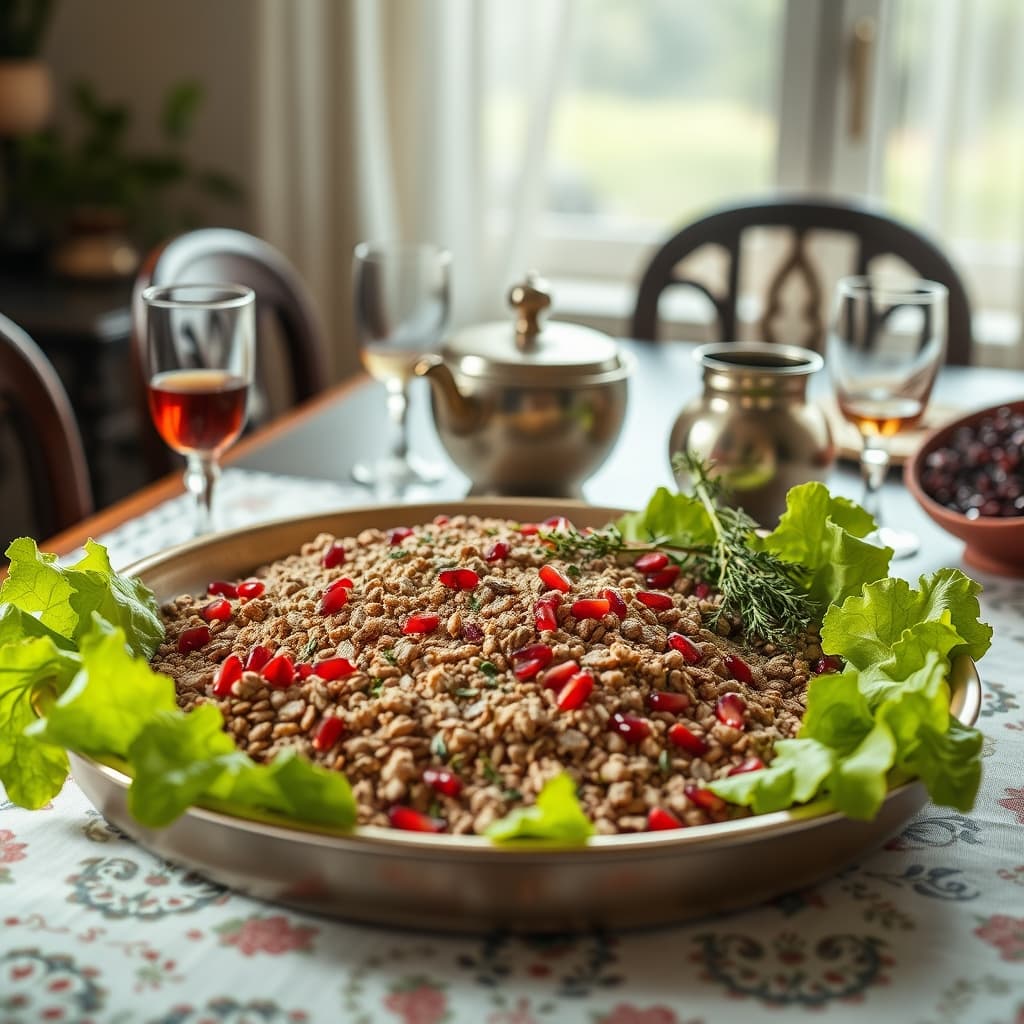
Gündelik ayrıntılar, sumaklı kısırın neden hafızada böyle canlı kaldığını açıklar. Büyük çelik tepside karıştırılan bulgurun sesi, ince kıyılmış yeşilliğin mutfağa yaydığı koku, servis öncesi üstüne serpiştirilen birkaç nar tanesi ya da son anda sıkılan ekstra limon, tarifin neredeyse törensel küçük anlarıdır. Kısır masaya geldiğinde sohbet de genellikle hızlanır. Çünkü yenmesi kolay, paylaşılması rahat ve tekrar alınması çekincesizdir. Sofrada ağırlık yapmaz; insanı oturmaya, konuşmaya ve biraz daha kalmaya davet eder. Bu topluluk hissi, onu aile tarifleri içinde ayrıcalıklı kılar.
Bugün kısır hâlâ yaygın olarak yapılıyor olsa da, “kısır günü” ifadesinin çağırdığı sosyal sahne her yerde aynı yoğunlukta yaşamıyor. Zamanın hızlanması, misafirlik pratiklerinin kısalması ve hazır ikram seçeneklerinin çoğalmasıyla o uzun ikindi toplantıları seyrekleşti. Yine de sumaklı kısır hazırlandığında eski sofra düzeninin izleri hemen belirir. Tarif, insanı yalnız geçmişe değil, paylaşma biçimine de geri götürür. Çünkü bu yemek, ölçü kadar muhabbetle tamamlanır.
Sonuçta sumaklı kısır günleri aile tarifleri içinde özel bir yere sahiptir; çünkü onlar lezzetle birlikte topluluk duygusunu, ev içi emeği ve misafirliğin yumuşak ritmini taşır. Ekşi, ferah ve renkli tadının ötesinde kısır, sofraya kurulan ilişkinin de hafızasıdır. Bir tabak kısır bazen yalnız bulgur, yeşillik ve sumak değildir; aile içi tariflerin neden nesilden nesile korunduğunu anlatan en canlı kanıtlardan biridir.
🇬🇧 English | Domestic Table Joy Built with Tart Grains that Colored Tea Time
Some tastes endure in memory not only because of their flavor, but because of the social language they gather around themselves. Sumac kısır is one of them. As fine bulgur slowly softens, tomato paste meets oil and takes on a glossy color, and the familiar tartness of sumac rises together with pomegranate molasses, the kitchen does not simply produce a recipe. It prepares the ground for a household gathering. Those days of kısır, half planned and half spontaneous, were among the liveliest scenes of older visiting culture formed around tea time.
Within culinary memory, the first reason sumac kısır holds a special place is that the recipe lives through small differences from family to family. One household uses more lemon, another lets the tomato paste speak louder, another covers the bowl with an almost snowy amount of herbs, while another adds pomegranate seeds or finely chopped pickles. Yet in many versions, sumac draws the defining line of memory. Its tart lift makes kısır more than a filling dish. It becomes a taste made for conversation. Every family defends its own proportions, but everyone also recognizes a shared flavor known from elsewhere.
Another reason it holds such a special place lies in the way it is prepared and shared. Kısır is rarely made for a single private need. It is made in anticipation of company. One senses beforehand that tea will be brewed, plates will come out, someone will say, “let’s add a little more parsley,” and someone else will wash the lettuce. Even the act of kneading the bulgur carries a feeling of togetherness. The more hands touch the recipe in a kitchen, the richer it becomes, and the plate that reaches the table is not only food, but the sum of shared effort. That is why kısır days are remembered less as a recipe than as a domestic organization of sociability.
Here sumac functions not merely as a spice, but as a cultural signature. Its tart red dust carries the cooling, awakening taste memory of Anatolian and neighboring cuisines. When added to kısır, especially in spring and summer, it creates a table that does not feel heavy, but open and lively. With curly lettuce, tea in slender glasses, perhaps lentil balls, perhaps a potato pastry beside it, the table fully takes on the mood of a daytime visit. Women’s gatherings, neighborly invitations, teenage girls returning from school, or unexpectedly crowded family afternoons all find their place in this dish.
Everyday details explain why sumac kısır remains so vivid in memory. The sound of bulgur being mixed in a wide steel tray, the smell of finely chopped herbs filling the kitchen, a few pomegranate seeds scattered on top before serving, or an extra squeeze of lemon at the last moment are all almost ceremonial gestures. Once the kısır reaches the table, conversation usually quickens. It is easy to eat, easy to share, and easy to take again without hesitation. It does not weigh down the table. It invites people to sit, talk, and stay a little longer. That sense of collectivity is what gives it a privileged place among family recipes.
Today kısır is still widely made, yet the social scene evoked by the phrase “kısır day” is not lived everywhere with the same intensity. Life has sped up, visiting customs have shortened, and ready-made offerings have multiplied. Even so, when sumac kısır is prepared, traces of the older table order appear immediately. The recipe draws people back not only toward the past, but toward a way of sharing. This dish is completed as much by conversation as by measurement.
In the end, sumac kısır days hold a special place among family recipes because they carry with their taste a sense of community, domestic labor, and the gentle rhythm of visiting. Beyond its tart, fresh, and colorful flavor, kısır preserves the memory of how a table is socially formed. A plate of kısır is sometimes more than bulgur, herbs, and sumac. It is one of the clearest proofs of why family recipes survive from generation to generation.
🇧🇷 Português (Brasil) | A Alegria da Mesa Doméstica Criada com Grãos Ácidos que Davam Cor à Hora do Chá
Alguns sabores permanecem na memória não apenas pelo gosto, mas pela linguagem de encontro que constroem ao redor de si. O kısır com sumagre é um deles. Enquanto o trigo fino vai hidratando devagar, a pasta de tomate encontra o óleo e ganha brilho, e a acidez conhecida do sumagre aparece junto com o melaço de romã, a cozinha não está apenas preparando uma receita. Está montando o terreno de um encontro doméstico. Os chamados dias de kısır, meio planejados e meio espontâneos, estavam entre as cenas mais vivas da antiga cultura de visitas em torno da hora do chá.
Na memória gustativa, a primeira razão de o kısır com sumagre ocupar um lugar tão especial é que a receita vive com pequenas diferenças em cada família. Algumas casas usam mais limão, outras destacam mais a pasta de tomate, outras cobrem a mistura com uma chuva fina de ervas, enquanto outras acrescentam sementes de romã ou picles picados. Ainda assim, em muitas versões, é o sumagre que traça a linha principal da lembrança. Seu toque ácido faz do kısır mais do que um prato farto. Ele vira um sabor feito para acompanhar conversa. Cada família defende sua proporção, mas todas reconhecem um gosto em comum.
Outra razão para esse lugar especial está na forma de preparo e partilha. O kısır raramente é feito para uma necessidade individual. Ele é preparado com expectativa de gente. Já se sente antes que o chá vai ser passado, os pratos vão aparecer, alguém vai sugerir “vamos colocar mais salsinha”, outra pessoa vai lavar as folhas de alface. Até o gesto de amassar o trigo traz uma sensação de coletividade. Quanto mais mãos participam da receita, mais rica ela fica, e o prato levado à mesa não é apenas comida, mas soma de esforços compartilhados. Por isso, os dias de kısır são lembrados menos como receita e mais como organização doméstica da convivência.
O sumagre, aqui, não funciona só como tempero, mas como assinatura cultural. Esse pó azedo carrega a memória refrescante e desperta dos sabores da Anatólia e de cozinhas vizinhas. Quando entra no kısır, especialmente na primavera e no verão, cria uma mesa que não pesa, mas se abre. Ao lado de alface crespa, chá em copos finos, talvez bolinhos de lentilha, talvez uma torta de batata, a mesa assume por completo o clima de visita diurna. Reuniões entre mulheres, convites de vizinhas, meninas chegando da escola ou tardes de família que de repente ficam cheias encontram lugar nesse prato.
Os detalhes do cotidiano explicam por que o kısır com sumagre continua tão vivo na memória. O som do trigo sendo misturado numa bandeja grande de aço, o cheiro das ervas bem picadas tomando a cozinha, algumas sementes de romã colocadas por cima antes de servir ou um limão espremido no último instante são gestos quase cerimoniais. Quando o kısır chega à mesa, a conversa costuma acelerar. Ele é fácil de comer, fácil de compartilhar e fácil de repetir sem constrangimento. Não pesa sobre a mesa; convida a sentar, falar e ficar um pouco mais. É essa sensação de coletividade que lhe dá um lugar privilegiado entre as receitas de família.
Hoje o kısır continua bastante presente, mas a cena social evocada pela expressão “dia de kısır” já não existe em toda parte com a mesma intensidade. A vida acelerou, as visitas ficaram mais curtas e as opções prontas se multiplicaram. Mesmo assim, quando o kısır com sumagre é preparado, os vestígios da antiga ordem da mesa aparecem de imediato. A receita leva a pessoa não só ao passado, mas também a um jeito de compartilhar. Esse prato se completa tanto na conversa quanto na medida.
No fim, os dias de kısır com sumagre ocupam um lugar especial entre as receitas de família porque levam consigo, além do sabor, o senso de comunidade, o trabalho doméstico e o ritmo suave das visitas. Para além do gosto ácido, fresco e colorido, o kısır guarda a memória de como uma mesa é formada socialmente. Às vezes um prato de kısır é mais do que trigo, ervas e sumagre. É uma das provas mais claras de por que receitas familiares passam de geração em geração.