 Eski Pano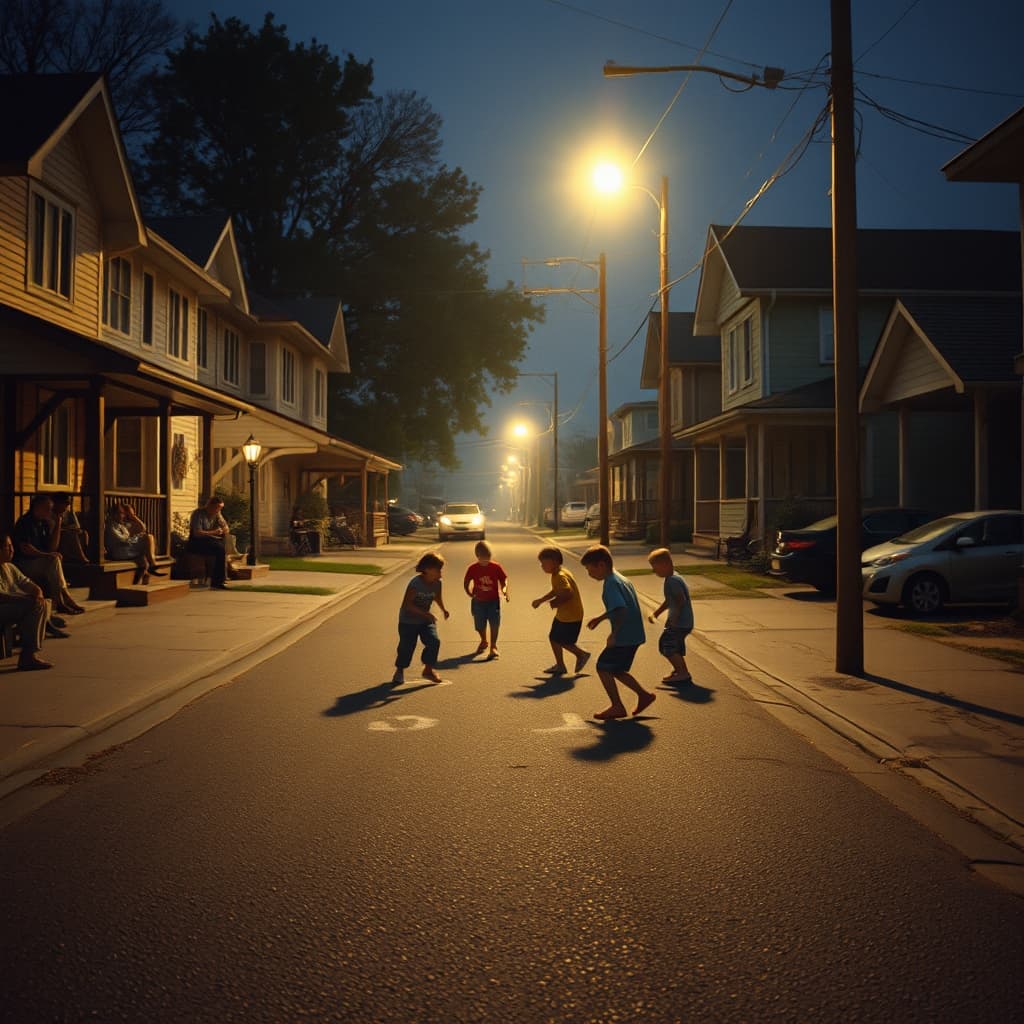
When daylight faded but the evening was not yet over, the pool of light beneath a streetlamp could become a second playground. Children moved skipping ropes, chalk games, marbles, balls, or chasing games towards the visible patch. The lamp did not illuminate the whole street evenly. Its limits helped define where play remained possible, while dark corners, parked vehicles, doorways, and passing traffic shaped the rules.
The group changed throughout the evening. Younger children arrived with siblings, older players joined after errands, and someone left when called from a balcony. Games had to absorb these arrivals without starting again each time. Teams were adjusted, turns renegotiated, and arguments settled well enough for play to continue. Neighbourhood bonds grew through this repeated practice of making room, not through uninterrupted harmony.
The Lamp Created a Boundary Everyone Could See
Within the bright circle, a wall might become a finish line and two stones a goal. Beyond it, the ball became harder to follow and children slowed or sent someone to retrieve it. Visibility offered a degree of reassurance to adults watching from windows or shopfronts, but it did not make the street safe. Drivers, uneven paving, open drains, and strangers still required attention. Informal supervision worked only when warnings were heard and respected.
Residents experienced the games differently. Some enjoyed the voices and recognised every child; others needed quiet, access to a doorway, or protection for a window and parked vehicle. A complaint could lead to lower voices, a moved goal, or the end of a particular game. Noise and damage sometimes created real conflict. Remembering strong neighbourliness honestly means including the compromises that allowed a shared street to serve more than one purpose.
Open Windows Extended the Field of Care
Communication crossed the building frontage. A parent asked whether a child had been seen, a neighbour announced that a coat had been left downstairs, and a shopkeeper warned of an approaching vehicle. Water, a spare ball, or a simple repair could come from a nearby door. This help was practical and immediate. It did not erase differences between families, yet it created familiarity with names, routines, and expected behaviour.
The final call home gave the evening its rhythm. Each household had its own hour, and children tried to negotiate one more round or one final goal. As players departed, the remaining group reorganised until the game could no longer continue. Shoes carried dust upstairs, voices moved indoors, and the street returned to traffic and silence. The next evening, much of the same social structure could be assembled again.
Belonging Was Learned Through Participation
Not every child was included equally. Age, gender, confidence, skill, disability, or being new to the area could affect access. Older children might protect younger ones or dominate them. A responsible archive records exclusion beside solidarity. The strongest version of neighbourhood culture was not automatic; it appeared when groups revised rules, shared turns, and treated the public space as belonging to others too.
For a Digital Nostalgia Archive, streetlight games matter because they show community being produced through small negotiations. The lamp supplied electricity, but residents supplied permission, observation, boundaries, and repair after conflict. The memory remains vivid because play made relationships visible: who waited, who warned, who shared, who complained, and who called everyone home. Under borrowed light, children learned that a street could be both playground and common responsibility.