 Eski Pano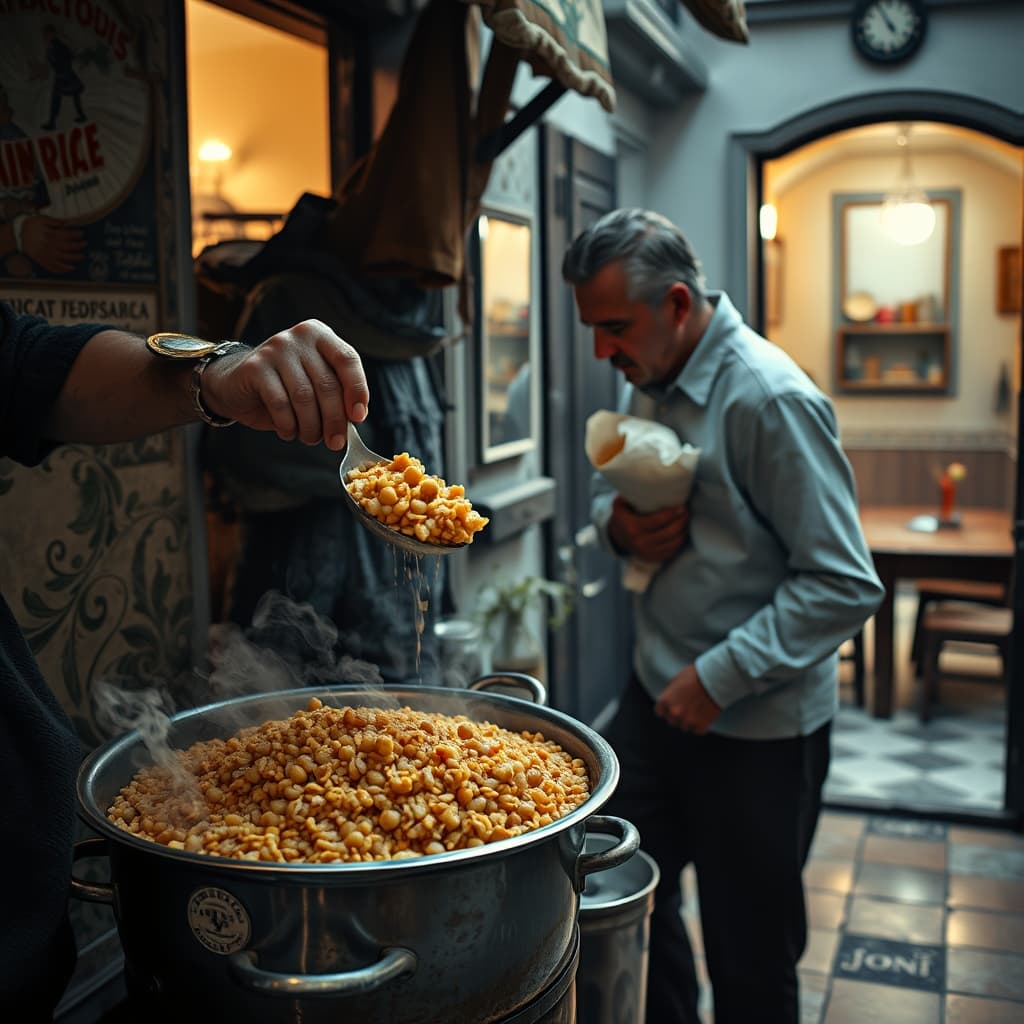
Street-style chickpea rice could fill a home with aroma before the serving container was fully opened. Warm rice held steam, chickpeas carried the flavour of their cooking, and butter, oil, stock, or chicken—depending on the version—added depth. Brought home from a neighbourhood seller or recreated in the kitchen, the dish crossed the boundary between public street food and private table without losing the expectation attached to its first hot spoonful.
There is no single formula. Rice type, soaking, rinsing, fat, stock, chickpea texture, chicken, seasoning, and accompaniments vary between sellers, cities, and homes. Some versions are plain and grain-focused; others are richer. Pickles, ayran, black pepper, or hot pepper may accompany the plate. An archive should document these differences rather than declare one combination universally authentic.
Separate Grains Required Controlled Moisture
The desired texture depended on washing or soaking the rice as appropriate, balancing liquid, managing heat, and allowing rest. Too much stirring could break grains; too much liquid produced heaviness; too little left hard centres or a scorched pot. Chickpeas had their own timetable and needed to be tender without collapsing. Combining two ingredients therefore required planning, not merely placing them in the same vessel.
Street service added another set of skills. The seller kept portions ready, managed steam and temperature, moved quickly, and judged the balance of rice and chickpeas in each plate. The cart or counter had to remain clean under demanding conditions. These practical details matter more than romantic claims about a single legendary vendor. They reveal food work performed in public, under time pressure, for customers expecting consistency.
The Journey Home Changed the Aroma
When carried home, enclosed heat concentrated the smell. Paper, a lidded container, or another form of packaging held steam until it reached the table. Family members noticed the arrival, cleared space, and added accompaniments. The dish became part of the household evening even when no one at home had cooked it. That transition helps explain why a street meal can belong strongly to domestic memory.
Food safety should remain central. Cooked rice can become hazardous when held at unsuitable temperatures, and chicken and chickpeas also require clean preparation and storage. Hot food should be kept appropriately hot or cooled promptly under reliable guidance; leftovers require timely refrigeration and careful reheating. Nostalgic recollection is not evidence that every past handling practice was safe.
A Modest Plate Connected Seller and Household
The dish’s affordability and portability made it useful to workers, students, travellers, and families, though price and access changed over time. A purchased portion could supplement a meal, solve a late evening, or become a small treat. At home, plates might be divided differently for children and adults. The same container therefore entered several economies: the seller’s labour, the customer’s budget, and the household’s distribution of food.
For a Digital Nostalgia Archive, chickpea rice matters because it links street commerce to kitchen memory through a sensory event. The aroma filling the house was not magic; it came from hot grains, cooked legumes, fat, steam, packaging, and anticipation. Its cultural value lies in that complete route—from soaking and cooking to portioning, carrying, opening, and sharing. The first spoon recalled the street and the home at once because both had contributed to the meal.