
🇹🇷 Türkçe | Baharın İlk Işıkları: Fuar Alanlarında Parlayan Memleket Hayali
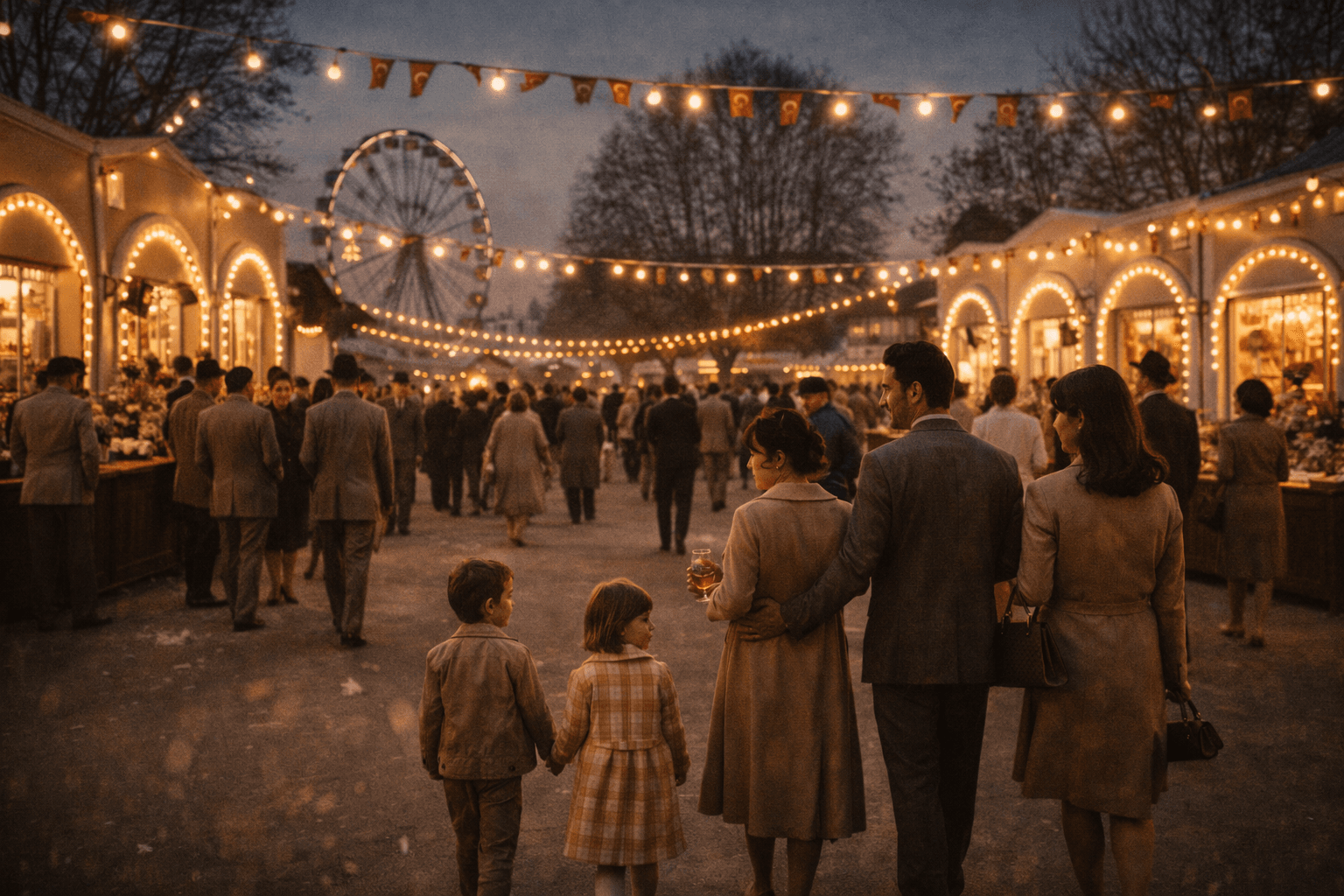
Akşam serinliği henüz ceket gerektirecek kadar keskinleşmemişken, şehirlerin kenarına kurulan fuar alanları başka bir âlemin kapısı gibi görünürdü. Tozlu yolların ardından aniden beliren ışıklar, renkli bayraklar, uzaktan gelen anons sesleri ve dönme dolabın ağır ağır göğe yükselen gölgesi, sıradan bir günü bir bayram akşamına çevirirdi. Baharın ilk akşamları bu yüzden hâlâ hafızada daha parlaktır; çünkü insanlar sadece gezmeye değil, memleketin geleceğini gözleriyle görmeye giderdi. Fuarlar, yeni gelen bir makineyi, parlayan bir mutfak eşyasını, uzak şehirlerden taşınmış bir modayı ya da henüz duyulmuş bir yeniliği halka gösteren büyük sahnelerdi. Orada dolaşan herkes, kendi hayatının biraz daha genişleyebileceğini hissederdi.
Bu alanlar yalnızca eğlence için kurulmazdı. Cumhuriyetin modernleşme hikâyesi, kalkınma heyecanı ve şehirli hayatın yeni ritmi çoğu zaman fuar kapılarında görünür olurdu. Pavyonların önünde duran kalabalıklar, bazen yerli üretimin gururunu, bazen yabancı bir tekniğin şaşkınlığını, bazen de daha düzenli, daha ferah, daha parlak bir yaşam ihtimalini seyrederdi. Bir vitrinin önünde uzun uzun duran memur ailesi, belki o gün alamayacağı bir buzdolabına bakardı; çocuklar pamuk şekere ve oyuncaklara yönelirken babalar makinelerin başında oyalanır, anneler sergilenen kumaşlara, tabak takımlarına ve mutfak düzenine dikkatle bakardı. Böylece fuar, gündelik hayatın özlemleriyle kamusal hayalin birleştiği bir mekâna dönüşürdü.
Fuar akşamlarının bellekte yer etmesinin bir nedeni de toplu bir görgü deneyimi sunmasıydı. İnsanlar en temiz kıyafetlerini giyer, saçlarını özenle tarar, şehir meydanından ya da tramvay durağından kalkıp ailece fuara giderdi. O yürüyüş başlı başına bir törendi. Giriş kapısındaki kalabalık, bilet gişesindeki telaş, hoparlörden yükselen nazik ama resmî anonslar, her yaştan insanı aynı merak etrafında toplardı. Işıklı tabelalar altında çekilen siyah beyaz fotoğraflar, o geceyi yalnızca yaşanmış bir zaman değil, saklanacak bir hatıra hâline getirirdi. Çocuklar için fuar bir masal atlasıydı; büyükler için ise memleketin değişmekte olduğunu gösteren canlı bir kanıttı.
Bugünden geriye baktığımızda, fuar alanlarının neden daha parlak göründüğünü biraz da kaybettiklerimiz anlatıyor. Şimdi bilgiye hızla ulaşılıyor, yeni olan hemen ekrana düşüyor, şaşırmak için uzun uzun beklemek gerekmiyor. Oysa fuarda yenilik fiziksel olarak karşımıza çıkardı; dokunulur, koklanır, etrafında dönülür, aile içinde üzerine konuşulurdu. Baharın ilk akşamında yakılan o ışıklar, yalnızca ampullerin ışığı değildi; ortak bir iyimserliğin parıltısıydı. Memleketin daha zarif, daha üretken, daha neşeli olabileceğine dair sessiz bir inanç dolaşırdı çay bardaklarının, simit kâğıtlarının, çocuk kahkahalarının arasında. Bu yüzden fuar alanları bugün yalnızca geçmiş bir eğlence biçimi değil, bir dönemin toplu umut hafızası olarak hatırlanıyor.
🇬🇧 English | The First Lights of Spring: The Dream of a Nation Shining Through Fairgrounds
Before the evening chill sharpened enough to require a proper coat, fairgrounds set up on the edges of cities looked like gateways to another world. After dusty roads and ordinary streets, people would suddenly encounter strings of lights, fluttering flags, distant loudspeaker announcements, and the slow silhouette of a Ferris wheel rising into the sky. An ordinary day would turn into something close to a holiday. That is why the first evenings of spring still seem brighter in memory: people did not go only to stroll, but to witness the future of the country with their own eyes. Fairgrounds were grand stages where a new machine, a gleaming kitchen appliance, a style brought from another city, or a recently introduced innovation was displayed to the public. Everyone walking there felt that life itself might become a little wider, a little more modern, a little more hopeful.
These places were never only about amusement. The story of modernization, economic ambition, and the changing rhythm of urban life often became visible at the gates of the fair. Crowds gathered in front of pavilions to admire domestic production, to feel surprise before unfamiliar technologies, and to imagine a life that seemed cleaner, brighter, and more orderly. A clerk’s family might stand for minutes before a refrigerator they could not yet afford; children would run toward cotton candy and toys, while fathers lingered near mechanical displays and mothers carefully examined fabrics, tableware, and kitchen arrangements. In that way, the fair became a meeting point between the desires of everyday life and a larger public dream. It translated national progress into something visible, walkable, and emotionally immediate.
What made those evenings unforgettable was also the sense of shared social ritual they created. People wore their best clothes, combed their hair with care, and set out together from the city square or tram stop. Even the journey felt ceremonial. The queue at the ticket booth, the elegant yet formal announcements from the loudspeakers, the glow of signs above the entrance, and the mixture of anticipation on every face gathered all generations around the same curiosity. Black-and-white photographs taken under bright signage turned the night into more than a passing event; they preserved it as proof that one had stood inside a modern spectacle. For children, the fair was a book of moving wonders. For adults, it was living evidence that the country was changing before their eyes.
Looking back from today, the brightness of those fairgrounds is explained partly by what has been lost. Now novelty reaches us instantly on screens; surprise is brief, constant, and often shallow. At the fair, newness had presence. It could be approached, touched, circled, discussed, and remembered together. The lights switched on in the first evenings of spring were not merely electrical lights; they were the glow of a collective optimism. Between glasses of tea, paper cones of roasted seeds, and the laughter of children, there moved a quiet belief that the nation could become more graceful, more productive, and more joyful. That is why fairgrounds are remembered today not simply as a form of entertainment, but as one of the brightest archives of shared hope in cultural memory.
🇧🇷 Português (Brasil) | As Primeiras Luzes da Primavera: O Sonho do País Brilhando nos Parques de Feira
Antes que o frescor da noite ficasse frio o bastante para exigir um casaco de verdade, os parques de feira montados nas bordas das cidades pareciam portais para outro mundo. Depois de ruas comuns e caminhos empoeirados, surgiam de repente fileiras de luzes, bandeirolas coloridas, anúncios ao longe pelos alto-falantes e a sombra lenta de uma roda-gigante subindo contra o céu. Um dia comum transformava-se em noite de festa. É por isso que os primeiros entardeceres da primavera ainda parecem mais luminosos na memória: as pessoas não iam apenas passear, mas ver com os próprios olhos uma imagem do futuro do país. As feiras eram grandes palcos onde se mostravam ao público uma máquina recém-chegada, um utensílio doméstico reluzente, uma moda vinda de outra cidade ou alguma novidade ainda pouco conhecida. Quem caminhava por ali sentia que a própria vida podia se tornar mais ampla, mais moderna e mais promissora.
Esses espaços nunca foram feitos só para diversão. A história da modernização, o entusiasmo pelo desenvolvimento e o novo ritmo da vida urbana tornavam-se visíveis logo na entrada da feira. As multidões diante dos pavilhões admiravam a produção nacional, surpreendiam-se com tecnologias pouco familiares e imaginavam uma vida mais clara, mais organizada e mais confortável. A família de um funcionário público podia parar por vários minutos diante de uma geladeira que ainda não podia comprar; as crianças corriam para o algodão-doce e os brinquedos, enquanto os pais observavam máquinas em funcionamento e as mães examinavam com atenção tecidos, louças e modos de organizar a cozinha. Assim, a feira virava um ponto de encontro entre os desejos do cotidiano e um sonho coletivo de progresso. O país parecia caber, por algumas horas, dentro de um passeio em família.
O que tornava aquelas noites inesquecíveis era também o ritual social que elas criavam. As pessoas vestiam suas melhores roupas, penteavam o cabelo com cuidado e seguiam juntas desde a praça ou da parada do bonde. Até o trajeto tinha algo de cerimônia. A fila da bilheteria, os anúncios educados e quase solenes pelos alto-falantes, as placas iluminadas na entrada e a expectativa estampada em cada rosto reuniam gerações diferentes em torno da mesma curiosidade. As fotografias em preto e branco tiradas sob letreiros brilhantes transformavam a noite em mais do que um evento passageiro; guardavam a prova de que se havia participado de um espetáculo moderno. Para as crianças, a feira era um atlas de maravilhas. Para os adultos, era a confirmação viva de que o país estava mudando diante de seus olhos.
Quando olhamos para trás a partir de hoje, entendemos por que aqueles parques de feira parecem mais brilhantes. Muito disso se explica pelo que se perdeu. Hoje a novidade chega imediatamente pelas telas; a surpresa é rápida, constante e às vezes superficial. Na feira, o novo tinha corpo. Podia ser observado de perto, tocado, contornado, comentado e lembrado em conjunto. As luzes acesas nos primeiros entardeceres da primavera não eram apenas luz elétrica; eram o brilho de um otimismo coletivo. Entre copos de chá, saquinhos de petiscos e risadas de crianças, circulava a crença silenciosa de que o país poderia ser mais elegante, mais produtivo e mais alegre. Por isso os parques de feira são lembrados não apenas como diversão de outra época, mas como um dos arquivos mais luminosos da esperança compartilhada na memória cultural.
