
🇹🇷 Türkçe | İskele Saatine Sığan Akşam: Şehir Hatlarında Baharın Neden Hâlâ Parladığı
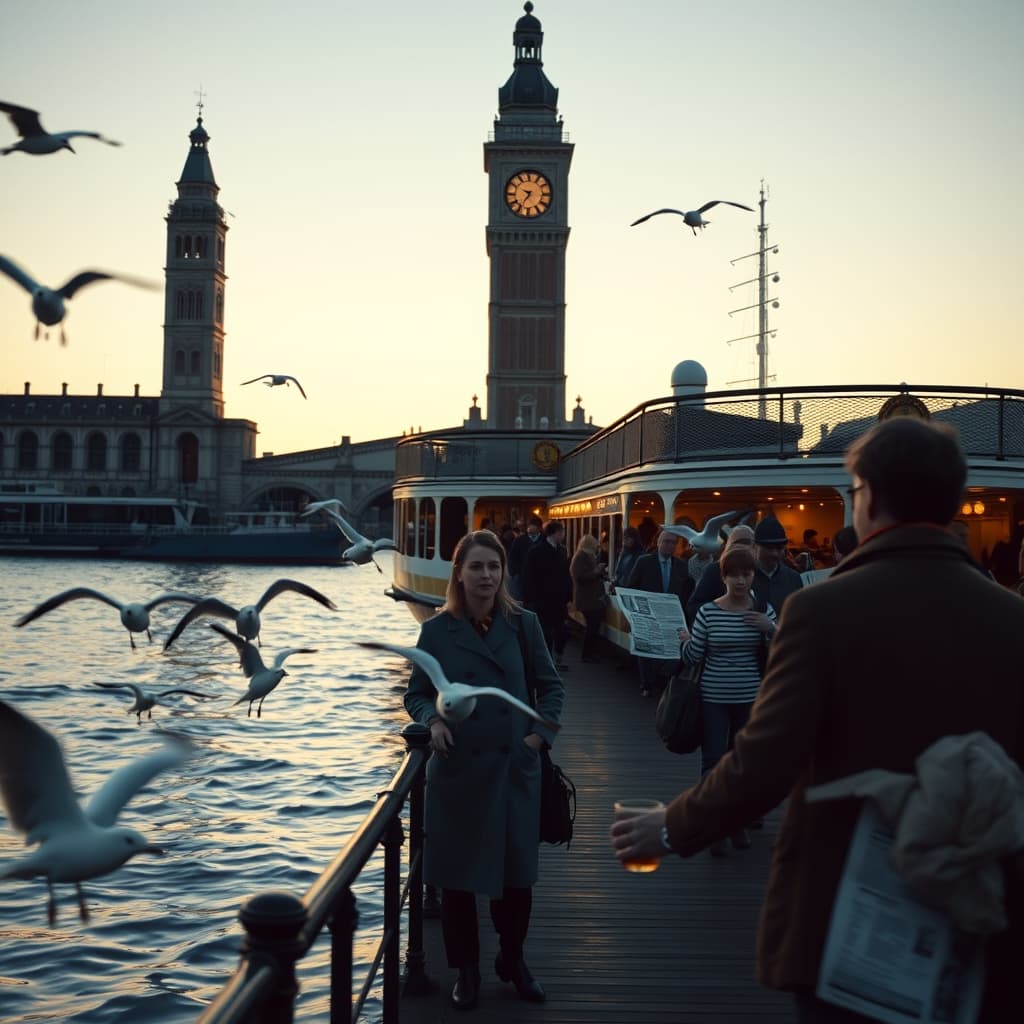
Baharın ilk akşamları, eski şehirde yalnız mevsim değişikliği değil ritim değişikliği demekti. Güneş suyun üstünde biraz daha uzun kalır, rüzgâr keskinliğini yitirip tuzla ıhlamur kokusunu aynı anda taşırdı. İskele saatinin altındaki kalabalık da bu dönüşümü iyi bilirdi: memur çantasını dizine almış, öğrenci defterini koltuğunun altına sıkıştırmış, pazardan dönenler filedeki maydanozun kokusunu vapur güvertesine kadar taşımış olurdu. O saatlerde şehir hatlarına binmek, bir yerden bir yere ulaşmaktan çok aynı duyguda buluşmaktı.
Vapur düdüğü kıyıda yankılanınca herkesin adımı aynı anda hızlanırdı. Tahtadan iskelede çıkan tok ses, turnikeden geçerken duyulan madeni tıkırtı, biletçinin kısa selamı, bir kentin gündelik müziği gibi peş peşe dizilirdi. Cam kenarı koltukları önce çocuklar kapar, büyükler “önce onlar otursun” diye gülümseyerek ayakta kalırdı. Çaycı tepsiyi dengelerken bardaklar ince ince çınlar, simitçinin susam kokusu rüzgâra karışırdı. İşte bu küçük ayrıntılar, geçmişe dönüp baktığımızda bahar akşamlarını olduğundan daha parlak gösteren duygusal ışığı kurardı.
Şehir hatlarının o dönemki yolculuk kültürü aynı zamanda bir nezaket okuluydu. Kimse yüksek sesle konuşmaz, tanımadığı yolcuya bile hafifçe yer açar, kapı önünde bekleyene “buyurun” demeyi ihmal etmezdi. Gazete sayfaları açılır, son dakika haberleri mırıltıyla paylaşılır, bir köşede yaşlı bir amca Boğaz’ın akıntısını anlatırdı. Bu düzen, hızın değil dikkatli birlikte yaşamanın düzeniydi. Vapurun ağır salınımı, şehir insanına aceleyi azaltan bir terbiye verirdi.
Baharın ilk akşamlarını parlaklaştıran bir diğer unsur da ışığın suyla kurduğu ilişkiydi. Sokak lambaları henüz yanmadan gökyüzü laciverde döner, karşı kıyının pencereleri birer birer belirirdi. Suya düşen sarı yansımalar hareket ettikçe şehir sanki sürekli yeniden çizilen bir tabloya benzerdi. Bugün fotoğrafla yakalamaya çalıştığımız atmosfer, o yıllarda göz hizasında ve doğal akışta yaşanırdı. Kimse “anı biriktiriyorum” demeden anının tam içinde kalırdı.
Bu yolculuklar, sınıfsal ve kültürel farkları yumuşatan ortak bir sahne de yaratıyordu. Aynı bankta oturan öğretmenle balıkçı, aynı rüzgârda üşüyen çocukla iş kadını, aynı martı sesini dinleyen göçmen aile, kentin çoğulluğunu gündelik bir sakinlikle görünür kılardı. Şehir hatları bu yüzden sadece ulaşım ağı değil, toplumsal temasın açık dersliğiydi. İnsanlar birbirinin hikâyesini tüm detaylarıyla bilmezdi belki, ama aynı akşam ışığında aynı güzergâhı paylaşmanın sessiz akrabalığını taşırdı.
Geçmişe baktığımızda baharın ilk akşamlarının daha parlak görünmesi nostaljik bir yanılsama değil, deneyimin yoğunluğudur. O saatlerde zaman biraz yavaşlar, mekân biraz yakınlaşır, insanlar biraz daha dikkatli konuşurdu. İskelede başlayan, vapurda olgunlaşan, karşı kıyıda devam eden bu geçiş ritüeli şehir kültürünün en zarif miraslarından biri olarak kaldı. Bugün hatırladığımız şey yalnız manzara değil; birlikte yolculuk etmenin insana verdiği ölçü, sabır ve incelik duygusudur.
🇬🇧 English | An Evening Measured by the Pier Clock: Why Spring Still Glows on the City Lines
The first evenings of spring in the old city meant more than a seasonal shift; they meant a shift in rhythm. Sunlight stayed on the water a little longer, and the wind softened, carrying both salt and linden scent. Crowds under the pier clock knew this transition well: office workers with bags on their knees, students clutching notebooks, market-goers bringing the smell of parsley all the way to the deck. Boarding the city lines at that hour was less about transportation and more about entering a shared mood.
When the ferry horn echoed along the shore, everyone’s pace quickened at once. The hollow sound of wooden planks, the metallic click of the turnstile, the ticket clerk’s short greeting all lined up like the daily music of the city. Children took window seats first, while adults smiled and stayed standing. Tea glasses chimed on a moving tray, and sesame from fresh simit drifted through the breeze. These details formed the emotional light that makes spring evenings appear brighter in memory.
That travel culture also worked as a school of courtesy. People spoke quietly, made room for strangers, and never forgot a simple “please.” Newspaper pages opened, headlines were shared in low voices, and an elder in the corner might explain the current of the Bosphorus as if teaching a lesson. It was an order shaped not by speed but by careful coexistence. The ferry’s steady rocking taught urban people to reduce urgency and recover measure.
Another source of brightness came from the relationship between light and water. Before streetlights turned on, the sky shifted to deep blue and windows on the opposite shore appeared one by one. Yellow reflections moved across the surface, making the city look like a painting constantly redrawn. What we now try to capture through filters and edits was then available at eye level, inside ordinary life. No one declared they were preserving a moment; they simply stayed within it.
These voyages also softened social differences. A teacher and a fisherman sharing the same bench, a child and an executive shivering in the same wind, a migrant family listening to the same gull cries made the city’s plurality visible without drama. City lines were not just a transport system; they were an open classroom of social contact. People might not know one another’s full stories, yet they carried a quiet kinship from sharing the same route in the same evening light.
When those first spring evenings seem brighter now, it is not only nostalgic illusion; it is the density of the experience itself. Time slowed slightly, distance narrowed slightly, and speech became slightly more attentive. The ritual that began at the pier, matured on deck, and continued on the opposite shore remains one of the most elegant inheritances of urban culture. What endures is not only scenery, but the sense of patience and grace created by traveling together.
🇧🇷 Português (Brasil) | Uma Noite Medida pelo Relógio do Cais: Por que a Primavera Ainda Brilha nas Linhas Urbanas
Os primeiros entardeceres da primavera na cidade antiga não marcavam apenas a troca de estação, mas a troca de ritmo. A luz ficava mais tempo sobre a água, e o vento perdia a aspereza, trazendo cheiro de sal e de tília ao mesmo tempo. A multidão sob o relógio do cais conhecia bem essa virada: trabalhadores com bolsa no colo, estudantes com caderno no braço, gente voltando da feira com cheiro de ervas que chegava até o convés. Nessa hora, embarcar nas linhas urbanas era menos deslocamento e mais encontro de sensibilidade.
Quando a buzina da embarcação ecoava na margem, todos aceleravam o passo juntos. O som oco do píer de madeira, o clique metálico da catraca, o cumprimento breve do bilheteiro compunham uma música diária da cidade. As crianças corriam para os lugares da janela, os adultos cediam com naturalidade. Os copos de chá tilintavam na bandeja, o aroma de simit com gergelim se misturava ao vento. Esses detalhes criavam a luz afetiva que faz a primavera parecer mais luminosa na memória.
A cultura de viagem daquele período também ensinava delicadeza social. Falava-se baixo, abria-se espaço para desconhecidos, e um simples “por favor” não era esquecido. Jornais eram abertos, notícias divididas em voz baixa, e sempre havia alguém mais velho explicando as correntes do estreito. Era uma ordem menos guiada pela pressa e mais pelo convívio atento. O balanço contínuo da embarcação ensinava a desacelerar e a habitar o tempo com medida.
A sensação de brilho vinha ainda da relação entre luz e água. Antes de os postes acenderem, o céu passava ao azul profundo, e as janelas da margem oposta surgiam uma a uma. Reflexos amarelos se moviam na superfície, como se a cidade fosse um quadro sendo redesenhado a cada minuto. O que hoje tentamos reproduzir com filtros era, naquele tempo, experiência direta e cotidiana. Ninguém dizia que estava “guardando o momento”; todos simplesmente viviam dentro dele.
Essas travessias também suavizavam diferenças sociais e culturais. Professor e pescador no mesmo banco, criança e executiva no mesmo vento, família migrante ouvindo as mesmas gaivotas: a pluralidade urbana aparecia sem espetáculo. As linhas urbanas eram mais que transporte; eram sala aberta de contato humano. Nem todos conheciam a história completa do outro, mas havia parentesco silencioso em compartilhar a mesma rota sob a mesma luz.
Quando hoje aqueles primeiros entardeceres da primavera parecem mais vivos, não é apenas idealização nostálgica; é a densidade da experiência. O tempo desacelerava um pouco, as distâncias pareciam menores, e as pessoas falavam com mais atenção. O ritual que começava no cais, amadurecia no convés e seguia na margem oposta permanece como herança elegante da cultura urbana. O que fica não é só paisagem, mas a paciência e a delicadeza que nascem de viajar juntos.
