Eski Pano
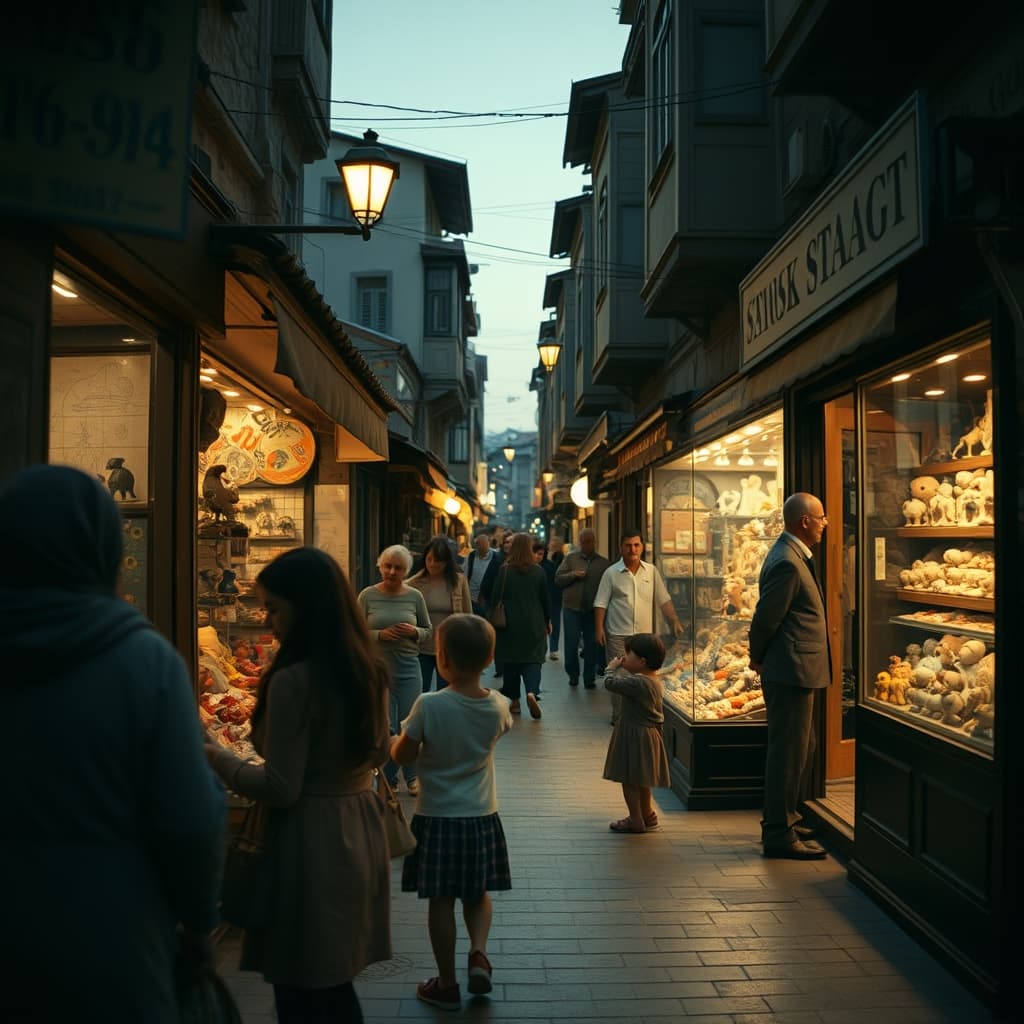
When the afternoon chill lifted and evening light softened the streets, the rhythm of the neighborhood changed without announcement. Mothers with market bags, fathers returning from work, and children released from their uniforms all seemed to drift toward the same direction: the bazaar. In those years, window browsing was less about buying and more about welcoming the season together. New shoes, bright shirts, lace curtain samples, and small decorative objects catching the light in the glass quietly signaled that spring had arrived.
Window culture carried a different emotional economy than today’s fast consumption. Purchasing was often postponed, but looking, talking, and imagining were not. Families could spend long minutes in front of a jacket button, a wooden radio cabinet, or a porcelain pattern. Phrases like “for the holiday,” “next year, hopefully,” or “let’s remember this one” were not only budget calculations; they were collective promises to the future. The shop window became a surface where desire and patience met.
From the 1970s to the 1990s, these evening walks were also part of local urban economics. Shopkeepers stood half a step outside their doors, adding their own presence to the products behind glass. Familiarity produced trust: tailors, fabric sellers, shoe merchants, and houseware owners called customers by name for years. Old local newspaper ads announcing “spring window display ready” were never trivial; changing a display worked like a seasonal bulletin for the whole neighborhood.
The strongest part of this ritual was that watching was collective. Families lined up side by side, children scanned the lower shelves at eye level, adults compared price tags in quiet glances. Many evenings ended with no purchase at all, yet people still carried something home: a shared conversation. At dinner they replayed details such as who would wear the blue dress, whether the floor lamp fit the living room, or how a child’s face changed when seeing the toy train.
That is why early spring evenings still ache in memory. In those moments, desire could be shared without becoming shame. No one needed to expose a wallet or hide a limitation. The display did not amplify lack; it multiplied possibility. Over time, what stayed in memory was less the object behind the glass and more the closeness in front of it.
Today, shopping apps can show thousands of items in seconds, but the social rhythm of looking together has faded. We still have endless options to scroll, yet not the spontaneous conversations born in front of a lit shop window. Back then, people were not only choosing what to buy; they were quietly revealing what kind of life they hoped to build.
That is why window strolling was never a minor habit of the past. It was an emotional civic ritual that helped a neighborhood imagine itself. Every spring, the old ache returns with the same question: what we miss is not only old products or old prices, but the lost art of standing shoulder to shoulder, taking time, and sharing one fragile dream in public light.
Spring Evening Bazaar Walks: How Did Memories Accumulate Between Shop Windows?