Eski Pano
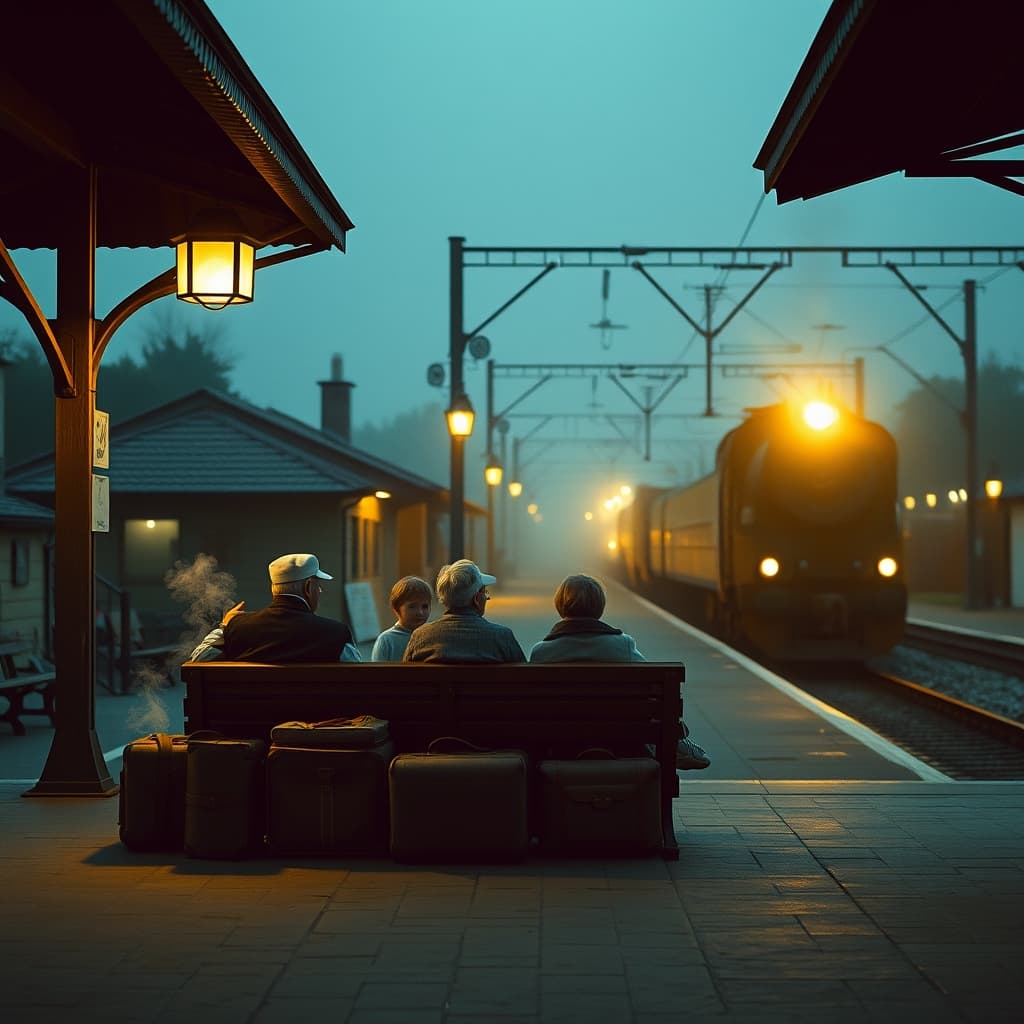
In seasons when evening arrived early, small-town railway stations were filled with a kind of light found nowhere else. Street lamps drew warm yellow circles, and inside those circles the same wooden bench hosted both farewells and reunions. On one side, a mother touched her son’s suitcase one last time before military service; on the other, a younger sister fixed her hair while waiting for a brother returning from distant work. The station was not only where trains passed. It was the stage where a town’s emotional calendar became visible.
Through a historical daily-life lens, the details of this scene reveal a shared rhythm. The platform clock was often a few minutes late, tea glasses were washed in haste, and men near the ticket window folded newspapers to discuss politics in low voices. Thin cardigans appeared exactly in this in-between weather, neither winter nor summer. Draped over the shoulders, they offered a small layer of certainty against travel’s uncertainty. People sitting side by side on the bench usually knew each other, and even when they did not, they understood how to share silence like acquaintances.
During decades of internal migration, especially from the 1970s through the 1990s, town stations became quiet transition gates. Students leaving for university, fathers heading to factory jobs, relatives returning from abroad - each carried a new city story back to those waiting at home. That made station culture more than transport. It became a mirror of social transformation. A town’s connection to the wider world often expanded through short conversations held on a platform before departure.
In today’s accelerated life, those details feel even more valuable. A carriage number written by hand on a paper ticket, a handkerchief pressed into a traveler’s palm, a tin box of biscuits brought back after return. Even a hot pretzel from the kiosk across the station during delays became part of a common language of waiting. Children were warned not to throw stones at the tracks, then stood up with bright eyes the moment a train headlight appeared. In that second, every face turned in the same direction, and the crowd tightened like one held breath.
Thin-cardigan days also remind us of patience. Back then, journeys were not tracked by instant notifications; news arrived through one’s own eyes and ears. Waiting was not an interruption but a normal part of life. Small conversations formed while waiting strengthened social texture. The station clerk saying “it will enter soon,” a neighbor asking “shall I bring tea,” people naturally making room for one another on the same bench - all of this made trust visible.
Many small stations are now quieter or transformed, yet the memory of that bench survives: unsaid sentences at farewell, voices smiling before faces at reunion, tea steam rising under streetlamp light. What glows in memory is not only the lamp itself, but the culture of waiting, sending off, and welcoming together. Thin-cardigan days tell us something simple and lasting: social memory is often written not in grand squares, but on modest station benches.
Small-Town Station: How Did Farewells and Reunions Turn into Memories on Benches?