Eski Pano
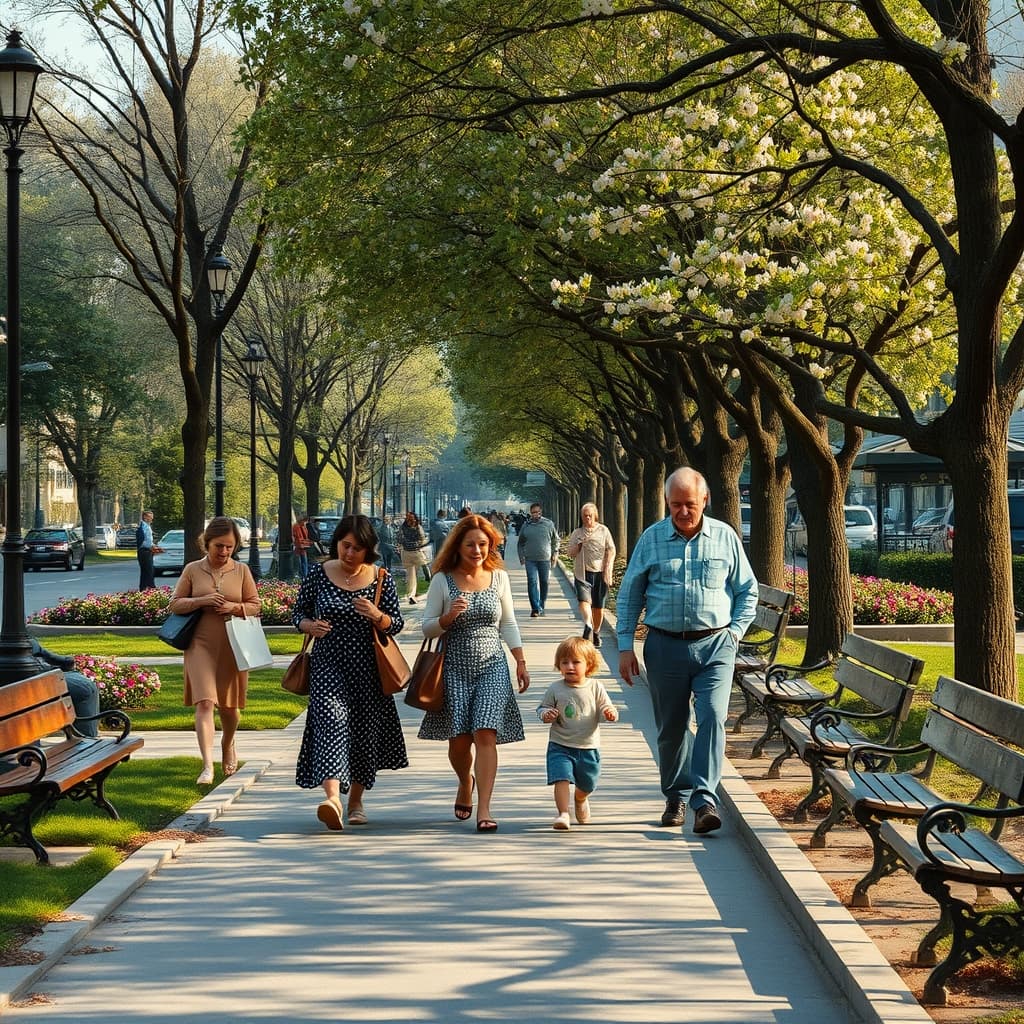
There was a time when Sunday mornings descended over the city more slowly and more gently than other days. The smell of bread coming from the bakery mixed with damp soil, freshly watered geraniums, and the quiet movement of lace curtains fluttering in open windows. Families got ready early, children’s hair was combed, mothers placed handkerchiefs, water, and a few small snacks into modest bags, and fathers waited by the door with jackets over one arm. Going to the park was not simply leaving the house. It was a way of turning the week’s fatigue into a portable family joy. The flower-scented streets created the first act of that outing and set the emotional tone before anyone even reached the gates.
Seen in historical perspective, the Sundays when city parks turned into family outings reveal how shared leisure was once built before urban life accelerated beyond recognition. The park was not merely an open area with swings and benches. It was something like a public living room where people from the same neighborhood kept seeing one another, noticed how children were growing, and measured the seasons through the shade of trees. Soda bottles, paper cones of sunflower seeds, simit bags, the bell of the ice-cream seller, and the photographer’s black case were all small but decisive parts of the Sunday excursion. A family’s arrival at the park was less a matter of recreation than a way of renewing belonging inside the city.
What still makes these scenes powerful is their modest orderliness. No one spoke in contemporary phrases about “quality family time.” There was no need. Everyone already knew that the park would be visited, had a rough sense of the proper hour, and remembered which bench received the most pleasant shade. While children ran near the grass, adults greeted neighboring families, mothers shared pastries from their bags, and grandfathers leaned their canes against a bench and quietly watched the surroundings. Such repeated gestures made family closeness visible not only at home but also in public life. Perhaps that is exactly what feels most distant today: a simplicity in which being together did not require special planning.
The quiet habits that flower-scented streets left behind are hidden in the background of those Sundays. Walking slowly, stopping to exchange greetings with familiar faces, not rushing the steps of children, looking around carefully enough to notice the shade of a tree, sharing a single soda bought from a kiosk, and recalling the day’s best moment in a few soft sentences on the way home all belong to that inheritance. In today’s hurried pace, such habits may seem faint, yet they are not gone. Packing extra napkins before a weekend outing, choosing to pass through neighborhood streets on the way to the park, or treating a walk not only as arrival but also as remembrance still carries traces of those older Sundays.
Everyday details make the legacy more concrete. The sound of the iron gate at the entrance, the slight creak of a wooden swing, mothers calling out not to wander too far, a child bending to retrieve a ball rolled beneath a bench, tea poured into the lid of a thermos, and clothes being dusted off before returning home all bring back not the grand narratives of the past, but its small structures of life. The city park offered both nearness to nature and social visibility at once. Families rested a little, presented themselves a little, and held onto one another a little more firmly. That is why the park outing was more than an ordinary leisure activity. It was a quietly repeated rehearsal of living together inside the city.
In the end, if the Sundays when city parks became family excursions still live on alongside flower-scented streets, it is because they continue to suggest a plain rhythm that once bound people to one another. What is remembered is not only the park itself. The preparation before leaving home, the greetings exchanged on the way, the conversation on the bench, the slowing steps of tired children, and the faint scent of earth carried back indoors all belong to that memory. The quiet habits that remain matter for precisely this reason: they remind us that closeness is sometimes created not through grand declarations, but through the shared tempo of footsteps moving side by side.
Sundays When City Parks Turned into Family Outings on the Dusty Shelves of Memory: Which Quiet Habits Did Flower-Scented Streets Leave to Today?