 Eski Pano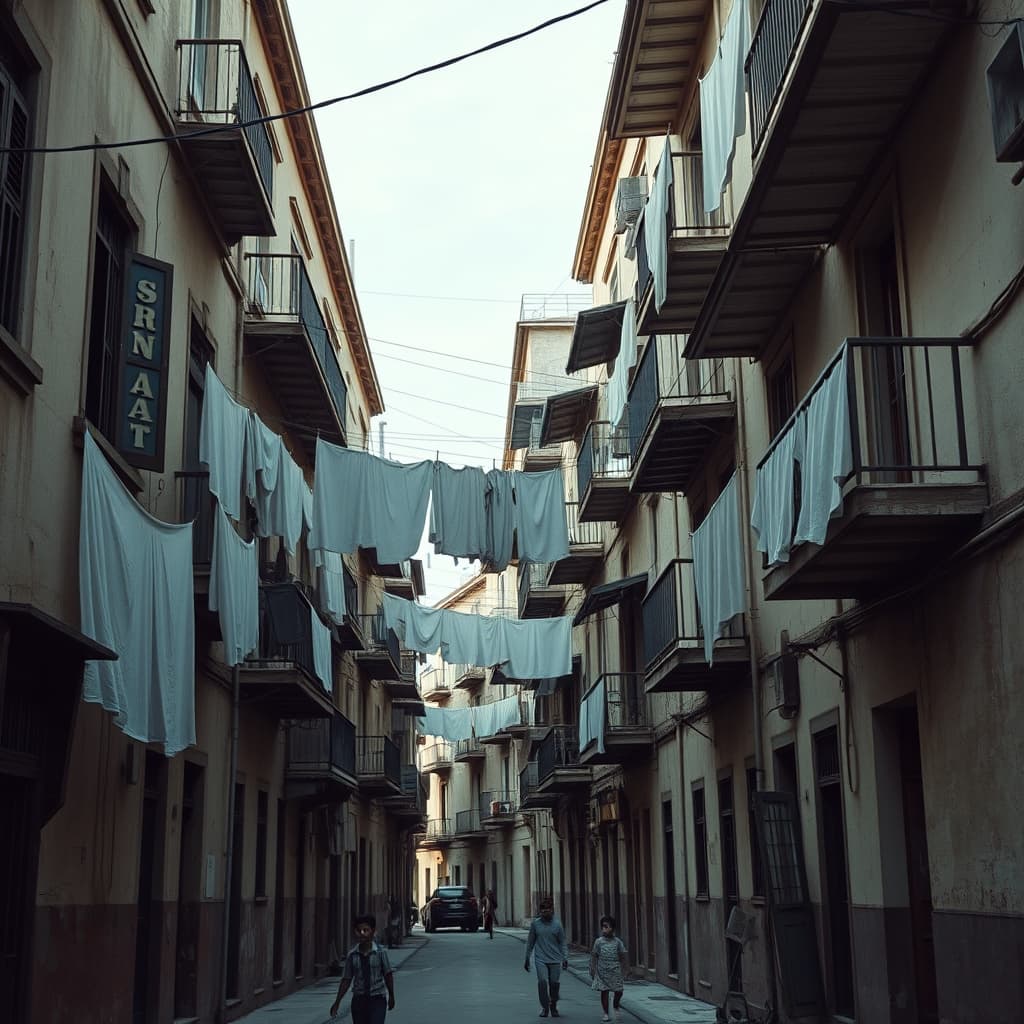
Clotheslines once crossed courtyards, balconies, terraces, and narrow spaces between windows, placing domestic work in public view. Sheets caught the light, shirts announced the size of a household, and pegs held against sudden wind. The scene is easy to treat as picturesque, yet every line represented washing, rinsing, lifting, carrying, hanging, turning, collecting, folding, and often ironing. Much of that labour fell repeatedly to women and girls and should not disappear behind a beautiful photograph.
Drying outdoors depended on close observation of weather. A bright morning could turn dusty, windy, or wet. Winter sun reached some walls briefly, while shaded courtyards held damp. Fabrics differed: heavy blankets strained ropes, dark garments faded, and delicate pieces needed concealment or gentler support. Timing followed both forecast and architecture, and a person who knew the building could predict where afternoon light would fall.
Shared Air Required Rules
In a common courtyard, no household acted entirely alone. Residents negotiated which line belonged to whom, when a large wash could occupy extra space, and whether dripping laundry above would wet clothes below. Rugs, blankets, and sheets tested these arrangements. A warning called from a window might save a neighbour’s dry washing from rain; an unannounced bucket could create an argument that lasted beyond the day.
The line also touched privacy. Underclothes, children’s bedding, work uniforms, and signs of illness could become visible to neighbours. Some items were placed behind larger fabrics or dried indoors. Looking was unavoidable, but commenting was a social choice. The warm memory of window-to-window conversation coexisted with scrutiny, gossip, embarrassment, and unequal power within a building.
Tools Carried Local Knowledge
Rope material, knots, pulleys, poles, baskets, pegs, and balcony rails formed a modest technology. Lines had to bear wet weight without sagging into dirt or obstructing paths. A worn rope could break suddenly. Leaning far from a window or climbing an unstable chair introduced serious risk. Safe fixing and access mattered, especially in upper floors and crowded yards.
Water and fuel shaped the work before drying began. Washing by hand or with early machines required heating, soap, rinsing, and drainage. Clean water was not equally available, and detergent could irritate skin. Remembering fresh linen should include the physical effort and resources that produced it rather than suggesting that earlier domestic life was naturally simpler.
Reading the Neighborhood Without Inventing It
A clothesline photograph can support careful research. Building details, shadows, garments, fastening methods, and changes in balconies may suggest place and period, but they rarely prove an exact date alone. Captions should distinguish known information from family recollection. Ask who washed, where water came from, how winter drying worked, and what happened when several households needed the same space.
The old neighborhood line joined private necessity to shared architecture. It made cooperation visible, but also exposed workload and vulnerability. Preserving this scene honestly means recording the people, tools, weather decisions, disputes, and courtesies that kept laundry moving through limited space. The cloth fluttering above the street is memorable because it shows a city being maintained day after day, one practical negotiation at a time.