 Eski Pano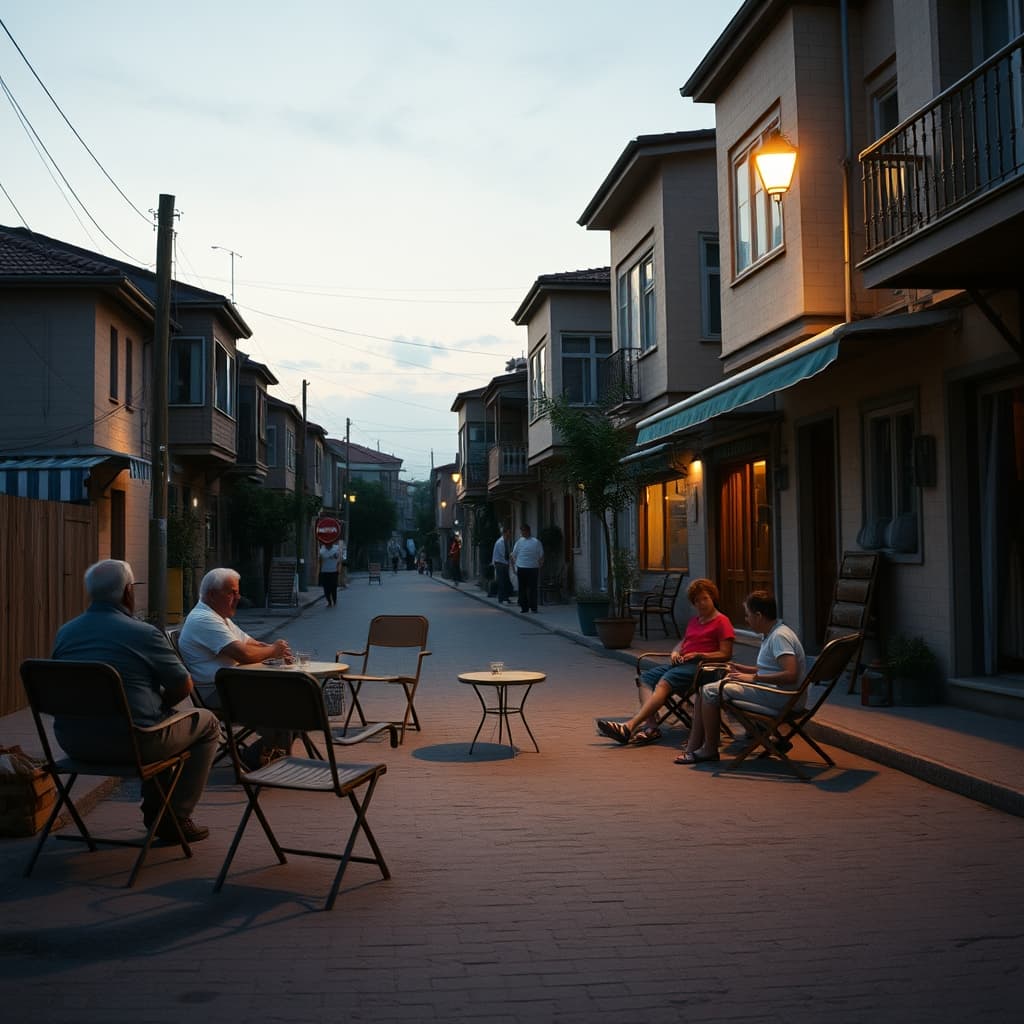
A chair carried onto the pavement could create a social place without permanent construction. Shopkeepers sat between customers, older residents watched the evening street, and neighbors added seats as conversation grew. The arrangement could last twenty minutes or several hours, then disappear indoors. Its flexibility helped it fit the narrow thresholds of old city life, where home, shop, workshop, and street met at close range.
The chairs themselves varied: wooden kitchen chairs, woven stools, folding metal seats, plastic chairs, or improvised benches. Each had a different weight and meaning. A shop chair suggested availability to customers; a household chair extended domestic life outside; a stool borrowed from next door marked cooperation. Position mattered more than design. Shade, doorway, wall, traffic, wind, and the view of children influenced where it stood.
Moving a Chair Claimed a Temporary Place
No deed accompanied the gesture, yet repeated use could make a patch of pavement feel informally reserved. Regulars knew whose chair usually stood where. Newcomers learned whether they could join, pass, or request space. This produced belonging, but also exclusion. A person not invited to sit could read the arrangement as a boundary rather than welcome.
Pavements remain routes. Chairs that narrowed passage created difficulty for wheelchairs, prams, carts, and people with limited vision. Shop displays, parked vehicles, and uneven surfaces compounded the problem. Respectful street life required seats to move when others needed access. Nostalgia for lively sidewalks should never treat obstruction as harmless.
Sitting Supported Work and Care
For tradespeople, the chair offered rest while keeping the business visible. For residents, it allowed fresh air without travelling far. Adults noticed deliveries, children, visitors, and unusual events. This watchfulness could produce quick help during a fall or illness. It could also become commentary on clothing, relationships, and hours, turning collective attention into social pressure.
Conversation carried practical knowledge about repairs, prices, jobs, health, and local changes. It also carried rumor. People were not equally heard: age, gender, ownership, and long residence shaped authority. A full account records who served tea, who remained standing, whose labor continued indoors, and who avoided the gathering.
Weather Set the Daily Architecture
Sun shifted the row toward shade, a cool evening brought cardigans, and rain ended the arrangement abruptly. Dust required wiping seats before use. Winter reduced the hours but did not necessarily eliminate them when a sheltered doorway caught light. The street furniture responded to climate more quickly than permanent design could.
Photographs can show chair type, placement, clothing, shopfronts, and street width, but they cannot reveal consent or conversation by themselves. Oral histories should ask how people joined, what rules governed passage, and when traffic or redevelopment changed the habit. The pavement chair belonged at the heart of old city life because it was a practical tool for presence. Its history is strongest when welcome, labor, surveillance, access, and weather all remain in the frame. Scrape marks on legs and repeated repairs can also reveal how frequently a chair travelled between interior and street. It moved repeatedly.