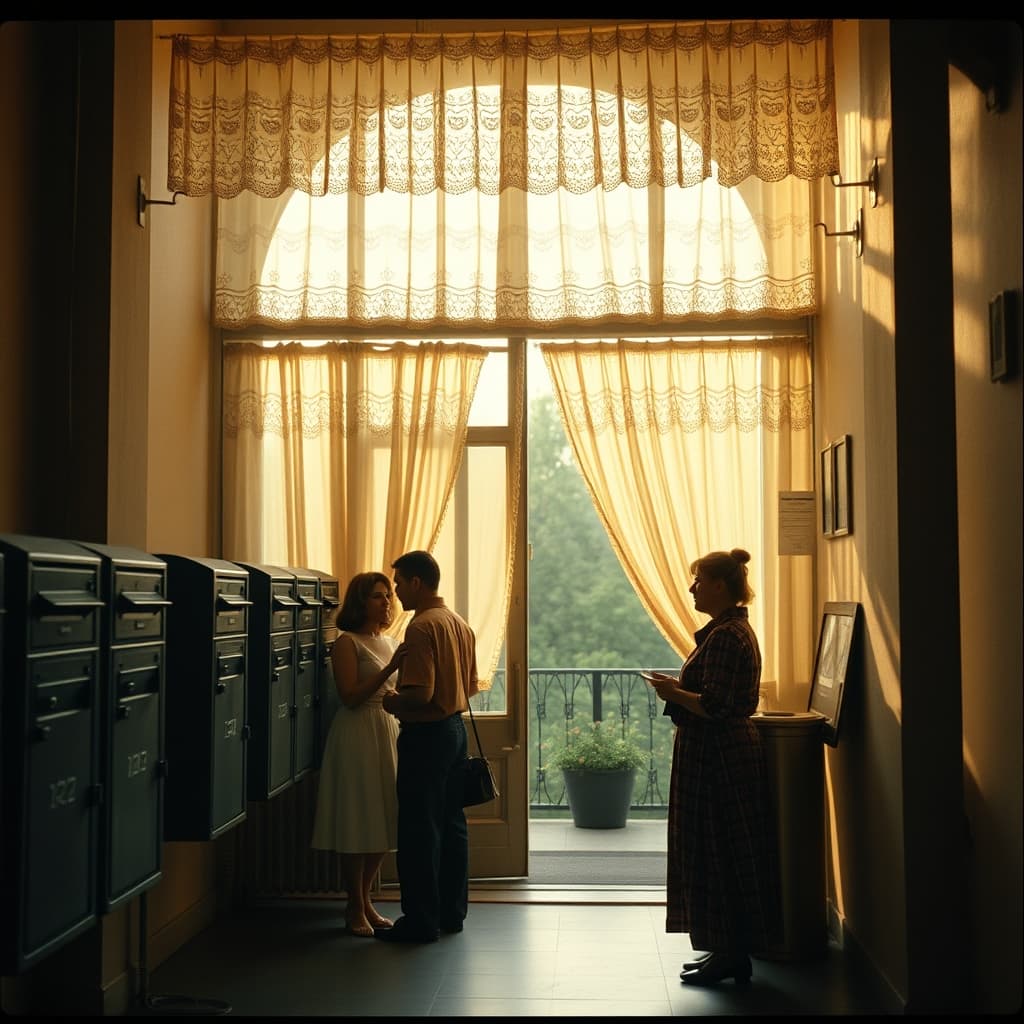
Eski Pano
When afternoon light leaned across narrow streets, a quiet tension rose in the neighborhood: would a letter arrive today? Flowerpots were watered, lace curtains shifted, and stools near front doors subtly faced the street where the postman would appear. Nobody announced it loudly, yet every ear searched for the same sounds: a bicycle bell, the metal click of a leather bag, the voice in the stairwell saying there was mail. Waiting was never only about receiving news. It was an urban rhythm in which time itself educated people and turned patience into a daily practice.
The letter era was slow, but intensely meaningful. Before writing a sentence, people thought; they chose paper carefully, controlled line spacing so ink would not blur, added short notes to the back of envelopes. For both sender and receiver, communication involved a chain of effort. That is why a letter was not just text. It carried mood, household atmosphere, even the season of a city. Lined sheets from the corner stationery shop, the illustration on a postage stamp, or a faint lavender scent on the envelope became details memory could preserve for decades.
In old city life, waiting hours were almost a social ceremony. Building caretakers knew exactly where to deliver each envelope, neighbors near the grocery asked whether any family news had come, and children treated opening the mailbox like an honorable mission. Personal correspondence therefore touched shared neighborhood emotion. A letter from a soldier, a postcard from a sibling abroad, or two pages from a student far from home would move beyond a single apartment and blend into street-level feeling. People learned to carry one another’s joy and worry inside the same waiting moment.
Its strongest legacy is the discipline of not demanding immediate response. In today’s instant messaging culture, even slight delays can feel uncomfortable. Back then, silence lasting days was not absence but a natural part of the process. Writers weighed their words, and readers returned to lines repeatedly, discovering deeper meanings each time. Communication was fed less by speed and more by attention. The reason some sentences still settle slowly and powerfully inside us may come from that earlier training in patience.
Those cooling afternoons remain vivid partly because of spatial memory. The metallic sound of the mailbox lid, the envelope placed on a wooden console in the hallway, tea aroma from the kitchen, evening air entering through an open window; these small scenes gathered around each letter. They do more than create nostalgia. They establish a sense of urban belonging. Every district had its familiar postman, every building had its own way of waiting. Through letters, the city functioned like a living network where personal stories moved hand to hand.
Letters may be rarer now, yet the patience they taught continues as cultural inheritance. Choosing words carefully in a long message, allowing response time without pressure, seeing communication as relationship rather than pure information transfer all echo that period. The letter afternoons of old city life are more than romantic memory. They represent a civic habit of speaking with respect for time, preserved in memory like a cool evening breeze that never fully disappears.
The Days When Waiting for Letters in Old City Life Taught Patience: Why Those Cooling Afternoons Still Feel Vivid in Memory