Eski Pano
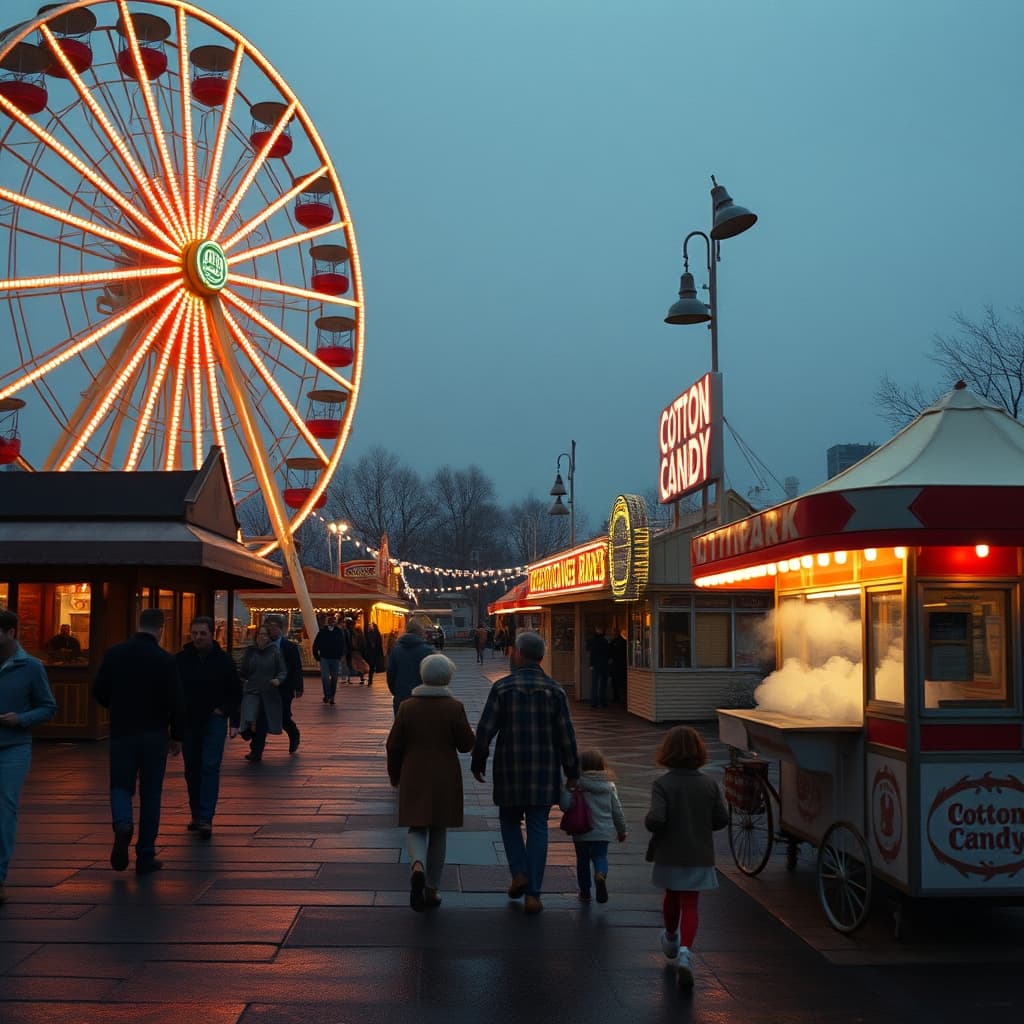
On the first evenings of spring, the amusement parks set up at the edge of old cities could turn daytime fatigue into a different color. The air was still mildly cool, the ground smelled like freshly watered earth, and cotton candy rose like a thin mist in the evening light. From afar, the Ferris wheel looked simple, yet once the bulbs turned on, it became a fairy-tale gate in neighborhood children’s eyes. Those hours were not only for entertainment; they were a passage from ordinary rhythm to shared imagination.
One reason those parks look brighter in memory is that light itself was a rarer event in an era of limited technology. There were fewer street lamps, shop windows were modest, and the glow from homes was restrained. So when dozens of colored bulbs lit up in one space, it felt like a gentle rebellion against the darkness of the city night. People waiting in the ticket line were not only queuing for a ride; they were queuing for the vitality of that evening.
Historically, amusement parks were temporary yet powerful stages of urban modernization. Traveling operators carried fairground culture into city life, adapting rural festivity to stone streets. On one side stood the fascinating sound of mechanical rides; on the other stood neighborhood commerce adjusting its pace. Simit sellers closed later, photo studios prepared more film for the next day, and families made evening plans even on weekdays.
In daily details, that atmosphere became even clearer. Children held their tokens tightly in their palms, mothers reminded everyone to bring a light cardigan, fathers said, “let’s take one round first,” while navigating the crowd. The metallic scent of bumper cars, carousel melodies, and buttery roasted corn drifted together. Because every sense was activated at once, the memory stayed not as a single image but as a layered emotional archive.
When we look back, those evenings seem brighter also because childhood perception works like a selective lens. At that age, every light is read not only as illumination but as a promise. As adults, the same spaces may appear smaller and simpler, yet the amusement park in memory remains taller and richer in color. Memory stores not only what happened, but also the hope felt at that moment.
Today many of those parks have given way to malls, digital arcades, or short-lived events. Still, what keeps old spring evenings vivid is not only the Ferris wheel lights; it is the ritual a whole neighborhood built together. Those small miracles endure because the city suspended its seriousness for a few hours and reminded people that becoming a child again was possible.
Their cultural value lives exactly there. The amusement park was a shared ground where class distance softened, generations walked side by side, and neighborhood language was rebuilt through joy. A brief happiness bought with one ticket turned into stories retold at school, at work, and at doorsteps the next day. If spring evenings appear brighter in hindsight, it is not only because of bulbs, but because of the common life gathered beneath them.
The Small Miracles Old Amusement Parks Built with Lights in Those Hours That Revealed the Spirit of the Era: Why the First Evenings of Spring Look Brighter When We Look Back