🇹🇷 Türkçe | Okul Kapısından Bakkal Önüne Uzanan Gazozlu Çocukluk Saatlerinin Canlı Hafızası
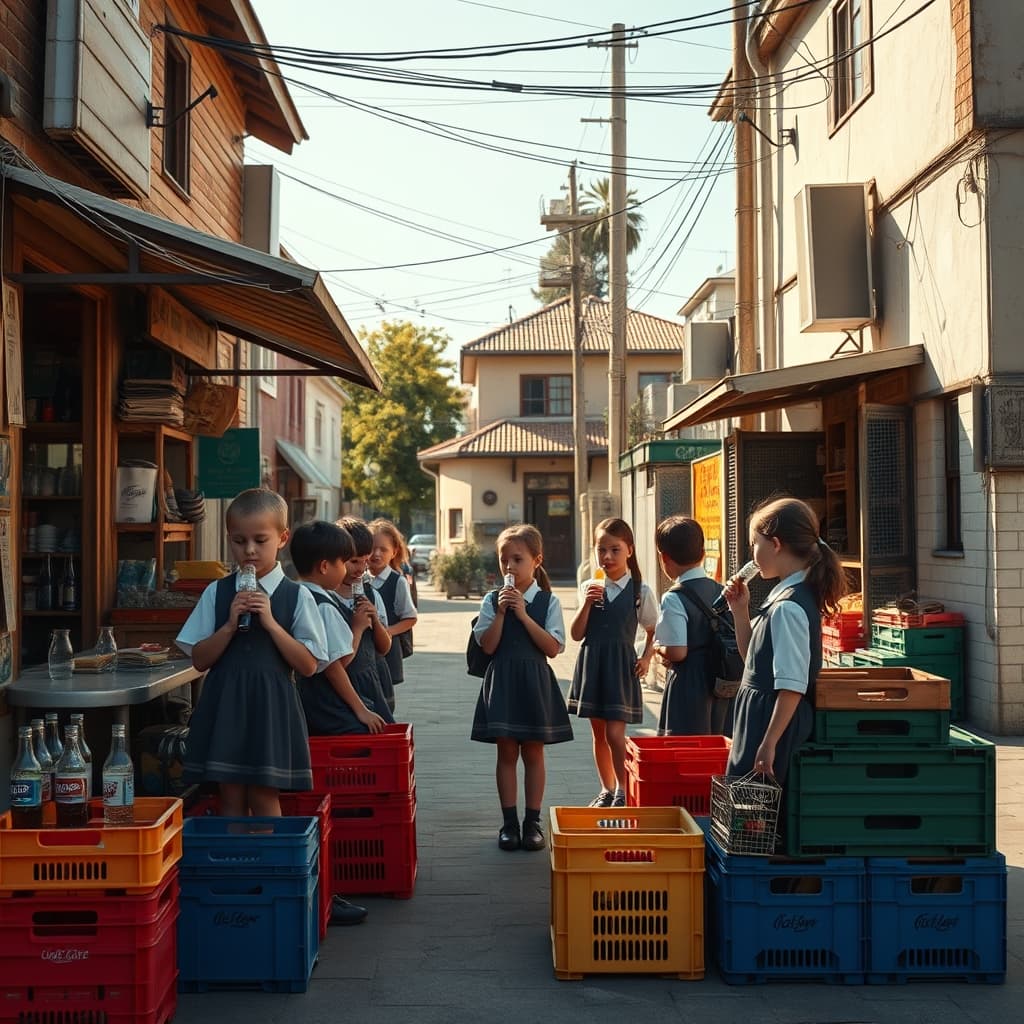
Bazı çocukluk anıları büyük olaylardan değil, günün aynı saatinde tekrarlanan küçük molalardan oluşur. Okul çıkışı gazoz molası da böyle bir hatıradır. Ders zili sustuktan sonra sokak bir anda seslenmeler, çanta kayışlarının omuzda kayışı ve ayakkabıların kaldırıma hızlı hızlı vurduğu adımlarla dolardı. Çocuklar ya okulun hemen karşısındaki bakkala ya da yol üzerindeki küçük büfeye yönelir, renkli şişeler ahşap kasalarda dizili dururken günün en tatlı serbestliği orada başlardı. Gazoz kapağının açılırken çıkardığı tok ses, teneffüsün değil, çocukluğun genişlediğini hissettirirdi.
Mahalle Kültürü içinde bu küçük mola, yalnız bir içecek alışkanlığı değildi. O, okul ile ev arasındaki geçiş zamanını yumuşatan bir sosyal eşikti. Çocuklar henüz tamamen aile gözetimine dönmemiş, ama artık sınıf disiplininden çıkmış olurdu. İşte bu kısa aralıkta arkadaşlıkların dili biraz daha serbestleşir, günün dedikodusu yapılır, kimin öğretmenden aferin aldığı ya da kimin defterini evde unuttuğu konuşulurdu. Bakkal amca hangi çocuğun her zaman sade gazoz istediğini, hangisinin şişeyi bir dikişte bitiremeyip yarısını eve götürdüğünü bilir, bazen bozuk para hesabında ufak bir esneklik gösterirdi. Bu yüzden gazoz molası, çocuk hafızasında lezzetten çok ilişki biçimi olarak yer ederdi.
Bu saatlerin hiç silinmemesinin bir nedeni, onların yarı bağımsızlık duygusu taşımasıdır. Çocuk eve varmadan önce kısa bir özgürlük alanına sahip olurdu. Çantasını yere bırakmadan içilen gazoz, bazen kaldırıma oturularak bazen dükkân önündeki kasaya yaslanarak tüketilir, şişenin soğukluğu avuca işlerdi. O sırada kimse zamanı çok sıkı tutmazdı; ama herkes aşağı yukarı ne kadar oyalanabileceğini bilirdi. Bu ölçülü serbestlik, çocuk zihninde çok güçlü bir iz bırakır. Çünkü hem düzenin içindedir hem de düzenin hemen dışında küçük bir nefes sunar. Bugün bile hatırlanınca yüzü gülümseten şey, biraz da bu izinli kaçamaktır.
Gündelik ayrıntılar hafızayı daha da canlı kılar. Islak şişelerin kasada yan yana duruşu, camın içinden yükselen kabarcıklar, açma kolunun metal sesi, pipet kullanmak isteyenle doğrudan şişeden içen arasındaki küçük tercih farkı, gazozun yanında alınan leblebi ya da sakız, bakkal önünde biriken okul önlüğü renkleri, bütün sahneyi çocukluğun somut bir dekoruna dönüştürürdü. Yalnız içecek değil, sokak da bu hatıranın parçasıydı. Evine daha uzak olan çocukla biraz daha yürümek, yol ayrımında vedalaşmak, bazen şişe depozitosunu geri vermek için ertesi gün tekrar uğramak gibi tekrarlar, okul çıkışını sıradan olmaktan çıkarırdı.
Bu hafızanın silinmemesinde dönemin mahalle düzeninin de payı vardır. Sokak, çocuk için hem gözetimli hem geçirgen bir alandı. Esnaf tanıdıktı, komşular görünürdü, bir çocuğun gecikmesi tamamen bilinmezlik anlamına gelmezdi. Bu güvenli yarı kamusal alan, gazoz molasını mümkün kılıyordu. Çocuklar ilk defa kendi küçük seçimlerini burada yapar, portakallı mı sade mi içeceğine karar verir, kalan bozuk parayla ne alacağını hesaplar ve arkadaşının beklemesini isteyebilirdi. Yani bu mola sadece serinlemek değil, gündelik hayata katılma provasıydı. Çocuk hafızasında yer etmesinin nedeni de burada saklıdır.
Sonuçta okul çıkışı gazoz molası ile geçen saatlerin çocuk hafızasında hiç silinmemesi, onların hem tadı hem de toplumsal dokusu yüzündendir. Gazoz şişesinin serinliği, bakkal önündeki kalabalık, okul çantasının omuzdan kayışı ve eve dönüş yolundaki hafif oyalanma duygusu, çocukluğun en sahici ara zamanlarından birini kuruyordu. Bugün o saatler anıldığında hatırlanan sadece bir içecek değil; arkadaşlığın, mahallenin ve büyümekte olan özgürlüğün küçük ama parlak sahnesidir. Belki de bu yüzden, çocukluk hafızasında en kalıcı olanlar çoğu zaman tam da böyle mütevazı molalardır.
🇬🇧 English | The Vivid Memory of Soda-Filled Childhood Hours Stretching from the School Gate to the Corner Shop
Some childhood memories are built not from great events, but from small pauses repeated at the same hour each day. The after-school soda break belongs to that kind of memory. Once the final bell fell silent, the street filled at once with voices calling out, bag straps sliding across shoulders, and shoes striking the pavement in quick succession. Children headed either to the grocer directly opposite the school or to the small kiosk along the way home, where brightly colored bottles stood in wooden crates and the sweetest freedom of the day began. The firm sound of a soda cap being opened signaled not recess, but the sudden widening of childhood itself.
Within neighborhood culture, this brief stop was not only a beverage habit. It was a social threshold softening the transition between school and home. Children were no longer inside classroom discipline, yet had not fully returned to parental supervision. In that short interval, the language of friendship loosened a little. The day’s stories were retold, who had been praised by the teacher was discussed, and whose notebook had been forgotten at home became a matter of lively conversation. The grocer knew which child always wanted plain soda, which one could never finish the bottle and carried half of it home, and sometimes showed small kindness in counting change. That is why the soda break remained in memory less as taste than as a form of relationship.
One reason those hours were never erased is that they carried a feeling of partial independence. Before reaching home, the child possessed a brief zone of freedom. The soda was drunk before the schoolbag had even been set down, sometimes sitting on the curb, sometimes leaning against a crate in front of the shop, while the cold glass pressed into the palm. No one measured time too strictly, yet everyone knew more or less how long they were allowed to linger. That measured freedom leaves a powerful mark on the mind of a child. It belongs to order, yet also offers a little breath just outside it. Even today, what brings a smile back is partly that permitted escape.
Everyday details make the memory even more vivid. The wet bottles standing side by side in their crates, the bubbles rising behind the glass, the metallic click of the opener, the small difference between those who wanted a straw and those who drank straight from the bottle, roasted chickpeas or chewing gum bought alongside the soda, and the gathering of school uniforms in front of the shop all turned the scene into a concrete stage set for childhood. The drink alone was never enough. The street itself was part of the memory. Walking a little farther with the child who lived farther away, saying goodbye at a fork in the road, or returning the next day with the empty bottle deposit all made the after-school hour feel larger than it was.
The neighborhood order of the time also helped preserve the memory. For children, the street was both supervised and porous. Shopkeepers were familiar, neighbors were visible, and a slight delay did not mean complete uncertainty. That safe semi-public space made the soda break possible. Here children made some of their first small choices, deciding whether to drink orange or plain, calculating what else they could buy with the remaining coins, and asking a friend to wait. In that sense, the pause was not only about refreshment. It was a rehearsal for taking part in daily life. This is the deeper reason it settled so firmly in childhood memory.
In the end, the hours spent in an after-school soda break remain in childhood memory because of both their flavor and their social texture. The coolness of the bottle, the small crowd outside the grocer, the schoolbag slipping from the shoulder, and the slight delay on the way home together created one of the most authentic in-between times of childhood. When those hours are remembered today, what returns is not only a drink, but a bright little scene of friendship, neighborhood life, and freedom just beginning to grow. Perhaps that is why the most lasting memories of childhood are often these modest pauses.
🇧🇷 Português (Brasil) | A Memória Viva das Horas de Infância com Refrigerante Entre o Portão da Escola e a Mercearia
Algumas lembranças da infância não nascem de grandes acontecimentos, mas de pequenas pausas repetidas todos os dias no mesmo horário. A parada para tomar refrigerante depois da escola é uma dessas memórias. Quando o sinal final se calava, a rua se enchia de vozes, de alças de mochila escorregando pelo ombro e de sapatos batendo depressa na calçada. As crianças seguiam para a mercearia em frente à escola ou para a pequena banca no caminho de casa, onde garrafas coloridas ficavam alinhadas em caixotes de madeira e começava a liberdade mais doce do dia. O som seco da tampinha sendo aberta parecia anunciar não o fim da aula, mas a expansão da própria infância.
Dentro da cultura de bairro, essa pequena parada não era apenas um hábito de consumo. Era um limiar social que suavizava a passagem entre a escola e a casa. As crianças já tinham saído da disciplina da sala de aula, mas ainda não haviam voltado por completo à supervisão familiar. Nesse curto intervalo, a linguagem da amizade ficava mais solta. Comentava-se o que tinha acontecido no dia, quem tinha recebido elogio da professora e quem tinha esquecido o caderno em casa. O dono da mercearia sabia qual criança sempre preferia o refrigerante sem sabor, qual não conseguia terminar a garrafa e levava metade para casa, e às vezes fazia uma pequena gentileza com o troco. Por isso, a pausa do refrigerante ficou na memória menos como sabor e mais como forma de convivência.
Uma razão para essas horas nunca terem desaparecido é que traziam um sentimento de independência parcial. Antes de chegar em casa, a criança possuía um breve território de liberdade. O refrigerante era tomado sem nem mesmo tirar a mochila do ombro, às vezes sentado no meio-fio, às vezes encostado num caixote diante da venda, enquanto o vidro gelado deixava sua marca na mão. Ninguém controlava o tempo com rigidez, mas todos sabiam mais ou menos quanto poderiam demorar. Essa liberdade medida deixa uma marca muito forte na memória infantil. Ela pertence à ordem, mas oferece um pequeno respiro logo fora dela. Até hoje, o que faz sorrir ao lembrar é justamente essa fuga permitida.
Os detalhes do cotidiano tornam a cena ainda mais viva. As garrafas molhadas lado a lado nos caixotes, as bolhas subindo pelo vidro, o clique metálico do abridor, a diferença entre quem queria canudo e quem bebia direto da garrafa, o grão-de-bico torrado ou o chiclete comprados junto e o agrupamento de uniformes diante da venda transformavam tudo num cenário concreto da infância. A bebida, sozinha, nunca bastava. A própria rua era parte da lembrança. Caminhar um pouco mais com o amigo que morava mais longe, despedir-se na esquina ou voltar no dia seguinte para devolver a garrafa faziam a saída da escola parecer maior do que realmente era.
A organização do bairro naquele tempo também ajudava a fixar essa memória. Para a criança, a rua era ao mesmo tempo vigiada e aberta. Os comerciantes eram conhecidos, os vizinhos estavam visíveis, e um pequeno atraso não significava desaparecimento total. Esse espaço semipúblico seguro tornava possível a pausa do refrigerante. Ali as crianças faziam algumas de suas primeiras escolhas: decidiam entre um sabor e outro, calculavam o que podiam comprar com as moedas que sobravam e pediam ao amigo que esperasse. Nesse sentido, a parada não era só para se refrescar. Era um ensaio de participação na vida cotidiana. É por isso que ficou tão forte na memória infantil.
No fim, as horas passadas na pausa do refrigerante depois da escola não se apagaram da memória infantil por causa do gosto e também da textura social que carregavam. O frescor da garrafa, a pequena multidão diante da mercearia, a mochila escorregando do ombro e a leve demora no caminho de casa formavam um dos intervalos mais autênticos da infância. Quando esse momento volta hoje à lembrança, não retorna apenas uma bebida, mas uma pequena cena luminosa de amizade, bairro e liberdade em crescimento. Talvez por isso as memórias mais duradouras da infância sejam justamente essas pausas modestas.