🇹🇷 Türkçe | Tozlu Sahanın Ortasında Büyüyen Tartışma ve Mahalle Sıcaklığı
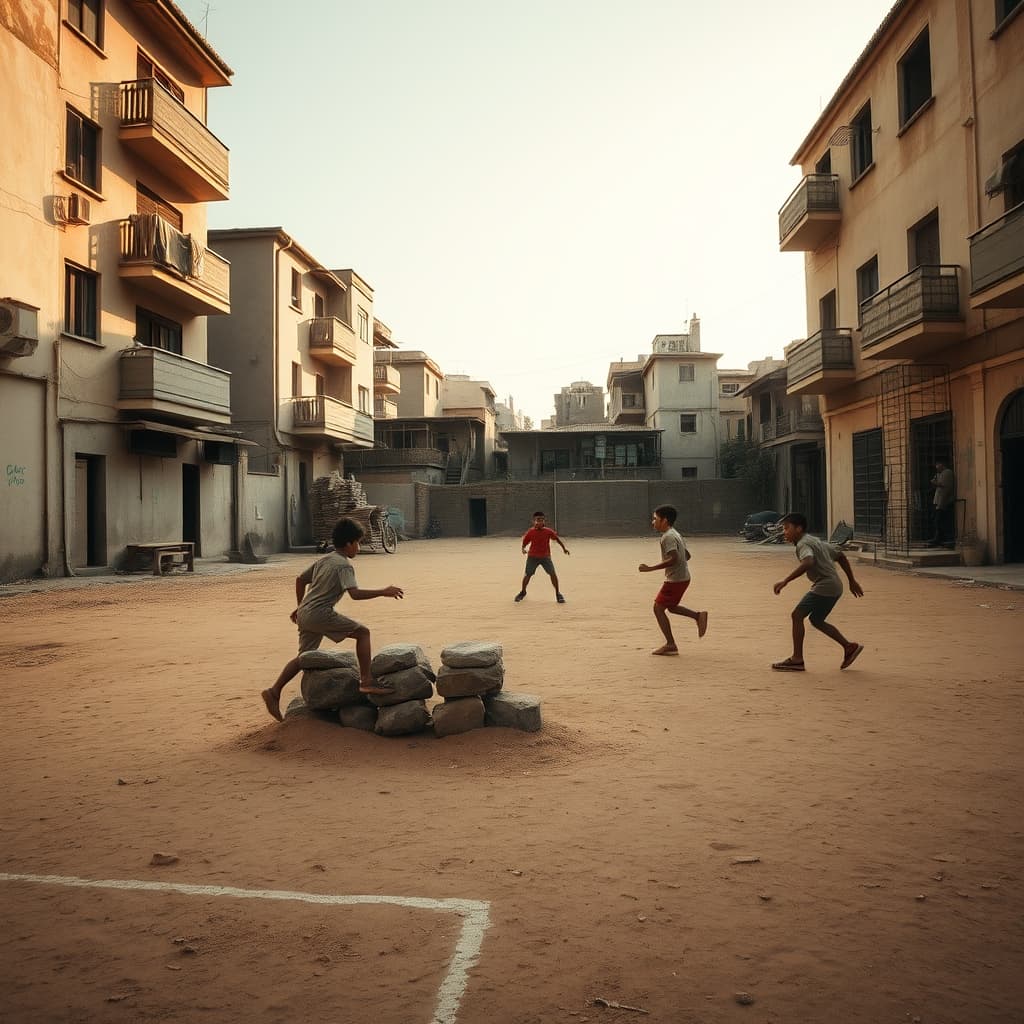
Yaz akşamüstü biraz serinlemeye başladığında, mahallenin boş arsası ya da iki apartman arasına sıkışmış genişçe alan bir anda stada dönüşürdü. Taşlarla kaleler belirlenir, yere tebeşirle sınır çizilir, kim oynayacak kim yedek kalacak tartışması daha maç başlamadan hararetlenirdi. Topun ilk sekmesiyle birlikte mahalle yalnız çocukların koştuğu bir yer olmaktan çıkar, seyircisi, hakemi, yorumcusu ve itiraz makamı olan tam teşekküllü bir küçük cumhuriyete dönerdi. En çok da tartışmalı goller hafızada kalırdı; çünkü golün çizgiyi geçip geçmediğinden daha önemli olan, o an herkesin kendi adalet anlayışını ortaya koymasıydı.
Mahalle Kültürü içinde bu maçlar yalnız spor faaliyeti değildi. Sokak hayatının ortak dilini kuran güçlü bir toplumsal alandı. Büyükler balkondan izler, bakkal çırağı kapı önünden yorum yapar, küçük çocuklar top kaçınca peşinden koşar, anneler “akşam ezanı okunmadan gel” diye seslenirdi. Maçın temposu, mahallenin ritmiyle birlikte akardı. Bir yanda çekirdek sesi, bir yanda uzaktan geçen simitçinin bağırtısı, öte yanda “faul var” diye yükselen itiraz. Bütün bunlar eski şehir hayatının tam ortasında, kendiliğinden kurulmuş bir kamusal tiyatro gibiydi.
Tartışmalı goller bu tiyatronun en unutulmaz sahneleriydi. Top taşın yanından mı geçti, çizgiyi tam aştı mı, kalecinin eli önce mi değdi, yoksa oyuncu faulle mi aldı? Bu soruların kesin bir cevabı çoğu zaman yoktu. Ama mesele tam da buydu. Kurallar, hazır bir otorite tarafından değil, oyuncular ve seyirciler tarafından birlikte müzakere edilirdi. Bazen en yaşlı ağabey son sözü söyler, bazen maçı başlatan top sahibinin kararı kabul edilirdi. Bu küçük gerilimler, çocuklara yalnız rekabeti değil, pazarlık etmeyi, ikna etmeyi ve yenilgiyi kabullenmeyi de öğretirdi.
Bugünün sitelerinde aynı sıcaklığın bulunmaması, yalnız fiziksel mekân farkıyla açıklanamaz. Eski mahalle maçlarında saha ile hayat arasında duvar yoktu. Maç sürerken komşu teyze market poşetiyle aradan geçer, top apartman girişine kaçarsa herkes kısa bir mola verir, bazen oyuna yeni gelen biri doğrudan takıma yazılırdı. Hayat kesintisiz biçimde sahanın içinden akardı. Modern sitelerde ise alanlar daha düzenli, güvenlikli ve programlı olsa da bu geçirgenlik azalıyor. Spor alanı, gündelik hayatın ortasında kendiliğinden beliren bir buluşma olmaktan çok, ayrılmış bir etkinlik alanına dönüşüyor.
Mahalle maçlarının sıcaklığı biraz da eksikliklerinden gelirdi. Forma yoktu, çizgi düzgün değildi, top bazen yamuk sekerdi, hakem bulunmazdı. Ama tam da bu eksikler, oyunu herkesin katkısıyla tamamlanan bir deneyime çevirirdi. Çocuklar kendi kurallarını üretir, topu patlayan arkadaş dışlanmaz, evden su getiren oyunun doğal parçası sayılırdı. Bu ortak eksiklik yönetimi, mahallenin birlikte yaşama pratiğini güçlendirirdi. Tartışmalı gol sonrası çıkan kısa küslükler bile akşam olmadan tatlıya bağlanırdı; çünkü ertesi gün yeniden aynı sahada buluşulacağı bilinirdi.
Eski şehir hayatında mahallenin sıcaklığı yalnız komşuluk selamından ibaret değildi; birlikte gerilmek, birlikte sevinmek ve birlikte itiraz etmekle kuruluyordu. Maç bitince tozlu dizler, terle ıslanmış saçlar, susuzluktan kızarmış yüzler ve “yarın rövanş var” cümlesi aynı toplumsal dokuya karışırdı. Çocuk için bu deneyim, şehirle ilk müzakeresiydi. Kendi hakkını savunmayı, arkadaşını oyunda tutmayı, bazen geri adım atmayı orada öğrenirdi.
Bu yüzden mahalle maçlarının tartışmalı golleri bugün bile unutulmuyor. Hatırlanan şey yalnız futbol değil; resmi kurumlardan bağımsız biçimde kurulmuş bir yakınlık, bir adalet arayışı ve bir mahalle dili. Bugünün sitelerinde daha temiz sahalar, daha güvenli çevreler olabilir; ama eski boş arsalarda bulunan sıcaklık, oyunun hayatla bu kadar iç içe geçmesinden doğuyordu. Toz kalktığında geriye yalnız skor değil, birlikte yaşamanın küçük ama kalıcı dersleri kalıyordu.
🇬🇧 English | Dusty Pitches, Disputed Goals, and the Warmth of Neighborhood Life
When summer afternoons began to cool, an empty lot or a wide space between apartment blocks suddenly became a stadium. Stones marked the goalposts, chalk traced uncertain boundaries, and arguments over who would start and who would wait often began before the first kick. As soon as the ball bounced, the neighborhood stopped being merely a place where children ran around and turned into a complete little republic, complete with spectators, referees, commentators, and authorities of objection. Most of all, disputed goals remained in memory. What mattered was often less whether the ball crossed the line than the way everyone revealed a personal sense of justice in that instant.
Within neighborhood culture, these matches were never only sport. They created a common social language for street life. Adults watched from balconies, the grocer’s apprentice commented from the doorway, smaller children chased the ball when it rolled away, and mothers called out, “Come back before evening prayer.” The tempo of the game moved with the rhythm of the area itself: sunflower seeds cracking, a distant street vendor’s shout, sudden cries of “That was a foul!” It all felt like a spontaneous public theater set at the center of old city life.
Controversial goals were the most memorable scenes in that theater. Did the ball pass the stone? Did it really cross the line? Did the goalkeeper touch it first, or was there a foul in the buildup? There was rarely a final objective answer. Yet that uncertainty was the point. Rules were not enforced by a formal authority but negotiated by players and onlookers together. Sometimes the oldest boy gave the final word. Sometimes the owner of the ball carried the deciding power. These small tensions taught children more than competition. They taught bargaining, persuasion, and the uneasy acceptance of defeat.
The reason today’s residential compounds rarely reproduce the same warmth cannot be explained only by differences in architecture. In old neighborhood matches, there was no hard wall between life and the field. A woman carrying groceries might walk right through play. If the ball escaped to an apartment entrance, everyone paused. A late-arriving child could be added to a team without ceremony. Life flowed through the game without interruption. In many modern compounds, by contrast, spaces are cleaner, safer, and more organized, yet less permeable. The playing area becomes a designated facility rather than an accidental meeting point inside daily life.
Part of the warmth came from imperfection. There were no uniforms, no proper lines, no official referee, and often no perfectly shaped ball. But those very lacks turned the match into a shared construction. Children created rules, nobody excluded the friend whose ball had lost air, and the person bringing water from home became part of the event. Managing common insufficiency strengthened the practice of living together. Even brief sulks after a disputed goal usually dissolved before nightfall, because everyone knew they would meet on the same ground again tomorrow.
In old city life, neighborhood warmth was never limited to polite greetings. It was built by being tense together, joyful together, argumentative together. When the match ended, dusty knees, sweat-soaked hair, dry throats, and the phrase “rematch tomorrow” all entered the same social fabric. For children, this was often a first negotiation with the city itself. They learned how to defend a claim, keep a friend in the game, and sometimes step back.
That is why the controversial goals of neighborhood matches are still remembered. What survives is not only football, but a form of closeness, a search for justice, and a neighborhood language that existed outside formal institutions. Today’s compounds may offer cleaner pitches and safer surroundings, but the old warmth grew from how completely play intertwined with life. When the dust settled, what remained was never only the score. It was a small education in living together.
🇧🇷 Português (Brasil) | O Campo de Terra, os Gols Contestados e o Calor Humano do Bairro
Quando o fim de tarde de verão começava a refrescar, o terreno vazio do bairro ou o espaço largo entre dois prédios virava estádio de repente. As traves eram marcadas com pedras, a linha do campo aparecia em giz, e a discussão sobre quem começaria ou ficaria no banco já esquentava antes do primeiro toque na bola. Assim que o jogo começava, o bairro deixava de ser apenas lugar de passagem e virava uma pequena república completa, com torcida, árbitro improvisado, comentaristas e instância de protesto. E eram justamente os gols polêmicos que ficavam na memória. Mais importante do que saber se a bola entrou era ver como cada um revelava ali seu senso de justiça.
Dentro da cultura de bairro, essas partidas nunca foram apenas esporte. Eram um espaço forte de linguagem social da rua. Os adultos assistiam da varanda, o ajudante do mercadinho comentava da porta, as crianças menores corriam atrás da bola, e as mães gritavam para voltar antes de anoitecer. O ritmo do jogo andava junto com o ritmo da vizinhança: barulho de sementes quebradas, pregão de vendedor ao longe, gritos de “foi falta” surgindo no meio da poeira. Tudo isso parecia um teatro público espontâneo montado no coração da antiga vida urbana.
Os gols discutidos eram a cena mais inesquecível desse teatro. A bola passou a pedra? Cruzou a linha inteira? O goleiro tocou antes? Houve falta na jogada? Raramente havia resposta objetiva. E era justamente essa incerteza que fazia a experiência valer. As regras não vinham de uma autoridade pronta. Eram negociadas entre jogadores e quem assistia. Às vezes o mais velho dava a palavra final. Às vezes o dono da bola tinha poder decisivo. Essas tensões pequenas ensinavam às crianças muito mais do que competir. Ensinavam a negociar, a convencer e a aceitar a derrota.
A falta da mesma acolhida nos condomínios de hoje não se explica só pela mudança do espaço físico. Nas partidas antigas, não havia muro rígido entre a vida e o campo. Uma vizinha com sacolas podia atravessar o jogo, a bola que escapava para a entrada do prédio interrompia tudo por um instante, e alguém que chegava depois entrava no time quase sem cerimônia. A vida passava dentro da partida. Em muitos condomínios atuais, os espaços são mais organizados e seguros, mas menos permeáveis. A quadra se torna área separada de atividade, e não encontro espontâneo no centro da rotina.
Parte do calor vinha justamente das imperfeições. Não havia uniforme, nem linha bem pintada, nem juiz oficial, e às vezes a bola quicava torta. Mas eram essas faltas que transformavam o jogo em experiência montada por todos. As crianças criavam regras, ninguém excluía o amigo por ter uma bola ruim, e quem trazia água de casa também fazia parte do ritual. Administrar a carência em comum fortalecia a prática de viver junto. Até as pequenas brigas por causa de gol polêmico normalmente acabavam antes da noite, porque todos sabiam que haveria revanche no dia seguinte.
Na antiga vida urbana, o calor do bairro nunca foi apenas cumprimento cordial. Ele se construía também ao tensionar junto, vibrar junto e contestar junto. Quando o jogo terminava, joelhos empoeirados, cabelo molhado de suor, sede e a frase “amanhã tem revanche” entravam no mesmo tecido social. Para muitas crianças, ali acontecia a primeira negociação com a própria cidade. Aprendia-se a defender uma posição, a manter o amigo no jogo e, às vezes, a recuar.
Por isso os gols polêmicos das partidas de bairro ainda são lembrados. O que fica não é só o futebol, mas uma forma de proximidade, uma busca de justiça e uma linguagem comunitária nascida fora das instituições formais. Os condomínios de hoje podem oferecer quadras melhores e mais segurança, mas o calor antigo nascia da mistura total entre jogo e vida. Quando a poeira baixava, não sobrava apenas o placar. Ficava uma pequena escola de convivência.